
If there were ever a musical chameleon, David Bowie would be the most colorful and bold of them all. Interestingly enough, releasing his self-titled debut album on the same day (May 26, 1967) as The Beatles’ Sgt. Pepper’s Lonely Hearts Club Band. Pepper’s Lonely Hearts Club Band, like the Fab Four, David Bowie was constantly evolving. Going from Modern Pop to his recognizable Space Folk sound of the 1969 single “Space Oddity,” to the Ziggy Stardust period (between 1972 and 1973), to Aladdin Sane (also in 1973), to the more Soul/R&B era of 1974’s Diamond Dogs and 1975’s Young Americans, another significant shift came in 1976 with Station to Station.
Marking Bowie’s tenth studio album in less than a decade, the pace at which his sound and image shifted during that time has never been replicated. Truly an artist in every form of the word, Station to Station was recorded in late 1975, immediately after he had completed filming The Man Who Fell to Earth. Portraying an alien named Thomas Jerome Newton, Bowie mephored his appearance to an even thinner frame than ever before, with near-hollow cheeks and shocking orange hair.
Rather wild to see, Bowie retained much of this image going into the Station to Station era and adopted a persona as The Thin White Duke, with his wardrobe scaled back to a white shirt, black trousers, and a black waistcoat. At the same time, his hair remained slicked back in a pompadour. Once more, as he was ever-changing, so was the music for Station to Station, where he explored sounds not heard before. A very bold record, much more stripped back than immediately prior Bowie works, it also had a very dark undertone.
Diverse, blending elements of Funk, Soul, and Rock (with some great guitar riffs and solos), perhaps the most significantly noticeable aspect of Station to Station was the use of synthesizers. Giving his music a more electronic feel (which would become increasingly popular as the ‘70s progressed, giving way to the New Wave boom in the ‘80s), Bowie remained on the cutting edge. Released on January 23, 1976, Station to Station reached number 3 on the Billboard 200, became his highest-charting album ever (until 2013’s The Day), and featured the epic hit single “Golden Years.”
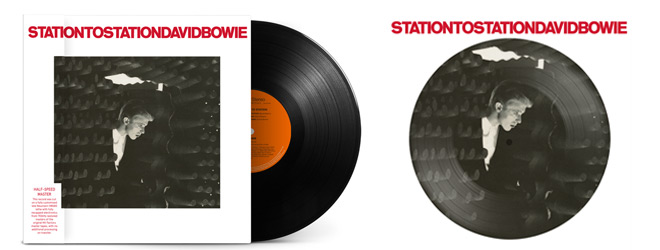
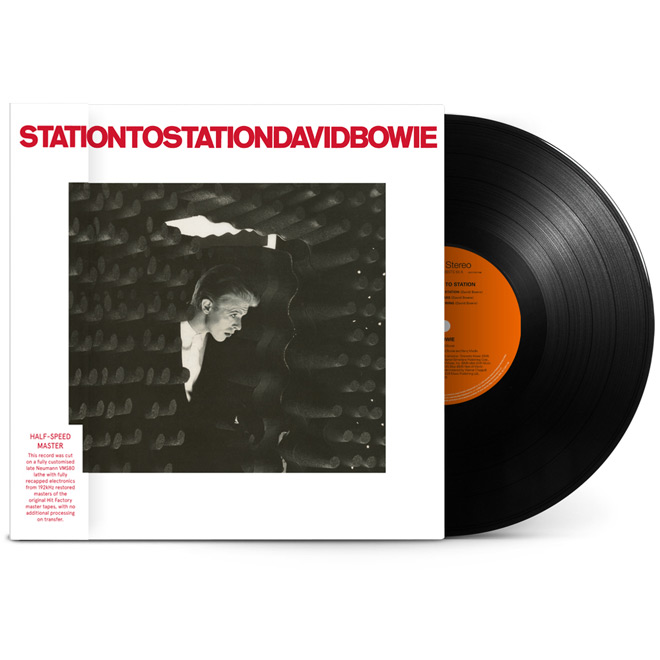
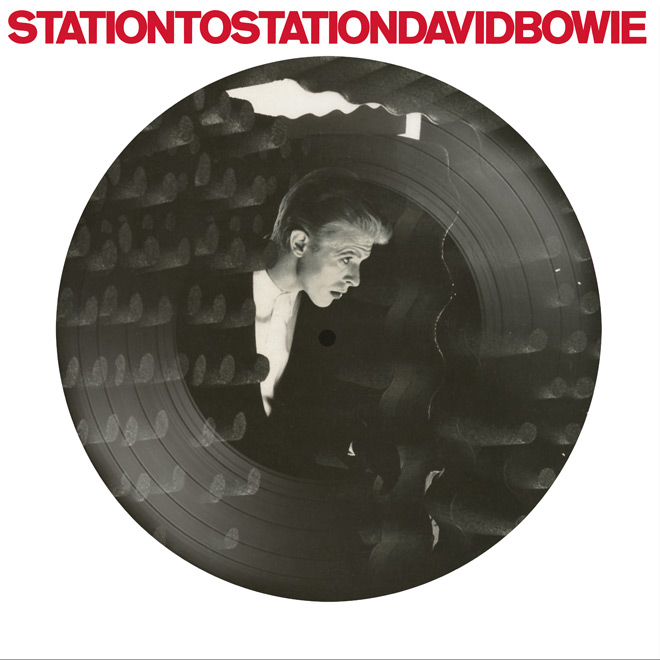
Considered by many to be one of Bowie’s best records, and one which is highly influential, beyond “Golden Years,” you cannot deny the title track, “Stay,” and the haunting aesthetic of “Wild is the Wind.” Now, as Station to Station turns 50 years old, it remains equally as curious as ever before. Justifiably honored, there will be a Celebrating David Bowie tour kicking off in February 2026, which features former Bowie bandmates (as well as other recognizable names like Everclear’s Art Alexakis and Eagles of Death Metal’s Jesse Hughes), which will highlight Station to Station in their setlists. Beyond this, on January 23, 2026 (50 years to the date of the original release), Parlophone will be releasing two limited-edition vinyls.
Very exciting for David Bowie fans who have been blessed with various re-releases on vinyl in recent years, this latest offering includes a lovely picture disc LP and standard black LP, both half-speed mastered. Something significant: for those unfamiliar with half-speed mastering, you get an enhanced, extremely high-quality listening experience. Sourced from the restored digital masters, it still maintains the integrity of the original recordings with no additional processing, again with stellar sound.
Quite ear-tingling to listen to, the layers pop out even more so than ever, as do the subtle textures. This is vital with an album such as Station to Station, because there is just so much going on beneath the surface. Pressed to a high-quality 180-gram vinyl for both the black and picture disc, either is an excellent addition to any David Bowie fan’s collection. That is why Cryptic Rock gives the 50th anniversary half-speed master of Station to Station 5 out of 5 stars.




)
No comment