
American Sign Language (ASL) has been around since 1817, thanks to Laurent Clerc, who founded the American School for the Deaf. This history in mind, it was not until 1932’s Freaks, directed by Todd Browning, that America and Hollywood were taken by storm with its mostly disabled cast. Unfortunately, it freaked people out so much that it was banned in some countries and had thirty minutes shaved off the final act.
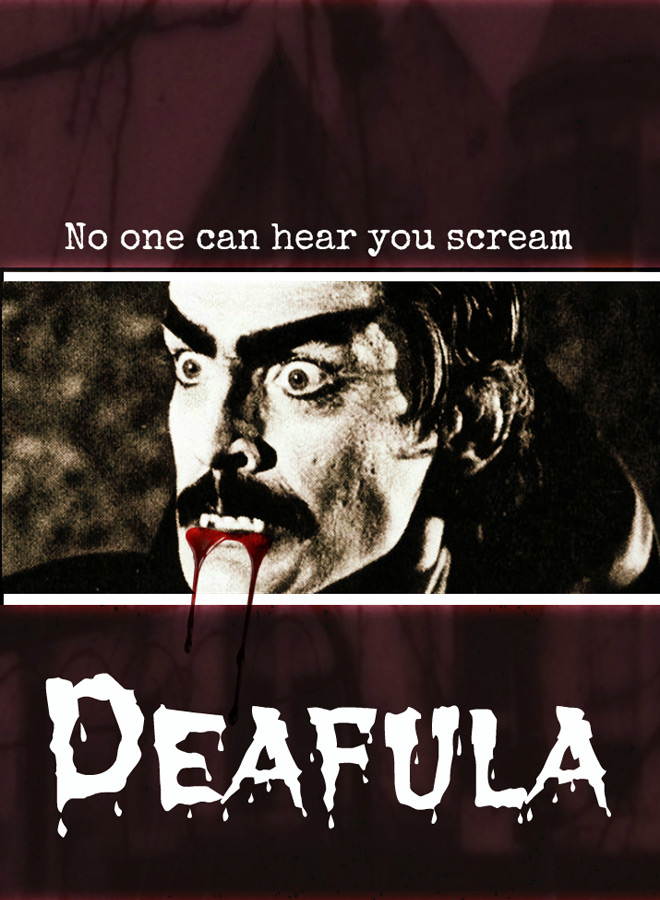
Fast forward to March 1975, Writer/Director Peter Wolf (real name Peter Wechsberg), in his directorial debut, tapped into this topic with Deafula. Seldom seen or spoken about, this Horror film reimagines the Dracula mythos through the lens of deaf culture and language. The first of its kind, utilizing ASL throughout, the film now celebrates its 50th anniversary.
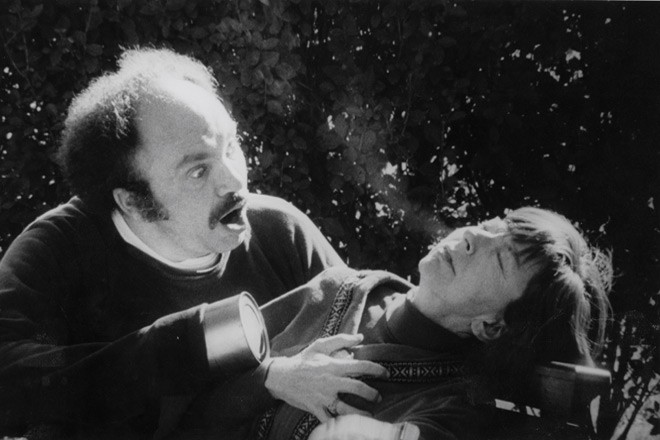
Starring a cast, who made their feature debut and their only feature, (* denotes a hearing actor) there is Peter Wolf as Steve Adams, Lee Darrel* as the detective, Dudley Hemstreet as the assistant detective, Inspector Butterfield, Katherine Wilson* as Maria Adams, Steve’s mother, Gary R. Holstrom* as Dracula, James Randall as Steve’s father, the minister, Norma Tuccinardi as Amy, Nick Tuccinardi as Amy’s assistant, Zork, and Cindy Whitney as young Amy in a story blood a theology student (Wolf) finds himself turning into a vampire (Holstrom) and hunting other students for their blood.
The tagline of Deafula really simplifies the plot that gives a backstory for a “possible” motive, which might come off as tropey nowadays. Still, it tackles greater issues like identity, morality, and transformation, which are universal, but as a disabled person myself, they have more weight for the deaf in a hearing world. Using vampirism is actually a brilliant idea to conceal identity, because in most movies, the person has to come to terms with being a vampire. It is the same for any disabled person to be successful in their world, which will most definitely be able-bodied/hearing; they have to become comfortable in their skin. This covers identity and transformation. Since Steve is a theology student raised in a religious family, he struggles to cope with the transformation into a vampire, facing a moral dilemma: being a student by day and a cold-blooded killer by night.
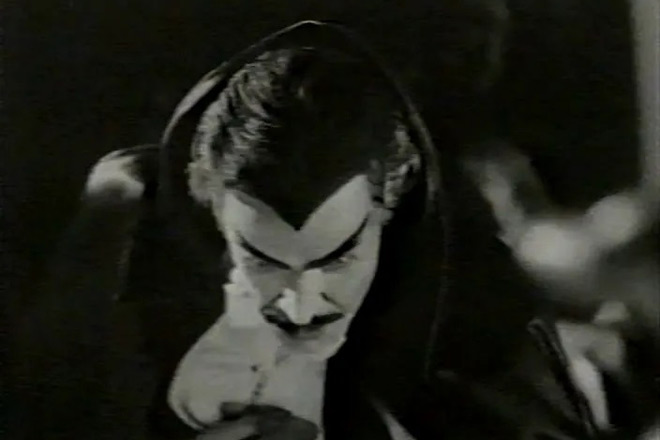
As previously mentioned, Deafula was the first feature shot entirely in ASL, not just translated afterward. This affected blocking, camera angles, and pacing. A voice-over leading into the film was added later for hearing audiences, but the original intent was to center on deaf viewers and ASL fluency. Given that it was an intended niche, the film was shot on a low budget, which included filming in black and white in Portland, as opposed to, say, Europe. This approach also involved navigating communication barriers on set, especially between deaf actors and hearing crew members, which added complexity but also deepened the film’s authenticity.
Ironically, not everybody was 100% on showing Defaula to hearing audiences, even though it deserved to be and needed to be seen, out of concern that it would be misunderstood or mocked. Furthermore, it sparked debate, with some feeling it was empowering, while others thought it invited ridicule. Nonetheless, the creators stood by their vision of a deaf-centric Horror film that did not compromise its identity.
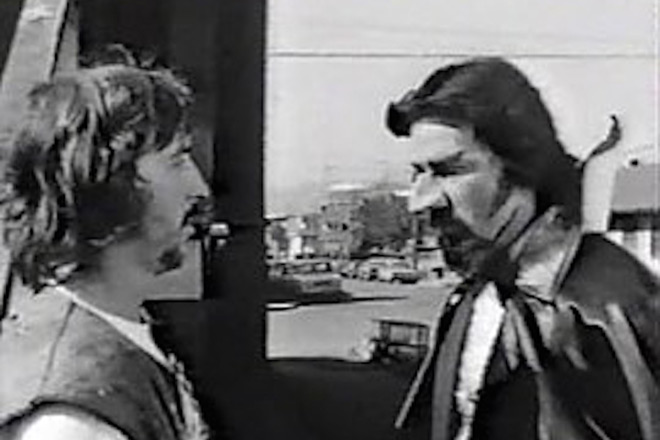
Unlike Freaks, which obviously pushed 1932 sensibilities, Deafula leaned into the camp of 1970s sensibilities. For instance, the inclusion of bizarre elements, such as a mute character with cans over his hands and a servant named Zork who has no hands. Surreal touches enhance the film’s cult appeal, while also reflecting the experimental nature of the shoot. In fact, in a 2017 interview with Cryptic Rock Magazine, Pantera’s own Phil Anselmo referenced Deafula as one of his favorites, stating –
“Not many Horror fans know about Deafula, but if you’re a true Horror movie buff, perhaps you would know Deafula.“
Which leads to the question: How is Deafula perceived in the digital age? Although it has never been officially released to DVD or Blu-ray, you can find it on YouTube. Something culturally interesting, hopefully, more people will give it a watch and come out the other end with a broader perspective.
Aside from Freaks, which is both wildly entertaining and a gross disservice to people with disabilities (even though some might enjoy it), it is hard to find any older movies that represent them. However, Deafula remains a gem that endures even fifty years later.


No comment