As the 1960s was coming to a close, Diana Ross & the Supremes were still on the charts with one Top Ten hit after another. A five-year run of out-of-this-world success that began in 1964 with “Where Did Our Love,” amidst changes in music styles and society in general, the Supremes always seemed to find a way to adapt.
Looking back to 1967, the original singer, Florence Ballard, was replaced by Cindy Birdsong. Then came the executive decision to change the group name from simply The Supremes to Diana Ross & the Supremes. From the outside looking in, the group was not skipping a beat and, in 1968, delivered yet another powerful showing with the album/single Love Child. Then, on the heels of this, 1969 saw the arrival of not one but three more studio albums, all beginning with Let the Sunshine In.
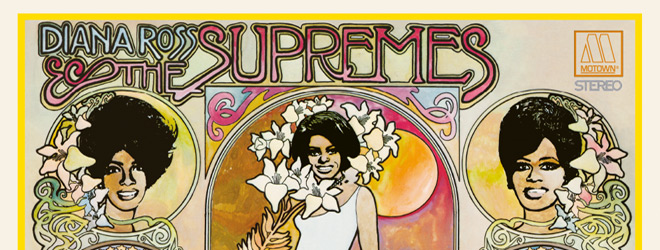
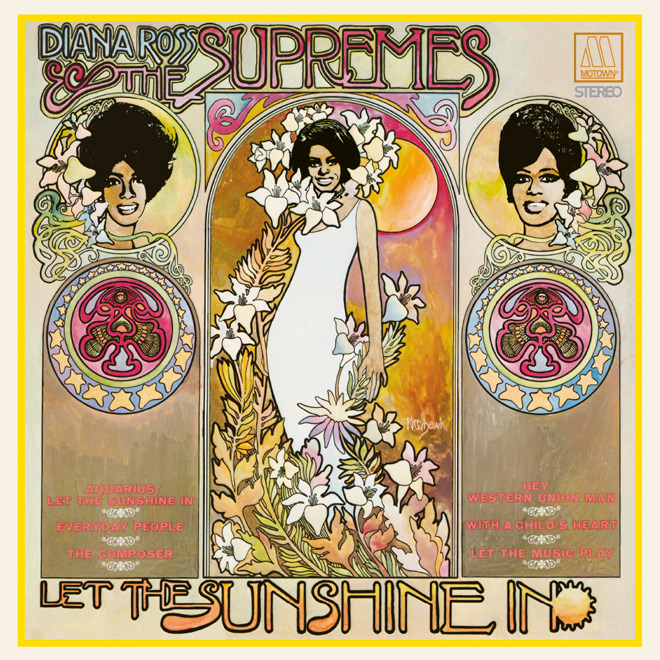
Released on May 26, 1969, interestingly, the album was to be titled No Matter What Sign You Are after the song of the same name featured amidst the tracklisting. However, the single release did not chart in either the US or the UK, so they scrapped the title and original cover art bearing the name and opted to call it Let the Sunshine In. No doubt, capitalizing on the song “Aquarius/Let The Sunshine In,” which The 5th Dimension had a huge hit with earlier in 1969, it was a good marketing move, especially since The Supremes did their own interesting version of the track for the album.
With this bit of detail in mind, it is also important to recognize that Let the Sunshine In was at the tail-end of an era with Diana Ross leading The Supremes because their albums Together and Cream of the Crop (which arrived in September and November 1969 respectively) would be the final albums with her as lead vocalist before embarking on a solo career. A bit of a somber note in the hearts of fans of the group, Let the Sunshine In still had success, hitting 1 on the UK R&B Charts and 24 on the US Billboard Charts.
Great accomplishments indeed; the album also has instrumentational work from the legendary Funk Brothers and even features vocals of Florence Ballard on “Let the Music Play” since the song was actually an outtake from the 1996 I Hear a Symphony recording sessions. Speaking of carrying over material, the track “What Becomes of the Broken Hearted” was also originally recorded in 1966, and the single “I’m Livin’ in Shame” was a thematical sequel to “Love Child.”
Beyond this, the album also features “The Composer” (penned by Smokey Robinson), a delightful edition of Sly and the Family Stone’s “Everyday People,” and “What Becomes of the Brokenhearted,” which Jimmy Ruffin made famous in 1966.
Overall, Let the Sunshine In is a delightful late-era release from Diana Ross & the Supremes, and that is why it is great to see Elemental Music re-releasing it on vinyl as part of their Motown Sound Collection. Arriving on Valentine’s Day, February 14, 2025, it is the seventh Supremes re-released vinyl from Elemental Music, which started with 1965’s We Remember Sam Cooke and continued with 1966’s I Hear a Symphony, 1968’s Love Child, 1964’s A Bit of Liverpool, 1965’s More Hits By The Supremes, before 1968’s Reflections. There is a lot of material to revisit; one of the coolest aspects of this new vinyl pressing of Let the Sunshine In is the entire twelve songs that are currently not available for streaming on popular platforms like Spotify. Something to think about: perhaps this is even more incentive to actually pick up a physical copy.
Worth the time and money, this new limited edition pressing is on 140-gram vinyl and features the classic front and back artwork. It sounds delightfully warm, the physical quality is very high, and it is a perfect way to dig into a Supremes album that is perhaps not as easily recalled as others. That is why Cryptic Rock gives Element Music’s reissue of Let the Sunshine In 4.5 out of 5 stars.



)
No comment