

Few are fortunate enough to have times in their lives when they can look back with a smile. Whether it be because we are too busy living our lives or just never make it to our golden years, it is a blessing to have hindsight.
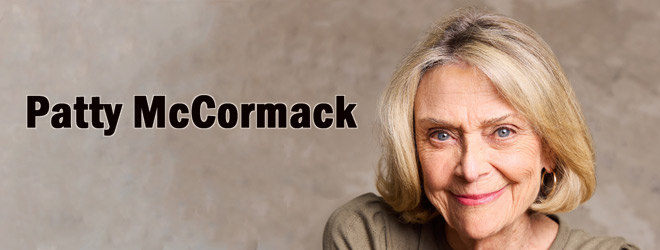
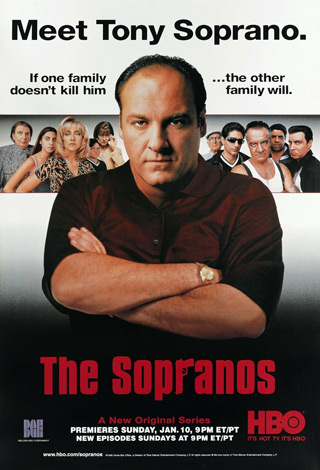
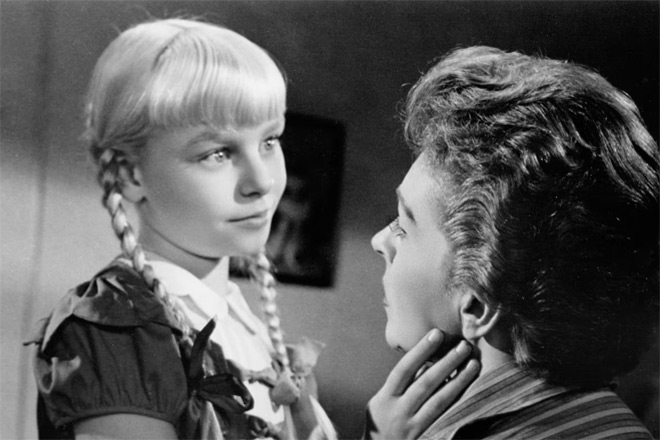
Recently, celebrating her 80th birthday in August 2025, prolific Actress Patty McCormack was pleasantly reminded that she has indeed accomplished quite a lot. Beginning her film career as a child, McCormack was 11 when she took on the lead role of Rhoda Penmark in the iconic 1956 Horror film The Bad Seed. From here, continuing to find consistent work through the decades, McCormack’s career has found her star in a list of recognizable parts includine a main spot on The Ropers, a recurring role on the hit series The Sopranos, in Horror films such as 1975’s Bug, plus in the theater, like the more recent off-Broadway production Just Another Day.
Truly a versatile actress, the gracious Patty McCormack sat down to reflect on her years of work, her latest role in the indie film Stop Time, and more.
Cryptic Rock – You have had an extensive career in film and television, beginning when you were young and continuing for decades. A part of many different films and television series, how would you describe your journey in the arts?
Patty McCormack – It’s been interesting. I had no idea how varied it was. I have to tell you this because I had a really big birthday this year. With that, my nephew, Fred Cerulo, who lives in New York, runs the Grand Central Partnership bid. He put together a series of clips. I don’t know how he found these clips. He threw a party with my sister and my daughter. My sister came out for it with her kids and grandkids. It was at Musso & Frank Grill, and it was a great birthday. Anyway, this tape was rolling with all these jobs. I thought, “Oh, my Lord, I’ve had more hairdos than anybody I’ve ever known.” I look like different people in a lot of the clips. It was so nourishing to see that. To have my family there was just amazing; my grown kids, their mates. I realized things went the way they were supposed to because if this hadn’t happened and that hadn’t happened, certain things wouldn’t have happened.
All in all, I thought I had gotten lucky with the accidents that had occurred in my life. If I had planned it out, I don’t think it would have gone as well. The journey of my work fit in nicely with the times that I wasn’t working, because then I was home with the kids and whatever. The times that I got to work, like now, it feels like I’m free to work on this late date. Also, you get braver when you get older because you think, “How bad could it be?” The things you used to worry about when you were younger, you let go of, and you have new things to worry about.
I’m enjoying this time now because I can see my kids. I can see my grandkids. I can see friends in New York. I get to work. I swear the last few jobs have been the most satisfying in a long time.
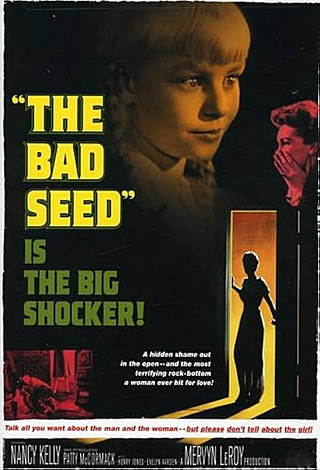
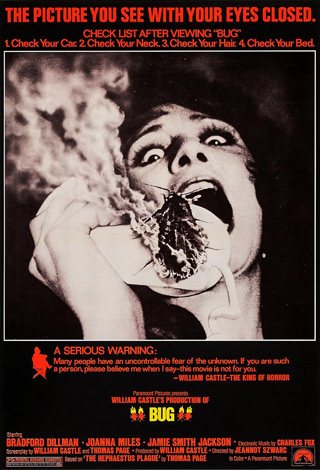
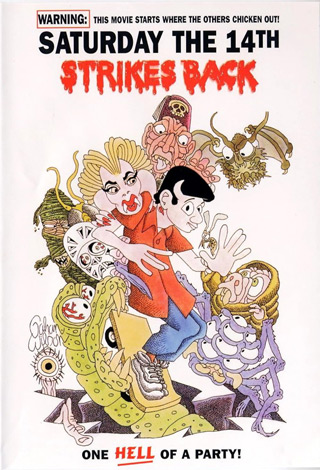
Cryptic Rock – It sounds like it is an exciting, unexpected journey. Life is unpredictable. You also had the ability to work in different genres and do different things. For example, you have worked on Horror-related films at a young age with 1956’s The Bad Seed, as well as later on with 1975’s Bug. You also worked on Comedy-related films like 1988’s Saturday the 14th Strikes Back.
Patty McCormack – Thank you! You know about Saturday the 14th Strikes Back?
Cryptic Rock – Yes! For many, Saturday the 14th Strikes Back has become a cult favorite.
Patty McCormack – No kidding. That’s nice to hear. Avery Schreiber, the funniest man in the world, was Frank Baxter in the movie. He taught improv for years at his house, and I went. That was a big opening for me, actually, as a grown woman, to a whole other field of work. He was a good teacher.
Cryptic Rock – That is interesting to hear. Your diversity is apparent. Even your latest film, Stop Time, finds you playing a very different role. Is that something that you enjoy, the challenge of working in different roles and taking on different parts?
Patty McCormack – Yeah. It’s funny because I’m currently doing this play called Just Another Day. It’s about two Comedy writers living in a home. We’re doing it everywhere, and we did it in Ireland for a fundraiser. I am playing somebody in a relationship in a home without the family around us. It’s a two-hander, so it’s just the two of us. I guess you would say Alzheimer’s or severe dementia, because each day we forget what happened the day before, and we relive some of that. It wasn’t foreign to me, because as you get older, you have experience with people in your family who have it. These are areas that it’s really helpful when you’re older to play because you have real touch with it. I loved it when I read the little scene that we did. I loved the writing and how it took a left turn and a right turn just like it would. The writing was so good. At this point in life, it’s a good part for older women or men.
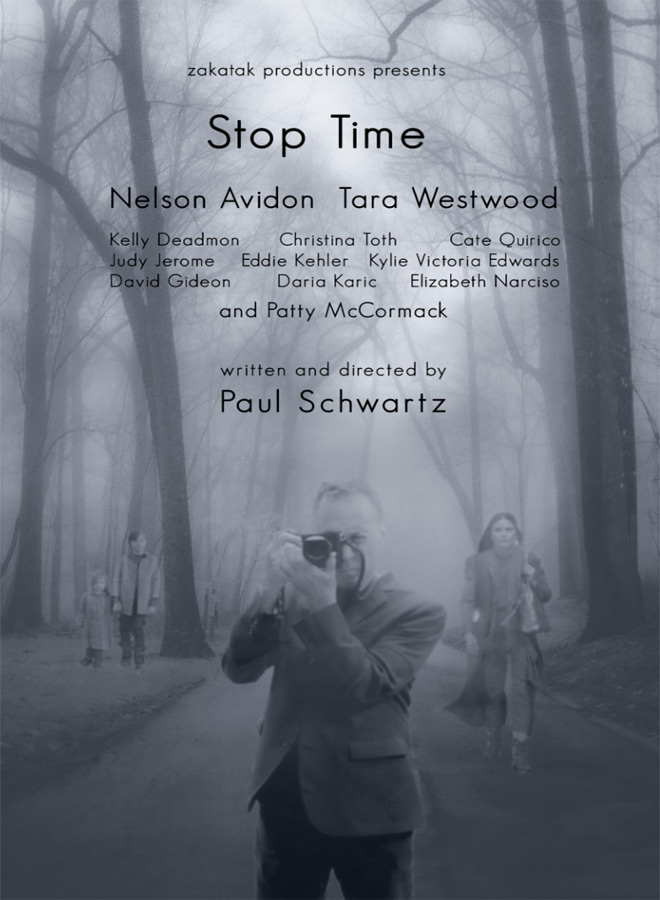
Cryptic Rock – Hopefully, people can check out that production as well. Stop Time premiered on January 17, 2026, in New York City. This film is about humanity, people, and the struggles that we all go through. How did it come about for you?
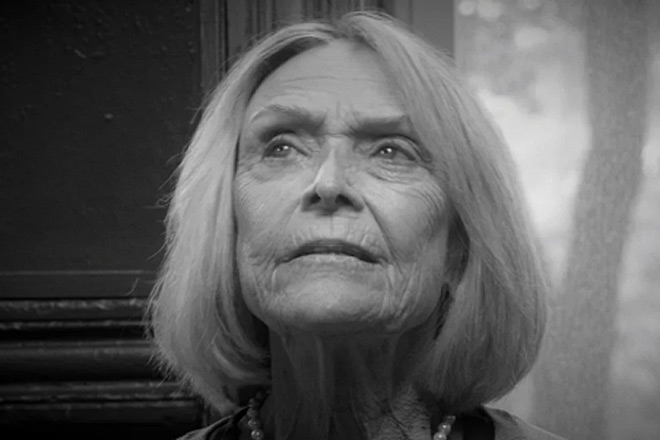
Patty McCormack – The short version is that I was in Bobby Moresco’s class because I was doing that play, Just Another Day in New York. In the class, Dan Lauria introduced me to Tara (Westwood), my daughter in the film. We connected nicely for a period of time. Then I went back, she called, and sent me the short version of Stop Time. I thought it was wonderful. She said they’re developing it into a full-length film, and they were going to go into her character a little bit. She asked whether I would play her mom? I said, “I would love to be your mom.” (Laughs) That’s how that happened. Then Paul approved. So first Dan, then Tara, and Bobby Moresco. If it weren’t for Bobby Moresco, we wouldn’t have met, probably. It’s very complicated.
Cryptic Rock – Stop Time seems to rely heavily on the mood, with the use of lighting and such. As you said, it is a good role for you at this point in your life. What was it like playing this role as a grandma with fading memories?
Patty McCormack – I knew when we were doing it that it felt good. I can’t explain it. I’m not very good at talking about acting, which is odd. The tone of the whole morning, or into the afternoon, was so nourishing, creative, and little surprise things happened within the running of the scene because we started off rehearsing. He explained things in depth that maybe we didn’t understand. Everything just clicked right. I had no idea how good it turned out, but it did. It turned out. You don’t know when you’re in it. You just trust the director. It was a joy to do.
Cryptic Rock – It sounds like it was a good experience. Given your extensive career across film, television, and beyond, you have worked on big-budget projects and small-budget, independent projects, including this one. One can imagine they all have a different feel. How do you compare the experiences?
Patty McCormack – You know what’s funny? I was surprised, because it had been a lot of years since I had done a big movie. I had a little part in 2012’s The Master, and that was Paul Thomas Anderson. Philip Seymour Hoffman and the wonderful Joaquin Phoenix were in it. With good directors and actors, there’s nothing different about what happens in a bigger-money job or a smaller-money job. Your intention is to do the best you can. Maybe the only benefit of something with more money attached to it is that they have more money, so they can take more time. (Laughs) With Indies nowadays, because they’re not paying for film, they can erase it, so it’s not a cost. The work in Indies can be as valuable as the work in huge films, depending on the group you’re working with. I think that’s true. I never thought, “This is only something or other.” I was always there to try to do the best I could.
Cryptic Rock – So, it really depends on the people making the film. They create the environment.
Patty McCormack – Yeah. It matters that everybody’s trying to make a good piece of work. If there are people there making fun of people, or that kind of thing, it’s never a good vibe.
Cryptic Rock – Understood. You mentioned Just Another Day, a theater production. Theater is a completely different aspect of acting. You get the initial immediate reaction from an audience and stuff like that. With your vast experience over the years, what is it like in the theater compared to filming?
Patty McCormack – The theater is so lucky because you always get a chance to do it again. In film, you’d better bring your A-game because when they print it, that’s it. Theater is so enjoyable because it’s never frozen in one moment. It’s a living, breathing, creative process that doesn’t end until you close. It’s so enjoyable. I love the fact that you have time to rehearse in the theater, then you have the opening, and the second night, which they call the tough one. If you have your great opening, you think, “Uh-oh, what’s going to happen on the second night?” At this point in life, my favorite is the theater because it gives me time to memorize, which is a big deal when you’re older, and to play with it. I have to say it’s my favorite.
Cryptic Rock – It is truly exciting that you have been blessed with so many different opportunities. You started when you were quite young, and you’ve continued to this point. What do you think are some of the most important things you’ve learned from all these experiences through all these decades of working?
Patty McCormack – This is going to sound so funny. But for a lot of actors, when a job ends, they think they’re never going to work again. That’s a real common thing, or that one job is going to lead to something else, and it doesn’t. I would say what I learned was that it isn’t over till the fat lady sings, that expression. You just don’t know. You have to either keep enjoying it, enjoy the process, or the changing process because it’s changed a lot, or get out and do something else.
I’m pleased to have made it to my age. Acting has been what I have done most of my life, aside from the lucky part of being a mom and all that side of life. I’m surprised, actually, because I remember always wanting to stop. When I was a little kid, I imagined I would grow up to be something else in my mind. As a teenager, it was tough transitioning into other roles. I always thought, “What do I really want to do?” I had that kind of thinking, but nothing ever came of that. I wasn’t a great student, so that wasn’t helpful. I’m glad I didn’t get out, though. I stopped at various times for certain periods of time. I stopped for about three years between 18 and 21. Basically, the biggest life lesson learned is to stay humble, stay grounded, and don’t lose sight of your passion.


No comment