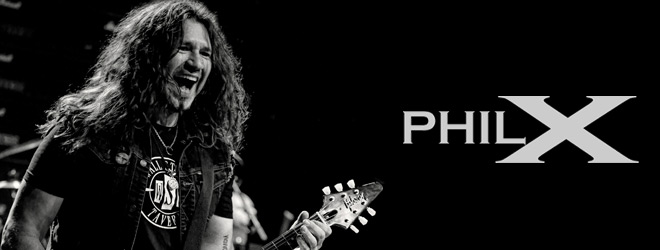
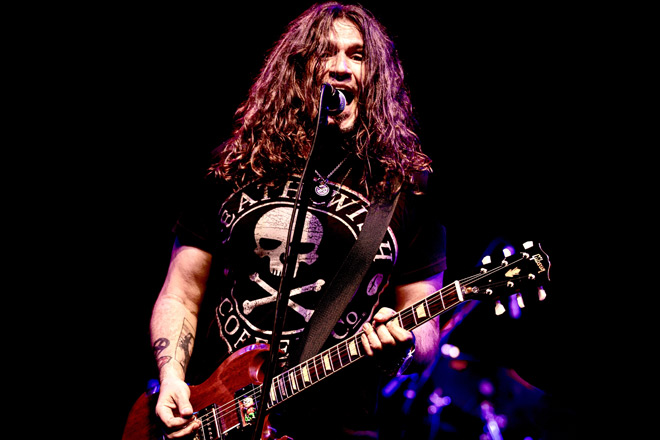
It is good practice to pinch yourself twice when finding a situation you only dreamed of being in as a child. This applies to any walk of life, but is most evident for professionals such as athletes, actors, actresses, or musicians.
Growing up working at his dad’s restaurant in Mississauga, Ontario, Canada, as a kid, Theofilos Xenidis, also known as Phil X, had big Rock-n-Roll aspirations. Spending much of his time spinning records and saving up cash to buy the latest Rock/Metal albums coming out, he eventually picked up a guitar himself and began to feel his way into the music.
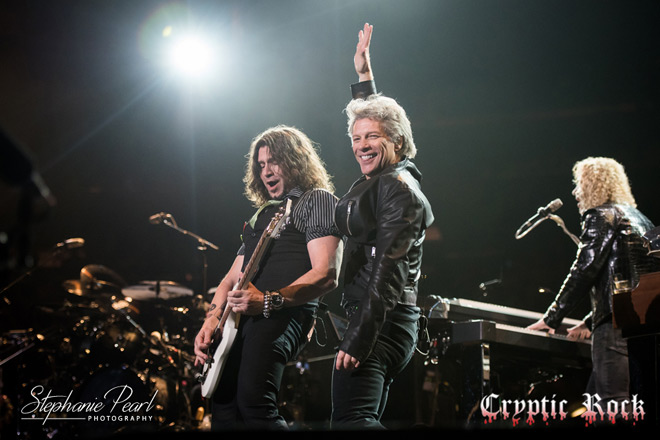
A story not unique to many young Rock-n-Roll loving kids with stars in their eyes, Phil X eventually found himself working with a broad range of musicians, ranging from Alice Cooper, Daughtry, and Tommy Lee to Kelly Clarkson and Rob Zombie as a studio musician. Quite exciting, then the unthinkable happened in 2011 when Jon Bon Jovi called on Phil X to fill in for Richie Sambora on some live gigs. A tremendous opportunity to play with one of the biggest Rock bands in the world, that was fourteen years ago, and since Phil X has played hundreds upon hundreds of shows and recorded three albums as part of Bon Jovi.
Taking nothing for granted and loving each moment, Phil X continues to possess a passion for his playing with Bon Jovi, as well as with his band Phil X & The DRILLS. Recently, the talented guitar slinger sat down to chat about his approach to playing, his time with Bon Jovi, the latest album with The DRIILS, plus more.
Cryptic Rock – You have been involved in music for quite a long time, and you have built a very cool resume. Working as a session musician, you have worked on various other projects, including your own, and have been working with Bon Jovi for fourteen years. How would you describe your interesting, incredible career?
Phil X – I couldn’t have done it if I weren’t a chameleon. (laughs). It’s pretty crazy when you go back. It was way back in the beginning, when I was a kid in Canada, learning the covers of our favorite bands so we could go do three forty-five-minute sets in the middle of nowhere, three nights a week. Then I would go back to my dad’s restaurant and bartend to pay for my gear.
I think back then, before YouTube, before I even knew what tablature was, learning all those songs by Zeppelin, Van Halen, Black Sabbath, and ZZ Top by ear really trained my ear. That helped me later in life when I had to learn whatever I was learning in the studio, because I don’t read music. I could be playing on anybody’s record, and you’ve got a bass player who sight-reads, and you’ve got a drummer who makes a chart that he can read every note. I’m just going, “F, G, come on, come on, come on, come on, baby.” I did syncopation by association.
All of this led to me securing numerous gigs and establishing a name for myself in the LA studio scene. Finally came the Bon Jovi gig, where I had to learn an entire show, show up, do a sound check, and play in front of thousands of people. (Laughs)
Cryptic Rock – It is wild to look back on. Looking through your resume, you have been a part of so many recordings. You have worked with Our Lady Peace and collaborated with numerous bands, providing a hired gun, as you mentioned.
Phil X – Yeah. It’s amazing because people think if you’re playing on a Kelly Clarkson record on Monday and then an Alice Cooper record on Thursday, that it’s just different gear. No, you’re actually a different person. (Laughs) You have to put your mindset into what you’re creating.
Basically, it’s all about the vocals. The vocal is king, and it’s your job to support it. Sometimes it’s super heavy guitars, and interesting things are happening. The other format is super Pop, very pleasant, and less aggressive, obviously. It’s just being able to wear all those hats.
Cryptic Rock – It sounds very interesting. As you said, you learned from an early age to develop your ear. Is it challenging to wear all the different hats like that?
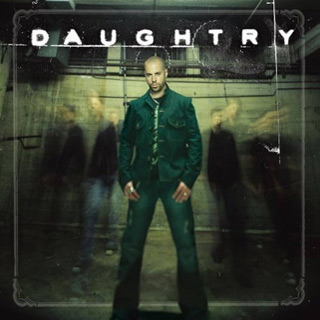
Phil X – No, it’s actually exciting. I like the challenge. I like being able to just walk in, hear the song, and instinctively know exactly what it needs. A calling card for me was back in 2006 when I did all the guitars on the Daughtry (2006) record. The phone started ringing like crazy. They’re like, “Get that guy who did the Daughtry record and tell him to bring the acoustic that he used on ‘Home.'” It was really specific.
Cryptic Rock – It is fascinating to hear about everything that has happened to you. You mentioned the Bon Jovi gig. You first played with Bon Jovi in 2011, and then you became the official guitarist a few years later. You have now been with the band for fourteen years and have recorded three studio albums with them as well.
Phil X – Wow. Really? (Laughs) See how time flies?
Cryptic Rock – It has to be surreal being a part of a band that has made such a massive impact in Rock-n-Roll. What has your time in Bon Jovi been like?
Phil X – Going back to 2013, where I really thought Richie Sambora was going to come back, and then he didn’t. We’d get on the jet going to another city. I’d wake up on the jet and I’d look at Jon and I’d go, “Oh, man, it’s Jon Bon Jovi.” It would register a second later: “Dude, you’ve been playing on stage with this guy for months now.” I’d look at him, and he’d go, “Hey, it’s show 76 tomorrow,” or “Show 89 tomorrow,” or “Show 93.” He was keeping count.
Again, I think everybody thought Richie was going to come back, and he just didn’t. All these shows were adding up, and it was still surreal. I’d get on stage and still feel like, “Wow, this is really happening.” Then take that into the first time I was in the studio with all the guys, where, again, it was super surreal. You’re like, “Is this really happening?”
I’m actually in the studio, Tico Torres is tracking drums, Jon’s to my right, John Shanks is at the other corner, David Bryan’s sitting at a piano or a synth, and Hugh McDonald is at a bass. We’re all working on a piece of music written by Jon Bon Jovi and Shanks. On the last record, Jon wrote with Ryan Tedder and Ed Sheeran. He’s done a lot of writing with Billy Falcon over the years, too.
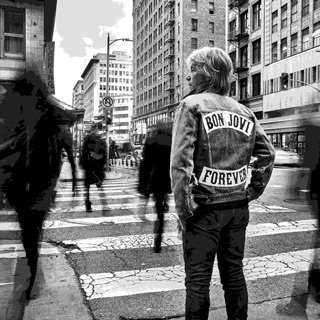
On the last record (2024’s Forever), Jon’s mindset was, “I don’t want to record the drums here, then the bass there, then the guitars in LA, and then the vocals in New York. I want to make this record, which was Forever, in the same studio until the last note is recorded. Just like we did with Slippery When Wet.” I’m like, “Well, I’m not in that ‘we,’ but I get what you mean.” It’s an amazing way to do it.
We were literally in Nashville, at Ocean Way for five weeks. If we weren’t recording the backing tracks because we were done, then the drums would be torn down, and we would then do guitar overdubs; sometimes, we would keep the guitars.
It was almost like an audition. We listened to the guitars that we played live off the floor with the band, and we would only replace them if we thought we knew we could beat them. Sometimes you put up a guitar that I was playing with the band, and it was like, “Wow, we don’t have to fix that.” It’s got this urgency of, “Yeah, I’m playing with the band.” It’s not an overdub or anything like that. Taking solos was “Just play. Don’t even think about it. Just go in there and play.” It’s funny, because sometimes that happened quickly.
I was at an airport last year. Somebody walked up to me and said, ” I really love that solo you played on ‘The People’s House.'” I’m like, “How did that go?” I had no clue because it was like that. (Laughs) I pick up my phone, I put in “The People’s House,” and I’m like, “Damn, straight. That’s a good solo.” (Laughs) I remember just changing the ending. I had the solo done, and Shanks was like, “Hey, why don’t you do this at the end because I think that’ll bring in the last chorus.” I said, “Great, done.” We did that, and I felt like it just happened.
When it was done, it was an amazing moment. That was a huge accomplishment. That’s the long answer to that question. (Laughs)
Cryptic Rock – It sounds like it was an exciting experience. Did you apply undue pressure on yourself coming in full-time with Bon Jovi?
Phil X – There’s a fine line because you can get in your head, and that could be your worst enemy. For instance, the first show. When we rehearsed in New York for two days and then Jon learned that Richie was in rehab, he just looked at me and he said, “So you remember I put you on hold for May?” I said, “Yeah.” He goes, “Well, Richie’s in rehab. It looks like you’re playing on Saturday at Jazz Fest. It’ll be fifty thousand people. No problem.”
I swear, if I had walked on stage with anything else in my head other than, “Dude, you’ve been playing guitar and singing your entire life. It’s just Bon Jovi songs. Go out there and kill it,” I would have flopped, and they would have sent me home. It’s as simple as that. I didn’t have time to be nervous. I had to deliver.
Cryptic Rock – Sometimes you have to keep your mind clear. The more you think, the worse it is.
Phil X – It’s the same thing I tell young musicians. Whether you’re on stage with Bon Jovi or at your first show, if you make a mistake and you let it bum you out, you’ll just keep making mistakes. I tell people it’s all about recovery. If you can make a really bad mistake and then recover and stay in your lane, you’ll watch it on YouTube and barely hear the mistake the next day.
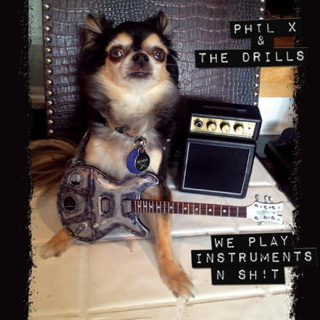
Cryptic Rock – Right. You also have your band, The DRILLS. You just released a record with the band on March 28, 2025, called POW! Right In The Kisser. It’s a fun Hard Rock album featuring a lot of great players. What was it like putting it all together?
Phil X – It’s funny because a lot of people make records, “Hey, let’s get some guest vocalists or some guest guitar players.” Me, I’m like, “Let’s get eleven drummers.” (Laughs)
It’s literally ten years in the making, with a little tease like when Stupid Good Lookings, Vol. 1 came out in 2019, which was a batch of six songs that were part of a longer process. We thought we had to get something out, so let’s at least put out Volume One. Then the list kept growing. I didn’t want there to be a Volume Two and a Volume Three.
The other changeup in the entire DRILLS family was that we signed to Frontiers Music. For me to be, “Well, let’s put Volume Two on Frontiers,” didn’t make sense. I thought, “Let’s make Volume One its own entity. Now it’s Volume One with no sequel.”
I wanted to create a new record with eleven songs, totaling forty minutes, that fit comfortably on vinyl. One of the first songs that we recorded was “You Sunk My Battleship” with Brian Tichy in 2014. The last song we recorded was in 2024 with Tosh Peterson, who’s the new kid on the block, slaying the drum world at the moment. Then, everything in between was recorded, with Liberty DeVito and Tico Torres being recorded, respectively, in New York and Las Vegas during the Bon Jovi tour.
If I had a day off or a morning off, I would go into the studio. I’d take Obie O’Brien, Jon Bon Jovi’s broadcast engineer and best friend, for like forty-something years. We would just go do it.
New York was interesting because we had two sold-out nights at Madison Square Garden. I called Liberty and said, “Hey, I’m going to be in town. Can you track some drums?” He goes, “Yeah.” Obie’s like, “Well, a legendary drummer, you’ve got to get a legendary studio. Let’s do it at The Power Station.” We did that. After lunch, Obie and I walked to Madison Square Garden, where we did a sound check for night two.
Every story has its own history. With Tico Torres, we were in Las Vegas. We had a night off after the T-Mobile Center. I said, “Hey, man, would you come in and do drums if I find a studio for tomorrow?” He goes, “Yeah, of course.” That happened. Both of those guys are legends and icons, and they’re crushing it. Both those songs came out amazing, way beyond my wildest dreams.
Tommy (Lee) and I have a history. We go back to ’99 when I played on Methods of Mayhem, and then every solo record he did after that. When I said, “Hey, man, play drums on one of my songs.” He was just like, “Yeah, dude, let’s do it.” We did it at his studio. He was one of those guys who came in, and he goes, “I love the idea. I love the song, but we need to slow it down.” I was like, “Well, you’re the boss, so let’s go.” That was “Fake The Day Away.” We probably changed that tempo three times. That’s the final tempo that you hear. I can’t even imagine it faster, which is hilarious. (Laughs)

Cryptic Rock – Wow, that is all very exciting. For all of these years, you played on everyone else’s records. Now, they are all playing on your record! As you mentioned, you have Billy Joel’s classic drummer, Liberty Devito. You also have others, such as Ray Luizer from Korn.
Phil X – Yeah. The amazing thing about that is all these guys, like Kenny Aronoff and I, for instance, I don’t know how many records we’ve played on together by other artists. When you’re in the studio, no matter whose song it is, you’re in a band. You’re creating, and there’s the chemistry that gets made into this all of, “Hey, we’re gelling.”
You become pals, you exchange numbers, etc. Kenny calls me up like, “Hey, I’m doing Kenny Aronoff & Friends night at The Baked Potato. Can you come?” I’m like, “Hell yeah, dude!” I’d go out and we’d jam in front of eighty people crammed into this tiny box. Then I’d say, “Hey, man, will you play on my record?” He’s like, “Of course.” There’s a camaraderie. It’s a gang kind of thing.
I remember that with Ray Luizer, we had never played together on anything, but we had been talking about it. When we got into the studio, it was one of those songs that we all played together, me, Ray, and Daniel Spree on bass. We were at Studio 606. We just started playing “Don’t Wake Up Dead.” As soon as we ran through it once, I was like, “This song’s going to open the record!” (Laughs) It totally represents the DRILLS for me, which is one guitar, a bass, a drummer, and my aggressive style of singing with an interpretive lyric. To me, that’s the epitome of The DRILLS. I was really excited about that track.
Cryptic Rock – These are some great stories to match with the tracks. There honestly are no boring portions throughout POW! Right In The Kisser.
Phil X – Thanks, I appreciate that! That’s a hard thing to get done these days, with ADHD being high on the platform of fandom.
Cryptic Rock – Definitely. You mentioned that it was recorded at different times in various studios.
Phil X – Yes. If there were eleven drummers, it was probably five or six different studios and different engineers. It’s funny because there were some of the drummers who were on the same drum kit on the same day. Because they hit differently, it sounds different. I thought if the common denominator is my guitar and the way I play guitar, my voice, Dan’s bass, and his background vocal sound, you’d be okay if all the drummers sounded different. But no.
The first time I handed mixes to Maor Appelbaum, our mastering guy, he was like, “Dude, this doesn’t sound like the same record. I think you’ve got to try to bring everything closer.” He really had a strong hand in getting it to the finish line. He was like, “It’s getting closer. I think we’re there. I’m going to send you the first draft of mastering.”
I’m really happy with how the album came out. I’m really happy with the way all the pieces fit. It was a hell of a jigsaw puzzle, but it came together.
Cryptic Rock – It certainly is cohesive. Knowing it was recorded with so many different players, engineers, at various times, and in multiple places, your reaction might be, “Well, it’s going to sound all over the place.” That is not the case. It is dynamic, yet cohesive.
Phil X – Yeah. I’m glad you said dynamic because there were drummers that I had in mind when I was working on the song. There’s a different vibe that’s flowing throughout the record. I really dig that. Some people listen to it as a full listen, and some people listen to it like, “This song’s better and this song’s the best. I wish the whole record were like this song.” To me, that’s not interesting enough.
When you listen to a Soundgarden record, all the songs don’t sound the same. Chris Cornell was a huge influence on me. I had the opportunity to work with him when I was at the height of my studio session heyday. I wrote “Broken Arrow” when I learned that he had passed. I don’t think I would have approached a song like “Broken Arrow” years ago with The DRILLS. I probably would have excluded it from our vibe, but I was ready to include it on this batch of songs. I feel like our fans were ready for a new dimension, and I think it added that depth.
Cryptic Rock –Absolutely. You mentioned how the vocals are so important. Your voice is aggressive, but it is very powerful. Your voice is also an instrument, beyond the guitar. How have you developed your voice?
Phil X – Yeah. Actually, The DRILLS are very demanding. If I have to sing a DRILLS show, even if it’s one show, I probably have to scream DRILLS songs in the car for three weeks before I get on that stage, to prepare for it. It’s very different than singing backgrounds.
Singing backgrounds in a couple of bands that I have, including Bon Jovi, that’s a completely different sound. You’re not a lead vocalist. You’re a background vocalist. You’re in the supportive role. When it’s you delivering the main lyric, the title, and all that stuff, you can’t go full aggressive either. You have to be able to pace yourself.
I wish I had the range I had when I was younger, because it just happened over time. It just happened. Many times, when I was playing cover songs and with bands as a young musician, I would lose my voice, and then it would come back. Then you’d find ways to keep your voice longer. It would be pacing myself and staying away from problem areas. I don’t want to get too technical because I really don’t know what I’m talking about. (Laughs) People will ask, “Man, you go really high. Is that falsetto?” I’m like, “I don’t know.” (Laughs)
It’s like a guitar player going, “Hey, man, do you use economy picking?” I’m like, “What’s that?” (Laughs) I don’t really know anything that I’m doing. I wish I did, because people ask me how I sing so high. I don’t know what level of mix it is, from falsetto to throat. I call it throat because it sounds throaty to me. But thanks for the compliments. I appreciate it.

Cryptic Rock – It is inspiring to hear about you playing and singing based on feeling. Honestly, music is all about feeling. You could be the most technical player or singer in the world, but if you do not have emotion and feel, it’s lost.
Phil X – Totally. I think you’re right. It’s also subjective. You can tell Lady Gaga knows her instrument inside out. You know Celine Dion knows her instrument inside out. Dave Lee Roth, in his heyday/prime, probably didn’t really know what he was doing. A lot of people loved it, and a lot of people didn’t. I saw him in 1980 on the Women and Children First Van Halen record, that’s how long we go back. I was fourteen, and it changed my life. When you listen to 1979’s Van Halen II, that was the peak of his train whistle. His high-high stuff that had two notes happening at the same time. I think that was by accident, because it kind of diminished over time. But man, he had this thing that was incredible. But I don’t think he could tell you what he was doing.
I’ll go back to Chris Cornell again because he knew his instrument, man. There are so many songs where he was up there, and you’re thinking, “What is happening?” Then he sang really low, and he grabbed you when he sang low. He had his instrument down. It was pretty amazing.
Cryptic Rock – And those vocal ranges make for an exciting Rock album. It seems that many modern recordings have lost a dynamic feel. As mentioned, POW! Right In The Kisser has those dynamics.
Phil X – Thank you. I think that was in the mastering as well as in the production. Out of curiosity, I listen to what’s out there. It’s like everybody’s using the same kick sample, the same snare sample, hardly any sizzle of the symbols, and stuff like that. I think, “Wow, man, how did it get here?” I want it to sound like a band jamming in a garage. That doesn’t sound like that. That was another tricky thing for me.
One review I read of the album said, “I really love the production. It’s like four guys jamming, like in a bar.” (Laughs)
Cryptic Rock – Is that a compliment? (Laughs)
Phil X – I don’t know! (Laughs) Is it a backhanded compliment? I don’t know what it is. I feel like it’s closer to the garage than a lot of the stuff that I’m hearing on the charts. I listened to a song the other day. I listen to what’s up there, not because I want to emulate it, but because I’ve never been that guy. I want to be true to my roots. I want to be true to three guys making all this noise. That’s what happens.
We recently played three shows in Texas. When I watch it on YouTube, I thought, “Man, we sound great. Three guys just up there playing their instruments and singing their asses off.” It’s exciting to me. It’s got that thing. We’ll never need backing tracks. We’ll never need to trigger a kick and snare sound, so it sounds like the record. This is what it sounds like. It’s an acoustic drum kit, and guys are plugged into amps and jamming. I love that element. If somebody thinks it sounds like we’re in a bar, that’s cool.
Cryptic Rock – By and large, people gravitate to that type of sound, as opposed to the most polished-sounding record. Sometimes something is too perfect. It is the little nuances that make a record what it is.
Phil X – I thank you for that comment. I listen to a lot of stuff that comes out, and I’m like, “Okay, you made the verse huge, you made the pre-chorus huge, but there’s nowhere to go. You came in with the chorus, and you couldn’t get bigger.” I almost missed the chorus because that lyric sounds like a hook. Maybe this is the chorus. When you get to say, “Hey, was that the chorus?” That’s not a good thing you want to hear when you’re listening to a piece of music. I don’t want somebody to say, “Hey, great song, dude, but was that the chorus that we just heard?” That means it’s not a strong enough chorus if someone has to question it.
Even when I was doing sessions, I knew the chorus had to be the biggest section. There are a lot of guys that I work with, and we would start with the chorus and make that the size that it needs to be. Then we go to the intro and make the verse grow into the pre-chorus, which then transitions into the chorus, leaving no doubt.
A great example of something growing is “Foolin'” by Def Leppard. The verse is so amazing. Then you think, “What a cool pre-chorus.” Then, wait, what’s that?, the chorus comes in and you’re like, “Holy shit. This is the chorus. This is undeniable.”That’s part of my rootsy thing. I want a song to take you somewhere every step of the way.

Cryptic Rock – This is the art of songwriting. Like you just described, Def Leppard’s “Foolin'” is composed of many elements that make it enjoyable and exciting.
Phil X – There are a lot of Def Leppard songs where the pre-chorus sounds like it could be a chorus. Then you’re wrong because the chorus is even better.
Cryptic Rock – Totally. You seem to be someone who is a very passionate Rock-n-Roll fan. Do you have any favorite records that kind of shaped you?
Phil X – Definitely. Going back, it was sometimes records and sometimes just songs. I grew up listening to AM radio in my driveway during the summer as a kid. It was just Top 40. It was amazing songs. Then I had 45s because my uncle had a restaurant. Every time he changed the 45s out in his jukebox, he’d bring me the 45s. There was stuff like “Frankenstein” by Edgar Winter and “Rock and Roll, Hoochie Koo” by Rick Derringer. I would just rotate all those 45s.
It was crazy, too, because they were edits. They were 45 format, so “Frankenstein” had to be condensed from the album version to the 45 version. I didn’t know that when I was a kid. I finally heard the long version of “Frankenstein,” and I was like, “What is this section?” It was pretty crazy.
It’s pretty funny that when I started buying records, it was because I was washing dishes at my dad’s restaurant when I was eleven. I would take my paycheck and go right across the hall in the mall from my dad’s restaurant, which was a record store. The guy looked really cool, so I went, “What’s cool?” He goes, “Hey, check this out.” It was AC/DC Highway to Hell (1979). ” Or he’d say, “Check this out. This is Black Sabbath with their new singer, Ronnie James Dio. It was Heaven and Hell (1980). Then it was, “This new band just came out of England. It’s called Def Leppard On Through the Night (1980).”
Then I was into Ted Nugent, so Cat Scratch Fever (1977). There were a couple of months where I listened to Double Live Gonzo! (1978) top to bottom after school, just dropping the needle. It was all that stuff. As I got older, Eddie Van Halen came onto the scene when I was fourteen, and I was like, “What the heck is this?” It was mind-blowing. Then I went back to Scorpions with Uli Jon Roth. Moving around, obviously, there was Angus Young in the mix and Tony Iommi in the mix.
Black Sabbath’s We Sold Our Souls (1976). I remember that record! What was amazing was when I dropped a needle. I think it was with Sabotage (1975) and “Hole in the Sky.” That riff came in, and I was like, “What? What is this?” There’s only one guitar player in the band. What are all these guitars? It was overdubs. I wasn’t unfamiliar with that. That introduced me to, “Okay, there’s more going on here.”
It was Eddie Van Halen first, and then it was Randy Rhodes. I was listening to Blackfoot for a while. Also, Dave Menichetti of Y&T was, and still is, amazing. We were listening to Y&T when we were in high school. His voice is still killer, and his playing is even better.
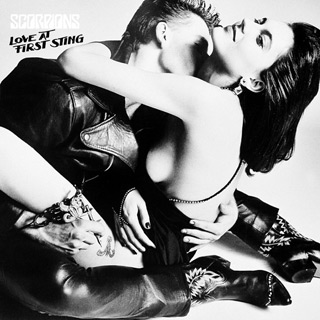
There was also Blackout (1982) and Love at First Sting (1984) by Scorpions. I was a kid when all this stuff was coming out. It’s all in there. It’s all mishmashed into this bucket of guitar licks.

Cryptic Rock – You just explained some of the best Hard Rock and Metal. It is incredible how all this stuff moves you when you are younger, and it sticks with you for life. It is phenomenal.
Phil X – It really is. I listen to stuff now, and I’ll tell Siri to play one ’70s or ’80s tune, and then she puts the menu together, one after the other. It happens all the time. It’s like time travel. You hear one song and it takes you way back to another time. Not a lot of things do that. In fact, music’s probably the only thing to do it. Well, smells too. (Laughs)


No comment