
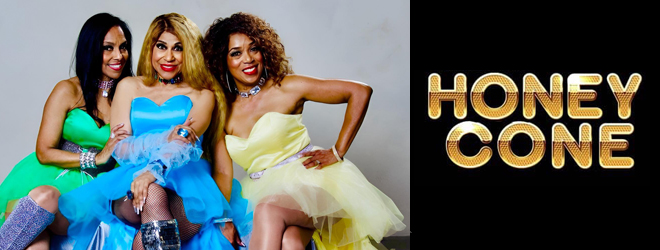
There has been a magic surrounding female singing groups in popular music over the last seven decades. From The Supremes to The Shirelles, leading up to En Vogue and SWV, there has been a precedent for ladies with powerful voices dominating Billboard Charts.
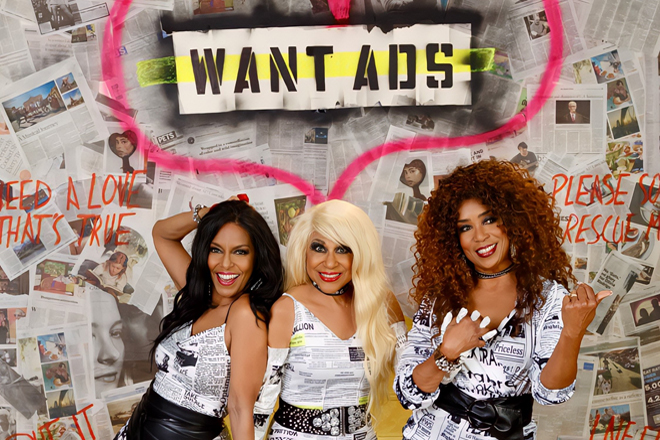
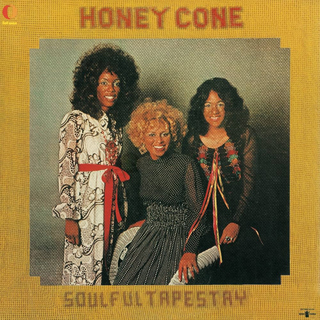
Taking a glimpse back to the 1970s, there was a three-piece Soul group named Honey Cone that made a significant impact. Coming during a time of change in the social fabric of America, these ladies bodily represented strength and class in their sound, which eventually found them hitting number one on the Billboard Charts in 1971 with “Want Ads.” A song that entered the charts in April 1971, “Want Ads” hit number one in May of that year, had a streak of holding the position for three non-consecutive weeks, and ranked in the Top 20 songs of that year.
Extremely impressive, Honey Cone also became the first group to play the fresh new musical variety television show Soul Train, and to this day, their music is beloved by many. Still going strong under the leadership of original member Shelly Clark, the new Honey Cone also features the talents of Kathy Merrick and Wendy Smith-Brune.
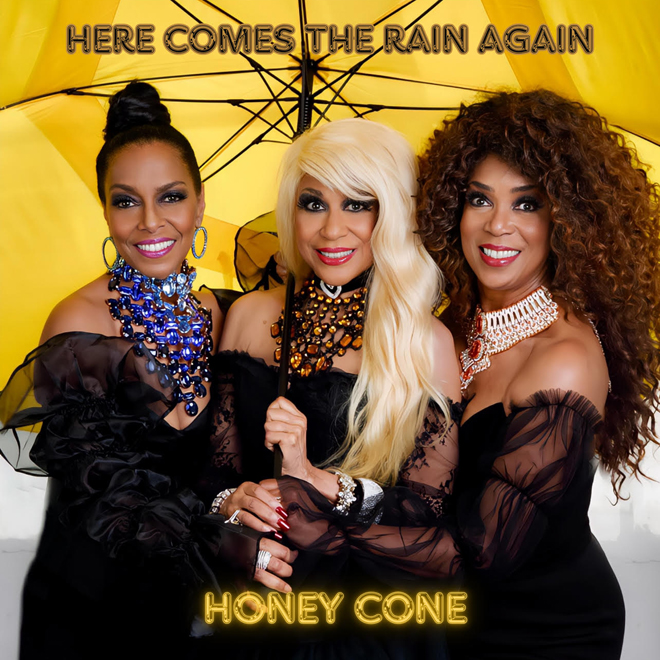
Together, a strong trio, in 2024, they recorded a stunning cover of the Eurythmics’ “Here Comes The Rain Again,” and they continued to perform live in 2025. With a bright future ahead, which includes more touring and even new music, Shelly Clark recently took time to chat about the past, present, and future of Honey Cone and her life in music.
Cryptic Rock – You have a long, rich history in music. Involved in music pretty much your entire life, you achieved great success with Honey Cone. Before we dive into things, how would you describe your journey in music to this point?
Shelly Clark – Wow. That is a great question. I was just inducted into the History Makers Hall of Fame. I did my second interview with them, and they asked me the exact same question. That’s why I think it’s a great question, because it came at the end of the interview. I have to say that I’ve been in the business since I was a child. I was known as the Black Shirley Temple in New York City. I was pretty famous. I could walk down the street, and people would say, “Oh, but there’s Shelly Clark. There’s the Clark kids.”
For me, it happened from childhood on. A lot of child stars and performers don’t fare well. They reach a certain age and then boom, all of a sudden, the career falls away. In my case, that happened, but not really. From childhood to my teens, it was very seamless. It seemed like I went from one job to the next, and the status was always being upped. It’s a rich legacy, almost seven decades of performing in different capacities.
Of course, before Honey Cone, it was Tina Turner. The things I learned on the road with her were invaluable and served me in other jobs with Little Richard. After that, Dusty Springfield, and then on to Honey Cone. It seemed like a gradual buildup. Each situation made the next one better, and on the highest level.
Finally, with the reimagining of Honey Cone, it’s so much better now. We signed with Holland-Dozier-Holland in the ’70s. I appreciated that, the songs, and the producers. As you know, groups in the ’70s didn’t have that much control or any say-so in what was going on in their careers. Holland-Dozier-Holland came from Berry Gordy. You were sort of on an assembly line where you do this, charm school, then you do that.
Saying all that, the reimagination in the later years is so much more seamless and wonderful. I own a trademark now. It’s such a joy to be able to control your career and where it’s going. Even though we would be considered older artists, we are a young ’70s group because we don’t wear gowns and gloves. We never did.
I’m just happy that people have accepted me all this time… even now. We have some performances coming up which we can talk about. I’m very grateful for my tenure in this industry because I can’t say it happened for everyone that way. The industry was very kind and very giving to me.
Cryptic Rock – Everything seems like it has been an exciting and enlightening experience. You brought up a very interesting point about ’70s artists and groups who didn’t have much control.
You mentioned Eddie Holland coming from the Motown world. That makes you think of artists like Mary Wells and others who didn’t have much control. Unfortunately, her career should have been longer and received further acclaim.
Shelly Clark – Exactly, and she is the artist who was supposed to get “Dancing in the Streets.” I believe Mickey Stevenson and Marvin Gaye were the writers on that. It just so happened that they let Martha, at the time, Martha Reeves, they let her do a demo for Mary. The song was so outstanding that it never got to Mary Wells. It was a God awful situation because I believe Mickey Stevenson was married to her at that time. Needless to say, after that record became a hit for Martha, they divorced. That’s the undercover story.
Cryptic Rock – You are right. These are just some of the many stories of what transpired at the time for certain artists.
Shelly Clark – Yes. There was no control.
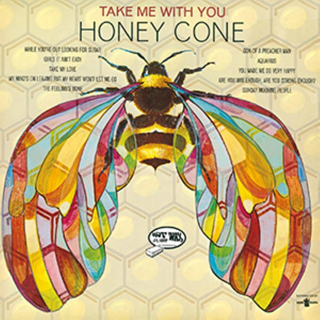
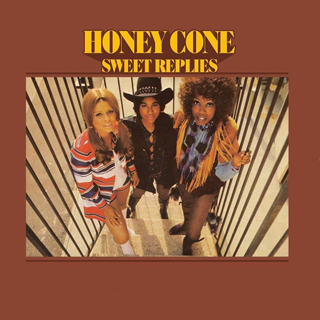
Cryptic Rock – Sadly so. Now, with Honey Cone, you have a fascinating history. You were the first artist to perform on Soul Train. You also had a major hit with “Want Ads.” What was it like when things were happening like that for the group?
Shelly Clark – We started recording in 1968 after Eddie Holland saw us on the Andy Williams TV Special, pre-Honey Cone. We were brought in as session singers to sing behind Burt Bacharach and Dionne Warwick. Eddie was watching at Edna Wright’s request because he wanted to sign her as a solo. She said, “Absolutely not. I’ll be in a group, though. If you like this group that you see, you can sign us.”
When I got there, I met Edna. We did the show. Eddie saw the show. He called Edna the next day and said, “Great. I want to sign you girls.” It’s 1968. I started running for the hills because I had heard those Motown stories and was not amused. I said, “No. You guys get a third girl and go ahead. I didn’t sign up for this, to go to Detroit. I’m an LA girl,” as they were.
I started traveling, and they called me back-to-back in Europe. I just started traveling. I think they caught up to me in London. They were screaming and begging on the phone, “Shelly, you’re ruining our chances. Please come back.” They eventually wore me down. They have a name for that now. It’s called stalking.
I came back and had a meeting with Eddie and them. And so, Eddie, “All right. So what’s a honey cone? Ha ha. You girls, don’t worry about that. Just sign the contract.” From that point on, things went pretty quickly as far as recording. We had to live in Detroit for six months. We recorded, I want to say, four albums while we were there living at the Howard Johnson. All of these, of course, were billed back to Honey Cone, including meals, lodging, costumes, and all that stuff. You can imagine why you never made any money. Berry Gordy had that down to a science. It’s royalty time. Boom. Here’s that bill from the hotel.
So in any event, 1968, “You girls go home. Now we have enough in the can. We’re going to start releasing stuff. I don’t want to see you girls on any shows. I want a fresh-faced group. I don’t want you guys surfacing in any projects,” blah, blah, blah. I said, “Oh, yeah, great. I don’t think so because I don’t intend on staying in this group. I don’t hear a hit in the stuff that we did.” The first song we recorded was “While You’re Out Looking for Sugar.” Then I think about the slew of hits by our writing team, Greg Perry (General Johnson from Chairman of the Board) and Angelo Bond (a young writer who looked like Prince), a lyricist.
Of course, Greg Perry ended up marrying Edna. They stayed married for 45 years until they both recently passed away in the COVID era. I went home and started auditioning for TV shows because I said, “This group is nothing. We’re not going to get anywhere.” I got on a very famous TV show. It was the Jim Nabors television hour.
Eddie Holland wanted to kill me because he said, “Get off that show, Shelly.” I said, “No, I’m doing okay. There’s no harm done here.” I stayed on the show. I want to say two months, and then suddenly, boom, “Want Ads” hits. We signed in ’68. It’s got to be ’71 by now. He said, “Shelly, you’ve got to get off the show now. The record went to number one. You just kicked the Rolling Stones out of the number one spot.” I’m like, “Oh, my God. I really want to stay on this show.”
I went to the producers and said, “Look, I forgot to tell you guys. I’m in a singing group, and the record just went to number one. I’ve got to get back to Detroit.” They said, “Absolutely not. We’ll sue you.” Edward Holland would say, “Get back here, or I’ll sue you.” I was like, “Jesus Christ, what in the hell?” I had to make a deal with the TV show.
They said, “If you can replace yourself with someone that looks like you, acts like you, walks like you, talks like you, we will accept them, but not if they fall short.” I had to do five auditions. You had to read music. You had to understand note retention. You had to dance, sing, and act. It’s like a cattle call to get on that show. It’s like 400 girls.
But they needed to have one black token to be with the other three white girls. All I know is that every audition had fewer and fewer girls. They gave you one song, “You Are My Sunshine, My Only Sunshine.” Everybody sang the same thing. You had to do any and everything with that song that you possibly could to stand out from anybody else. I took what I learned from Tina Turner. I took what I was doing with Little Richard. I took my whole career and put it in that one song. It was a done deal.
I started auditioning girls to get off the show. They didn’t accept anybody until I went and robbed Ray Charles. There was a girl who was a Raelette singing with him. Her name was Alex Brown. She was very famous in Europe. She had a beautiful voice and looked great. Finally, Alex came, and they accepted her. When they accepted her, it allowed me to leave to go to Detroit.
Now that the record is out there, we have to start the tour. Now comes the assembly line, working with Maxine Powell for Charm School and Charlie Atkins for choreography. When they were with Berry Gordy, they used everybody they had at their disposal. They had a wealth and myriad of people they could call on, such as costume designers, this, that, and the other.
Just so happened that Berry, after a long battle, let Holland-Dozier-Holland go, but with some restrictions. I’ll give you a certain amount of money. It was like a big father-son lawsuit, if you will. It finally worked its way out. Eddie could not use his name on certain songs, in different publications, or in other things like that. They were not allowed to use Holland-Dozier-Holland and Holland this or Dozier that.
They wrote under fictitious names, which is why you will see a lot of that on our four albums, names that don’t ring a bell to you. Who is this writer? What have they done? It was really Eddie, Lamont, and Brian hiding under different nicknames, surnames, whatever you want to call them.
We prepared a tour, then things started happening, and things were great for a while. We were voted Best Group by the radio and TV announcers. Of course, we did Soul Train, and were the first group on Soul Train. Right behind us were Gladys Knight and Eddie Kendricks, and I want to say maybe even Ike and Tina. We were the first. We had a lot of firsts.
We were the first group to come in with lyrics of empowerment. I would say we didn’t sing “Stop! In the Name of Love, “Please Mr. Postman,” and “Will You Love Me Tomorrow.” We sang songs like “One Monkey Don’t Stop No Show.” The women of the world were like, “Oh, my God. We like these young girls. They’re giving us courage to tell a man we’re not going to wait for you to come home at night.” “I’m putting it in the want ads. I need somebody new.”
Nobody was really singing like that then. We had very young, innovative writers. The ones I mentioned to you are General Johnson, Greg Perry, and Angelo Bond. They were our basic writing team. They were coming up with these controversial lyrics. They weren’t afraid to push the envelope.
We got known as the young girls’ group, which spoke their minds. The world caught on to that. They loved it. It pushed our career around the world for at least three years until Carolyn became a little depressed, and “I’m broke. I’m tired. We’re not going to get anywhere. We have no control. I quit.” I said, “Carolyn, you can’t quit. We’re out here on the road. What are you talking about?” She said, “I bought a ticket home. You guys figure it out.”
She left us high and dry. Little did we know that Holland-Dozier-Holland was having trouble supporting its labels. The parent company had stopped funding them. It was probably just due to the way labels always pull out from under you when things are going well and then wane a little bit. They don’t want that big bill.
The company was going bankrupt. Carolyn quit. The chemistry was just all over the place. We tried to replace her with Denise Mills. She was adequate. We managed to do The Johnny Carson Show with Denise. We did a few things with Denise. But like I said, chemistry was sort of gone. I knew that the end was near. We just rode it out to the very end, which I think ended in 1973.
Again, we didn’t own the name. Edward Holland started recording with other girls, Honey Cone featuring Sharon Cash, and things like that. We were like, “Okay, we’re going to have to take a lot of jokes here.” Edna kept touring with other girls. I was not interested.
Cryptic Rock – Wow. That sounds like it was a roller coaster ride of emotions.
Shelly Clark – I guess that happens. It’s the record industry. It’s not meant for your longevity because they’re always looking for the next young artist to take over. They couldn’t really replace what Honey Cone had done.
I think that’s why I started hearing, five to seven years ago, “Shelly, where are you guys? We still miss the music. We still want to hear from you guys.” I started thinking, “Well, why don’t I just create some social media pages? Let’s see what happens.” People were clamoring, “When’s Honey Cone coming? What’s going on with Honey? Oh, this is great.”
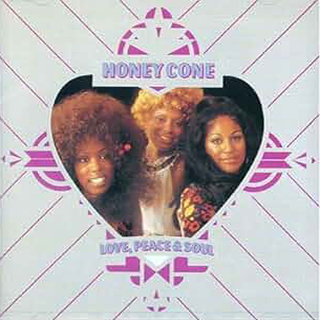
With the reimagined Honey Cone, which we started in 2014 with Wendy Smith-Brune from The Raelettes. I’m always borrowing from the Raelettes, right? There is also Kathy Merrick, whose husband (John Paris), tours with mine (Verdine White). John is the drummer for Earth, Wind, and Fire. Kathy was singing with The Sounds of the Supremes. She also sang with Shades of Lace. James Brown inspired them, and he was helping them. These two girls had so much history.
Cryptic Rock – It sounds like you have re-established a fascinating edition of Honey Cone. As Honey Cone, you released a single in late 2024, covering the Eurythmics’ “Here Comes the Rain Again.” Yours is a lovely rendition. What inspired you to select this track to record?
Shelly Clark – We have been working with a seven-time Grammy-winning producer and engineer, Neal Harrington Pogue. He called one day out of the blue and said, “Shelly, when I think of Honey Cone, I think global, I think international, I have a song. I want to cut with you girls.” I’m like, “Oh, okay, great.”
I thought that it was some R&B/Pop sort of thing. I said, “So, what is it, Neal?” He said, “Here Comes the Rain Again.” I said, “Wait a minute, Eurythmics, Annie Lennox?” He said, “Yes.” I said, “Well, Neal, wait, is there anything else you were thinking for us? I’m a little confused.” He said, “No, no. Trust me when I say it’s in my head. I booked the studio time. I’m ready to go. It’s ruminating in my head night and day. I hear all the parts. I know what I’m doing. You have to trust me.” I said, “Oh my God.”
I told my husband. I said, “Is he serious? ‘Cause they have a production company together.” He said, “Listen, Neal is working on his eighth Grammy. I wouldn’t argue with him if I were you. If he hears something, go with it.” I said, “Okay.” So I told the girls, and oddly enough, they said, “Oh my God, I love that song.” I said, “Huh? Oh, okay. Well, this is starting to feel better.”
When we got to the studio, he assigned us parts. Kathy’s husband, John Paris, is part of the production company. He is the harmonic expert. He’s got what we call big musical ears. He does a lot of stuff for Earth, Wind, and Fire. Ours was a no-brainer.
We were in the mix room. It was wonderful. We did it mostly in one day, and it turned out great. I couldn’t have asked for a better song. Then, we have a choreographer named Darrien Henning, a certified New York Film Institute graduate. He was able to do a video of us in a huge shower. It’s called the Rain Room Studio Downtown. You’re in this huge shower, and it’s raining on you, as long as it’s on. We were wet from head to toe. He did two passes, two takes on the song. That’s how the video came to life. He’s also an editor. Darrien is like a quadruple threat. We have good people on the team, and the song turned out phenomenal, better than I thought.
Cryptic Rock – It did come out very well. It sounds classy and exciting. Is there potential for more new music?
Shelly Clark – Absolutely. We actually thought that we should probably redo some of the older Honey Cone stuff that people love to hear. On social media, they’re always bringing up the songs that we originally recorded. All of the lyrics, like I said, are very empowering. It’s “the day that I lost you was the day I found myself.” We actually did a Disco remake of “One Monkey Don’t Stop No Show.” That was already very Latin-based, as you remember. That was not a far stretch to take to another level, which we did.
In our show, we say, “We would like to re-record some of these songs that we’re about to do for you. They may not have been number one on the charts, but they were number one in your hearts.” They were songs like “You’re Free To Go,” “Ace in the Hole,” “When Will It End,” and “If I Can’t Fly.” There are five songs in a row that we put in a medley. Some of these songs would be great to re-record, and therefore we would own the masters to them. The sky’s the limit after that. But that’s in the works, trust me.
Cryptic Rock – Excellent. That is something to look forward to. It would be fun to hear that. You also have live shows planned.
Shelly Clark – Yes. We did one earlier this year in Canyon Club in Agoura Hills, CA. It was about a 1,200 seater. We also did one at the Catalina Bar and Grill in Hollywood. They have had some of the greatest artists there, Freda Payne, and some of the artists from the ’70s, ’80s, and ’90s.
We recently played at Vibrato’s Bar & Grill in Los Angeles on April 6th and Oscar’s in Palm Springs, Florida on April 11th. In May, we will spend four days on the Old School Cruise. That is from May 2nd to the 5th, called the Cinco de Mayo Cruise on Carnival. We’re really looking forward to that. It’s leaving from here, where we live, in Los Angeles.
Cryptic Rock – That should be exciting. It sounds like a lot of great stuff is coming up.
Shelly Clark – Oh, yeah. I recently talked to the cruise promoter, and he is like, We want to get a double bang with you girls. There’s going to be a ship parked right next to ours. We’d like you to transfer over and do a surprise guest performance on the boat that will be docked next to ours.” I’m like, “Okay, that’s a double bang. Perfect. We’ll do it.”
Cryptic Rock – Fantastic! It seems like everything is going quite positively. Looking back, you mentioned working with Ike and Tina Turner and Little Richard. You come from a rich history of understanding the business side of things. You have applied this to other management ventures, etc. Would you say that all of these experiences helped you to help others?
Shelly Clark – Absolutely. When I get a chance, when they say, “Shelly, do you want to say something to up-and-coming artists?” I always go, “I encourage you to do the business side of the music as well, and at least try to arm yourself and learn what you can.” Our dear friend, Don Passman, has a 10-volume book. I believe it’s called All You Need to Know About the Music Business.
So long story short, I always try to say, “So you made a record or you participated in a project. So now what? Now you have to understand music publishing and copyright.” We rely heavily on our publisher, Rhonda Bedikian, to make sense of things.
Back in the day, Common sampled our song “Innocent Until Proven Guilty” and called it “Testify.” At that time, we owned no rights to that. Eddie, Brian, and Lamont did; the writers who helped put that song together. When an artist comes in and samples or covers something you’ve already done, it’s to your benefit to know exactly who gets paid, how much, and that kind of thing.
Now, I’m fully aware of how to go about that. I’m aware of how to make a deal if someone wants to record something. We have nothing to do with the old Honey Cone stuff as far as getting paid for it. That’s the producers, the songwriters, and the record label. Moving forward, I know so much more.
Now it’s gone into streaming. It’s another area that people have to learn about. I don’t know if you’ve noticed how many artists are complaining on Instagram that we’re not allowed to know how to calculate a song that we did from streams. Snoop Dogg was very recent in saying that he knows that his song sold 10 million copies, but when it translates to streaming, they don’t know how to calculate, and they won’t let us into that area.
Now I’ve got to figure out how to break in and figure out streams. Each era offers a different challenge. You have to stay diligent and stay on top of it as best you can.
Cryptic Rock – That presents an entirely new challenge. It is so hard to figure it out, and isn’t it convenient that the digital streaming platforms will not give those creating the music insight?
Shelly Clark – Yeah. It’s like the best-kept secret in the industry. My husband Verdine has always said that it’s like they up the game every time you get a little bit of knowledge. They take it a little higher, from vinyl to eight tracks, cassettes to CDs.
Everything has become obsolete. Nobody even does that anymore. You take your phone out and you start listening to music. There are the streams, and there are the YouTube videos. It’s all of that stuff that you can’t calculate. Artists are missing billions of dollars because of this. Every era offers something, a higher way to get to the music. Really, that’s all people want. They want the music.
Honey Coney 2025 Tour Dates:
May 2-5, 2025 The Old School Cruise 2025
For more on Shelly Clark: Facebook | Instagram
For more on Honey Cone: honeycone.biz | Facebook | Twitter | Instagram


No comment