
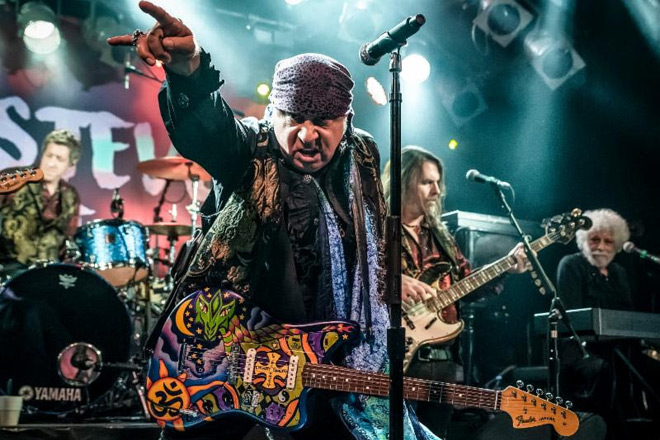
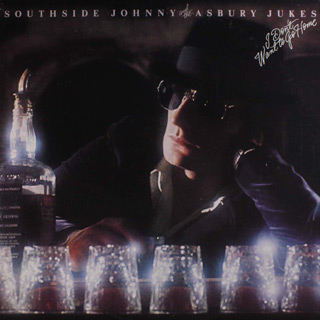
 By definition, a band is a group of people who come together for a special purpose. Placing less emphasis on the individual, in Rock-n-Roll, the concept of a band creates a community for music that is powerful and, at times, unstoppable. Looking for a place to call home, a self-proclaimed misfit and freak, Steven Van Zandt found his place within music at a young age. Growing up in the Jersey Shore music scene, the legendary musician, often known as Little Steven, would go on to co-found Southside Johnny and the Asbury Jukes before later joining up with his best friend Bruce Springsteen and the E Street Band.
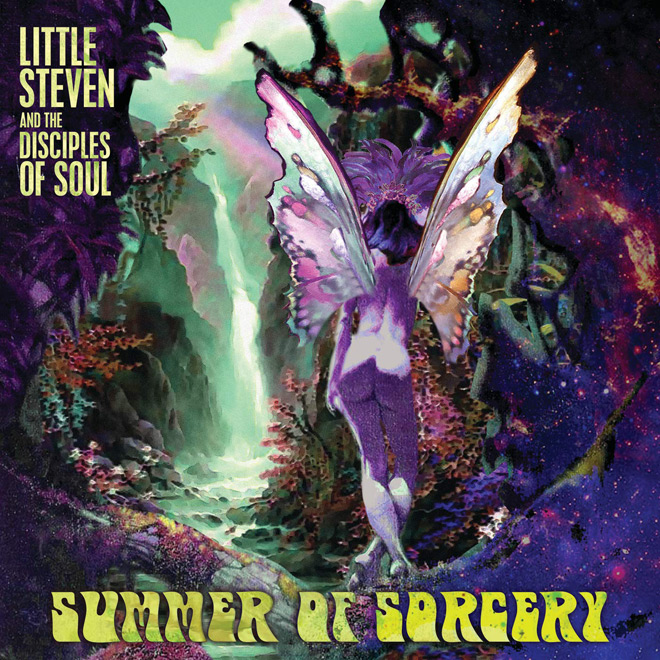
A musician, producer, and songwriter, even fifty-plus years into his career, Van Zandt continues to discover new territories with his band, The Disciples of Soul, on their recently released album, Summer of Sorcery.
Marking Van Zandt’s first Rock-n-Roll record in twenty years, Summer of Sorcery finds him back at his roots—and it never felt so good. Excited to be out on the road touring, Van Zandt recently sat down to talk about his career in music, his involvement in the new Documentary Asbury Park: Riot, Redemption, Rock n’ Roll, the importance of music in his life, and much more.
Cryptic Rock – You have been involved in music professionally for over five decades, and in that time, have accomplished a great deal as a composer and performer both on your own as well as being a signature member of the E Street Band and Southside Johnny and the Asbury Jukes. Briefly tell us how you would describe your journey in music.
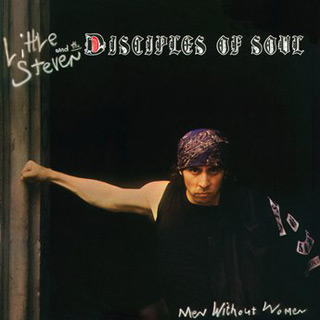
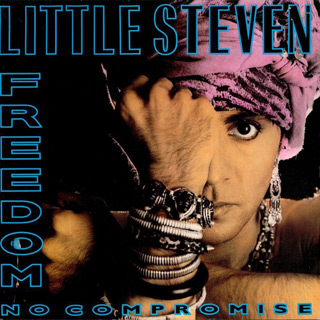
Steven Van Zandt – I think my identity musically was really formed in an important way when Johnny and I started Southside Johnny and the Asbury Jukes. We combined Rock and Soul. I was a Rock guitar player by then, but we added the horns and ended up creating this Rock and Soul hybrid. I’ve just returned to it really now; two years ago, I became reacquainted with my work with the Soulfire album and with the new album Summer of Sorcery. I’ve returned to that particular sound that I helped create, and it’s been a really colorful circle. I explored a lot of different genres in between, and there have been a lot of different things, but it’s funny to return to that particular sound now, around 35 years later – so I actually have come full circle with my own work.
Cryptic Rock – It’s interesting how you ended up returning to your roots after so many years. Your latest solo album, Summer of Sorcery, came out on May 3rd and is your first album of new, original music in two decades. A very diverse collection of songs, what was the writing and recording like for this album?
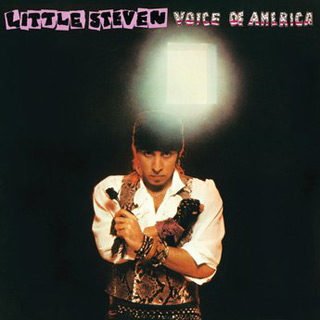
Steven Van Zandt – This was really a major breakthrough for me artistically, which is a wonderful thing to happen at this stage of the game. All my previous solo albums of the ’80s were very autobiographical and political. Then through a rather bizarre circumstance, by a guy asking me to throw a band together and play his Blues festival three years ago, I sort of became reacquainted with my own work after 20 years. I threw a list together of some of my old songs, along with some Blues songs, and it was quite a revelation to hear my old work and to realize it really had an interesting value; through the years, I think it had become its own genre, this Rock meets Soul thing.
From the very first rehearsal, it felt like an album, so we decided to make the Soulfire album. Of course, I wasn’t ready to write a whole new album yet, so I did an album of covers of songs I had written for other people through the years. That Soulfire album was really a major transitional moment coming back into the business because I realized I write very differently for other people than I write for myself. Like I said, I had done nothing but autobiographical and political music, and I didn’t do that at all when I wrote for other people. I liked those other songs, so I said, “You know, well, I’m going to try and write that way for me.”
I have really explored everything I needed to explore in terms of my autobiographical stuff; I’ve learned enough about myself. Certainly, the political stuff I did in the ’80s felt very useful because I was pointing out things that needed to be pointed out. In the ’80s politics was very much hidden behind-the-scenes, so it needed some light shown on those issues. Now, of course, politics are in our faces 24/7, and we really don’t need any explanation of what is going on politically, so I felt it was time to let that go.
I wanted to fictionalize my work and create 12 little movies where I can play a different character in each and have it under this concept of summer, in general. That first summer of your life, that first summer of consciousness. That summer feeling of getting out of school, falling in love with love, and falling in love with life. That was the concept for Summer of Sorcery, and I’m very happy I was able to do it. It is the first time in my life I’ve ever done a record that is fiction and not political; it’s very satisfying to have that artistic breakthrough at this stage. I give the credit to a band I’ve now kept together for almost three years, the Disciples of Soul, for giving me the foundation to do it. They are really a fantastic band and I’m a band guy, I need that support. It’s been a very productive couple of years here; I’m very happy with how things turned out.
Cryptic Rock – The album came out very well. You are currently touring Europe in support of the record before you return home to the USA for some more touring. How exciting is it for you to get out there and play these new songs?
Steven Van Zandt – It’s a whole new show; I do a very specific show where it tells a story. The Soulfire show was really my whole life story summed up in that tour and album. This one is a completely different story and a completely different show. We will be doing the entire Summer of Sorcery album and then throwing in some other things that fit with it.
We’ve now done the show a few times, excluding a record release party in LA and NY. I must tell you, this stuff is really translating very well live, and it’s partly because I think it’s the first time I’ve ever done two albums in a row with the same band. The longer the band stays together, the better we get. It’s been a wonderful start to the tour; the crowd is really enjoying the new album live. Most of them probably don’t even have the album yet, but they are responding just to what they are hearing. It’s very satisfying when you get that reaction from people hearing a song for the first time and acting like it’s been a hit record for five years. It’s wonderful!
Cryptic Rock – That is great to hear. You mentioned how much of your music was political in the past. Speaking of politics, you were certainly in the new film Asbury Park: Riot, Redemption, Rock n’ Roll, which is very much about politics and social distress. What were your thoughts when they approached you about this documentary?
Steven Van Zandt – I was just told recently that they had been working on it for a number of years – I didn’t realize that. When they came to me 2-3 years ago, I thought it was just an idea in their head, and I thought it was something worth encouraging. I thought it was good to capture what we had done in Asbury Park, and I thought it was a good explanation for young bands to learn from. I thought it was a good thing to show people that you can always find a local bar that’s got at least one night of the week that is slow, and you can start a residency, play there every week, build an audience, and learn how to build your craft. Of course, the history of the town is also fascinating, so I thought it was something worth encouraging, and I’m very happy it actually turned into a real movie.
Cryptic Rock – It does a very good job of showing the history of Asbury Park, the tragedy that happened, and the redemption. That said, what really brought Asbury Park back, with help from you among others, was music. It is a good time to release this film considering how divided we are with politics now.
 Steven Van Zandt – Yeah, and I really think, in general, I’ve made it a point to be non-partisan now for a long time. Ever since I started my music history curriculum at TeachRock.org, we decided we’re not going to be very political anymore; we need to concentrate on finding some common ground between us. We certainly are as divided as I’ve ever seen us: it reminds me of the old Vietnam War days, and in some ways, it may even be worse.
I decided my usefulness now is trying to bring people together. I’ve been doing that all throughout the Soulfire tour, and I will continue it now with the Summer of Sorcery tour. You come to my show, there are Republicans, Democrats, Independents, and everybody else are welcome. They’re not going to be humiliated and insulted; they are going to be welcome. Hopefully, the common ground of music will unite us, at least for the two hours we’re on stage. Maybe that will be the beginning of some sort of common ground for a dialogue – that’s what I’m hoping.
Cryptic Rock – Music really does have that power. You grew up loving music, from The Beatles on, so it has always been a very important part of your life.
Steven Van Zandt – Very much so. It certainly saved my life: I don’t know how I would have made it through without it. We were kind of freaks, misfits, and outcasts, not quite fitting into society then suddenly along came the British Invasion, as we called it. In 1964, all of a sudden, all these bands came over. Seeing a band for the first time – we didn’t have a lot of bands in America. I know it’s hard to imagine now, but there were a lot of individual stars: Elvis Presley, Bo Diddly, Chuck Berry, Little Richard, etc. There were singing groups and a lot of instrumental groups, but there weren’t a lot of bands that played, sang, and eventually wrote their own songs. It was quite unusual; that’s what got to me, and that’s what got to a lot of us.
There was that different communication that came from being in a band: it wasn’t all about ‘me, me, me,’ it was ‘us.’ It was the gang, the family, the friendship, and that’s really what made a difference in terms of communicating; it’s not just about show business; it’s about community. It’s something bigger than show business, and that’s what attracted me as a kid, and it attracts me now.
Cryptic Rock – There is something special about the comradery of a band. As mentioned, you would become a signature part of the E Street Band and have been working in the band and with Bruce Springsteen for well over 40 years. How would you describe the chemistry you, Bruce, and the band share?
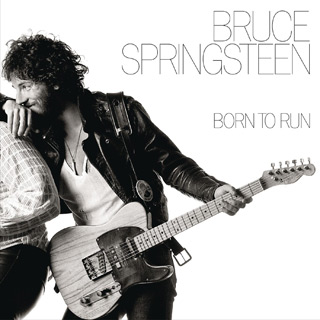
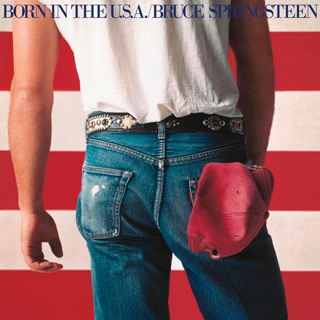
Steven Van Zandt – Well, I think growing up in the same era with the same philosophy, of course, helped. The reason Bruce Springsteen and I became best friends back then is because I think we were the only other person who knew that Rock-n-Roll was everything. It wasn’t just a hobby or something casual you did on the weekend, to me and Bruce it was absolutely everything. We never had a plan B for life; it was Rock-n-Roll or nothing. (Laughs) That was unusual because we were really freaks and misfits at the time because music business wasn’t even a business yet, it didn’t really become a business until the ’70s.
It was pretty freaky to decide you were going to spend your life doing something that was a long shot, to say the least. That’s what drew us together. We had a common philosophy and obsession with this whole band thing. We grew up in the same era, so we had a lot of the same influences. It was a wonderful time to grow up, and I can’t emphasize that enough; we were so lucky. We were the luckiest generation to grow up when we did. It was an absolute Renaissance period where the greatest art was being made and was also the most commercial – we’ll never see that again. We were able to absorb a lot of information coming at us in the ’60s. Every year it was a new revelation, a whole new musical trend would come in; British Invasion ’64, Folk Rock ’65, Country Rock ’66, Psychedelic ’67, Blues Rock ’68, and Southern Rock ’69. The entire country would go from one trend to the next until the ’70s, when, in time, it all fragmented into the very fragmented world we have now. Up until then, we were very much a monoculture.
We all grew up with those trends; you would pick a little bit from one trend and keep a little bit from another. Throughout the ’60s, we had Rock and Soul living side by side, and I think that influenced us. If you watched TV shows back then, and there was a lot of them, we must have had 8-10 Rock-n-Roll TV shows on every week, it was incredible. You would watch a show, and The Kinks would come on, then Smokey Robinson and the Miracles, then The Rolling Stones, then Curtis Mayfield and the Impressions. They would go back and forth between Rock and Soul on virtually every single TV show. We grew up with that yin and yang of Rock and Soul, and I think that remains in all of us to some extent.
Obviously, with the E Street Band, it went a little bit more towards Rock, but with Southside Johnny and the Asbury Jukes, and of course, Disciples of Soul, we went a little bit more toward Soul. We are kind of a combination of all those things we all have in common. We very much had our musical influences in common, our philosophy was in common, our obsession was in common, and we really strengthened each other, I think, by being so committed to trying to make it in this crazy business of ours.
Cryptic Rock – And that all goes back to the concept of a band: it is about working together. Beyond music, you would mix in some acting around 20 years ago and became a big part of The Sopranos. What inspired you to get involved in acting?
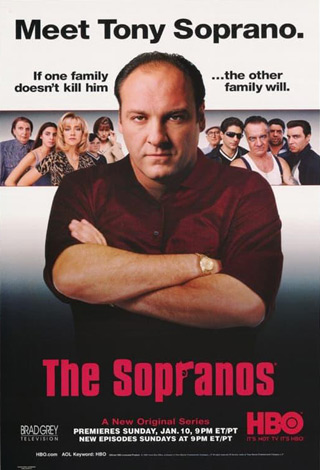
Steven Van Zandt – Like most of my life, I really had no intentions of doing that. David Chase called me out of the blue after seeing me do the induction ceremony of the Rock and Roll Hall of Fame with The Rascals; I did a little 3-minute comical sort introduction of them. He called and said, “You want to be in my new TV show?” I said, “Geez, that’s really nice, but not really – I’m not an actor.” He said to me, “Well, I think you are an actor; you just don’t know it yet.” I had nothing better to do, frankly, and I went down there and became an actor. I went to the greatest acting school in the world, The Sopranos.
It was completely accidental, circumstantial, and I had nothing to do with it, really. I was just very thankful for him having that faith in me, and I certainly did my best to live up to that faith; I worked very hard and took it very seriously. I learned from those wonderful actors, starting with James Gandolfini, one of the greatest actors of all time as far as I’m concerned. What a huge loss he was, not only to me personally. I miss him every single day, but also for the industry; he was just beginning. I think he would have been remembered as one of the greatest actors of all time. As said many times, if you do a scene with Jimmy Gandolfini, you walk away a better actor. That was true with all of the cast, all of them were so wonderful; Tony Sirico, Vincent Pastore, Edie Falco, Michael Imperioli were all extremely nice to me, understanding, and kind of took me under their wings mentoring me.
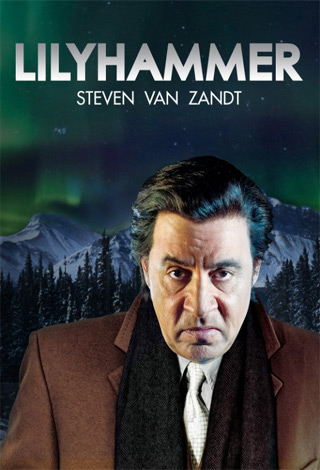
David Chase gave me a wonderful gift of a whole new craft. Of course, I took everything I learned on The Sopranos and used it on Lilyhammer, where I not only starred in it, but I co-wrote it, co-produced it, and even directed the final episode. I was able to turn one craft into about five – I also did all the music for it. It was a whole new world for me and one I plan on getting back to eventually; I really do like doing TV. I am going to have to balance that with whatever Bruce wants to do, as well as with Disciples of Soul, who I will try to keep together forevermore; I feel very close to this band. I’m going to have to balance those three things in the future.


1 Comment