
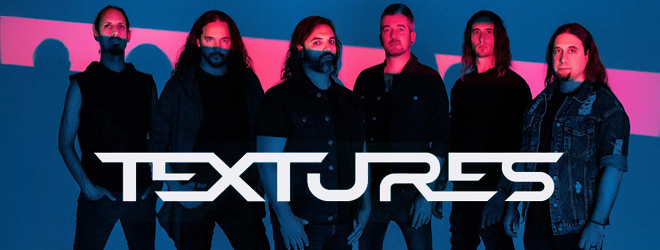
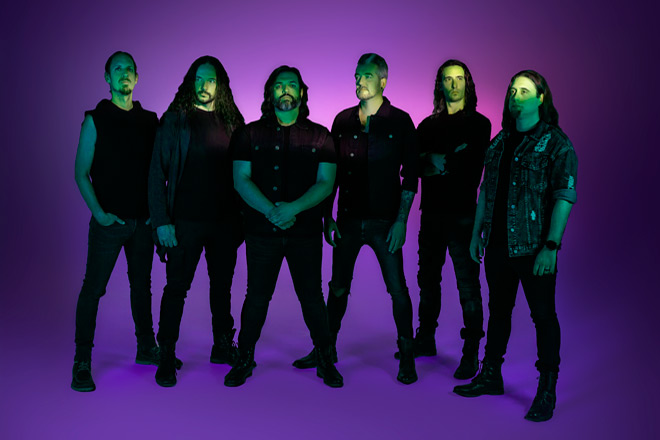
While the Heavy Metal genre has taken many forms over the decades, in the 2010s, a style known as Djent broke onto the mainstream with bands like Periphery and TesseracT, among others. Shaping the future of Modern Progressive Metal as we know it today, it would still be completely short-sighted to overlook the pioneering force of Textures, who arrived on the scene nearly an entire decade earlier.
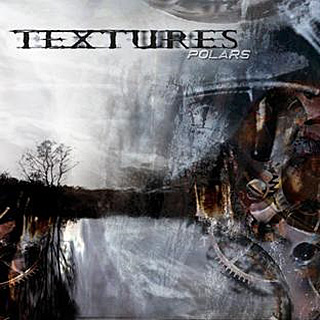
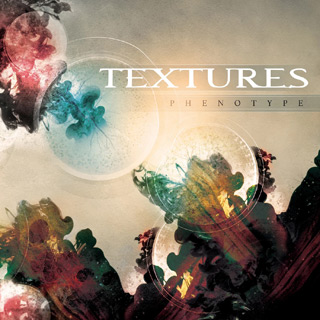
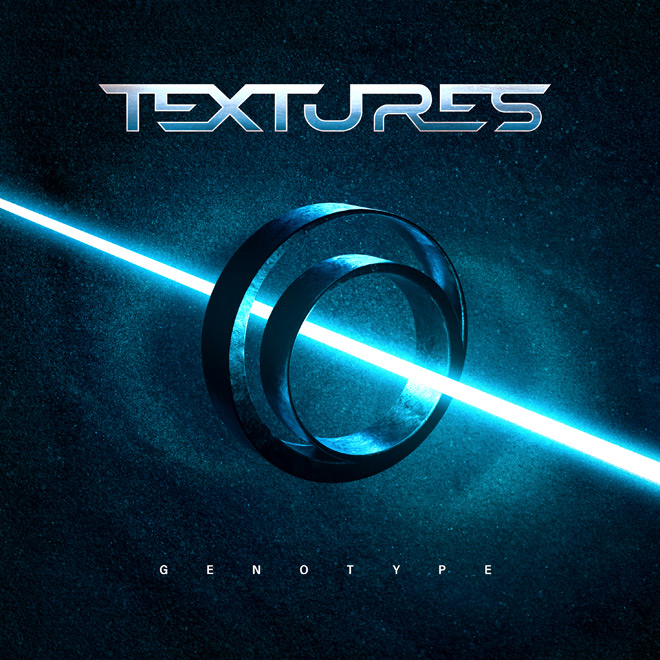
Based in the Netherlands, Textures debuted in 2003 with their Polars album, showcasing a highly experimental style that blended Metalcore and Death Metal with Progressive tendencies. A unique act to others on the international circuit at the time, Textures would go on to release four more studio albums over the next thirteen years, with their last being Phenotype in 2016. Each album showed the band’s growth and willingness to challenge themselves, and now, after a lengthy hiatus, they return in 2026 with Genotype.
Rejuvenated and once again taking listeners on unexpected twists and turns, Textures proudly sat down to talk about the development of Genotype, their outlook on songwriting through the years, hope in dark times, and more.
Cryptic Rock – Textures’ history dates back over twenty years. You emerged onto an international Metal scene at that time (in the early 2000s) as highly unique, blending Metalcore, Death Metal, and Progressive elements. How would you describe the early years of the band?
Bart Hennephof – We started out very experimental, trying out new kinds of rhythms and soundscapes, constantly pushing the limits of writing progressive and metal riffs. And through the years, we focused more on making songs instead of technicality.
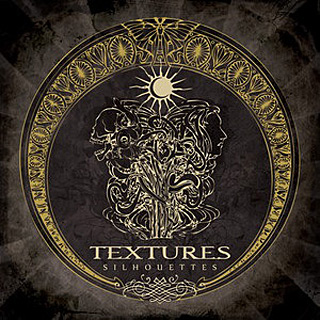
Cryptic Rock – It is fascinating to see the band’s progression over time. In those early years, the band put out some very captivating albums, from 2003’s Polars to 2006’s Drawing Circles and 2008’s Silhouettes. What inspired the band’s unique approach to the songs? Was it a matter of varying influences from each member?
Stef Broks – For Polars, ex-Guitarist Jochem Jacobs, and I wrote the basics for all the songs. But it was really Jochem’s experiment to produce and engineer the songs to the level they were put on the album. For the second album, Drawing Circles, it became more like Bart and me writing the very core of all the songs. Even lyrics and some vocal lines. The same applies to the third album, Silhouettes, although ex-Vocalist Eric Kalsbeek handled all the lyrics and vocals. He was really on top of his stuff, giving us also input on songwriting.
Bart and I are still the fundamental songwriters, but Uri Dijk’s (synth/keys) part for Genotype is quite extensive. We forced him to become a big part of our new sound, and that really worked out well. He also contributed significantly to songwriting, soundcrafting, and even producing the album.

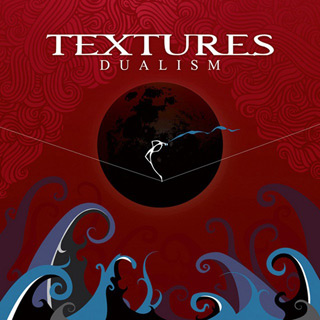
Cryptic Rock – Again, experiencing the development from album to album as a listener is very interesting. The band would go on to release two more records with 2011’s Dualism and 2016’s Phenotype, but then opted to bow out. Was it a matter of fatigue due to the busy nature of writing, recording, and touring that led to this decision?
Daniël de Jongh – In a way, we became a bit tired during the whole process of writing the follow-up to Phenotype. Priorities shifted, and it became clear that personal situations were more upfront than the band itself at that time. This slowed everything down, and after a meeting to see what our next steps would be, we came to the conclusion that it was maybe best to put everything on hold for at least the foreseeable future.
In hindsight, it appears to be the best thing that could’ve happened to the band. Everybody had time to breathe, make different decisions in life, and focus on their own surroundings. This gave us time to come back fresh and revitalized for the next phase of Textures. And it gave us a lot of inspirational input for Genotype.
Cryptic Rock – Sometimes, a break is necessary for everyone. What is extremely interesting about Textures is that when you first began, the style you played was very fresh and not many were doing it. Then, over time, there seemed to be many more doing something vaguely similar, moving into the mid-2010s. Did this make it more challenging for Textures in what became a very oversaturated scene?
Daniël de Jongh – As you said, when Textures started, the goal was to be a renewing kind of band that combined harsh metal in the style of Meshuggah with groovy, soulful vocals, along with layers of sound to expand the music’s horizons. This laid the foundation for many bands and influenced bands like Periphery, TesseracT, and many more. Of course, this makes renewing a challenge without losing your own touch. But in all honesty, Textures always tried to push the boundaries, as no album is the same. We always tried to create something different, just to challenge ourselves and stay fresh. That way, we try to avoid being a band that keeps releasing back-to-back records where you can’t tell the difference between them.
Cryptic Rock – Right, and you can certainly hear each album is unique to to other. In late 2023, the band announced they would indeed make a return, followed by live performances in 2024 and, in 2025, the announcement of recording new music. Now, in 2026, we have the album Genotype. What was it like to get back together and essentially start from scratch, creating songs?
Daniël de Jongh – Well, funny thing is that we weren’t initially planning to actually write a new album. When we recommitted ourselves to the band again, we wanted to see how it would be being together on stage again as a group. Of course, we stayed friends over the years when we separated, but it’s like coming back together when you broke off your relationship, because some things weren’t working anymore. Some loves never die, fortunately, and in our case, when we hit the rehearsal room, we instantly clicked after just playing four notes. I think after a couple of weeks, Stef and Bart hit the rehearsal room again to see if the fire was still there. A year later, we began recording the new album, which everybody now knows as Genotype.
Cryptic Rock – It all worked out because Genotype is an extremely engaging record. It takes Textures’ music in directions different from the past. Was it important to the band to create something unique compared to anything they had done before?
Daniël de Jongh – As I mentioned earlier, Textures always tried to reinvent itself in the past just to keep things fresh. With this record, we wanted to try to hit different areas, especially trying to create songs from the perspective where synths play a bigger role in the whole process. This also led to challenging vocals, as we also needed to match those from this perspective. It was a lot of fun to make this record, as the approach was different, following the synths rather than the rhythmic aspect of the drums or guitars.
Cryptic Rock – Yes, and the album takes you on many twists and turns. It also includes the single “At the Edge of Winter,” a striking song featuring Charlotte Wessels. Charlotte is a very talented, dynamic vocalist. This being the first time the band has recorded with a collaborative vocalist, what was it like working with Charlotte, and what was the creative objective going into the session?
Daniël de Jongh – Charlotte is a very talented, diverse, and charismatic vocalist. We were already fans of her vocals as we knew what she was capable of. When writing “At the Edge of Winter,” we instantly felt this could make use of female vocals rather well. Philosophizing about which vocalist would be a great fit with my vocals for this song, she was in our top 3 picks, and we’re very glad and honored that she was up to being a big part of this song. She is a very lovely lady and also did a great job with the video. Check out her solo project by the way, as she also released a new record in 2024 called The Obsession, which is great!
Cryptic Rock – Yes, it is an exceptional album for sure that everyone should check out, should they have missed it. With Genotype, there appears to be some extremely thought-provoking content in many of these new songs that really resonates with those who may feel frustrated with the world at hand. What was some of the inspiration behind the lyrics?
Stef Broks – A lot of people in the band have a deep sense of care about pedagogy. Not only because we have kids, but it’s in our core interest. Half of the band works in education or healthcare. We talk a lot about people, how to reach out to certain people, and what gets certain people in certain situations.
We -as humanity- always tend to learn only from successful people, it seems. But for me personally, I always learned the most from the suffering of other people. Not in a “Schadenfreude” (sorry, German word) way, but in a more spiritual way. By learning from the mistakes they made, I want to pay tribute to the time and energy it did cost them to work their way out. That counts for people around me and for stories shared by the media.
Cryptic Rock – That is a really good outlook. There is much to learn from others, whether their triumphs or their mistakes. Too often in society, we do not look to learn from our own or others’ mistakes. There is no question that we are living in an extremely complex modern world. There is so much to be anxious about; it seems like people are less connected on a human level than ever before, and comfort in self-isolation (because of technology) has become more normalized. What are your thoughts on the modern world’s version of interhuman relations?
Daniël de Jongh – I personally think the digital world has completely messed up the interconnection between humanity. Technology has brought us many things, and for a lot of very good reasons, it made us all a lot more independent in a way. However, it has also made us highly dependent, as we are all hooked on this small handheld device we once knew as a communication apparatus, ‘the telephone.’ Now it’s a device that brings pleasure in many ways, but also divides us as a species.
It’s digital poison that instigates people’s worst behavior and thoughts, and translates them into actions that are almost irreversible and irreparable. There’s more division than ever due to very dangerous people who know how to set up even your closest relationships against each other. We’re actually living in a world that could come directly out of an episode of Black Mirror. But I still have hope in humanity and that the dark clouds will be driven away by the sun behind it.
Cryptic Rock – You raise many extremely valid points that we should all look at more closely as a society, rather than blindly follow a completely digital life. Last question. Cryptic Rock also covers Horror and Sci-fi films. If you are a fan of either genre, what are some of your favorites and why?
Daniël de Jongh – I’m not the biggest fan of Horror and Sci-Fi, but I do occasionally love a good Slasher or Psychological Horror like Hereditary (2018) or Donnie Darko (2001). In Sci-Fi, I’m a fan of Blade Runner (1982) and do like movies such as Inception (2010), 2001: A Space Odyssey (1968), and Interstellar (2014), to name a few.



No comment