
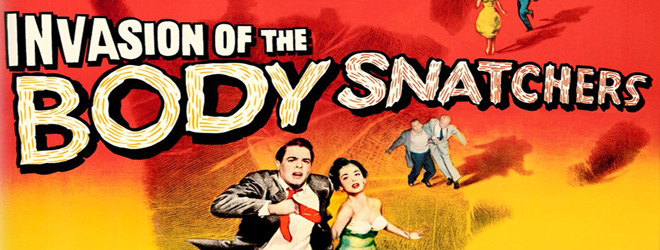
Invasion of the Body Snatchers has endured as one of the most unsettling science fiction films of the twentieth century. What initially arrived as a modest genre picture has since become a defining cultural artifact of Cold War cinema, reflecting the deep anxieties of its era while influencing decades of filmmakers to come.
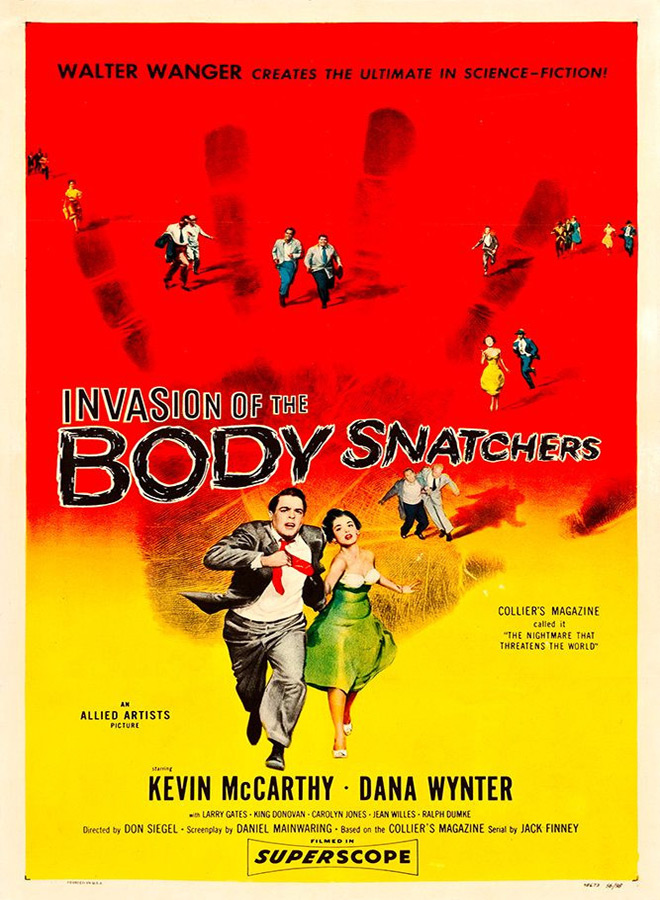
The film was released in the United States on February 5, 1956, and was directed by Don Siegel, based on Jack Finney’s 1954 novel The Body Snatchers. The movie’s budget was under $400,000, and it was shot in less than a month. Despite those limitations, it achieved an atmosphere of creeping dread that has stood the test of time.
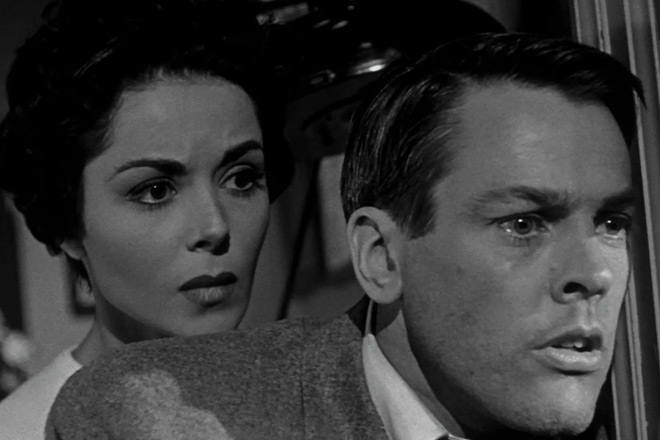
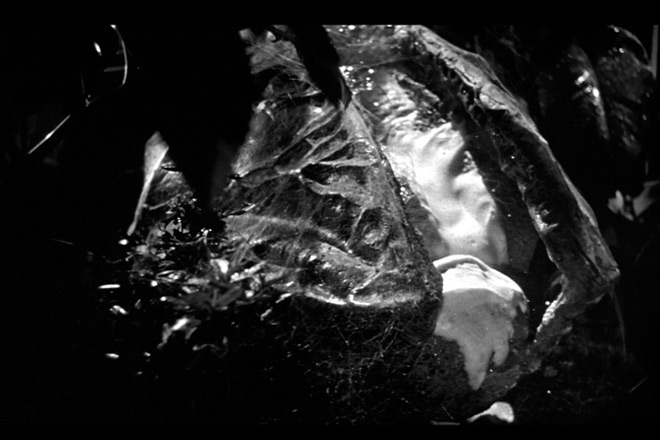
The story follows Dr. Miles Bennell, played by Kevin McCarthy (Piranha 1978, UHF 1989), a small-town physician who returns to his community of Santa Mira, California, to find something subtly but profoundly wrong. Patients begin insisting that their loved ones are not truly themselves, even though they look identical. As Miles investigates alongside former flame Becky Driscoll, portrayed by Dana Wynter (Fräulein 1958, Airport 1970), he uncovers the horrifying truth. Alien seed pods are duplicating human beings while they sleep, creating emotionless replicas that slowly replace the population. The invasion is quiet, methodical, and terrifying precisely because it does not announce itself with spectacle or violence.
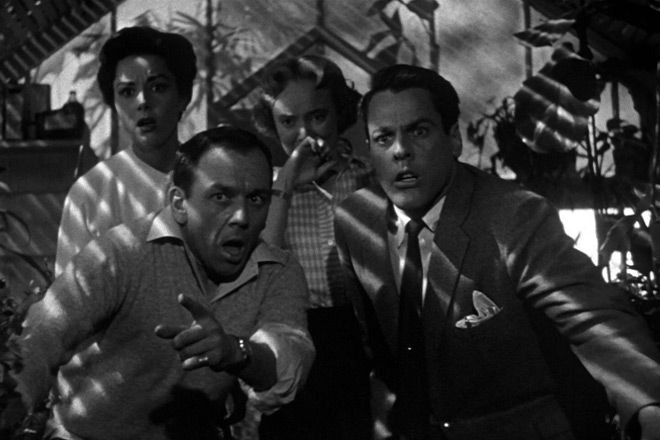
Rather than relying on elaborate effects, the film builds tension through paranoia and isolation. Siegel uses shadows, tight framing, and an increasingly frantic pace to convey the collapse of trust within the community. Friends, family, and authority figures can no longer be relied upon. Anyone might already be a pod person.
At the box office, Invasion of the Body Snatchers performed solidly but not spectacularly. It earned several times its modest budget, making it a financial success, though it was not initially regarded as a prestige film or major cultural event. Like many Science Fiction movies of the 1950s, it was marketed primarily as pulp entertainment. Its true legacy would emerge gradually, as critics and audiences began to recognize the sophistication beneath its genre trappings.
The broader historical context of the 1950s is essential to understanding the impact of Invasion of the Body Snatchers. The United States was living under the shadow of nuclear war, grappling with rapid technological change, and navigating a rigid social order that prized conformity above all else. Suburban life was idealized as safe and stable, yet many Americans felt a creeping sense of alienation beneath the surface. Against this backdrop, the film suggests that the greatest threat may not come from a foreign enemy but from within familiar spaces and trusted communities.
It is this climate of unease that gives the film its lasting cultural significance. For decades, critics have debated what Invasion of the Body Snatchers is really about, largely because its central metaphor is so adaptable. Many interpret the story as a reflection of Cold War fears, particularly anxiety surrounding communism and ideological conformity. The pod people are eerily similar to their human counterparts but lack individuality, emotion, and independent thought, echoing American fears of infiltration and the loss of personal freedom.
Others read the film as a critique of McCarthyism itself, arguing that the true horror lies in a society driven by suspicion and enforced sameness. The fear of being labeled different or dangerous, and the pressure to think and behave in prescribed ways, mirrors the political witch hunts of the era. The film’s brilliance lies in its ability to support both interpretations simultaneously, making it less a rigid political allegory than a vivid portrait of collective anxiety.
Director Don Siegel played a crucial role in shaping the film’s tone. Known for his lean, efficient storytelling and, later, for influential works like 1971’s Dirty Harry and 1979’s Escape from Alcatraz, Siegel brought gritty realism to his material. His direction keeps the story grounded, making the fantastical elements feel disturbingly plausible. Though studio interference resulted in a framing device and a more hopeful ending than Don Siegel originally intended, the core sense of dread remains intact.
The studio insisted on bookending the film with a hospital sequence and a clearer suggestion that authorities will intervene, softening the bleakness of the story’s conclusion. Siegel’s original vision was far more pessimistic, ending with Miles Bennell’s warnings falling on deaf ears and leaving the invasion’s outcome disturbingly unresolved. Even with this imposed reassurance, however, the film never fully relaxes its grip. The sense of paranoia and emotional erosion that builds throughout the narrative is too deeply embedded to be undone by a final note of optimism, leaving audiences with the unsettling feeling that the threat may already be too widespread to contain.
McCarthy’s performance as Miles Bennell is central to the film’s power. His transformation from confident professional to frantic, disbelieving prophet is deeply compelling. The final image of Miles screaming warnings to indifferent passersby has become one of the most iconic moments in science fiction cinema. Wynter’s Becky adds emotional weight, embodying both romantic hope and devastating loss as the invasion progresses.
The film’s enduring relevance is underscored by its many remakes and reinterpretations. Philip Kaufman’s 1978 Invasion of the Body Snatchers reimagined the story through a post-Watergate lens, emphasizing distrust of institutions and urban alienation. Body Snatchers in 1993 and The Invasion in 2007 adapted the premise to new cultural fears, from militarization to global pandemics. Each remake reflects its own era, demonstrating the story’s remarkable flexibility and underscoring that society is always shaped by anxiety, even as the source of that fear changes.
Avaliable in various formats to view at this time, in recent years, a new transfer of 4K scans from the best available 35mm elements was presented as a 2-disc 4K Ultra HD and Blu-ray set for Invasion of the Body Snatchers, released on July 16, 2024, by Kino Lorber. A great way to experience the film, his new edition is the film itself, which is presented in the original 2:00:1 aspect, but also 1:85:1. Explaining this a little further, the film was shot in 2.00:1 Superscope, which uses the same film stock as standard 35mm film, but puts a larger image frame on that stock. What this means is creating a unique feeling that keeps the characters and their environment in focus.
Nearly seventy years after its release, Invasion of the Body Snatchers remains a masterclass in low-budget filmmaking and thematic depth. Its fears are timeless because they are human, rooted in the terror of losing identity, autonomy, and connection. What began as a modest science fiction release has become a lasting cultural artifact, its relevance sustained by the persistence of social anxiety across generations.



No comment