


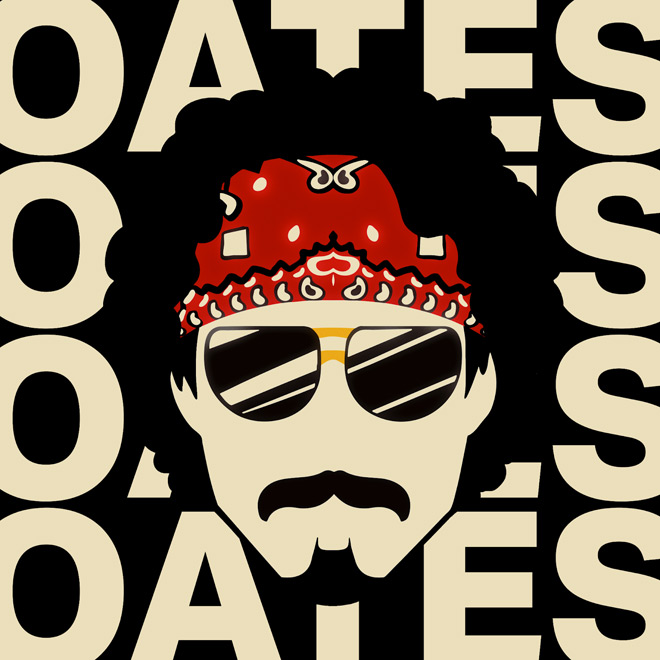
After all these years, John Oates is using his solo platform to return to his musical roots once again. Releasing the compelling album Reunion in 2024, the new album Oates, out on August 29, 2025, is equal parts R&B, Soul Pop, and Soft Rock held together by the surprisingly smooth voice of John Oates himself. Here, he is part of a band that consists of an organ, keys, bass, drums, and background vocals. Together, they embarked on a pre-release tour for the album, which began in midsummer on June 20th and concluded on August 27th.
A brief, likely unnecessary history lesson, John Oates is one-half of the famous 1970s Rock duo, Hall and Oates. While they dominated the airways for two decades, they continued to release music until the early 2000s, toured regularly, with Oates’s solo debut over twenty years ago, just after the turn of the century.
Now, after gaining entry to the Rock-n-Roll and songwriting hall of fame, Oates is continuing his early Rock-n-Roll and Americana sound from his recording studio down in Nashville, Tennessee. Alongside Producer David Kalmusky of Keith Urban fame and contemporary Singer-Songwriters Clyde and Gracie Lawrence and Devon Gillian, Oates has released music that caters to his inspirations and his voice, which has aged wonderfully pure while gaining a nice raspiness that developed as he aged into a new sound that had to be more impactful than filling one half of a duo.
The new album, Oates, is a smooth and easy listen, featuring feel-good tracks and non-abrasive Rock that prioritizes melody and experimentation over outstanding vocals and simplistic chord progressions. Different than what originally brought him easy-listening fame back in the ’70s, but still fulfilling the same purpose. The type of Rock Oates is creating has changed with the times, becoming more alternative and experimental. This includes adding sounds from other cultures, such as South American bossa nova in “Dreaming of Brazil,” and a heavier emphasis on African-American Soul and Blues in tracks like “Pushin’ a Rock” and “Get Your Smile On.”
Oates is creating more advanced soundscapes for the background of his songs. As a matter of fact, the difference between 1976’s “Rich Girl” and the current “Enough is Enough” is surprising. The foremost is a simple keyboard, drums, and vocal performance, while the new song is anything but simple. It sounds like a soulful sunrise on a warm summer morning. The stacked background choral vocals and bluesy guitar make up only one part of the song, which features an interminable catalogue of ad-libs from the Lawrence siblings and some tight drums that follow their own time signature yet keep the tempo wonderfully. Where the music is steeped in high production quality and masterful mixing, the lyricism is often simplified.
Furthermore, Oates himself has vocals that could lull any man or woman alive to sleep, but what he is actually saying is relatively straightforward. It works in the titular refrain from the first track, “Enough is Enough,” but throughout the rest of the release, “… A Ways Away,” “Disconnected,” and “World Gone Wrong” all feature lovey-dovey storytelling. However, these are the outliers in an album with wonderful musicality and sound mixing.
As stated, Oates comes a year after Reunion, which was a little more countrified in retrospect and closer to his 2011 album Mississippi Mile. These past sounds are definitely in the John Oates wheelhouse, but as with any previously popular musician group, a solo career should be reserved for more experimentation and contemporary refocusing. This was most definitely the case with his first original release, 2002’s Phunk Shui, and now with this self-titled album, the same is true. It is good to see Oates taking the time and effort to update his sound to match the contemporary era, which has seen a resurgence of R&B and a newfound appreciation for dynamic drum kits that flow like caramel across the harmonizing vocalists that consistently appear throughout the LP.
As John Oates reaches into his golden years, he is finding inspiration in his past and present scope. Using the sounds that initially inspired him to make music with John Hall in the ’70s, while also introducing contemporary musicians and adapting his sound to match what they are producing. He is working hard, not to stay relevant to the public, but to educate himself on the sounds of current Soft Rock and Blues, so that he can incorporate his technique into the modern musical world. For all these reasons, Cryptic Rock proudly gives Oates 4 out of 5 stars.




)
No comment