
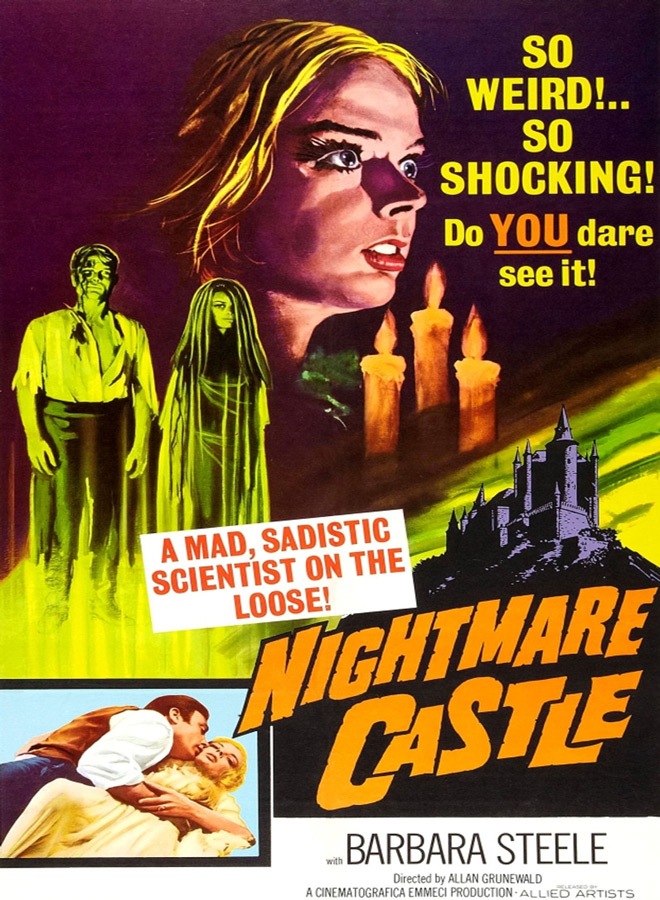
While America had 1964’s Hush…Hush, Sweet Charlotte, with its Southern Gothic elements of madness, murder, and memory, Italy released Amanti d’Oltretomba in 1965. Also known as Lovers from beyond the Tomb, The Faceless Monster (used for some English releases), most in the United States recognize it as Nightmare Castle in the uncut dubbed version. If you are not in the know, finding this surprisingly disturbing gem can be some work… but it is worth it even 60 years later.
Nightmare Castle was released on July 16, 1965, in Italy and almost a year later on July 5, 1966, in the United States. Written and directed by Mario Caiano, it stars Barbara Steele as Muriel Arrowsmith / Jenny Arrowsmith in the dual role of Paul Muller’s Dr. Stephen Arrowsmith’s wife and Jenny’s stepsister. There is also Helga Liné as Solange, Stephen’s aging servant, Marino Masé as Dr. Dereck Joyce, Giuseppe Addobbati as Jonathan, the Butler, and Rik Battaglia as David in the story of a woman and her lover who are tortured and killed by her sadistic husband, where the pair return from the grave to seek vengeance.
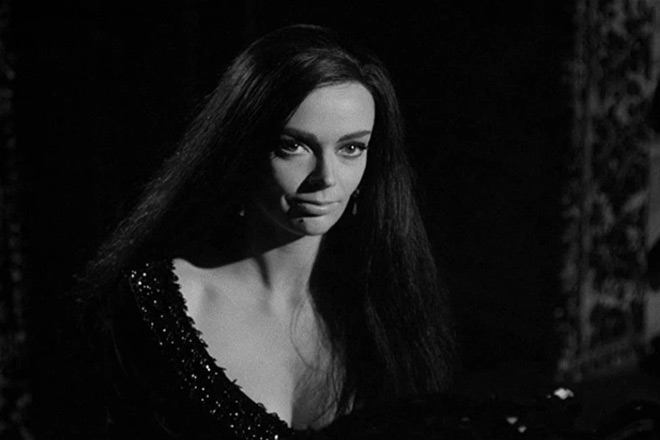
Filming began in late 1964 or early 1965; however, exact shooting dates are scarce. Mario Caiano described the production as a personal tribute to Gothic Horror and to Barbara Steele, with Nightmare Castle being a passion project shaped by his early love of Edgar Allan Poe’s work. Given that, the film’s low budget and tight schedule meant it was shot quickly, using stark black-and-white cinematography to amplify its eerie atmosphere. Caiano and Cinematographer Enzo Barboni (of the Django movies) leaned into chiaroscuro, or contrast lighting and shadow-drenched sets, to evoke dread without relying on elaborate effects.
The shoot might have seemed stressful, but by all accounts, the crew took it in stride with low-budget ingenuity as Caiano’s father, Carlo, stepped up to produce. Still, the crew had to be frugal, which meant the team had to be resourceful with sets, using Rome as a backdrop in studio interiors and castle-like locations to evoke a timeless, haunted space, lighting, and effects.
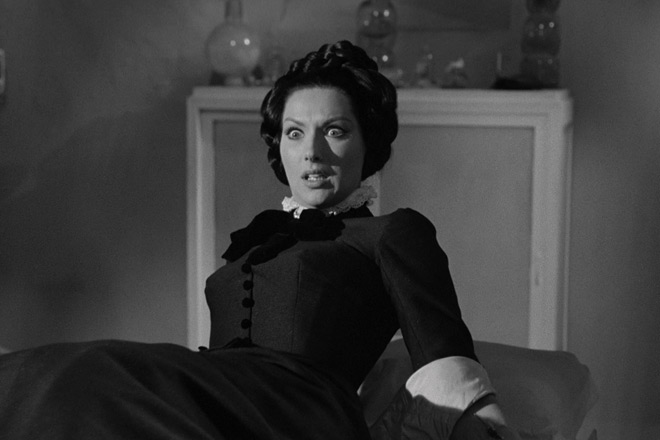
The brilliance of the film, coupled with the acting, lies in the visual obsession of Barboni’s camerawork, which, as stated above, leaned into stark black-and-white photography, enveloping the castle in shadows and gloom. This added to the psychology, turning the setting into a character of its own.
About the brilliant acting, most of the heavy lifting falls on Barbara Steele’s duality. If, by chance, she flubbed pulling off Muriel/Jenny, the film would have failed, especially since Caiano reportedly built the movie around her, crafting scenes that emphasized her ability to embody both icy vengeance and fragile innocence. Speaking of Steele, she was in Mario Bava’s 1960 film Black Sunday, which became the benchmark for Italian Gothic horror, so in some crowds, there were quiet accusations of Caiano aping Bava, which he vehemently claimed he was not directly influenced by Bava’s films, except maybe Black Sunday. Instead, he drew from Poe and his own narrative instincts.
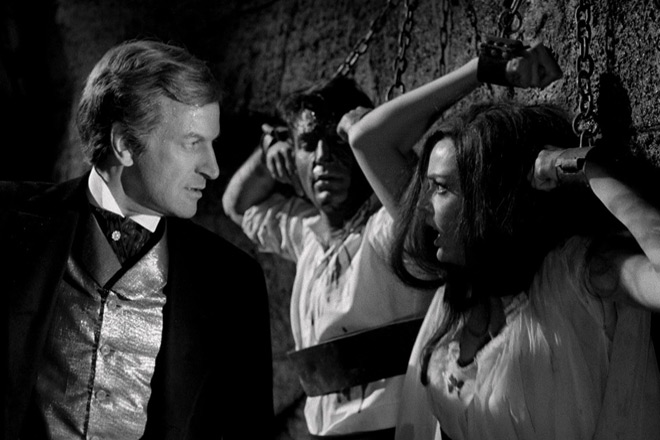
With revenge being one of the key driving forces of Nightmare Castle, there are actually some astonishing violent scenes, like a couple getting electrocuted in bed and a guy getting set on fire from beginning to end…and that is not everything. Considering it was 1965, audiences took it in stride. However, retrospective reviews have not been kind to it. Audiences, on the other hand, have it with harsh and even hypocritical criticism, and personally praise aspects of the film.
Those interested in revisiting, or viewing it for the first time, can find Nightmare Castle on streaming services like Tubi currently. Furthermore, if you are a collector, look into picking up a solid Blu-ray transfer of the film, which was released by Severin Films in 2015, with two bonus films starring Barbara Steele (Antonio Margheriti’s Castle of Blood from 1964 and Massimo Pupillo’s Terror Creatures From the Grave from 1965) that is still on the market for purchase.
Is Nightmare Castle dark and gothic? Yes. Is the English dubbing cheesy? Yes. However, it gives it a melodramatic charm, and it is psychologically and visually violent. What more can you ask for? That is why it is an honor to wish Nightmare Castle a happy 60th anniversary.


No comment