
Before the Lower East Side of New York City’s gentrification in the mid-2000s with luxury housing, high-end restaurants, and trendy bars for young people, it was a far different neighborhood, once filled with grit, abandoned buildings, and a very unique art scene. Emerging in a significant way during the late 1970s, there was an authentic anti-establishment undertone oozing out of every dark corner of the area. At the same time, iconic music venues such as CBGB hosted legendary acts, including the Ramones, Blondie, and Patti Smith, who performed regularly. Establishing the distinct New York Punk Rock and New Wave scene, on the streets, you had artists like Jean-Michel Basquiat decorating building exteriors with unique paintings, collectively capturing the mood of the times.
It was an era in New York City’s history that many will soon not forget, and on the cinema end, you had a list of do-it-yourself underground filmmakers making movies unlike anything else. Raw, often unscripted, and very minimalist in style, Super 8 film was frequently utilized, and in the process, real places on the Lower East Side were captured. Very much in line with the music scene of the time, you also had local musicians such as Lydia Lunch of Teenage Jesus and the Jerks and Debbie Harry of Blondie, among others, collaborating with local guerrilla filmmakers as New York City’s Punk Rock/New Wave music scene was translated into visual form. What is now referred to as No Wave Cinema, among those key creators of the period were a couple known as Beth B and Scott B.
Crossing paths in the art scene, Beth and Scott eventually married and began making short films with low-budget Super 8MM cameras, which were shown at local New York music venues. Very unique at the time, to the outsider, these films were bizarre, but within the scene, they were highly uninhibited and full of raw energy. Again, in line with the essence of the NYC Punk and New Wave music scene, Beth B and Scott B’s films were often made with zero funding, minimal premeditated scripting, and a very much learn-as-you-go approach. Filled with satire, dark subject matter, political undertone, and wildly unconventional characters, Beth B and Scott B certainly left a mark on underground filmmaking like no other.
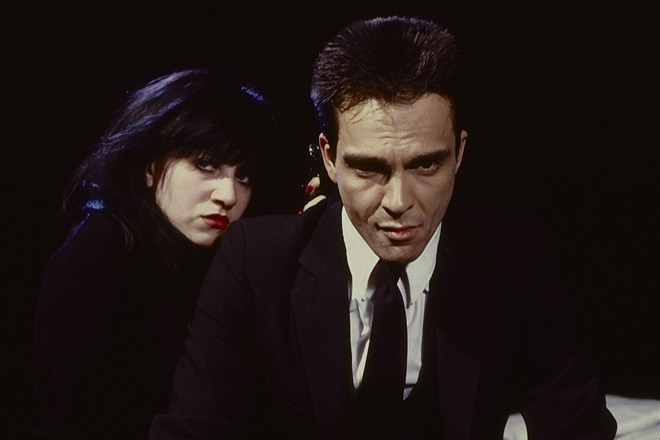
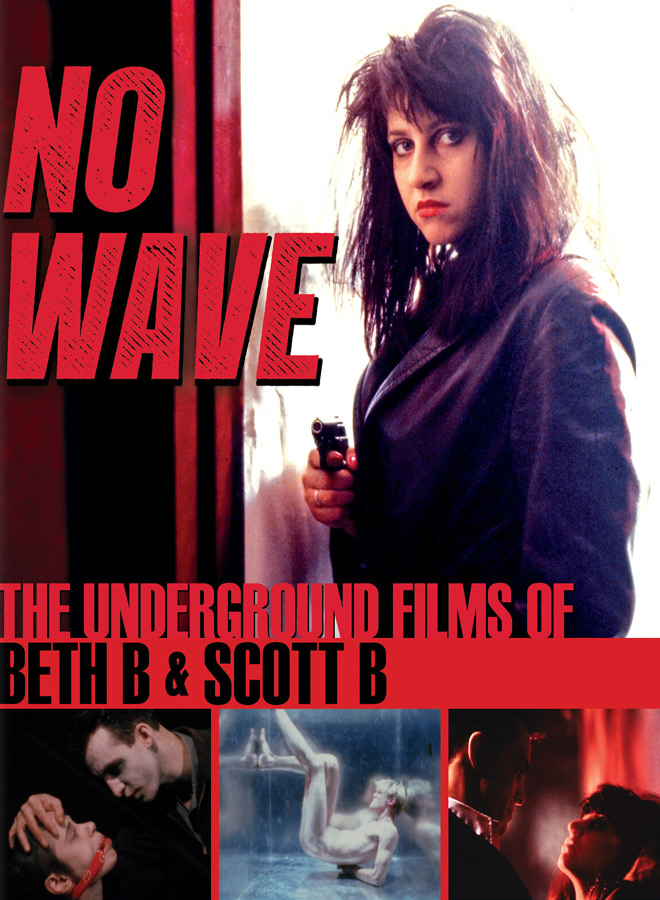
Working together on a list of short films and two feature films between 1978 and 1981, now in 2025, curious viewers can experience the works of Beth B and Scott B as part of the new No Wave: The Underground Films of Beth B and Scott B Blu-ray collection from Kino Lorber. A highly comprehensive documentation of the duo’s work, it arrived as a two-disc Blu-ray set on November 18, 2025, with plenty of intrigue.
Including key shorts on disc one, such as 1978’s G-Man and Black Box, there are also 1979’s Letters to Dad and The Offenders, but the two features on disc two are 1981’s The Trap Door and 1982’s Vortex. Many of which feature recognizable underground figures of the era, perhaps the biggest standout is Lydia Lunch, who appears in both Black Box (as an opposing dominatrix) and in Vortex (also as a formidable, strong female character).
All of this in mind, the new release also presents these works from Beth and Scott B in 4K restoration, which is undoubtedly a commendable attempt to preserve this piece of history. Beyond this, there is also an option for film introductions from Scott B, plus an insightful interview with Beth B. A perfect addition to the collection of any fan who likes something a bit different and who understands that compelling filmmaking comes in many forms, Cryptic Rock gives Kino Lorber’s No Wave: The Underground Films of Beth B and Scott B 4 out of 5 stars.



)
No comment