
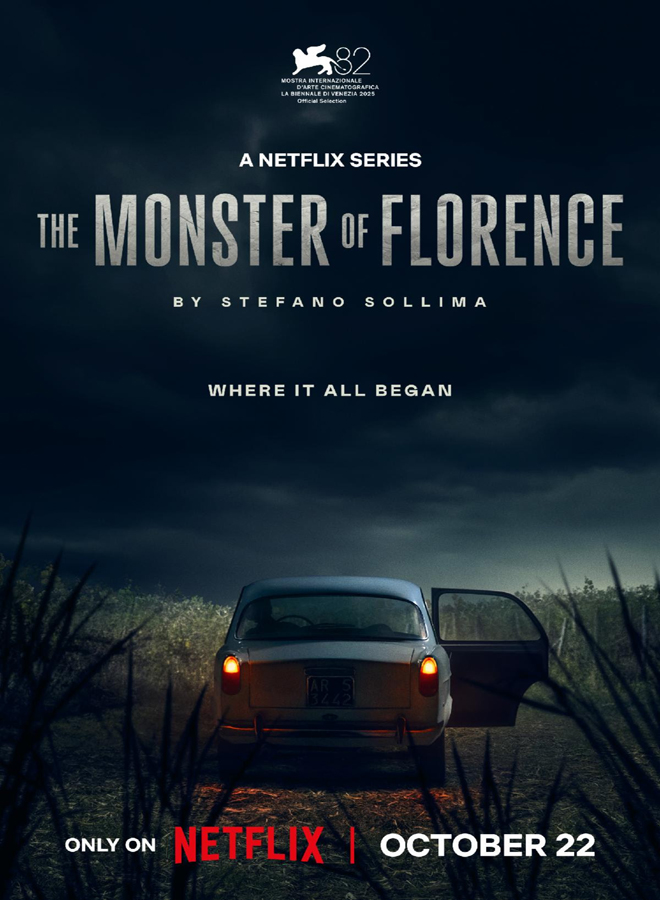
Stefano Sollima’s The Monster of Florence is a four-part deep-dive into one of Italy’s darkest unsolved serial killer cases. Premiering on Netflix on October 22, 2025, as an original limited series, by the final frame, you are left where you began: drowning in speculation, surrounded by suspects, and with no verdict in sight.
Based on the actual events surrounding Il Mostro di Firenze, the infamous serial killer who terrorized the Tuscan countryside between 1968 and 1985, the series follows the investigation’s decades-long trail of breadcrumbs. Sixteen victims, countless theories, and a journey of obsession that consumes everyone who touches it. Although Sollima does not give us resolution, he delivers a moody atmosphere, psycho-paranoia, and a slow unraveling of certainty.
The cinematography by Paolo Carnera (Bad Tales 2020, Adaigo 2023) is haunting: smoky, tactile, and bathed in chilling light and shadow, transforming the typically picturesque hills of Florence into a macabre and menacing stage for murder. Each episode unfolds like a fevered recollection: details shift, memories distort, and no one is trustworthy. One version of events bleeds into the next until the truth itself begins to feel like a lie.
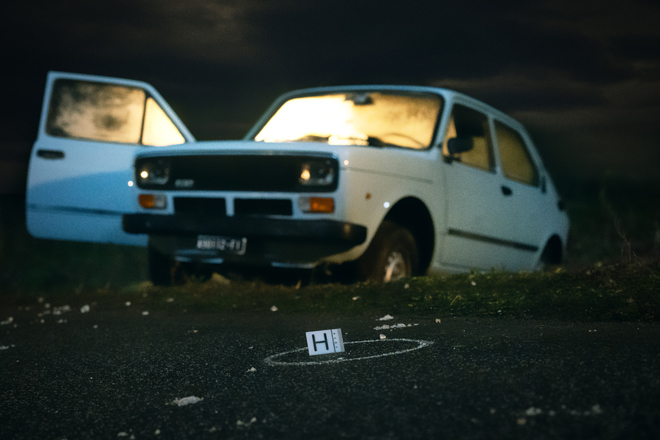
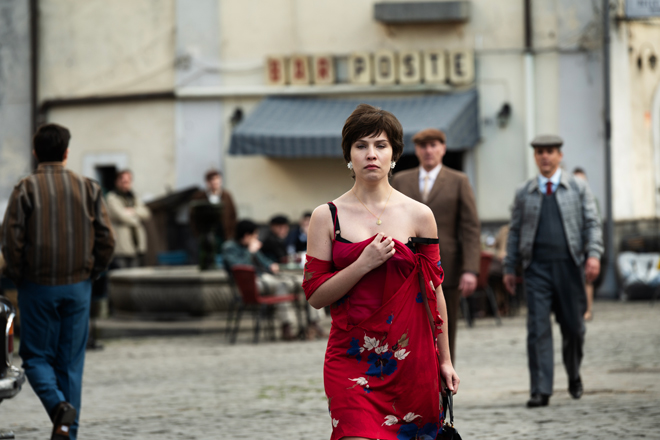
Performances are consistently strong across the board, but Marco Bullitta (Andarevia 2013, Quello che è mio 2023) as Stefano Mele, Valentino Mannias (Miriam – Il diario 2014) as Salvatore Vinci, Samuel Fantini (Infinite storie 2023) as Natalino Mele, and Francesca Olia (Boys 2021, Timor 2024) as Barbara Locci stand out. Bullitta’s Stefano is a man ravaged by guilt, while Mannias’s Vinci wants you to believe he is the killer, oozing with menace and oily, snake-like, sexually violent man. Olia’s Barbara, meanwhile, gives the show its rare flashes of humanity.
Through Barbara, we see the victims not as case studies but as real people caught in cycles of fear, joy, despair, and shame. Her portrayal is nuanced and heartbreaking, especially across the differing retellings that frame each episode. Perhaps a favorite in the series is Natalino, the sole survivor of Il Mostro’s murders, only six years old. His pained facial expressions, fear, and innocence bring this violent story to a place of true horror for any parent.
Episode four delivers the series’s most shocking twist, revealing Stefano’s sexuality and reframing much of what came before. It is handled with restraint, deepening the moral murk without sensationalizing it. Sollima and his writers understand that, in a case like this, truth is elastic. Everyone remembers differently; everyone lies a little, even if they do not mean to.
Additionally, The Monster of Florence is not an easy series to watch. The violence is brutal and explicit, the imagery often unbearable (trigger warning: stabbing, genital mutilation, rape). You might find yourself covering your eyes more than once, willing the scenes to end. It veers into gratuitous territory, but it is meant to be unsettling, reminding us that these horrors were real and really horrific.
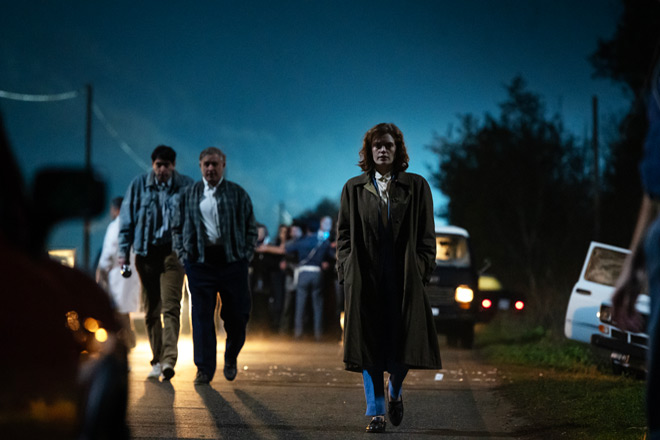
By the time the credits roll, nothing has been solved, and that is the genius of it. The lack of closure becomes the point. Overall, Murder of Florence is a dark, disturbing procedural that dramatically retells one of Italy’s most haunting, ongoing murder cases.
In refusing to solve its mystery, The Monster of Florence is a study of how evil seeps into memory, twisting the truth until it is impossible to tell what really happened. A haunting true-crime labyrinth with no exit, Cryptic Rock gives The Monster of Florence 4 out of 5 stars.



)
No comment