
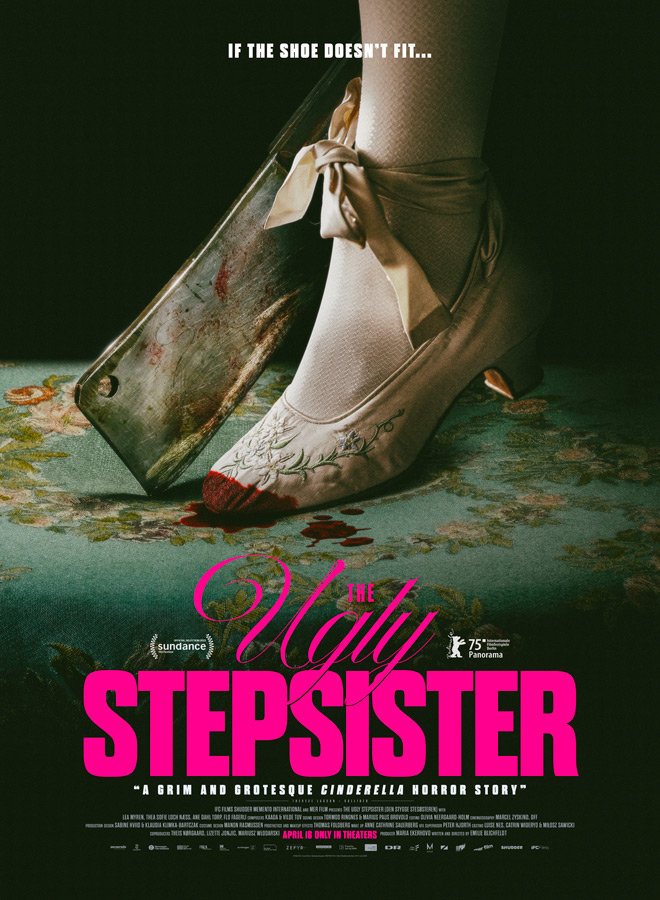
The latest entry into the Body Horror genre, The Ugly Stepsister, is a darkly twisted Norwegian Horror Comedy that marks Emilie Blichfeldt’s directorial debut.
Presented by IFC Films and Shudder, The Ugly Stepsister hits theaters in the US on April 18, 2025, and in the UK on April 25th through Vertigo Releasing. Starring Lea Myren as Elvira in her feature debut, Thea Sofie Loch Næss (One Night in Oslo 2014, La Palma mini series) as Agnes / Cinderella, and Ane Dahl Torp (The Wave 2015, Dreams (Sex Love) 2024) as the icy stepmother, Rebekka. A grotesque reimagining of the classic Cinderella tale, the story centers not on the fair maiden but on her obsessive stepsister Elvira, who is determined to win the prince’s affection, no matter the cost. In a kingdom where beauty is currency and transformation is both aspirational and horrifying, Elvira finds herself locked in a cutthroat rivalry with the enchanting Agnes in a bid to become the belle of the ball.
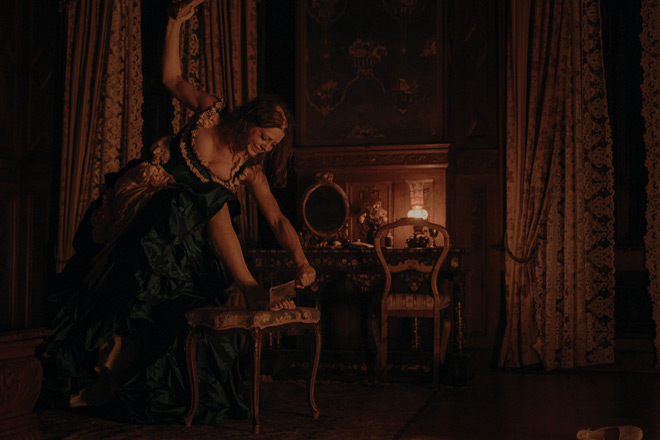
At its core, the film is a sharp critique of the extreme societal pressure placed on women to conform to rigid beauty standards. Elvira’s transformation journey—which includes grotesque beauty treatments and self-mutilation—lays bare how the pursuit of beauty can become destructive, dehumanizing, and deeply painful. What makes it even more unsettling is that her transformation is not about self-empowerment—it is a desperate bid for male approval. The film underscores how women’s worth is still so often measured through the lens of desirability to men, a theme as relevant today as it was a century ago.
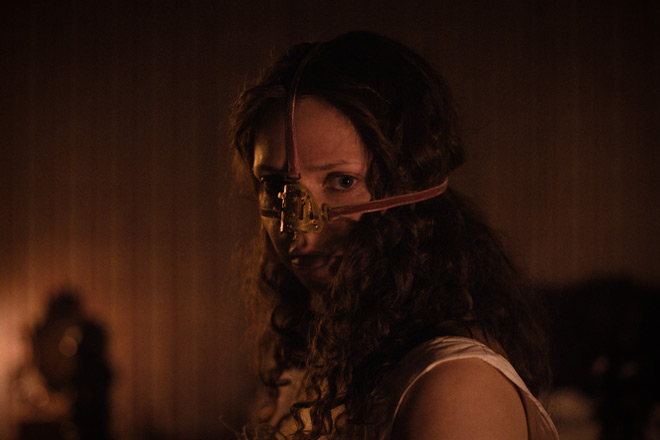
Myren delivers a fearless performance as Elvira, which is both heartbreaking and horrifying. She fully commits to the character’s desperation, allowing Elvira’s obsession and unraveling mental state to feel raw and authentic. The physicality of her performance is intense and gut-wrenching, embodying the raw pain and emotional torment that fuel Elvira’s desperate decisions. Some of the film’s most powerful moments come when she says nothing at all—her eyes and expression conveying a storm of emotion, silently signaling that another desperate, ill-fated choice is about to follow.
The Ugly Stepsister draws aesthetic cues from the late 1800s, when cosmetic surgery began to emerge in medical practice. Initially developed for reconstructive purposes, early cosmetic procedures of that era were often painful, experimental, and shrouded in secrecy. The film exaggerates these historical roots, transforming the primitive beginnings of aesthetic medicine into grotesque rituals of transformation. By connecting its Body Horror to the origins of real-world beauty standards, the film makes its message hit even harder, showing how far people have always been willing to go in the name of perfection.
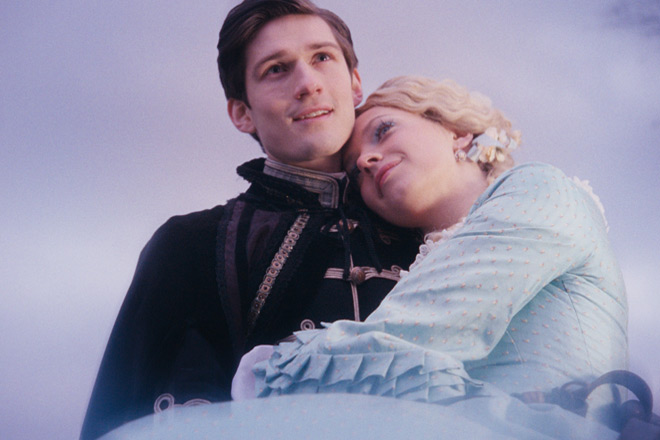
The film also critiques how women are often pitted against one another within systems built on patriarchal values. Elvira and Agnes are placed in direct, brutal competition for the prince’s affection, turning what could be sisterhood into rivalry. In doing so, The Ugly Stepsister explores how societal structures can twist female relationships into battlegrounds, where ambition, jealousy, and survival blur. All of this is brought to life through visceral body horror that will have audiences squirming.
In addition to its biting social commentary and visceral horror, The Ugly Stepsister immerses the audience in a richly textured world through grandiose set design and lavish costuming, reminiscent of what you might expect from a sweeping period drama. The film’s aesthetic draws heavily from 1960s and ’70s Eastern European fairytale cinema, celebrated for its gothic settings, practical effects, and natural lighting. That influence lends the film a gritty, enchanted realism, striking a unique balance between the fantastical and the disturbingly real.
Like the story itself, the sets and costuming offer a striking contrast between beauty and the grotesque, shifting from opulent ballrooms to dim, crumbling interiors where rot quietly festers. Extravagant gowns dazzle with ornate detail, yet conceal discomfort, restriction, and an unsettling sense of deterioration. This visual contrast heightens the film’s atmosphere, amplifying a sense of unease and dread—an effect that feels especially jarring in a story rooted in a classic fairytale. The familiar narrative becomes unpredictable, and that dissonance keeps the audience on edge.
The score of the film deepens this emotional undercurrent, especially in moments when Elvira slips into daydreams. During these sequences, the music channels the essence of a desperately romantic young girl—hard yet soft, ironic yet sincere—capturing the innocence that still flickers beneath her obsession. It is a haunting contrast to the brutality around her, adding a melancholic beauty to her descent. The score has a 1970s vibe, layered with contemporary electronic music beats throughout the rest of the film. This fusion gives the movie a strange, electric energy, rooted in retro nostalgia but pulsing with modern urgency.
The Ugly Stepsister is a bold and unsettling take on a familiar fairytale that will make audiences feel unsettled long after leaving the theater. Blichfeldt’s debut is a provocative exploration of the body and mind and what women are willing to sacrifice to meet the expectations of the patriarchy. In the world we live in today, these themes could not be any more relevant, which perhaps is what makes the film so powerful. This is why Cryptic Rock gives The Ugly Stepsister 4.5 out of 5 stars.



)
No comment