
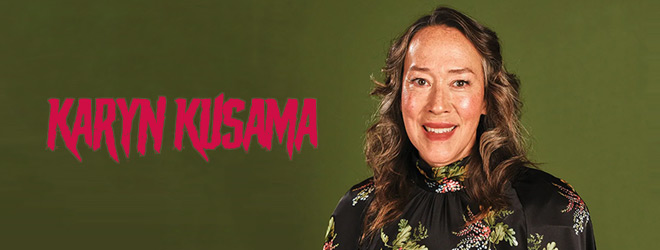
Women have been shaping Horror from the shadows for decades, building fear from emotional truth, lived experience, and sharp cultural insight. Their approach to terror often feels more intimate and unsettling, rooted in what it means to be vulnerable in the world. Among them, Karyn Kusama stands out. Working in film for three decades, she does not rely on cheap shocks or buckets of blood. Her horror gets under the skin. It is psychological, personal, and uncomfortably real.
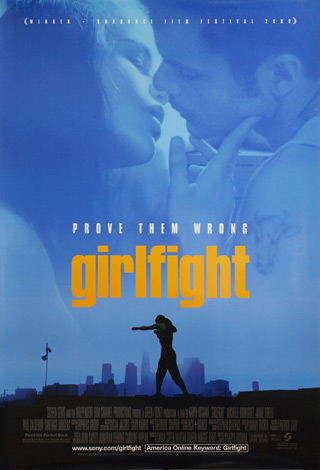
Looking back, Kusama did not start her career in Horror, but her trajectory into the genre has made her one of its most compelling voices. Splitting her formative years between New York City and Los Angeles, Kusama grew up surrounded by ambition, creativity, and the pressure to define oneself. That sense of emotional friction would eventually find its way into the stories she tells on screen. She first burst onto the scene with 2000’s Girlfight, a gritty Sports Drama about a young woman navigating the boxing world. The film earned critical acclaim and an Independent Spirit Award, announcing Kusama as a filmmaker unafraid to center female perspectives in male-dominated arenas—a theme she would carry into Horror.
It was in Horror, however, that Kusama truly carved her niche. Her films are less about blood and jump scares and more about suspense, unease, and the slowly creeping dread that comes from seeing human flaws magnified under extreme circumstances. Kusama’s style emphasizes mood over spectacle: lingering shots, meticulous framing, and quiet moments that make viewers squirm long before anything overtly terrifying happens. Her Horror is intellectual, emotional, and often socially conscious.
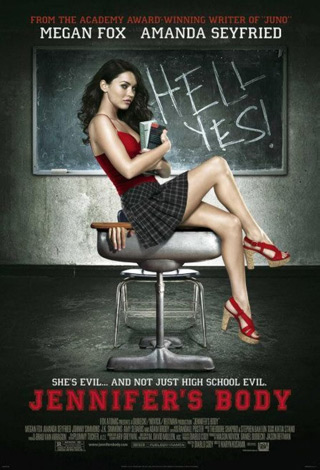
Take 2009’s Jennifer’s Body, perhaps Karyn Kusama’s most talked-about work in mainstream Horror. On the surface, it is a teen Horror film about a high school girl possessed by a demon who begins killing her male classmates. But through Kusama’s lens, it becomes a darkly comedic and feminist exploration of female adolescence, friendship, and the often cruel social dynamics of high school. Megan Fox’s titular character is not just a Horror trope; she becomes a vessel through which Kusama examines jealousy, desire, and empowerment, creating a protagonist who is simultaneously vulnerable, dangerous, and unforgettable. Initially misunderstood by critics, Jennifer’s Body has since become a cult classic, celebrated for its wit, emotional honesty, and subversion of a genre dominated by male fantasies.
The film’s cultural resurgence highlights why it matters: when it was released, marketing targeted teenage boys, overlooking the audience the story truly spoke to. Critics often focused on Fox’s public persona rather than the film’s nuanced commentary. Over time, young women reclaimed Jennifer’s Body for what it is at its core: a story about the intensity of female relationships, the pressures of adolescence, and the struggle to be seen. Its blend of humor, horror, and emotional insight resonates far more clearly today, carving space for teen girls to be both vulnerable and ferocious. Kusama’s influence is central—her direction balances tension, empathy, and dark humor, allowing these themes to shine without sacrificing suspense. It is this careful, character-driven vision that gives the film its enduring power and cements its status as a feminist Horror classic.
She followed up with The Invitation in 2015, a masterclass in slow-burning Psychological Horror. Set almost entirely at a dinner party, the film thrives on tension, paranoia, and the dread of real-life grief and trauma. There are no supernatural creatures or flashy gore; instead, Kusama magnifies the ordinary, making every glance, pause, and whispered conversation feel loaded with potential threat. Its Horror is stripped down to its most human elements: fear of loss, manipulation, and confronting unresolved trauma. Kusama demonstrates here that the scariest monsters are often the ones inside our own minds, and sometimes in the homes of people we trust.
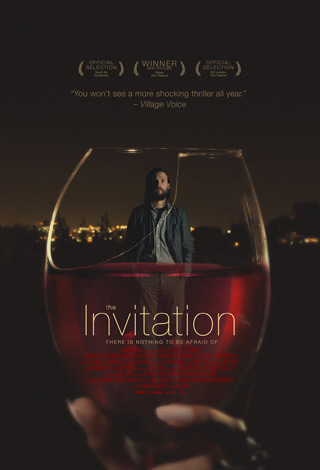

What makes The Invitation uniquely Kusama is her ability to turn subtle human behavior into gripping suspense. Her meticulous pacing and focus on character psychology build tension slowly but relentlessly, making the eventual climax all the more devastating. The film exemplifies her signature approach to horror: blending emotional depth with suspense, creating dread from empathy, insight, and everyday anxieties rather than spectacle. By transforming a mundane setting into a crucible of fear, Kusama proves that Horror can be deeply personal, intellectually engaging, and emotionally resonant, all while keeping audiences on edge from start to finish.
Overall, Kusama’s magic lies in her ability to blend the psychological with the cinematic. Her Horror often centers on women, not as victims, but as complex protagonists navigating danger, isolation, and societal pressures. She consistently challenges genre norms: women are not just damsels in distress or objects of male desire—they are active agents, flawed yet powerful, navigating worlds at once terrifying and tragically familiar.
Beyond her films themselves, Kusama’s impact on the horror landscape is significant. She is part of a growing wave of women directors who are redefining what modern Horror looks and feels like, alongside talents such as Ana Lily Amirpour (known for 2016’s The Bad Batch), Jennifer Kent (known for 2014’s The Babadook), Julia Ducournau (known for 2021’s Titane), and Rose Glass (known for 2024’s Love Lies Bleeding). These filmmakers are proving that Horror is not limited to shocks and spectacle. It can be emotionally layered, thematically sharp, and deeply reflective of real-world anxieties. Kusama’s work, in particular, highlights how fear often stems from relationships, identity, grief, trust, and the pressure to perform normalcy when everything within is unraveling. She shows that the slow tightening of psychological tension can be more unsettling than anything monstrous on screen. Her films remind audiences that Horror is at its most powerful when it asks us to sit with discomfort, recognize familiar vulnerabilities, and see ourselves in the very thing we are afraid of.
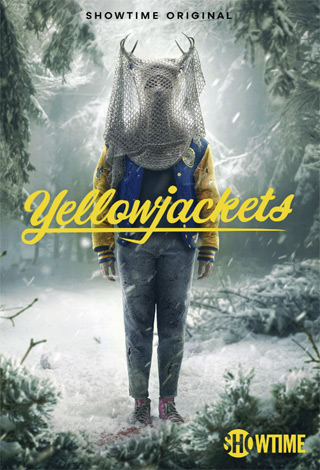
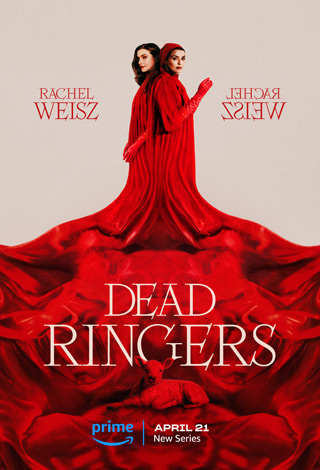
Karyn Kusama’s resume shows how Horror can be both unsettling and deeply human. Her films refuse to treat fear as something distant or theatrical. Instead, they reveal how it grows quietly in the spaces between people, in the things left unsaid, and in the emotional weight we carry. By grounding Horror in lived experience, Kusama reminds us that the genre can reflect real life just as sharply as any drama. Her influence continues to expand as more women take up the camera and tell stories that challenge expectations, shift perspectives, and push the genre forward. Kusama does not simply direct Horror; she reshapes what Horror can mean, and in doing so, she opens doors for others to follow. Although Kusama has been focusing on television in recent years (most recently working as an executive producer on the popular Showtime series Yellowjackets), fans can hope she returns to the big screen soon, bringing her distinctive vision and talent back to cinema.




No comment