
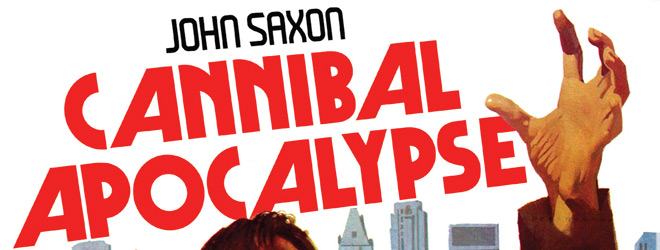
In the years to follow the end of the Vietnam War, many films began to emerge entrenched in the events of the time. Of course, you had powerful pieces such as Francis Ford Coppola’s Apocalypse Now from 1979, Oliver Stone’s Platoon in 1986, as well as Stanley Kubrick’s Full Metal Jacket arriving in 1987. These being tales of the real-life nightmares and carnage of combat, there were also some other filmmakers touching on this conflict in more of a Horror cinema ecstatic. First, you had the highly talented Bob Clark diving into the realm early on back in 1974 with his Vietnam war themed Horror film called Deathdream. Not to be missed, Deathdream is a psychological metaphor, depicting a presumed deceased soldier returning home to his family, but only as a vessel of a being. Tragic, yet highly effective, Italian’s Antonio Margheriti opted to take a more graphic approach on subject matter years later with his 1980 feature called Cannibal Apocalypse.
Margheriti, a filmmaker known for a diverse filmography, his work includes exploration into Spaghetti Westerns, Action, Sci-Fi, as well as the Horror genre. Sometimes overlooked in the scope of time, Margheriti should be recognized for his ability to be resourceful in many lower budget productions, but also find clever ways to utilize special optical effects by utilizing multiple cameras at a time in an attempt to obtain various shots perspectives. Perhaps recognized by most fans for his 1964 Gothic Horror classic Castle of Blood or 1970’s Spaghetti Western And God Said to Cain, many hold a special place in their heart for Cannibal Apocalypse. Certainly stepping away from the more refined gothic style Margheriti explored in his earlier films, Cannibal Apocalypse is pretty raw, at times quite grotesque, and most certainly never lacking an uncomfortable moment. With this, Margheriti creates a film that may not appeal to a broader audience, but absolutely something fans of late ‘70s/early ‘80s vibed Horror might enjoy.
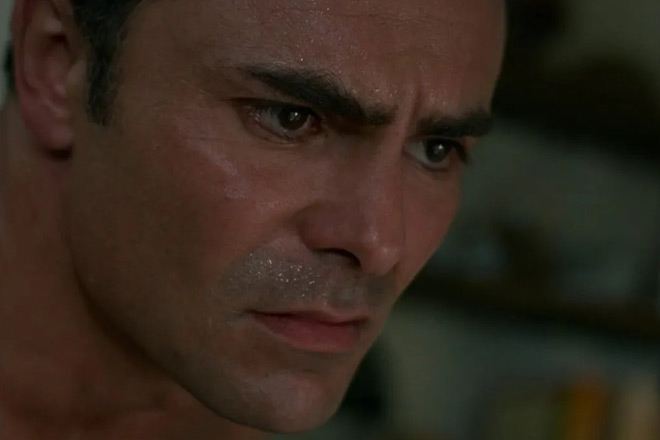
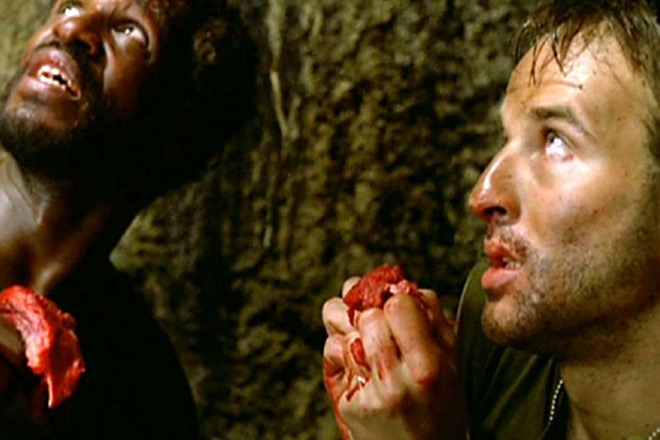
Mixing Horror, Action, and a tint of Drama, Cannibal Apocalypse, (also known as Cannibals in the Streets or Invasion of the Flesh Hunters) story’s follows returning Vietnam war veterans who have experienced clear trauma from being a prisoners of war, forced into cannibalism to survive. Naturally, this is something that does not escape the mind so easily, and these individuals eventually carry this heavy load with them like an infection back home. Hospitalized as unstable and mentally broken from the war, it is only a matter of time before they slip on by supervision, thus start spreading their human flesh hungrier virus to the masses.
A bit of a wild concept, it also makes for a pretty fast paced viewing experience that not only keeps your interest, but at some points, makes you empathize with the cannibalized former US soldiers. Oddly, even with the untethered approach Margheriti takes, you can still feel the sorrow of how many who returned home from the Vietnam War were treated with anything less than respect. This factor in mind, the production of Cannibal Apocalypse was able to nab John Saxon to take on a leading role. Saxon, a prolific actor, unfortunately was given a poorly translated script and he presumed that the plot was a metaphor; treating the Vietnam war like it was a virus you could bring home with you. Not terribly far off, Saxon still had no idea that there was this overlapping element of cannibalism involved here… and this is something that truly made him second guess taking on the role all together.
Nonetheless, with some compromise, Saxon stated on the production; and thank goodness for that, because his presence is essential. Joining him you had Italy’s Giovanni Lombardo Radice taking on a lead role and doing a fine job at that, looking extremely believable as a distressed, disenfranchised soldier. Beyond this, you also had Elizabeth Turner (known for films such as 1977’s Psychic), Cinzia De Carolis (star of many features, including Dario Argento’s 1971 film The Cat o’ Nine Tails), and former football player turned actor, Tony King. Together this cast brings Cannibal Apocalypse to life as something that is difficult to forget… that is if you have actually seen it.
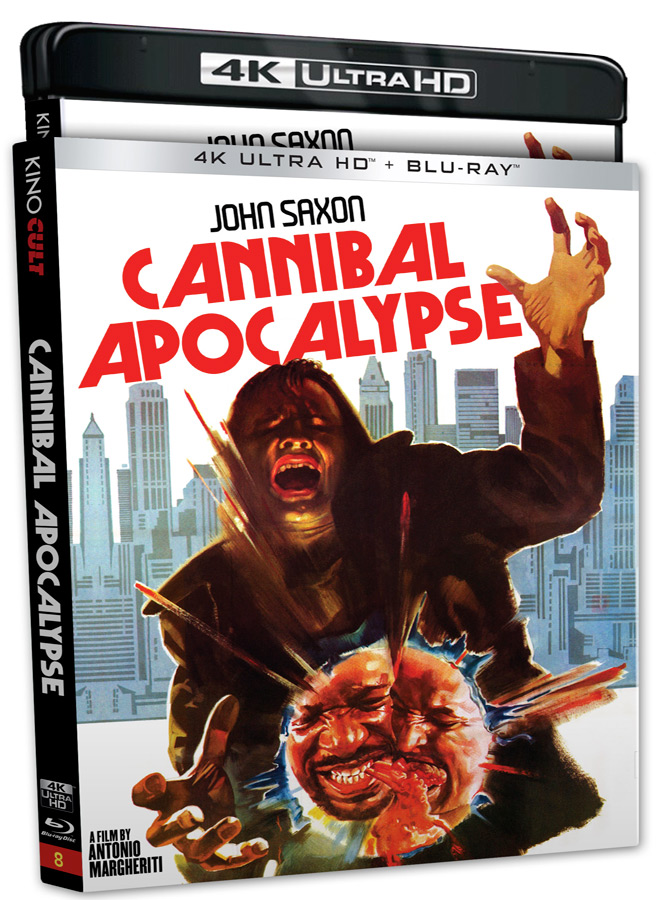
That being said, if you have not seen it, now in 2024 Kino Lorber are offering Cannibal Apocalypse in 4K Ultra HD for the first time ever. Released on July 16th as a 4K Ultra HD and Blu-ray set, if you are curious of the film’s home media release history, back in 2002 it was put out on DVD as part of The EuroShock Collection through Image Entertainment. That, a serviceable copy for the time, in 2020 Kino Lorber put the film out as an upgraded Blu-ray with a 4K transfer, plus plenty of extras. Leading us to this 2024 edition, which includes the same 2020 UHD SDR Master by StudioCanal, from a 4K Scan of the 35mm original camera negative, however, this time on 4K Ultra HD, accompanied by a Blu-ray disc. Mirroring the bonus features from the 2020 Blu-ray release, these include a worthy documentary called Cannibal Apocalypse Redux, an interview with Tim King, plus more.
These aspects considered, the 4K transfer itself is the bread winner here; because the colors are rich, vibrant, and extremely deep. Truly remarked, no matter how many times you see what a good 4K upgrade can do for an older film like this, you never grow tired of it. In the end, Kino Lorber’s 4K Ultra HD and Blu-ray set is the ultimate edition to own for everything mentioned, plus being uncut, and featuring not just the original film art, but a really cool newly commissioned flipside artwork. Worth it in many ways, Cryptic Rock gives the 4K Ultra HD edition of Cannibal Apocalypse 4.5 out of 5 stars.




)
No comment