
In the realm of literature, several characters transcend time and space. A testament to their connection to culture, topping overall popularity, you have Sherlock Holmes, but peering out of the darkness directly behind is the infamous Count Dracula.
First appearing in Bram Stoker’s 1897 novel Dracula, Count Dracula has been one of the most adapted literary figures in film over the decades. First appearing in film as early as 1921 in the lost film Drakula halála, his likeness was also portrayed in the now iconic 1922 silent film Nosferatu. From here, you had the legendary 1931 Universal Pictures Dracula (with Bela Lugosi as The Count), 1958’s Horror of Dracula (with Christopher Lee in the lead role), as well as Francis Ford Coppola’s 1992 modern-day masterpiece, Bram Stoker’s Dracula. Of course, there have been many more adaptations in between it all, from the fantastic (like Dan Curtis’ 1974 made-for-television Dracula) and the underappreciated (such as 2000’s Dark Prince: The True Story of Dracula) to the less-than-watchable (also from 2000, Dracula 2000). However, one thing is sure: nearly everyone has a bit of a different spin on the story of Dracula.
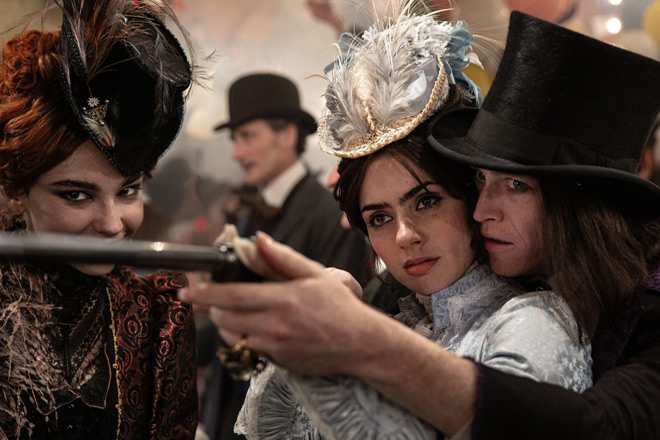
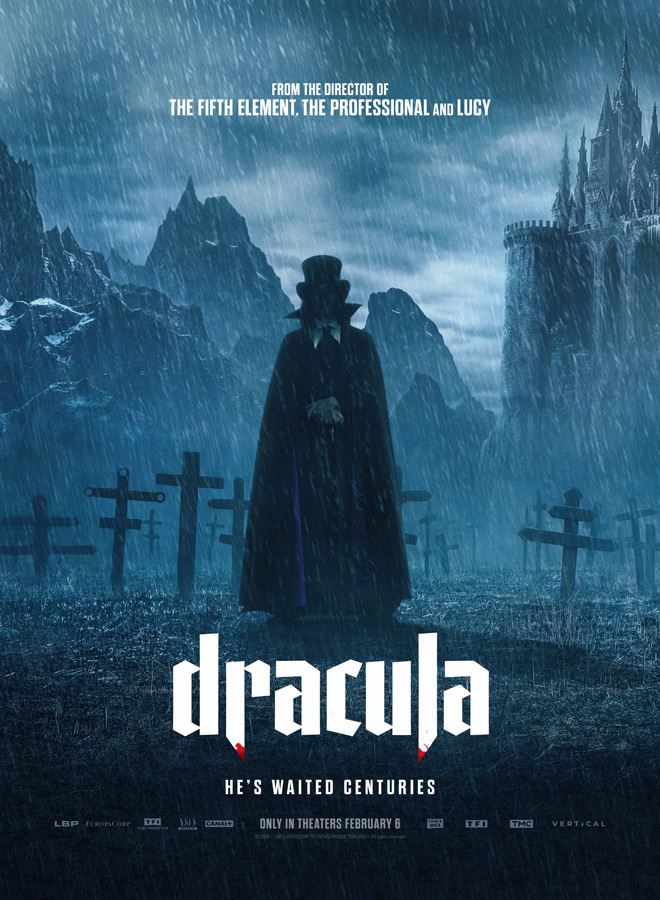
With this in mind, in 2026, French Filmmaker Luc Besson wrote and directed his own take on the Prince of Darkness, titled Dracula. Initially released in France in July 2025 as Dracula: A Love Tale, the film received major distribution backing from Vertical and is receiving a wide theatrical release across the United States and Canada starting February 6, 2026. Coming with a ton of curiosity from Dracula fans who were mixed on 2014’s Dracula Untold and 2020’s Dracula BBC Mini-series, which appeared on Netflix, those looking for a story more faithful to Bram Stoker’s tale will yet again not find it with Besson’s Dracula. Explaining this further, over the years, Dracula became a more tragic, romantic character, rather than an evil, animalistic beast, in Bram Stoker’s Dracula. This can be traced back to F.W. Murnau’s Nosferatu, which portrayed the character (known as Count Orlok to avoid copyright infringement) as a more pathetic, pitiful, lonely creature.
However, the fundamental ethos of the more romantic take on Dracula must be credited to the highly underrated Dan Curtis, who teamed with the accomplished Writer Richard Matheson to portray him as a more romantic figure seeking to reunite with his true love. This is the direction that Coppola followed with his big-budget Bram Stoker’s Dracula years later, and in many ways, Besson’s continues this with 2026’s Dracula. Something you can accept, given that it is the most recognized depiction of Dracula (save 1931’s Dracula, which portrayed him as a gentlemanly individual who catches you with hypnotic gazes), Besson delves deeply into the love story side of it all more than anything else.
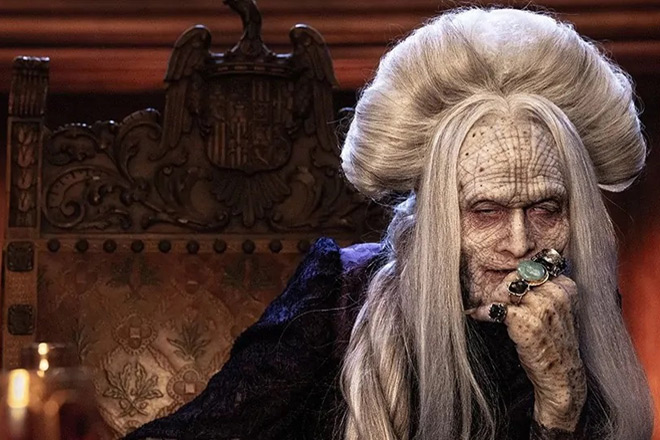
Admitting to not being all too interested in Horror, this new Dracula feels more like a Historic Action film with a lot of blood, but drenched with a rather over-the-top dramatic longing for love. Kind of fitting to be released just a week before Valentine’s Day, in this Dracula, Caleb Landry Jones (known for films like 2011’s X-Men: First Class and 2017’s Get Out) sinks his teeth into the role with tons of passion and energy that you have to applaud him. With Jones giving you a very intense performance with serious undertones, Zoë Bleu Sidel (known for films like 2023’s Gonzo Girl) plays opposite him as his 15th-century wife Elisabeta, and her modern-day reincarnation, Mina. Together, they play extremely believable individuals deeply in love, with chemistry that bleeds off the screen (no pun intended). Feeling the yearning and heartbreak between the two, another highlight of the film is its costumes and gothic atmosphere, which feel authentic.
Joining them are secondary characters like the Priest (played by the Emmy-nominated Christoph Waltz), Matilda De Angelis (known for films like 2016’s Italian Race) as Maria, and the award-winning Ewens Abid as Jonathan Harker, who do a fine job in their roles. Although there is a list of pluses, there are still some elements of 2026’s Dracula that are displaced and may displease some. Really, a matter of taste: several scenes go from silly to absurd (for example, a lavish musical montage that does not seem to fit). At the same time, the hounds from the original story are replaced by simply ridiculous-looking CGI-generated gargoyles who move so awkwardly you have to giggle.
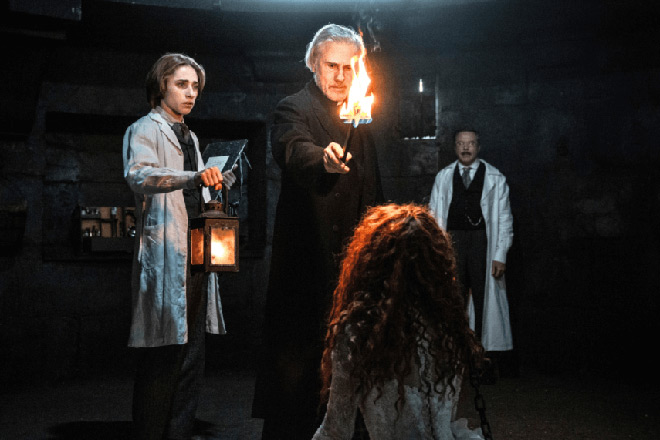
So, if you are looking for a completely serious Dracula film with intensity and triumph, you might not find it with this 2026 film. A bit of a shame, because much of the film is quite compelling, the unevenness is apparent as ludicrous scenes overshadow it all. Watchable and entertaining, with a strong focus on undying love, Cryptic Rock gives 2026’s Dracula 2.5 out of 5 stars.



)
No comment