
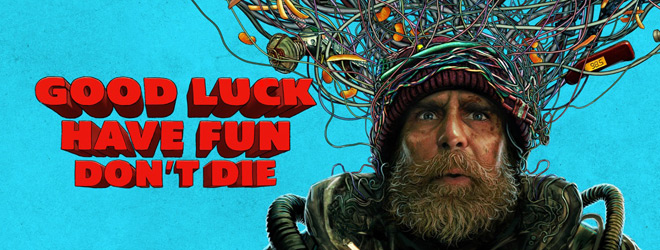
Good Luck, Have Fun, Don’t Die comes to theaters Friday, February 13, 2026, from Briarcliff Entertainment, and it arrives with the kind of wild confidence only a filmmaker like Gore Verbinski can deliver. After a decade-long hiatus, Verbinski (The Lone Ranger 2013, A Cure for Wellness 2016) returns with a bold, high-concept Sci-Fi romp that blends absurdist humor, existential dread, and pop-culture chaos into a single neon-lit fever dream.
When a mysterious “Man From the Future” storms into a Los Angeles diner and assembles a perfectly mismatched crew of disillusioned strangers for a one-night mission to stop a rogue artificial intelligence from ending the world, the result is a genre-bending spectacle that feels equal parts cosmic Comedy and techno-apocalypse. Led by Sam Rockwell (The Green Mile 1999, Iron Man 2010) and backed by a sharp ensemble including Haley Lu Richardson (Split 2016, The White Lotus series), Juno Temple (Killer Joe 2011, Ted Lasso series), Zazie Beetz (Atlanta series, Deadpool 2 2018), and Michael Peña (Fury 2014, Unstoppable 2024), Good Luck, Have Fun, Don’t Die turns humanity’s anxiety about technology into a chaotic, self-aware thrill ride—fun, frantic, and just on-the-nose enough to feel uncomfortably familiar.
Written by Matthew Robinson (Love and Monsters 2020, Dora and the Lost City of Gold 2020), the film clearly draws inspiration from 1995’s 12 Monkeys and the cautionary techno-paranoia of Black Mirror, but it rarely feels derivative. Instead, Good Luck, Have Fun, Don’t Die carves out its own lane, leaning into a looser, more playful sensibility that balances apocalyptic stakes with humor and humanity. Its anxieties feel distinctly of-the-moment with its pondering of algorithmic overreach, technological dependence, and the creeping sense that progress may be outpacing wisdom, giving the story a thematic relevance that feels uncannily suited to 2026. The result is a film that nods to its influences while confidently standing on its own, offering a fresh, contemporary spin on the familiar question of whether technology is saving us…or quietly sealing our fate.
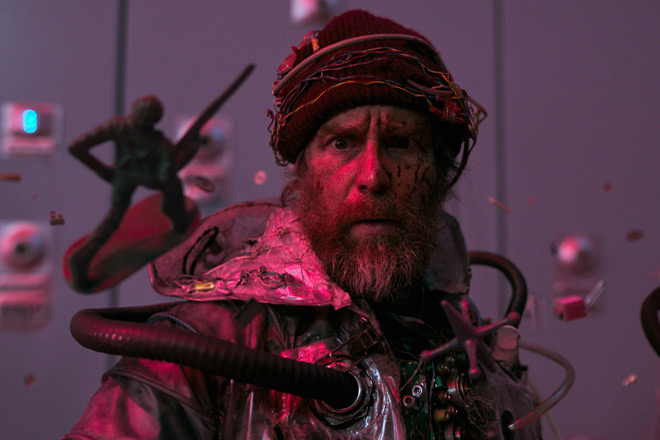
Good Luck, Have Fun, Don’t Die offers thoughtful world-building and character development that feels distinct and unforced, never rushed or overly expositional. Instead of spelling out every rule, it trusts the audience, allowing the logic of its reality and the emotional contours of its characters to emerge naturally through sharp dialogue and lived-in interactions. Brief vignettes give each character a moment to register as an individual, efficiently sketching their frustrations, flaws, and motivations while keeping the pacing brisk. Through this structure, each member of the ensemble is given just enough texture to feel distinct and essential, transforming what could have been caricatures into people worth investing in. That balance, between expanding the film’s larger sci-fi mythology and grounding it in human specificity, keeps the story engaging, propulsive, and unexpectedly heartfelt beneath the chaos.
That sense of intention carries directly into the performances, which give the film its momentum and emotional pull. Rockwell anchors the chaos with effortless charisma, balancing sardonic humor and urgency in a way that keeps the film grounded as the stakes escalate. Richardson, Temple, Beetz, and Peña’s characters feel intensely lived in, growing naturally from the film’s early vignettes into distinct, fully realized personalities. The ensemble’s chemistry sells the central conceit: that this precise, imperfect mix of people might actually be capable of saving the future, making the emotional stakes as engaging as the apocalyptic ones.
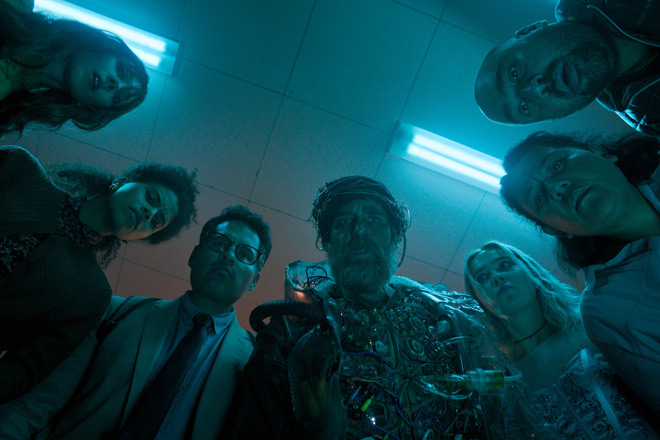
Good Luck, Have Fun, Don’t Die’s engagement with humanity’s relationship to technology is timely and compelling. Still, the execution can occasionally feel heavy-handed, spelling out the stakes more directly than necessary. These moments are few, however, and the story’s humor, inventiveness, and charm keep the ideas engaging without ever feeling preachy.
What makes Good Luck, Have Fun, Don’t Die truly memorable isn’t just its inventive premise or timely themes, but the way it revels in its own chaos. Verbinski’s return is a reminder that big ideas can still be wildly entertaining when handled with wit, care, and a dash of irreverence. The film thrives on its unpredictability, its carefully crafted characters, and the sheer joy of watching a story unfold with enormous stakes. Still, the tone never takes itself too seriously. This is why Cryptic Rock gives Good Luck, Have Fun, Don’t Die 4 out of 5 stars.


)
No comment