

Fortunate, fame, and glory are nice, but what matters most is that you are doing what you love. Without fulfillment of what is deeply embedded in your soul, all the money and riches in the world mean absolutely nothing.
This a bold statement, but very true. It is also true that happiness cannot be bought… however, it can be cultivated. Known as the bassist of the platinum-selling Rock band Shinedown, Eric Bass is well aware of the ups and downs along a journey in music because he has been on them all along the way. Impassioned about music his entire life, he has always been involved in it but never imagined he would be where he is today.
As a result of hard work, Bass has been much more than the bassist of Shinedown for the past fifteen-plus years. He has assisted in the songwriting and handled the production of their last two albums, 2018’s ATTENTION ATTENTION and 2022’s Planet Zero. Now on the verge of one of Shinedown’s biggest tours, they are also releasing new music, but Bass has his own solo album also emerging from the rearview mirror.
A surprise to many Shinedown fans, news came a couple of months ago that Bass had been working on a solo material, and it takes shape as I Had A Name. A cinematic collection of songs, it arrives on February 28th, and with it, a ton of excitement from Bass, who has been itching to the music out there. Proud of the material, he recently took some time to chat about his experiences in music, the key to balance in life, the concept behind his new album, plans for Shinedown moving forward, and more.
Cryptic Rock – You have been involved in Rock-n-Roll for a long time. You have been in Shinedown for over fifteen years now and have had a lot of success with the band, co-writing, touring, and all the great things you guys have done over the past twenty years. Before we dive into your solo record, how would you describe this incredible, unpredictable journey you have been on?
Eric Bass – It’s everything that I’d hoped it would be, but not everything I thought it would be if that makes any sense. When I was a kid, the Rock-n-Roll lifestyle was the Mötley Crüe’s “Girls, Girls, Girls” video. It’s definitely not that. That’s not the life that we lead.
It’s a life of purpose. I was built to do this. I was made to do this. I love being creative. I love trying all sorts of creative ventures. Music is what I was put on this earth to do. The fact that I have made a career out of it and that I can continue to make a career out of it is such a blessing.
It gives me purpose. It gives me a reason to wake up in the morning. It’s not easy, but it’s very rewarding. Kevin Hart, the comedian, said, “Everybody wants to be famous, but nobody wants to do the work.” That’s very much how it is. It’s not about fame. That’s how he put it.
It’s a lot more than I thought it would be when I wanted to do it, but I’m really glad it’s as much as it is because it definitely makes me appreciate it.
Cryptic Rock – That is fantastic. You are getting to live your dream. How much better can it get than that?
Eric Bass – Again, I can wake up in the morning and not chase someone else’s dream around. I forget who said it; I’m full of quotes right now: “A salary is what they bribe you with to give up on your dreams.” The fact that I was able to stick to it, to make my own rules as I went, and to be successful with it.
I exited working for someone else when I was twenty-eight years old. I stopped working the construction job and was able to make music a full-time thing. Ever since then, it’s just been unreal to be able to experience that. I hate weekends. I love Mondays. I love working. I love being out here. I love doing stuff. That’s the life hack right there. If you can get a job, it doesn’t matter what it pays, if you can sustain yourself and your family doing something that you can’t wait to do again the next day. Who cares if you’re rich or not? That is the life hack. As long as you can sustain yourself and live a good life doing something like that, that’s it.
Cryptic Rock – Agreed 100%. We spoke briefly about how you joined up with Shinedown. It was right before 2008’s The Sound of Madness record. Shinedown had their success, but the lineup with you and Zach Myers went to a new level. Not to downplay the original lineup, but it was fantastic, too. However, Shinedown reached a new level and has been sustained as a success. There is a camaraderie in the band, you see it all when you guys play live. What do you attribute all its success to?
Eric Bass – What you just said, first and foremost. I don’t want to be in a band with anybody other than the three individuals I’m in a band with. It doesn’t mean that it’s perfect. It doesn’t mean that we don’t have our disagreements, we don’t go through our hard times, and we don’t have to tolerate each other somewhat. That’s just being in a band. That’s how it is.
The things I have to tolerate are minuscule compared to some other bands that I’ve been around. We all love each other. We all still ride the same bus when we don’t have to. We all genuinely care about each other.
We were all just in the same room recording. We’re working on the new Shinedown record right now. Barry Kerch and Zach were here up until a couple of days ago. We actually wrote a song in the studio, which is something we hadn’t done in a minute. Brent was just in here, literally right before I got on with you, tracking vocals. We all enjoy being around each other.
A hugely important thing I can point to is the lack of complacency. I am twisting myself in knots, making this record the same way I twisted myself in knots, making the last record and the one before that. Everyone’s doing the same thing. We don’t rest on our laurels. Every record is your first record. Every tour is your first tour. You try to treat every show like, “Hey, man, there are people out there that have never seen us play before.” I think about that every day, and so does the rest of the band.
Another thing that we’re blessed with is we have a sense between the songwriters in the band and the songwriters we work with outside of the band about what we think makes a great song for our band. We know how to put a good Shinedown song together. We have plenty of bad songs that no one’s heard. Every band does. I would say the majority of our songs are really good. I don’t know why that happens. It’s the soup. It’s what goes into the Shinedown casserole.
Just not being complacent about any of that. I’m producing this new record, and Brent and I had a pretty frank meeting about songs a couple of weeks ago. As the producer, I have to take myself out of songwriter-land and bass player-land and become the producer and go, “We don’t have all the songs we need for a record. It’s not there yet.”
Going into it, we all thought we had what we needed to get going on it. It doesn’t mean we’re stopping working on it, but we have some more stuff to write that we didn’t think we needed to write. It’s just that attitude. It feels weird saying it, but it’s true. It’s trying to leave something behind. I want to leave a legacy. I want to leave something of value to the world. Being content with having a single in a few album tracks isn’t going to do that for me.
Those are just a few of the things, not to mention the tireless efforts of all the people behind the scenes that we work with, too. A band can look an awful lot like a monolith to people from the outside, and it’s just these four guys who make it happen.
We do make a lot of things happen, but it’s not just a venture on our own. There are a lot of other people who care an awful lot about this band and who work with us. Whether that’s in management, or label, or promotion, or our crew. All those things go into it. That’s a really long answer to your question. I wish I could just point to one thing. It starts with love for each other. It continues into not being satisfied with just good enough and ends with our extended family. Those are a lot of the reasons, if not the main ones.
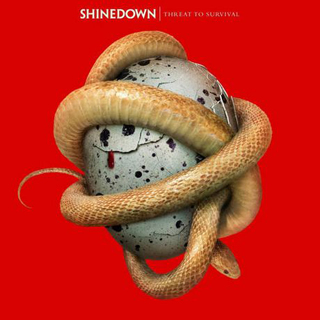
Cryptic Rock – What you are saying is accurate. If you wanted to summarize it, Shinedown appears to care about what they are doing, and you want to leave a legacy. You are not just doing it to go through the motions. You can hear the authenticity of the music.
You mentioned the last two records: 2018’s ATTENTION ATTENTION and 2022’s Planet Zero. You worked on the production of those as well. They are two phenomenal records, very potent, which leads to your solo album, I Had A Name. This is based on a story you thought up, but it is autobiographical because it is based on feelings and things you have been through. It is quite fascinating… so tell us a little bit about this record.
Eric Bass – Thank you. I did not set out to write anything autobiographical. I’ll give you a little bit of the backstory on it. We were on the ATTENTION ATTENTION Tour. We were in Europe, and I was in a hotel room. I had one of those moments that some of us have experienced. Not everybody. People who have experienced things like this will understand. People who haven’t might think it’s weird.
I just finished a workout. I had this voice speak to me that didn’t belong to me. The skies didn’t open up. It was none of that. It was internal, but it just said, “You might want to write this down.” I spent the next two hours writing down a story outline.
The interesting thing about it is I grew up reading comic books somewhat, but I’m not obsessed with comic books. I’m not obsessed with superhero stories. I was a Star Wars and Star Trek fan… I still am. I have always enjoyed Good Science Fiction, Battlestar Galactica, and other stuff like that. I was never really a comic book person. This was very specific. It’s like this graphic novel idea. Why would I be given a graphic novel idea? It’s not really something I’ve ever really been into. Ultimately, I wrote down what would become the prequel to the story that I told. I was so taken aback by it.
I called my friend Eric Rickert; he and I worked in the studio together. He’s the assistant engineer on everything I do. He’s my right hand everywhere I go. He is a comic book fanatic. He gets boxes of comic books every month and reads all of them. He keeps up with the stories. I said, “Hey, this weird thing happened to me yesterday. I think I’m supposed to write this story in the graphic novel form. I don’t know where this came from, but give me some graphic novels that you think are really well-written. I’m not worried about the artwork. I’m worried about the story.” He gave me some examples and I read some stuff.
That’s how fish-out-of-water I was with it. As I progressed with that story and figured out who these characters were, I started thinking about music. The album became a secondary thought. I had some music that I started working on in my hotel rooms while we were on tour.
I went to Brent Smith, and I said, “Hey, man, are you in the mood to write a new Shinedown record right now because I’ve got some pieces of music that I’m throwing around? They’re kind of different, but I always want to put my best stuff into the band first before I do anything else with it.” He was like, “Man, we’re not there right now. I’m not there. Just do whatever you need to do.”
I began in earnest writing these songs, basically writing snapshots from the story that I was writing. The album is chronological, but it does not tell the whole story. It’s just taking these moments that I thought were the same way I write any song. I see something, think something, or feel something, and I write a snapshot of that feeling or moment. I did the same thing with this.
Later, I was listening to the fifth song on the record, “Goodnight, Goodnight.” I had another one of those moments where I had a shocking realization. Something dawned on me, and it shot ice through my veins. It was like, “You have written the most autobiographical thing you’ve ever written through these characters.” Through everything in these songs, all of the lyrics, I started to hear the songs that I’d written differently all of a sudden.
It was like, “Oh, man. Yeah, dude, you’re writing about yourself here, and you’re writing about yourself here.” It all made a lot of sense to me at that moment because the lyrics had been really easy to write. Not easy, as in I just sat down, and everything came out. I mean, lyrics are always going to require some detail, and you have to push through some walls and rewrites.
I wrote the verses to one song in particular, and I loved it. I started to sing it and realized immediately that it wasn’t right. It was not honest. It wasn’t good. I scrapped the whole thing and started again. When the lyrics would flow, they really flowed very effortlessly. That’s something that, in my experience, only happens when you are being extremely honest in your writing. I had thought it through the process.
I was like, “Man, it’s really interesting how I intimately know these characters, and I know who they are, and I know why they’re where they are and what makes them tick.” Writing from their perspective has been really easy. Then you realize later, “Well, no, you’re just pouring yourself.” Every single one of them is you. Whether they’re the villain or protagonist, A or B, or accessory character, they’re a piece of you. They’re a part of you. You’ve basically wrapped all of your neurodivergence, depression, happiness, and whatever into these characters.
It became the most raw autobiographical thing I’ve ever written, but maybe that’s what made it easy. I took myself out of the equation, and maybe that made it easier to say some of these things. Yes, it’s its own story. The story has nothing to do with my life. It has nothing to do with me.
On the record, when I’m writing about these characters and what they’re feeling and thinking, it is a very scary realization. It made the record a lot more personal. The joy that I got out of being able to go back and go, “Listen to your record again.” This thing that I’ve been working on for eight months or whatever, all of a sudden, I heard it with fresh ears, and it’s something else.
A lot of times, if you have a Rock Opera or something that’s a concept record, it’s hard for people to find themselves in something like that. Music allows us to find ourselves in the songs, the songs that we love. I think that people are going to be able to find themselves in these songs because of what I’m talking about. People are going to be able to see themselves in what’s being said. It is very personal at the end of the day.
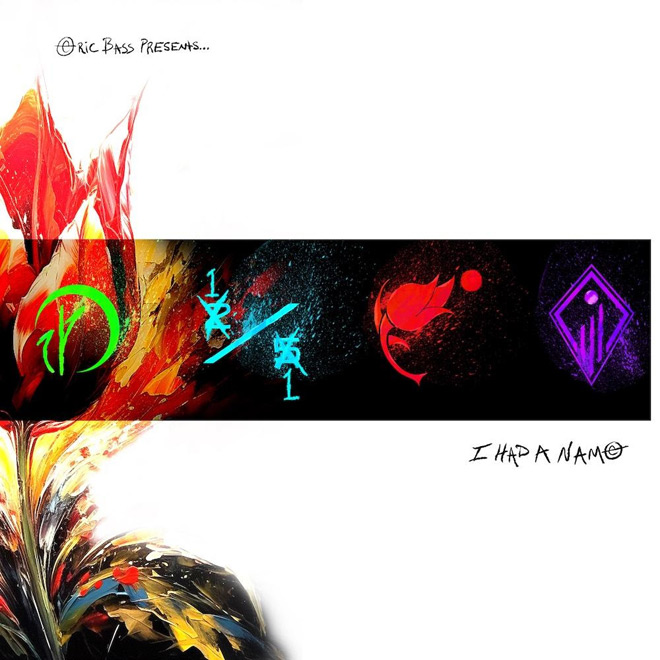
Cryptic Rock – Agreed. Like you said, it’s a story. There’s a lot of reality in all of what you’re saying. You talk about the lyrics and how it was almost like channeling your personal feelings and stuff into characters. The music is very eclectic as well. Is that indicative of your personality?
Eric Bass – I don’t have a lot of musical boundaries and walls. My only regret about the record is that it’s not more eclectic than it is. When I was in the middle of working on it, I felt like I was making this thing feel really different to me and not like other things. I felt like I was really extending myself.
Now, when I listen back to it, I’m like, “Oh, man, you could have gone so much further with this. It could be so much more.” That’s for another record, right? That’s just how my brain is. It can be detrimental sometimes. You can lose people. Maybe I’m fortunate that I didn’t extend myself as far as I could have with it because maybe people wouldn’t be able to really grasp it. Not because it’s so good. I’m saying that it got so obscure that people couldn’t rein it in. If had gone to where this is Country, and then this is Metal, maybe it wouldn’t be that accessible.
I just like so many different things, and so many different things make me tick. It did worry me a bit when I was working on it. I was like, ” Maybe I should rein some of this in.” Then I think back. Mike Patton came to mind a lot when I was working on it because that guy just does whatever he feels, whatever feels good. That’s what creativity is. I’m making something for myself first and for everyone else second. That’s why it has some different elements in it. I decided to take those walls down and play in a bigger sandbox, so to speak.
Cryptic Rock – It works well, and people are going to enjoy it. It will be cool for them to see this side of you with the music because most people obviously recognize you from Shinedown. This is a different side of you. The record is set to come out. Are you going to have time to do any shows for it at all?
Eric Bass – Not out of the gate. I will not. We’re in the midst of making Shinedown records. I have that responsibility as well. I have the graphic novel circled to be out in the fourth quarter of this year. Perhaps when that comes out, it might be a good time to do some shows. That’s been thrown around and talked about. I don’t have anything set in stone and no definite plans.
Originally, I hadn’t thought at all about ever playing this live. The more people mention it, the more I think about it in earnest. I feel like that’s something that could happen. Not immediately, though.
Cryptic Rock – That is something we’ll have to look out for. As you said, you have a lot going on with Shinedown with recording material. The band recently announced a really big tour, singles are out, etc. There is a lot going on.
Eric Bass – Yeah. We recently finished the mixes on two songs, and those are mastered and on their way.

Cryptic Rock – Very cool! You mentioned a graphic novel associated with I Had a Name. Who handled that for you as far as the publishing, the drawing, etc.?
Eric Bass – Yeah. Funny enough, right now, it’s in development. Rob Pryor is one of my dearest friends. He’s a very well-known Pop culture artist. He used to be a more Fantasy-based artist. He still does a lot of stuff. He did a lot of Star Wars book covers, a lot of comic book covers, a lot of Magic: The Gathering artwork, and stuff like that. He’s morphed into a serious artist now. He travels the world and does a lot of live painting and that sort of stuff. He and his apprentices at his studio helped me with the concept art for my characters.
The artwork in the album, when it comes out on vinyl, is their work. Rob and I have a cool thing going on for the artwork for the graphic novel. I don’t want to give too much away, but that is happening right now.
As far as publishing goes, right now, it’s literally just trying to find the right home for it. Some people are interested, and I’m talking to a few different people. I’m such a bad business person—I’m the worst. There’s never been an artist who has benefited more from having business people around him than me.
Recently, I asked my wife if she wanted to go get brunch. It was the first time I had left here in three weeks. All I want to do is create, make, and do. I’m always in the work. I’m always in the art.
Rob and my management team have been very helpful in finding a home for it. There are several options, and I’m just trying to make the right decision right now.
Cryptic Rock – Cool. It is interesting how you say how passionate you are about the work and not the business. You are not alone. A lot of people who are artistic are the same way. It is good to have the people around you to help you out with that.
Eric Bass – It is because I would say I can make the donuts, but I can’t sell the donuts.
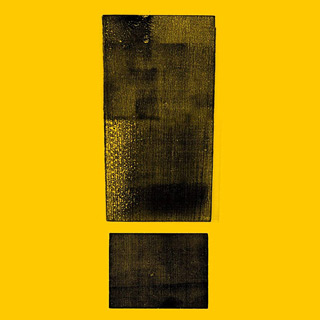
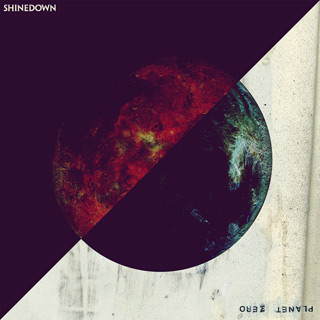
Cryptic Rock – Understood. You mentioned how you worked in construction until you were about twenty-eight years old. You worked hard and did what you needed to do to be a musician. Then Shinedown came along as this full-time gig, and you became an intricate part of it. This all happened when you were pretty much an adult. Sometimes, people get that when they’re really young, and it is not so good. Maybe it is better when we are older. Would you agree?
Eric Bass – I would 1000% agree. I’ve been playing in other bands, touring in vans, and sleeping in Walmart parking lots. I work construction and then get in a van with my bandmates on Thursday, Friday, and Saturday, touring the East Coast and Southeast before going back to work again.
I had left that touring van life to pursue studio full-time. I’d gotten some recognition. I got a good bit of recognition from the bands I was working with, from labels, and people in the business. That’s how I found myself in the position with Shinedown. Barry and Brent came to write songs for The Sound of Madness with me. We ended up getting along. I worked my way back into playing after I’d stopped. I was a married man. I was a professional. I did go from 0 to 1,000.
One minute, I’m just this obscure guy that people in the industry know somewhat. I’m not super well-known, but in some circles, I was making some noise. The next thing you know, I’m on stage in front of ten thousand people, and it’s a whole other life.
I’ll be honest with you, I tried to screw my life up. I was thirty-two years old at the time. Shinedown was not the healthiest place at that point. There were a lot of drugs, alcohol, and everything else going on prior to me getting there. I just fell right in line with everybody. We threw the sails up on the pirate ship and hit the road.
That Sound of Madness Tour was something like four-hundred and thirty shows on one record cycle. We were constantly gone all over the world. At thirty-two years old, I fell off the wagon, lost my mind, and unintentionally tried to ruin my marriage. Even being an adult, knowing right from wrong, and having tried to live a responsible life, it was virtually impossible to fall into that situation and not become what you would expect it to be. A cliche.
I can’t imagine what it would have been like if I had been eighteen to twenty-two. Would I have had the responsibilities and all of that stuff? Probably not. It’s just one of those things. All of the finest people that I know in our industry have all been through that story I just told you about. You have to back your way out of it and realize, “Okay, if I want to continue to do this, I have to reevaluate my priorities. I have to reevaluate sex, drugs, and Rock-n-Roll.” This goes back to why Shinedown is still together.
There are plenty of fantastic musicians and Rock stars who have found a way to make that their life. They live it, but that’s very rare. Most people end up dead or divorced. Luckily, my wife’s a saint, and we made it out. I got my head together, and so did the rest of my band.
It’s definitely a good thing that it happened later because, just seeing what happened when it did, if I’d been younger, who knows what would have happened. I might not even be here.

Cryptic Rock – That is what being human is all about. The bottom line is we should not be casting stones at others. We are all human, and it is all a learning experience. That is the connectivity with the music as well as the human condition.
Eric Bass – For sure! No one’s immune to the pitfalls. The second that you think you are is when it’s going to happen to you, I promise.


No comment