

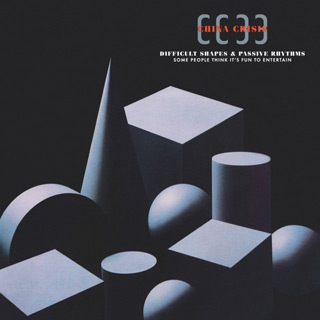
 There is no question that the 1980s were an era that produced some extremely unique music. With many artists developing a sound distinctive to them, out of the north west region of England came those known as China Crisis. Initially begun as a duo, led by songwriting partners Gary Daly and Eddie Lundon, they swiftly found success with the 1982 debut album Difficult Shapes & Passive Rhythms, spending seventeen weeks in the UK charts, while 1983’s Some People Think It’s Fun to Entertain produced a top-ten hit with “Wishful Thinking.”
An excellent achievement, the inventive songwriters of Daly and Lundon moved forward and upward in 1985 with their hit record, Flaunt the Imperfection. Now, over four decades ago, Daly and Lundon have kept China Crisis going strong with extensive international touring, a superb original studio album released in 2015 called Autumn in the Neighbourhood, and an interesting compilation album in 2024 called China Greatness.
Showing no signs of slowing down, in 2025 the band looks to celebrate the 40th anniversary of Flaunt the Imperfection, and in the summer, hit the States as part of the Lost 80s Live! Tour. Gracious in continuing to live his musical dreams, Gary Daly recently took the time to chat about the early years of China Crisis, the work put into Flaunt the Imperfection, touring, and more.
Cryptic Rock – China Crisis has remained active for over forty years, sustaining itself and continuing to tour with success. How would you describe your incredible journey with the band?
Gary Daly – Pretty indescribable, because it’s been so long. We’ve done almost everything a band can do. All the initial excitement of starting off as school kids, then dreams start to come true, you don’t realize your dreams are coming true because it’s all a bit otherworldly. Then it is enduring and making the most of the success we had.
Then, those years where you’re just in the wilderness because that success has passed. I don’t believe Eddie and I had hit records. We didn’t really have a following. We didn’t really harness a fan base. Once that initial success had gone, we didn’t really have anybody to play to.
We’ve spent the last ten, fifteen years, or forty years creating a fan base, trying to get the people who bought the records to actually still come and see us play. I do realize it’s one of the best jobs you can do, one of the best jobs in the world. I’m always very aware of people’s shifts when they’re doing work. If someone serves me at a counter, or in a drive-thru coffee, or something like that, I do find myself looking at them, going, “How long have you been on your feet? How long have you been in that tiny space serving that thing?” I’m always very aware of time, how much it’s worth to people, what people get paid for their time, etc.
Whenever it gets, “My God, we never stop gigging, playing, and traveling,” I always get made aware. There are worse jobs than this. There are hard jobs out there at the end of the day.
Cryptic Rock – Right. Obviously, you appreciate it. You do not take it for granted, and it shows because you both seem very passionate about what you are doing. You mentioned that the band did not necessarily build a huge fan base, but you have had success. You had albums that did very well in the UK market. Many of the bands that emerged during the early ’80s, including China Crisis, were unique among their peers. How did you approach the music, because it just seemed a little different?
Gary Daly – Yeah. We’ve been touring now for forty years of Flaunt the Imperfection (1985). I always tell people that what made us different from many of the other acts was that, as for myself, we didn’t really want to be a band as such. We were very inspired by Brian Eno and his work with David Bowie, as well as the New Wave bands that followed. At the same time, we were listening to Odyssey and people like that, sort of popular Soul Pop.
The fact is that Eddie and I grew up in big families; Eddie’s one of ten, and I was one of eight. We had older sisters. We didn’t just hear our older brothers’ Prog Rock, New Wave, Rock, and Pop. We heard a lot of Tamla Motown, Soul music, Bowie, Stevie Wonder, Rolls-Royce, and all these kinds of people. I think that was in our music from the very beginning. We didn’t particularly want to be like a band like Echo & the Bunnymen or The Teardrop Explodes. In fact, Eddie and I went to see the Bunnymen and The Teardrops playing together at the famous Eric’s Club. So we would have only been about seventeen. And we would have definitely been sitting there going, “Well, I don’t think the sound is that great.” And the songs aren’t standing out. And it all sounds a bit samey and a bit bandy. We were more about our songs and what they could be, as opposed to people liking us as a band or anything.
It was like, “No, we wanted to see what we could make of each piece of music or a song that we wrote.” We didn’t really realize that what we were doing was lending it to becoming a unique sound. When Eddie and I grew up, we weren’t singers. It’s not like we grew up as kids, and everybody thought we had these amazing voices, and we’re going to be these singers. We didn’t sing at all until we started these little instrumental tunes that we thought we were copying Eno and Bowie’s Low (1977), etc. Then something happened along the way, and we became curious about whether we could sing over them. That led to writing lyrics. It was all brand new and exciting.
If Eddie was working on a tune, then he’d end up working on the lyrics, and I’d be the same. That’s how we ended up singing over our music… it was total curiosity and by accident. We did not grow up thinking we were singers or anything like that.
Cryptic Rock – Interesting. Curious is a good way to describe China Crisis. A China Crisis record is a curious experience because it takes you in different directions that you may not anticipate as a listener.
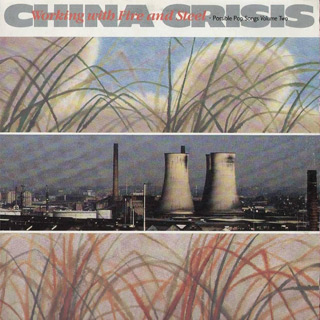
Gary Daly – Yeah, there was a lot of experimentation. Well, very early on. It mostly helped with our voices, as we weren’t that experienced as singers. It mostly helped with the delivery of the vocals. There wasn’t much effort. We hadn’t had any lessons or techniques. So, when you hear me singing a lot on the first two albums, it’s very influenced. Originally, it would have been Greg Lake and Emerson, Lake & Palmer, and the way he sang so nicely and melodically, with an English sort of sound. Later on, it would have been Eno, David Byrne, and Howard Devoto. All sorts of people who couldn’t really sing, but they had a sound and a delivery that was unique to them.
That encouraged Ed and me to sort of like go, “Well, you just sing what comes into your head, and that’s how you sing it, and that’s how you deliver it.” So, a lot of the time, I think you can hear that we were trying to be David Byrne, Brian Eno, David Bowie, as well as Howard Devoto. You can hear it totally in my mannerisms in some of the songs, such as “Hanna Hanna” and “Animals in Jungles.” It’s completely David Byrne and Talking Heads.
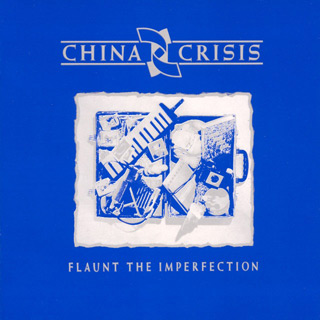
Cryptic Rock – Those influences all bleed through. You mentioned the 40th anniversary of Flaunt the Imperfection. That was an album you worked on with Walter Becker. Walter is known for his work with Steely Dan and was a fantastic musician. What was it like making that record and working with Walter?
Gary Daly – Well, first of all, it wouldn’t have been my first choice because I was keen to have Eno work on every record, and he didn’t work on any. (Laughs) I’d ask the record company each and every time for Eno, and they’d come back and say, “He said, no, he’s not available,” or he’d say, “No.” And in the end, I got the impression that they didn’t even ask. They were like, “Gary, don’t be ridiculous. We need you, boys, to get in the charts and sell records. We can’t have you be in an experimental B-side kind of band.” They did indulge us a great deal, but I think they were gearing us towards greater and greater success. It was unbeknownst to us because we were so young. By the time we were working with Walter, we were only twenty-two, and we were already onto our third album. We had hit records off the first two records. So we did feel pretty confident.
Walter wasn’t my first choice, but I knew of him. Eddie and I had The Royal Scam (1976) and Aja (1977) when we were kids, at fourteen and fifteen in the mid-1970s. So very aware of him. Eddie was more of a fan, and Eddie’s brother, Nicky, who worked with us. I was able to enjoy his company and his ideas without feeling intimidated. Because I must admit, I was stoned a lot of the time. (Laughs) And he enjoyed and liked it. We had such a laugh recording all the vocals.
Say, like “Black Man Ray,” for instance. That’s five tracks of my lead vocal and one track of Eddie’s vocal on top of that, on a higher octave. That wouldn’t have been my idea. That wouldn’t have been my suggestion. That was Walter, because Walter would have heard it. What Walter said was, “Look, when it’s a single vocal, you can just make out what’s being said. When you double-track it, it becomes a lot clearer.” The thing with “Black Man Ray” is that he was so intrigued by the imagery and the way words were conjuring up. I think he was very much, “People have got to hear this. They’ve got to be able to hear these words. We’re going to make it solid.” Well, that would have taken a lifetime to do, because one, it was analog. There were no digitized vocals. There was no moving them around in the recording. It was all on tape.
You had to sing it a few times, comp that. Comp, meaning you would take lines and words from each take and make a lead vocal. Then you would repair that to get it pristine. Then once that was pristine, we went in and recorded another four vocals on top of that, which had to be exact and pristine. And then he would add Eddie. That was all Walter’s idea. We had such a laugh doing it because we only ever did it just before supper or teatime in the evening. I would always get stoned, and as exact as we were being or as exact as Walter was being, we always had a laugh doing it. I was unaware of just how intense the recording was because we were having such a good time, and we were laughing about it all. I really enjoyed working with Walter on Flaunt the Imperfection.
All our roles in the band had changed. Eddie and I suddenly became the writers, not just the artists, but the writers for China Crisis and China Crisis with Walter. The fact that it was the second album we were working on with Gary “Gazza” Johnson and Kevin Wilkinson meant we were a band. Everybody was suddenly in charge of their part of being in the band. Kevin was very much looking after the drums with Walter, and the same was true for Gaza, who was looking after the bass with Walter. Same with Eddie, guitars, and some keys, vocals, and some of the brass arrangements. And I’d be the same. We all sort of carved out roles for ourselves, and Walter was definitely the producer.
Up until that point, Eddie and I had felt a lot in charge of everything that was being committed to tape. Once we were in Walter’s sphere, he was very much in charge of what was going on tape. He would always run it by us, but he wouldn’t run it by us until it was going to go to tape. He would say, “You want to fix any of this or you want to add anything to it or you want to critique it or anything, now is the time to do it because it’s about to go to tape and it’s about to become your record.” There were things like that going on. It was an incredible lane and curve. Some of the people Walter got in, Tim Renwick on guitar and Nick Magnus on keyboards, were virtuoso players. Eddie and myself were just sort of self-taught, intuitive kind of kids. It was generally where you would sit and write a song, and it was like, “Well, how did you write that?” And we would be like, “Well, I really don’t know. Just sort of sat there with a bit of a synthesizer and did Black Man Ray.” Well, that’s the simplest thing on bloody God’s earth. I remember Walter telling me he thought “Black Man Ray” was like a Beatles song. He was right because it’s an intro, verse, chorus, verse, chorus, middle eight, verse, double chorus, and outro. Well, that’s The Beatles, they did that on everything.
Cryptic Rock – It sounds like it was a very intense yet enjoyable experience. A lot is happening in those recording sessions.
Gary Daly – Yeah. It was. It was really fantastic. I suppose we’d been together enough to sort of realize that we were enjoying each other’s company, and it didn’t feel like work. It felt like we were making a record as a group. It wasn’t just Gary and Eddie anymore. The first two albums it was very much Gary and Eddie. You know, but by the time we got to Flaunt the Imperfection, it felt like a band.
It was like Walter was taking it to another level. He was taking it, and we would provide the raw ingredients – the songs, the voices, and the band to play it, augmented with a few session players. That’s what happened. Walter and the record company’s trajectory was that this band needs to be a bit more successful. They thought we were on the right path to being a bit more successful. We did and we didn’t. It was for Warner Bros. in America, and they just didn’t think much of it. That was weird because Walter was on Warner Bros; that’s how he ended up working with us, as he had nothing to do. He wasn’t going to be working with Steely Dam for the foreseeable future. Donald Fagen was off doing The Nightfly (1982), a massive solo success. They really didn’t know what to do with Walter, so they gave him a go at producing. And he did a great job. He ended up working with Rickie Lee Jones and a variety of other people thereafter.
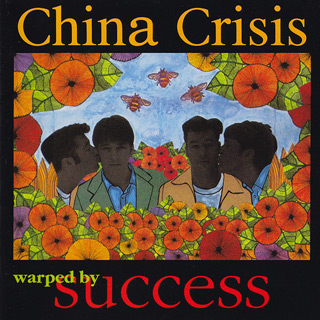
Cryptic Rock – Hearing the backstory is fascinating. So, it has been forty years since Flaunt the Imperfection. Thirty years later, you put out Autumn in the Neighborhood in 2015. Believe it or not, Autumn in the Neighbourhood is now ten years old!
Gary Daly – I know. That’s unreal. It still feels brand new to me. Do you know Autumn in the Neighbourhood never really got released? It never went in the shops. You can only buy it from the band. We didn’t have it online until about five years ago.
Eddie and I owned it; that’s the only record we own after forty-odd years. The deals we were offered when we finished it were pitiful, really pitiful. And we said, “Well, you’re not getting it. You can’t have it. It’s as simple as that.” So basically, we just sold it at the gigs, and people pre-ordered it.
It was a pledge thing where a lot of the fans pledged money towards it. Some of them were incredibly generous. Then we put it up online and sold it as gigs as well. We had to stop selling it online because the cost of shipping it anywhere became untenable. It just wasn’t right, so we sold it at gigs instead.
Now we have the vinyl you haven’t been able to get for a couple of years. I think the idea now is that it’s going to be out in the autumn, an official release through the independent label Last Night From Glasgow. With pre-sales and such, we might get a chart entry. That’s the only reason for it coming out, because I always felt like Autumn in the Neighbourhood deserved Grammys. I thought that it should have gotten about three Grammys for production and songwriting, etc. I think it should have gotten on the radio and all that. Obviously, we didn’t have any of that in place when it came out.
Hopefully, this time, there will be some recognition for it and the people involved who recorded it, played on it, did the arrangements, and produced it. It would be great to see them get a little bit of, “Wow, this is a standout record.” I absolutely love it.

Cryptic Rock – Agreed. It is a fantastic record that deserves more attention. You and Eddie have been very hands-on over the years. As mentioned, you took ownership of Autumn in the Neighborhood and sold it independently at shows, etc. What is it like working independently as opposed to working with a label? Is it more stressful, or is it better to have control?
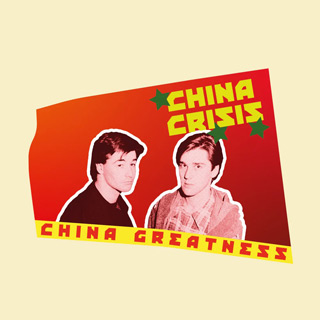
Gary Daly – It has been fantastic, actually. It is really great. I literally mailed out Autumn in the Neighbourhood from my home. We’ve done a few things. I did two solo albums, and we put out China Greatness (2024). It has been fantastic. We do stickers, CDs, and lots of t-shirts. It’s nice thinking up new things for people. It’s nice the way there’s a keen interest in anything musical that we’ve done. It’s nice being able to put out little demo compilations and similar items.
I do like trying to get out as much as we can because I’m always over mind, “Well, what’s the point of it being on a hard drive just sitting there?”We might think too much of it, but people have a keen interest in the journey of a song, an album, or the initial idea.
It does take a lot of energy, a lot of positive energy. You’ve got to have that about to do it all because it’s a lot. It’s an awful lot you know to be doing it.
Cryptic Rock – Certainly. It also brings you closer to the listeners, as you’re so hands-on with it. The shows are always very intimate and fun to go see.
Gary Daly – It’s quite nice putting things in an envelope, such as stickers or postcards, and you send it to them, and they’re not expecting it. I always really like the way people really appreciate you know that you’ve done something, a little bit outside of what they were expecting. I always think that’s quite nice.
The thing about the record company is that I’m glad we’ve had one now for the last few releases. We made it into the charts, the official charts with China Greatness. We were just below Taylor Swift, Billie Eilish, and people like that. That was pretty exciting. That’s the thing with the record company; they can get it to the radio stations and the shops. You can be in a town somewhere, go in the shop, and go – Whoa, there’s your record. That’s a great thing. We can’t really do that on our own.
Cryptic Rock – Yes, and that exposure is deserved. Are you regularly writing? Is there a possibility of new China Crisis music?
Gary Daly – We have just started. The writing has never stopped; there are always ideas. At some point, you start recording them and passing them around. I’ll pass something to Eddie and say a couple of things to him, and then sort of let him get on with it a bit. Then we’ll hook up and hear what he’s been doing. That’s how it starts with trying out ideas.
I like the way you don’t know if they’re any good or not. You really don’t until something happens and someone plays something to it, or someone suggests something. All of a sudden, it’s like, “Wow, that really is good.” And then there are others that just, no matter what you throw at them, it doesn’t stick. We are at a stage where everything is brand new, even though we’ve been doing it for a long time.
It’s exciting to hear what people think you’re trying to do, and seeing them respond to it, whether it’s a ‘yay’ or ‘nay’ kind of thing. It’s good, though.
Cryptic Rock – It will be exciting to see some of you start to see the light of day.
Gary Daly – Well, do you know what? I don’t think it will be anytime soon. (Laughs) Autumn in the Neighbourhood took twenty years, and it was the first album in twenty years. It’s not going to be out in the next year or so. It will take a while.
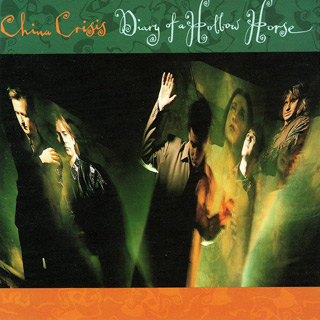
The thing with Autumn in the Neighbourhood is that we were very aware that we needed people to like it. We couldn’t put it out, and people don’t think it was us, or doesn’t sound like China Crisis, or they’ve changed, or it’s not as good, and those kinds of things. It’s a bit different when you’ve got a bit of a legacy. We thought, “Well, I don’t want them comparing it with Flaunt the Imperfection.” As it was, quite a lot of people thought it was as good as anything we’d made. That was thrilling. It didn’t just happen; we really did do our best. Everyone who worked with us, really, really pulled out the bag and did their best, and wanted it to be as good as anything.
It was thrilling when people began to get excited about what they were hearing. I was quite blown away. I thought it was so grateful of people. I couldn’t have stood a duffer. (Laughs) You know what I mean? I’ve seen other artists doing it. I’ve seen them in contemporaries of ours, just putting out too many records. And I’m like, “Well, why are you doing that?” It takes time and experience, and things happen in your life, as well as in the world. That doesn’t just happen. It might when you’re younger because you’ve got the energy for it. But when you’re older, you’ve experienced a lot more, you’re aware of a lot more, and you’re aware of what is great and possibly what isn’t once you start hearing it. It suits us to take time. We’re not really in any hurry. We’d only be in a hurry to get somewhere great.

Cryptic Rock – Absolutely. You want to be happy with the work and come to those who wait. Speaking of performing live, you are a part of the Lost 80s Live! Tour, which kicks off in New Haven, Connecticut, on July 31, 2025. This tour includes you, A Flock of Seagulls, General Public, and Josie Cotton, among many others. How do you enjoy playing these festival-type tours?
Gary Daly – Well, we’ve done a few of them. We’ve done quite a lot of them in Britain over the last twenty years. We’ve done a couple in the United States. Every gig is a gig. No matter where you are or what it is, if you’re singing your songs and there’s an audience, it’s a gig. We’ve done, in over forty-odd years, every imaginable gig there is to do. I quite like these tours because they’re so different from the other gigs. There’s a show, and you’re just part of it. It’s all very professional, and it rolls into a city, and it’s set up, and it’s time to go, and everybody’s ready to go, and you do your thing, and you pack it away, and you move to the next one.
I like that thing of it being a different experience for everyone, and you have to pull as a team, and you’re part of a team. China Crisis is just one of the names on that poster. For it to work, everybody has to contribute a degree of goodwill and effort to make it a success.
It’s not a success if we go down very well. Everyone has got to have a great gig for it to be a success because the nature of the show is – on, off, on, off, on. Itself is very different from all our other gigs. It’s a chance to enjoy that and be part of that. I hope people understand that and are not too critical of the fact that we only do a few songs. I hope they get into the spirit of it. They usually do know what they’re signing up for. That’s the excitement of it, that it doesn’t stop. They’ll have a break, possibly in the middle.
Everyone’s done it. The Beatles would have done it, and Fats Domino would have done it, and Bill Haley & the Comets would have done it. It’s just one of those things. I’m always amazed at how Bob Dylan won’t stop. Neil Young won’t stop. Paul McCartney won’t stop. Fleetwood Mac won’t stop. They just won’t stop! These are people who could be anywhere. Imagine you’re Paul McCartney. You could literally be anywhere in the world. You could almost buy anywhere in the world to sit and relax, watch the ocean, color in your coloring book, sip your iced drink, and read your book. And do you know what they do? They all go, “You couldn’t sort us out a gig, could you?” (Laughs) It’s like, “Are you sure? You’re very old now when you just…” It’s, “No, no, it will be great. Let’s do some gigs. Oh, I just love doing a gig.” Do you know what I mean? And it’s mad, isn’t it? But when push comes to shove, they want to sing their song to someone. The fact that it’s a massive arena or a little club is neither here nor there. It’s about – do you want to sing your song to somebody? We don’t know how many people will be there, or we know it’s going to be a stadium full. It’s the same thing. People just want to sing their songs.

Cryptic Rock – That is very inspiring.
Gary Daly – It’s incredible. It’s the power of song, isn’t it? If you think about the way we are with stories and the way we have to hear stories, it’s every day. Every day, at some point, we sit down, whether it’s the news, a drama on the telly, or a film at the movies; it’s literally stories and songs.
They’re no different. They are stories. They’ve just got a musical background to them, and they might be quite short or whatever. I don’t know what that is. That goes back to caveman times, doesn’t it? Sitting around a fire, and someone saying there was a massive moose in the woods, and it nearly got me. People’s appetite for stories is insatiable. We want them forever.



No comment