
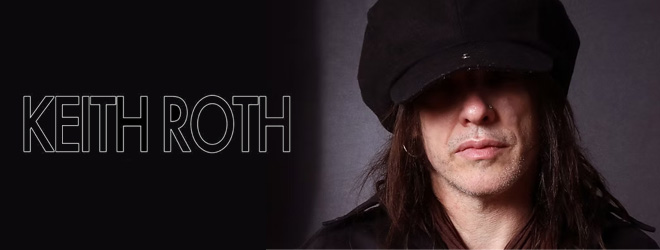
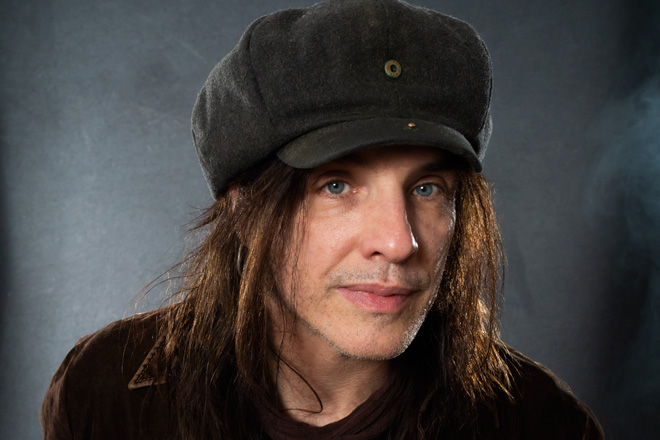
When something lingers so deeply within your soul, there is no containing the passion waiting to pour out. Something that follows you every step of life, there are fortunate enough to find a successful path within the muse, just like esteemed Radio Host Keith Roth.
Originally from The Bronx, but calling New Jersey home, Roth was the type of kid who adored music so intensely that he spent hours studying his LPs backwards and forwards. A love that inspired him to become a musician himself, he has gone on to sustain a long career as a part of Frankenstein 3000. Then, seemingly out of nowhere, a radio career began over twenty years ago, culminating in his successful run with SiriusXM, where he regularly hosted shows on Hair Nation and Ozzy’s Boneyard.
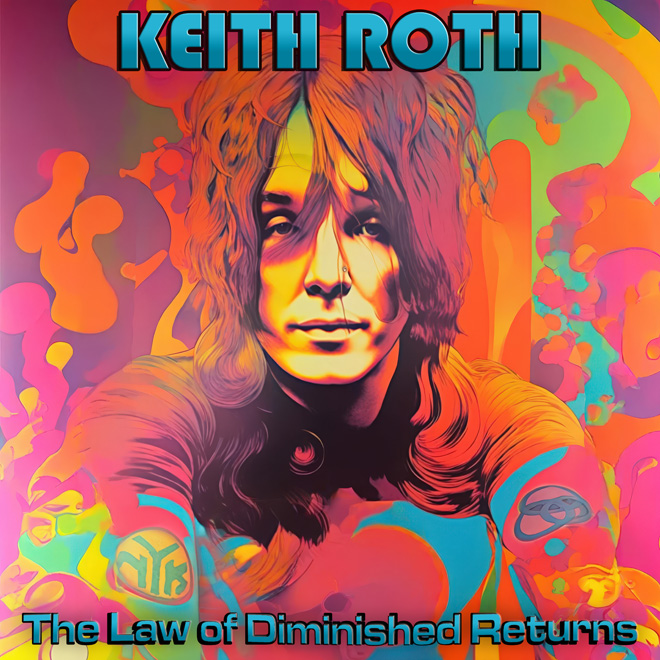
A fantastic story of unexpected events, Roth arrives in 2025 with his first-ever solo record, The Law of Diminished Returns, and it is pretty impressive. Living the dream with a smile, Keith Roth took some time to chat about his wild career in Rock-n-Roll, the work put into his solo album, his love for vinyl, plus more.
Cryptic Rock – You have been involved in music for a very long time. You have your bands and have worked on different things. For the past 20-plus years, you have been on SiriusXM hosting Ozzy’s Boneyard and Hair Nation. How would you describe this incredible journey?
Keith Roth – Well, regarding radio, it’s something I never, in my wildest imagination, thought I’d be doing. I started doing radio in October of ’97. I was in a band in the ’90s. A woman came out and did a story on the band when we had a record coming out. I was living in Long Branch, New Jersey. She moved to Long Branch and said there was a new radio station opening called The Rat (The Wrat), 95.9. She said she talked to the general manager and pitched him a specialty show. She asked if I’d want to be a part of it now.
I really didn’t even know what a specialty show meant. I’ve heard The Rat, and it’s cool. They play a lot of Rock stuff. I told her, “I’ve got to be honest. I don’t think I’m into Memorial Day weekend, the best of Van Halen.” She’s like, “No, it’s a show where we know a lot of people in the industry, and we consider ourselves music heads, musicologists. We could play whatever we want as long as it doesn’t have profanity in it.”
I didn’t really take anything seriously. She scheduled a meeting. I walked into the meeting, which was held at the big table, and the suit was sitting there. I just had my daughter at that time; she was eight months old. My hair was sticking up, and I literally just jumped out of bed. I walked in, I put my daughter on the table, I handed him a playlist written out in pen with not very good penmanship. They just talked to us and heard some stories, and they took a shot on this crazy show.
I did the show for twenty-five years. I didn’t retire it until July of 2024. We used to have Joey Ramone come down, John Paul Jones, and The Kinks. It really took off. There was no format to it. Whoever the guest was, we’ve had everybody from Rudy Ray Moore to you name it. Whoever came down, that was the theme of the night; the theme of the music. It was successful for the area.
Then I got a call about doing a show on Sirius Radio, which wasn’t Sirius XM at the time, about doing a Punk Rock show. They were telling me, “We call it The Punk Yard, and you could do a weekend on First Wave.” I had no clue what they were talking about. I thought Sirius satellite radio was like Wayne’s World. I’m always in the city. The bread to come up for one day and do these shows sounded like it’s worth my time.
I went up there and I saw it. I walked through those glass doors, and Pat St. John, Carol Miller, Meg Griffin, they’re all there. I’m like, “Holy shit, I got to educate myself on this.” I started doing a Punk show and the weekend on First Wave. That led me to other channels, and, of course, working for twenty-three years with the great David Johansen.
That’s how I got into radio. I never aspired to do it. People are always like, “Oh, you got a good voice for radio, but how’s that going to ever happen?” It does. It did. That’s how my radio career started, from being a musician.


Cryptic Rock – That is pretty wild. You have had tremendous success with it. You are the go-to guy on Hair Nation. Your show is fun and always great to listen to.
Keith Roth – I appreciate you saying that. The funny thing is, I was never a really big fan of that genre of music. At first, I thought they put me in radio purgatory because the companies merged. It was Sirius and XM. A lot of the channels I was on at that point, like Disorder and Buzzsaw, were all gone. So like, “We’re going to stick you on Hair Nation.” I’m like, “No, don’t do that. I don’t really know the genre.”
Sadly, I might have made fun of some of that stuff. I did it, and they said it was temporary. After getting into the channel, then being a musician and starting to play with some of those bands and meeting them, I got to relive it after it happened. I missed out on a lot of great stuff. Bands like Cinderella. I always liked Kix, Guns N’ Roses, Hanoi Rocks, Faster Pussycat, and L.A. Guns. That was about as far as it went, though. There were so many great songs. It was really exciting to discover this music that I wasn’t hip to.
I remember when we played with Cinderella in 2012. We did an opening slot for them at the Bergen Performing Arts Center. At that point, The Rolling Stones were having issues with Ronnie Wood. So, I’m watching Tom Kiefer – he’s singing, playing guitar, piano, and saxophone – I’m thinking, “What a great replacement for Ron Wood.” A lot of that stuff that maybe I wasn’t fully into it, I learned. I really enjoy doing that channel.
Cryptic Rock – That is fascinating to hear. There is some great music in that genre. The only qualm with the name of the channel is that it should not have been named Hair Nation. The name Hair Metal is derogatory in a way. Of course, some bands were really that stereotypical. However, it is unfair because bands like Cinderella were, truthfully, a Blues Hard Rock band. Kix are as well.
Keith Roth – I couldn’t agree with you more. You nailed it. That’s what Cinderella is, a Blues Hard Rock band. Kix is like AC/DC. There were a lot of bands towards the end of that, when the garage doors shut on a lot of them, that looked like they were coming off an assembly line. All they needed was the big hair and the yellow guitars, whatever they were playing. I know Jon Bon Jovi was very upset. He gets a lot of love on Hair Nation, but he finds that to be derogatory as well. I agree with you.
It’s become a stamp now, where people have accepted it. You’re not the first person who told me that. Tom Bajour was saying the same thing. He was always a hipster, Alternative Rock guy, but he loved Hair Nation. He loved Kix and Cinderella. He found it to be derogatory. If they change the channel, I don’t think anyone would complain. It’s become a brand, though.
Cryptic Rock – Understandable. That happens when they give these genres names. Some of them are so ridiculous and lazy, though. For example, Emocore, what does that even mean?
Keith Roth – I know. It’s ridiculous! As cheesy as this may sound, but Billy Joel said it best – Punk, New Wave, it’s still Rock and Roll to me. Everything is in genres and don’t cross. When we were kids, you’d go see Iggy Pop play with Kiss. It was just about great bands playing together.
Cryptic Rock – Absolutely. That is the way it should be.
Keith Roth – The Dictators played with AC/DC. It was great. Michael Stanley Band played with AC/DC. Back then, in the ’70s, all the bands looked different and sounded different. Sure, they were fans of the other groups, but it seemed like in the ’80s, everybody wanted to look and sound like Guns N’ Roses. Not everybody, but a big portion of them. The corporations come in, and they don’t know. These banker guys are running the company, and they’re like, “All right, look and sound like Cinderella.” Some of these kids sell their souls, and they do stuff like that. That’s what a lot of the bad rep came towards the end. It needed that break, and now it’s cool.
I recently spoke with Steve Brown from Trixter, and he mentioned that they were playing in Seattle. He said that the last time they played in Seattle was in ’93. I’m thinking, “Wow. What a time for Trickster to be in Seattle. In ’93.” He’s like, “Yeah, the promoter came in and said he absolutely hates us, but obviously there’s enough sales that he put the show through.” Nowadays, if you saw Eddie Vedder at the Trixter Show, it wouldn’t even be a big deal. I agree with you on the genre stuff. Right there with you on that.
Cryptic Rock – It is so true. Another absurd one – Yacht Rock. What a ridiculous title that is. The artists lumped in with that were phenomenal musicians. That was very unfair, the way they painted them in this corner.
Keith Roth – Yeah. If anything, they were inspired by bands like The Eagles and America. There was no genre of Yacht Rock. It was just these guys doing a softer kind of Rock. They were all amazing players. Steve Lukather probably bought a couple of mansions from playing on all those records. Then it became a thing, and people would attend the tribute bands wearing white hats. Now it has become a genre.


Cryptic Rock – On to your music. You released your first solo record, The Law of Diminished Returns, in March 2025, and it is excellent. It has got a very traditional, classic Hard Rock sound to it. What inspired you to put out a solo record at this stage?
Keith Roth – Interesting. I play in a band called Frankenstein 3000, and not many people have heard of it. Fortunately, we have enough people all across the world that’ll scrape up enough that we can actually put out a record. It was time to make another Frankenstein record. I started having some ideas and started demoing a couple of songs. My friend Danny (Farrow), who plays in the band Angel, said, “These songs are not exactly Frankenstein’s songs. A lot of people know you from the radio, and people do know you as a musician. If you just called it Keith Roth, you’d probably get a lot more attention. Instead of making a Frankenstein record, you could do some of the ideas that I’ve heard you do outside of that, where you could do whatever you want.”
That idea started appealing to me. I kind of shifted focus. I’m like, ” I’ll make a record like Keith Roth and Frankenstein 3000 or something.” I was bringing songs to The Dictators because we were working on that record.
I was going through a very prolific period where I was really writing so much for the first time in my life. I was organizing things into folders, such as Frankenstein, Dictators, and Solo, and then gradually working on them. All of a sudden, when you start seeing the light coming at the end of the tunnel, I was like, “Wow, this is a solo record.” I know there are a couple of covers on there, but it’s also autobiographical; a lot of the stuff that I grew up on. My influences I wear right on my sleeve.
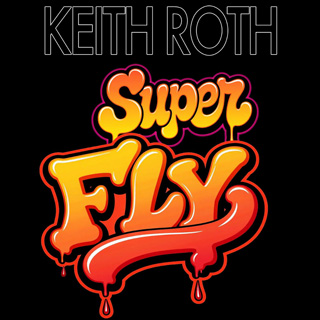
Covering Curtis Mayfield’s “Super Fly” has been embedded in me forever. When we started laying that down, I was like, “This has got to be part of my solo record because I grew up loving Curtis Mayfield.” It was a proper homage to him. It’s a conceptual record, but you’d have to plug in to my brain to see what the concept is.
It was really Danny saying that. Then Bob Pantella, who plays in Monster Magnet, played drums on a lot of the songs. Some of the initial recordings were done at his studio. He said something very similar to that with, “This is a bit different, and this shouldn’t be marketed under Frankenstein.” I said, ” Danny had this idea.” Bob’s like, “Yeah, I think you should.” I thought they made sense.
Additionally, people who knew me from the radio were unaware that I was a musician. Now they hopefully do. They could buy the record, or at least listen to it, or run their car over it.
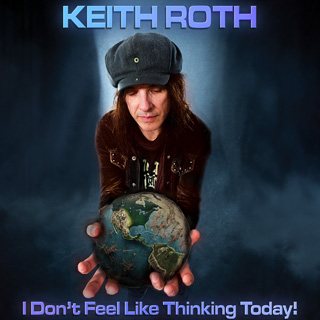
Cryptic Rock – Hopefully because it sounds good. You mentioned how there is a mix of covers in there. There ars a lot of originals in there too. You bookend the album perfectly with your original, “I Don’t Feel Like Thinking Today!” at the start and Lou Reed’s “Strawman” at the end. They share a similar vibe and convey a similar message, in a way.
Keith Roth – Yeah. It took me a long time to sequence the album. I knew “I Don’t Feel Like Thinking Today!” was going to be the opening song. In the last song, “Strawman,” Ross The Boss plays some of the lead bits on there. When you write something, you kind of know it’s the end of the journey. I knew it was the end of the journey for this record. I’m like, “Okay, it’s done.”
I really wanted Ross on the album. I just couldn’t write anymore. I didn’t want to force something to write a song so Ross the Boss could play it. We both love Lou Reed. Ross The Boss grew up on BB King; his favorite album is Live at the Regal (1965). I wanted people to hear him play in that style instead of what he does with The Dictators, Manowar, or some of his Heavy Metal stuff. I figured this was a perfect song for Ross.
I love the song, so I can’t go wrong with a good song. I think that’s why it got tacked on at the end of it. The sequencing took forever. I’m glad that you understood the journey of where it starts and where it ends, because that’s exactly how I was thinking.
Cryptic Rock – Sequencing with records is so important. With many modern albums, you have to wonder if the sequencing is thought out as much as it once was. When you listened to a record years ago, you knew where it began and ended. Sometimes you do not know anymore. Do people even think records are viable anymore with all the streaming and other digital platforms?
Keith Roth – Yeah. Vinyl has saved the industry for reissues. It’s doing a couple of billion dollars a year. In my little area, it’s kind of like That ’70s Show. I see the kids walking around the streets, their hair is long, and they have their Led Zeppelin, Who, and Pink Floyd shirts on. They’re even carrying boomboxes. I talk to them, and they stream to see if they’re going to buy. Of course, they love the convenience of streaming. If they believe in the record, they’re going to purchase it. I think they get together, they may smoke a little weed or whatever they’re into now, and listen to records. That experience that we had as a kid.
The younger generation, I think, is more into the physical product. I think it’s why everything is being reissued ten thousand times and remastered. The beauty of the album is coming back. I always looked at it as a motion picture before the Internet. I’d sit on my bed, and I knew who produced what, who played on what, and who mixed and mastered. A lot of kids are paying attention to detail.
You really make no money from streaming; ten thousand streams will barely cover the cost of a cup of coffee at McDonald’s. It’s crazy. That’s really unfair to the artist. I don’t think the album will ever go away. I think there’s enough, and from what I see of what’s coming up, it’s going to even get bigger. I hope I’m right.
Cryptic Rock – Hopefully you are right! Vinyl has come back. As you said, that is what has kept music alive. It would be interesting to see a resurgence of CDs. It is a great format, too.
Keith Roth – Yeah, I agree. I’ve always liked vinyl. When I got back into vinyl, maybe twelve years ago, and started listening, I finally put together a really good setup. I’m like, “Wow. This is why I became a fan.” CDs, a lot of it is really brick-walled, and they’ve got that digital kind of vibe.
I sat there listening to records like Zeppelin, Floyd, The Ramones, The Who, and there was that warmth. I know it sounds cliche, but it just sounded so well. This is why I became a fan. This is why I couldn’t wait. My main priority every week was to buy a record. Getting back into vinyl brought that passion back again. Many kids who are hearing vinyl are feeling and experiencing that.
It’s amazing how these kids talk, “That record had so-and-so producing it. They didn’t have so-and-so playing drums, so it doesn’t have that.” You’re sitting around like, “This is pretty impressive.” Maybe it’s just in my neighborhood, but I try to talk to kids about it. That’s what brought me back into it, when you hear music that way.
The CD was amazing because it’s like when you bought a record, but then you could put it in your car and bring it into the house. Then you were able to burn CDs, instead of the bad cassettes we used to make. It is a cool format. Do I think it’s going to come back? I really do. I think at some point. I don’t know about eight-tracks, but cassettes made a comeback, too. Have you noticed that?
Cryptic Rock – Yes! That is interesting because Cassette was not a very fun format. You had to get a pencil and put the tape back in if it came out. Cassettes were a nightmare.
Keith Roth – Yeah, I agree with you. I even hooked up my old cassette player. I was like, “What am I missing? I’m not missing anything.” It doesn’t sound… I must have listened to that a lot in the car. I don’t have many left. I do think CDs will. The problem with CDs is when people were able to rip them. It took away that specialty thing from it. “Let me borrow your CD,” and then they would rip it and get the exact thing that somebody just spent eighteen dollars on. It wasn’t like they were losing any quality.
If CDs had come out and they were only five bucks, I don’t think they would have ever dropped. I think they still would have been around. Especially in the CD world, bands were making records; it was using up all that time because they had an eighty-minute limit. They were putting all this extra stuff on there. Who wants to listen to an eighty-five-minute or a seventy-minute album? Thirty to thirty-five minutes, ten songs, boom, and let’s flip the record.
Cryptic Rock – Excellent point. With your record out now, are you going to do some Keith Roth headlining shows?
Keith Roth – Frankenstein 3000 did some shows with Foghat, which was interesting. It’s a cool bill. They’re a great ’70s Rock band, and Roger Earl’s still there. We played the Patchogue Theater with Foghat on May 17th and more.
I would love to go out and play this record, play the solo stuff on my own. Hopefully, more will come. I have some Dictator-related events. We had Little Steven Cruise in April. Some shows are being booked now for the fall. Hopefully, I’ll get some time to really go out and do it properly. The reaction has been good so far, which makes me happy.


Cryptic Rock – It’s good to see that you are going out and playing. As you said, perhaps people who did not know you were a musician, although it is hard to understand how, since you have been talking on the radio all these years. Do you think that this is going to open a door to maybe doing another solo record?
Keith Roth – Yeah, I would love that. I had the honor of playing on so many people’s records, which I always find a great honor. That also inspires me to write when you’re in a room with somebody. It took me two years to put this together. Right now, I could start twitching just thinking about another record. I would think of doing it at some point.
Additionally, the band I was in for many years, Frankenstein 3000, has just released a twenty-five-year career-spanning compilation record. I put a lot of heart, soul, and love into that, remixing stuff and finding proper versions. I’m not sure if that band will continue to do anything anymore, as it may have run its course. I think after this Dictator cycle, I’m probably going to try to do more shows on this. I could probably see myself making another one of these at some point.
Cryptic Rock – Very cool. Your new album is on CD and Vinyl. You mentioned how you have played with and recorded with so many others. You have been a part of a vast musical world, which is fascinating. When you work with and communicate with so many different people, what you learn about them is what makes it interesting and inspiring.
For example, when interviewing you and other musicians, it is not so much the thrill of interviewing someone, but rather about learning about other people. What do you get out of everything you have done?
Keith Roth – The same exact thing – people’s experience. It’s learning from being around people who have been there, been through the meat grinder, or have had some bad experiences. You want to hear what happened so you don’t make the same mistakes.
Getting back to David Johansen, who sadly just passed away about a month ago. I’ve learned so much from working with David, being his producer on his radio show, obviously being a fan when I was a kid of The Dolls, and becoming really friendly with him. Then, as a musician, I got to play with him. I did several Johansson Group shows with him and was in the studio with him.
You really realize that you worked with a lot of great people, but when you work with a guy like David, it’s almost like men amongst boys because he was such a professional. The values that you couldn’t pay to go to college for thirty years to learn what I’ve learned, being around that guy, sometimes sitting in a studio with him for twelve hours at a clip. Everything he said just made sense. I learned a lot from him – both what not to do and what to do.
The one thing I really learned about working with David is to follow your heart. Even though I started feeling that way before I worked with him, at that point, no compromising when it comes to yourself. I used to compromise when trying to get a record deal as a kid. I would never do that again. If you’re not happy with it and you’re kind of, “Okay. I’ll do it,” you’ll never be happy with yourself.
Everything I recorded, if I’m happy with it, it’s a success. If nobody buys it, it doesn’t matter because I’m happy with it. It kind of reiterated that, working with David. His career was like that. He was at the ultimate highs and the ultimate lows. It’s always a good idea to keep your ears open and learn from people who have been there. Out of all the people I’ve worked with, and I’ve worked with a lot, I’d say I took the most from David.
I appreciate, and sometimes I learn from, younger kids. I’ll get in a studio and I’m like, “Man, this kid’s unbelievable. He’s an old soul.” You could learn something from anybody.
Cryptic Rock – Most certainly. That is what is fascinating: talking with and learning from people. That’s what is great about music. Music is a connection between all of us. With the world being as messed up as it is, music is one of the few things that can still connect people.
Keith Roth – No matter what language you speak too. I’ve been in situations where nobody could speak a word of English. I was over in Spain with The Dictators. You get together in a room, we all have a guitar on or whatever, we could start talking, and everybody knows what we’re saying. It’s amazing. No matter what country, what world, what language, we’re all connected to music. They can’t understand a word of English, but they love the song and the melody, and the music is what drives them. It is, without a doubt, the international language.
Cryptic Rock – It is. You are clearly a passionate person. You also seem to love vinyl.
Keith Roth – I’m a big vinyl collector, so all that stuff is signed. That’s my fandom thing. I collect signed vinyl.
Cryptic Rock – That is great. What are some of your favorite albums?
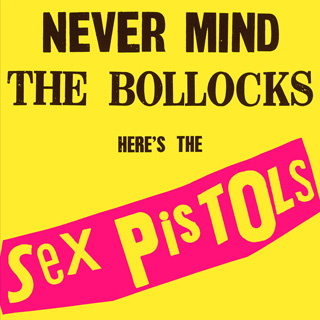
Keith Roth – Sex Pistols’ Nevermind the Bollocks (1977) might be the greatest Rock record ever made, in my opinion. It really was just a Rock record, even though people were hiding their kids in the basement to avoid them from the Sex Pistols. The Ramones’ Rocket to Russia (1977). Led Zeppelin’s IV (1971), even though it is so overplayed. I love The Who. Super Fly (1972) by Curtis Mayfield is one of my favorite albums. The Dictators Go Girl Crazy! (1975), Pink Floyd, The Piper at the Gates of Dawn (1967).
There are so many of them. T. Rex, The Slider (1972) is one of my favorites. Nirvana, the first record, Bleach (1989). That was revolutionary, hearing that for the first time. Cheap Trick, the first Cheap Trick record from 1977. Aerosmith’s Rocks (1976). Miles Davis’ Bitches Brew (1970). Velvet Underground & Nico (1967). The Rolling Stones are another band that I absolutely adore. It would take me forever to mention everything. It’s hard, but those are some of my favorite records.
Cryptic Rock – You have eclectic tastes. You mentioned Curtis Mayfield. There are so many great Soul and R&B records from the late ’60s and the ’70s.
Keith Roth – Amazing. The beauty of it is, as a kid growing up in the Bronx, I had two older brothers, and they were big music heads. I’m like twelve years younger, so I came out of nowhere. My brother bought records every week. He’d be playing bands like The Stooges, MC5, Cream, and The Temptations records, those compilations, and Sly and the Family Stone.
The beauty of the Bronx is that you could walk into a record store and walk out with a Curtis or a Led Zeppelin record, or anything. As we were discussing genres earlier, when I lived in that area, that didn’t exist. Good music is good music. Having that music, all that music around me, was a fantastic time. When I moved out of the Bronx, nobody even knew who the MC5 or The Stooges were. It was a very eclectic, just happened to live in a very cool area of New York, where they had a great independent record store, and the kids were hip to Indie music.
Also, with the ’60s and the ’70s, there’s so much great stuff that you discover that wasn’t a household name, even deeper than deep music heads. Dave Wyndorf, from the band Monster Magnet, got me into so many Hard Rock bands from the ’70s that I never knew existed, like bands like Granicus, Sir Lord Baltimore, and Highway Robbery. He’s a real musicologist.
Nobody, except maybe one hundred people, bought these records in the whole world. There’s so much stuff with the ’60s Soul. There are so many outstanding records that went nowhere, but you find them and put them on. You’re like, “How could this not have been Top of the Pops or whatever?” That’s the beauty of music, too. Thankfully, all those great records came out for people like me and you to search it out.

Cryptic Rock – Agreed. A record label called Elemental Music recently re-released, between 2024 and 2025, a collection of old Motown records featuring The Temptations, The Four Tops, Marvin Gaye, and Sam Cooke, among others. It’s a great way to revisit and listen to it, as there’s a wealth of great content available. Some of the records they have re-released are perhaps not the artist’s most mainstream, which makes it even more compelling.
Keith Roth – I’m right there with you. People followed these bands, and then they may have become unfashionable. A lot of people stopped buying those records, but that didn’t mean that the band wasn’t making great records at that point. Another example is a band called The Sweet. Many of those latter records went unnoticed because the scene had changed, and the artists were burned out.
Cinderella put out Still Climbing in 1995, but if you listen to it now, it’s probably still good. A lot of those records you just mentioned from that label have piqued my curiosity, and now I want to check out some of the stuff that probably went by me.


No comment