


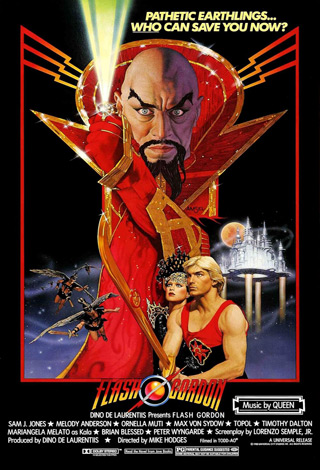
It is easy to fall into the trap of your self-perception. Something that can present a roadblock when it comes to personal growth and fulfillment, Sam L. Jones initially thought he would be an NFL football star, but it did not work out. Then he caught the acting bug and thought his calling was in the film industry. Seeming to find his calling, Jones would go on to portray the legendary character of Flash Gordon in the 1980 live-action film.
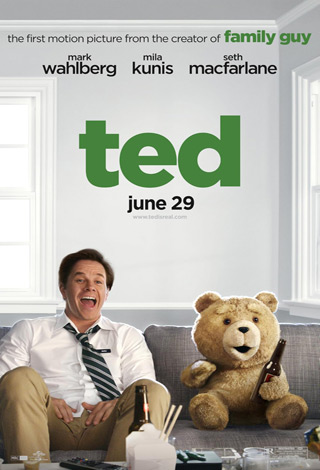
A role that Jones is synonymous with, he would steadily work in film and television through the 1980s and 1990s, but changes were on the horizon once again. Finding a new identity and strength within himself, he moved on to various areas of his life. However, with a role in the 2012 hilarious Comedy Ted, he was once again in the spotlight for an entirely new generation.
Grateful and humbled by his experiences, Sam L. Jones recently sat down to discuss his career in film/television, the moments that shaped him, his role in the new Sci-Fi film Roswell Delirium, and more.
Cryptic Rock – You have been on a fascinating life’s journey. You began as an athlete, joined the military, and ultimately had a successful career in film/television. You have traveled many roads.
Sam J. Jones – My story is pretty simple, and I can sum it up in a few seconds. I joined the Marine Corps at seventeen, right out of high school. I joined to be a lifer. I started playing Marine Corps football, and I thought I was incredible. I got a little bit arrogant, thinking the pros needed me.
Instead of spending my life in the corps, I left and went to Seattle to try out for the Seattle Seahawks. I chose Seattle because my grandparents lived there, and I had a safe place. So, this is four years later. Now I’m twenty-one, and I tried out for the Seahawks. And they said, “Thank you very much, but we don’t need you.”
So, again, here I am at a young twenty-one, and my football career is over, and my military career is over. I got a little bit down. Then a buddy gave me a magazine article on Clint Eastwood. I read that and it really inspired me to go to Hollywood. It talked about his movie career, but I just thought, “Well, that’s a cool guy, man. He’s doing a lot of stuff. He’s not just waiting around for the phone to ring. He’s out there doing construction and manual labor in between movies.” Not that I wanted to do that, but I just thought, “Wow.” You often hear so many horror stories about your favorite celebrity or your hero in the movie business. After I read that article about Clint Eastwood, I said, “Well, that’s pretty cool.” So, my objective was to get out there immediately.
I had a plan. I bought my grandpa’s second car. I knew I had to get a job immediately. I got a job as a waiter. I had a place to stay with my aunt for about a month, and then I knew I had to join an acting class. That happened quickly. That just started a whole new journey for you.
Cryptic Rock – And you were still young at the time. It was two different chapters in your life. You were inspired by the ambition of another to do something more than rely on one form of work.
Sam J. Jones – Yeah. And then I had another light bulb moment, probably twenty-four years ago, when the phone wasn’t ringing for a movie gig. My wife looked at me and said, “Look, I don’t know what’s going on with you, but I’ve been watching you wait by the phone for eight months. It’s not ringing.” At that time, we had a lot of kids. Three of the smaller kids were very young, two in diapers, one just out of diapers. So, she said to me, “There’s the door. You come back to this house when you’re providing for this house,” which I thought needed to be said.
It needed to be done. My mindset was fixed into, “Oh, I’m an actor.” And I suppose I forgot about the article I read about Clint Eastwood all those years ago. So, I went out, came back within four hours with a job. My buddy owned a construction company. And here I am, in my mid-forties, working in construction. It was great and I enjoyed it. It was like working out, and I was bringing home a paycheck, but I knew it was something that I could not do forever.
So, I reconnected with some former military guys who were doing high-end security operations. I asked them, “What do I need to do to do what you do, to be traveling the world, and protecting people from bad guys?” He said, “Well, you need to take this training. It’s called Federal Protective Doctrine Training. It’s the same as the Secret Service, ATF, FBI, and anybody who’s running protective details around the world. You need to get your certifications, your weapons permits, etc.” And I did it, and I got it in a short time. That was twenty-three years ago when I became a security professional.
That light bulb moment was okay, especially for us men. We need to stop thinking and saying, “Okay, I’m just a doctor. I’m just a truck driver. I’m just an actor. I’m just a podcaster. We need to take it to a whole new level. What we should be saying is that we are working men, and we would do anything legally to provide for ourselves and our families.
Again, that was a light bulb moment, and everything changed. So, now, if I’m not making movies, I’m running security operations or doing personal appearances. I’m not waiting by that phone anymore.
Cryptic Rock – It sounds like a healthy, positive attitude. There is an excellent point about that light bulb moment. It is essential for everyone not to box themselves into one thing. Being humble and supporting your family is the most important thing.
Sam J. Jones – Absolutely. And it opens up doors. I worked on the construction project for approximately eight months, and then I underwent training to become a security professional. Shortly thereafter, guess what happened? The phone started to ring to make movies again. It’s crazy!
You know why? Because, like my wife says, you need to get over yourself. So, I humbled myself. I listened. And as men, we do have to humble ourselves. We do have to listen to people we trust. Usually, it’s our spouses or people in our inner circle that we trust. It’s encouraging and lifts up everybody else around us that we are no longer a downer. You can’t say, “Those people there, they won’t hire me. Oh, those people… it’s their fault.” So, we end up taking our eyes off blaming the world and basically saying, “Well, it’s not their fault. You realize that. It’s the choices we make, especially as men.
There are always consequences whether we make good choices or bad choices. I guess the short story here is that everywhere we go, no matter what we speak, we need to be building people up, especially ourselves, and not being down. Who wants to be around a downer? There are so many challenges and adversities out there: confusion, doubt, worry, and fear. I don’t want to be around anyone who’s a downer and speaks nonsense. I’m not going to sit there and reprimand them, but I’m going to move on.
We need to bring value to each other. Even a good friend of mine told me, “Sam, even if we have to fire somebody, part of our team or business, the last thing out of our mouth, we need to be building them up.” I know that sounds crazy, but instead of saying, ” Get the hell out of here. You’re a lousy. You’re a lousy human being. Your work ethic is horrible. You’re never going to amount to nothing,” we need to say, “Hey, look, it’s not working right here for us.” But I know there’s something. There’s great value that you have to bring to somebody else and to another environment. As a matter of fact, I want to make a call for you because I think you have another skill set that you need to put into action.” That’s the way we got to be. All this stuff about punishing people verbally and physically is madness.
Cryptic Rock – It’s true. Sadly, that negativity often drives the world. Maybe we should take people as they can be, rather than judge them based on their past. Otherwise, no one will ever be anything they have the potential to be with preexisting negativity and judgment.
Sam J. Jones – Yeah. Unless we’re completely isolated and locked in our homes or habitats and never go outside the door, we’re all public figures.
Some of us have just a couple of hundred hits, or maybe ninety million hits. I never understood certain celebrities. They go outside, right? They are in public, at the restaurant, or walking down the street, and they start yelling at somebody, just like the press taking their pictures. Wait a minute. Why are you doing that? Why are you getting angry? You’re a public figure, and what? You’re not wearing sunglasses. You’re not wearing a baseball cap. You’re not wearing a mask. You want to be seen, okay? So why are you reprimanding photographers and paparazzi who are following you down the street?
Now, I can see if they’re getting in your face, putting their hands on you, and being annoying while you’re trying to chew your food at a restaurant. I got that part. But just walking or being somewhere, and people want to take your picture or talk to you? No, you need to reevaluate your thinking or stay home. We are public figures, and that comes with that.
Cryptic Rock – That is an excellent point. You mentioned how your life changed about two decades ago when you started a new journey. When you became an actor, you were steadily busy in film and television through the ‘80s. You were also involved in various genres. What was that time like for you?
Sam J. Jones – It’s a great question. It’s interesting. Remember, I was pretty fresh. I came to Hollywood in ’77. So, I was pretty fresh out of the Marine Corps, even though I left Seattle in ’76.
My mindset was still Marine Corps. That means not arrogance, but a high level of confidence on steroids. That’s how I would walk into an audition or something, back in the old days; now we take our iPhones and do a self-tape. Or, usually, people that I’ve known for thirty or forty years who are producers, directors, call me up and say, “Hey, I got an offer.”
However, back then, the audition process involved meeting a casting director at their office. There in the lobby would be twenty to thirty guys who look just like me and are the same age, and all competing for the same role. Here’s the cool thing: with my military mindset, I never looked at them. I didn’t believe I was better than them, but I never looked at them as my competition. I thought, “Okay, my job is to go into that room.” First of all, I would never hang out in the lobby, because that’s where you get distracted. You get in there, you sign in, and you walk out on the fire escape or the stairwell, and you just separate yourself.
My objective back then, and still now, was to go in there and be better prepared than anybody else with the mindset of, “No, I belong here and they need me.” Now, if they don’t hire me, it’s nothing personal. It’s just that they don’t want Sam J. Jones. They want somebody else. That was my mindset. For years, I had this mindset, and I had a lot of success.
Then there’s a point in your career where you start, let’s say, reading your press. You start overanalyzing yourself. You might ask, Sam, what do you mean by reading your press? Well, if I did a project, a movie, TV, or a play, and the critic says, “Sam J. Jones was great. He was incredible.” Now, what does that mean? When I read a negative critique that said, “I’m terrible. I’m horrible. It was a lousy performance,” does that mean that I follow that? No. I just stopped doing that. I found myself overdoing everything and making it overcomplicated. I went back to that early time of freshness, naivete, and a high level of confidence.
I think also part of what I was transitioned into, that negative side, was not just overthinking everything, but I think there was overdoing everything. They can read right through that stuff. Opposed to being relaxed and prepared like anybody else.
I also returned to acting class in my mid-to-late 30s, and that was a game-changer, too. It’s funny how history repeats itself. If we go back to basics, to simple things, why do you think even in professional sport, name the sport, the MLB, the NBA, the NFL – what do the coaches tell the athletes? Get back to fundamentals. That’s what I had to do, and then I had a resurgence. Then, of course, Ted (2012) and Ted 2 (2015) also appealed to the younger age demographic.
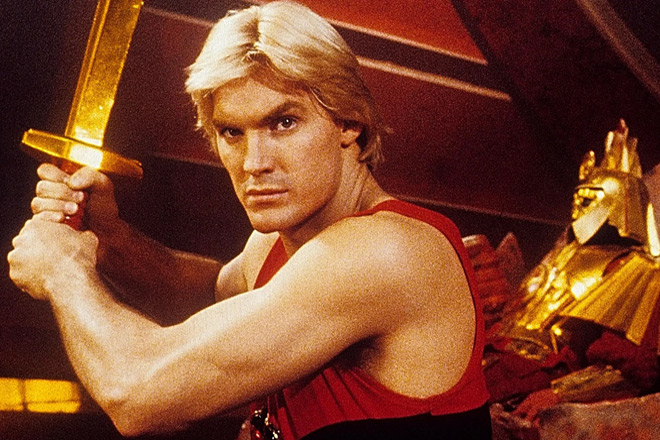
Cryptic Rock – It is interesting to hear all of this. Sometimes we get caught up in our thoughts, and that can bring us down. You mentioned Ted and Ted II, which led to more projects. Now we have Roswell Delirium. This movie is interesting because it was initially released in 2023, but it has gained new life as time has passed. How did Roswell Delirium come about for you?
Sam J. Jones – Well, Richard Bakewell, the director, producer, called me and he said, “Hey, I’ve got this project.” And I read it. I said, “Yeah, let’s do it.” Let’s not be fooled by the majority of actors who say, “Yeah, I read it. I studied it. It took me a long time, but then I made a decision, I’m going to do it.” Hey, there are very few things that actors are turned down for, okay? Unless you’re the A-list, even the B-list, that’s got nothing to do with talent; it has to do with your quote. It has to do with A-listers or bankable names. We all know them; there’s Mark Wahlberg, The Rock, Tom Cruise, the list goes on and on.
It’s funny to mention B-actors. I know it’s derogatory for many of them, but ‘B’ actors mean you’re not a bankable name like those in the top twenty-five or thirty. However, you’re still making millions and millions of dollars per movie. It’s crazy!
Anyway, Richard called me, and it was a little bit of a challenge. I’m used to playing either the superhero or the crazy, nasty villain, which I love. I had to bring it down, especially since Richard was looking for somebody to share his vision on what he’s created here. I could have taken it a couple of different ways, but I think he brought me down to his direction, just to let it flow and not overdo anything.
Then there is the story of Roswell Delirium; it just didn’t have a couple of turns with some curveballs. It has some crazy twists.
Cryptic Rock – It certainly does. It is an engrossing film because it combines different genres. There is Science Fiction, but also other themes. There are also several actors and actresses in this film whose names are well-known.
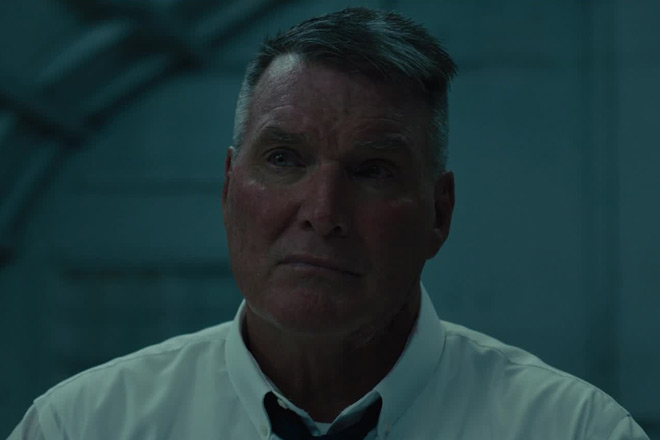
Sam J. Jones – Oh, yeah. Well, Anthony Michael Hall. I mean, come on, everyone knows him. Have you seen his recent performance in the series Reacher? Anthony Michael’s role was riveting. I mean, he was amazing as the so-called nemesis. He also brought a soft heart to it.
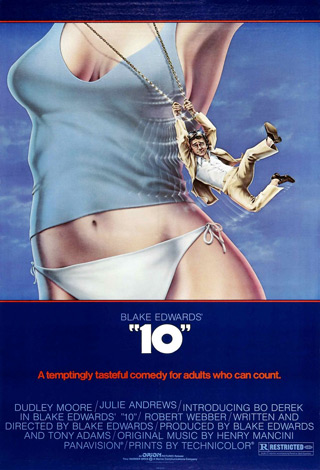
Of course, Anthony Michael Hall played a significant role in Roswell Delirium and added value. And then Arielle Bodenhausen, with whom I had the scene, was wonderful. With all that makeup she had to wear with scarring, and doing these long monologues. Dee Wallace is in it, too. I made my first movie with Dee Wallace in 1978 for Blake Edwards, titled 10 (1979), alongside Beau Derrick.
Roswell Derlium is not only entertaining. It’s got that, as you say, that Sci-Fi Thriller feel. But it is psychological. You are wondering – what’s going to happen next? It works.
Cryptic Rock – Yes. It is also interesting how you have come full circle to be part of a film with Dee Wallace again.
Sam J. Jones – Yeah. I didn’t see her on the set, though. It’s crazy because we did this movie in 1978. That was forty-seven years ago.
People don’t understand this. They say, “Oh, you know, hey, Sam, give me Mark Wahlberg’s phone number and stuff. I know your good buddy.” Look, he’s a great guy. As a matter of fact, really being candid with you, he’s probably one of the most humble A-list men in the business. He really is. He loves talking about his kids and family. He’s just a great guy. And he really brings the best of you out on screen.
I think a lot of the people who don’t work in the movie industry think, “Oh, yeah, you guys did this and you’re good buddies.” Well, not unless you live in the same area or you’re in a long-term series.
For example, we’re talking about Dee Wallace. I did a movie with her forty-seven years ago. And two years ago, I didn’t even see her on the set here. I saw her at a Comic-Con last year, though. That was the first time I’d seen her in forty-six years, which is crazy. That’s how it is in the industry.
Cryptic Rock – Understood. Roswell Delrum continues to find new life with a release earlier in 2025 and a digital release more recently.
Sam J. Jones – Yeah. As you get older, it’s not that you forget things; it’s just that you’re so oversaturated with life in a good way. I’ve got five kids. I’ve got a whole lot of grandkids. I’m traveling the world. At one point, almost every weekend, at least forty times a year. That’s a lot of weekends to travel.
For instance, somebody says, “You remember we did that movie?” I said, “Yeah, we did that movie. That was about five, six years ago.” They said, “Sam, it was twenty-one years ago.” I went, “Oh, my God, that’s scary. Okay. That’s freaking scary right there.” I remember faces. I’m pretty good with first names, even if it’s been forty-five years. As far as the exact place, time, and date, ooh, yeah, that’s a little bit different.
Cryptic Rock – Time does slip by. It is very exciting when a project you worked on in the past continues to have an impact.
Sam J. Jones – Yes. I love how Richard moves the camera and directs Roswell Delirium. Again, many people tend to overthink. I usually say a lot of people try to overbrainstorm, overthink a movie, but Roswell Delirium will probably make you do it.
It’s not your typical Sci-Fi, Fantasy, or Action Adventure because it’s psychological. It can get quite heavy, but that’s a good thing. That’s what Richard wants from the viewer. He wants you to get into trying to figure it out – Where’s the next scene going?, Where’s this story going?
I’d say it’s one of your better Psychological Thrillers. Usually, when you say Psychological Thriller, you think Horror movie, but this doesn’t have all that slasher stuff in it. This makes you think, and that’s a good thing. When a creator, when a writer, director, producer forces, a lot of times you think, “Don’t make me think too much. I just want to sit back and enjoy all the fight scenes and stuff like that,” which I think we all do. Richard has a gift, though. That’s what he does as a creator and filmmaker. And again, I tell everybody, just sit back and enjoy this ride with Roswell Delirium.
Cryptic Rock – It is a different film. As you said, it makes you think. You do not want everything spelled out.
Sam J. Jones – Yeah. Then there are times the filmmaker overdoes it, where you are lost. You have now overthought it, and I have no idea where the story is. You don’t want to go that far.
I’ll give an example. I’m not going to name any movies, but the way I watch live streaming now, sometimes it takes me twenty minutes to select a movie.
I know Richard has his own opinion on this, that you have ten minutes to get the audience’s attention. Not with this guy… if you don’t get my attention within the first couple of seconds, especially when live streaming, I’m on to the next. I don’t want to watch the trailer because it ruins the movie in a way.
My selection process for live streaming can take twenty to thirty minutes, which I don’t like. For me, personally, you’d better get my attention within seconds, and you’d better hold it. Then again, I used to go, “Okay. Well, they’re not. Okay. Give them another minute.” Next thing you know, you gave them the movie. I’m looking at the little counter right there at the bottom, and twenty-two minutes have gone by, and it’s boring as boring can be.
I always wanted to give the filmmaker a second or third chance. You won’t be bored with Richard or with Roswell Delirium. You get the attention, hold it, and it makes you think the whole time.
When you select your movie to watch live streaming, what are your guidelines?
Cryptic Rock – It is challenging. The larger problem is that there are too many choices. Too many choices overwhelm the brain. That is an issue with society in general. When you visit the grocery store, you’ll find hundreds of different toothpaste options.
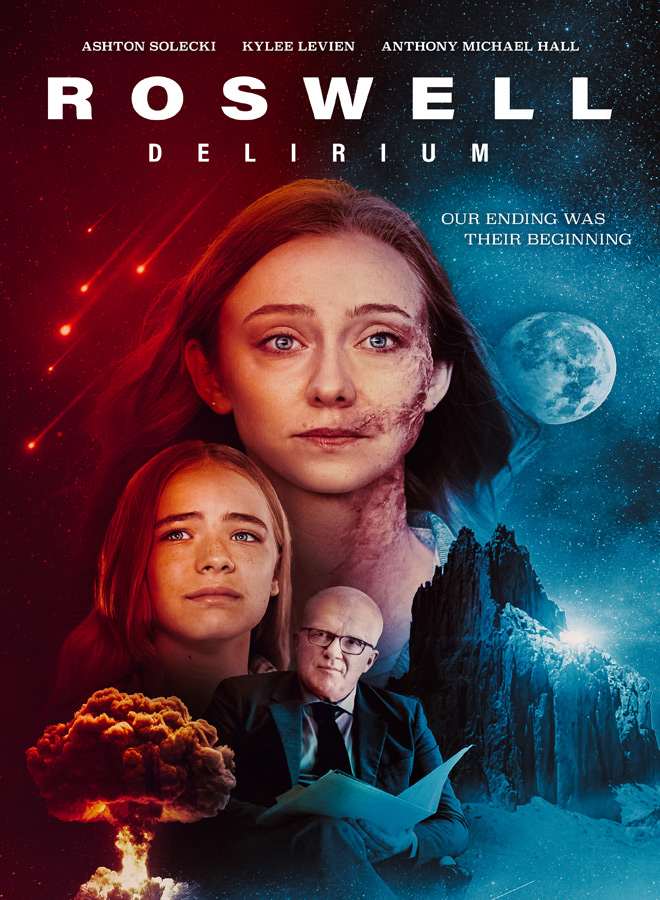
There was something vastly different in the days of video stores. Sometimes you would browse and select something because it had a fascinating artwork. You took a risk, rented, and see what you have. In other words, without being superficial, the artwork is often what draws.
Sam J. Jones – It’s interesting what you said about the poster. Some artists who put these VHS or DVD jackets or posters together used to get into a lot of trouble with fans because they would create incredible posters, right? The problem was that the movie was absolutely horrible. Fans would say, “How can you put a DVD jacket or a VHS jacket on that and/or a poster like that?” (Laughs)
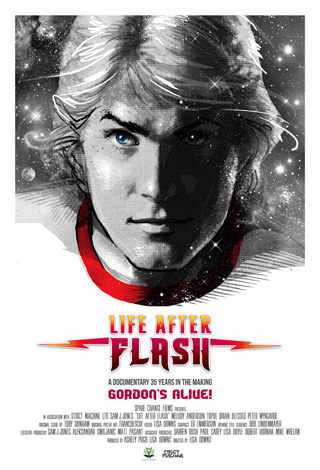
If you haven’t seen it, watch my documentary, Life After Flash (2017). We send a crew to Italy to interview Renato Casaro, an Italian poster artist from the old school, who was active in the 1950s and 1960s and continues to work today. He discusses how people would actually threaten his life because his posters were so incredible. People went to see the movie that he was promoting through his art, but it was awful. However, with posters, they looked incredible. (Laughs)
I agree with you anyway. For me, the poster has to get you in there. You look at the Roswell Delirium ad or poster, and it sucks you in. You look at the Flash Gordon poster that Richard Amsel put together.
Cryptic Rock – That is another iconic theatrical poster. The same thing happens when it comes to music. You would go in, find an interesting cover, and take a gamble. You would buy it, go home, and listen to it, and you got what you got.
Here is a question: You have been in many films and television shows. How many of them have you actually watched yourself?
Sam J. Jones – I’ve only seen half of my work over the past forty-seven or forty-eight years. Why? Because of my kids. They’re all grown up. Most are married now. But during those early years, it was, “Hey, Daddy, are you going to drive me to baseball? Hey, Daddy, are you going to take me to dance?” I was not going to say, “No. We’re going to stay home and watch my TV show.” I made the choice not to stay home, obviously, because we have to drive our kids to their sports and school, and so on. When fans hear what I just told you, they actually send me the old DVDs of some of the movies I’ve never seen before, which is kind of cool.
Putting the family first above anything else. I always say God first, and then our family, and then, of course, our work. That has taken me quite a few years to figure out.
When I was coaching my sons in Pop Warner football, I would leave the field and race over to help my six-year-old daughter in softball. I’m coming off the football field from coaching all the young boys, right? It’s a whole different mindset. I abrasively encourage the girls to get their gloves in the dirt and stop letting that ball go between their legs. The parents called me over and said, “Sam, you know we know you just got off the football field from coaching your sons. Maybe coaching the girls is really not your skill set.” So, that’s the last time I ever coached the daughters in something. (Laughs) Maybe if I had eliminated football, I would have been better. I was always there to watch their games and sports, though. That’s a funny comparison, isn’t it? The gridiron straight to the girls’ softball. Big difference! (Laughs)


No comment