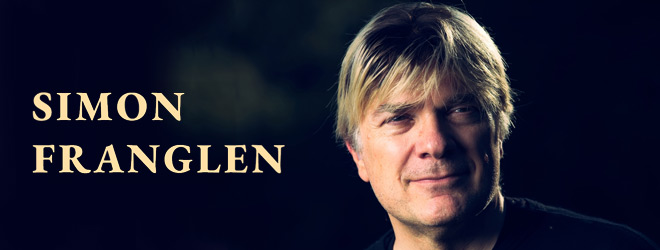
While film is mostly a visual medium, the average viewer might be unaware that the sounds draped behind the image and spoken words drive the emotion. Pulling at your heartstrings with each movement in a film, the soundtrack emboldens triumph, sadness, happiness, danger, and tension. Truly intangible, talented composers like Simon Franglen stand behind the scenes, helping bring the magic of cinema to life.
Coming out of England, Franglen has decades of experience in the music industry, working with numerous Pop acts from the late ’80s into the ’90s, as well as working behind the scenes on major motion pictures. A 1999 Grammy Award winner for Record of the Year for producing the Celine Dion song “My Heart Will Go On,” used in the 1997 movie Titanic, Franglen has worked on countless other film projects, including all in the Avatar series.
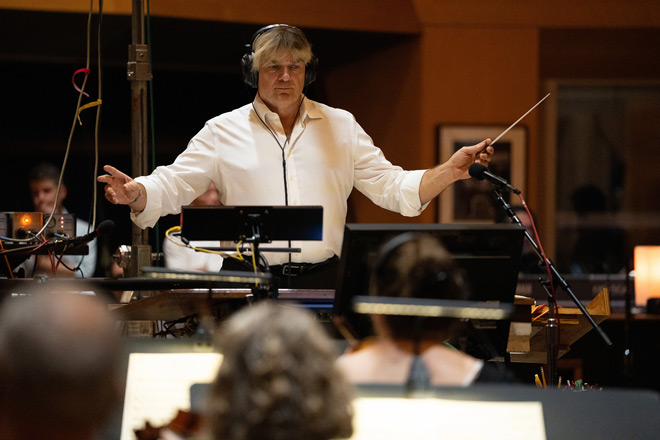
Working closely with fellow composer and friend James Horner, for 2025’s Avatar: Fire and Ash, Franglen took on the role of the lead producer for the score. A massive undertaking, Franglen worked for hours, composing countless pages of music to capture each moment of Avatar: Fire and Ash with texture and feeling.
Nominated for a Golden Globe in 2026 for the song “Dream As One,’ performed by Miley Cyrus, but co-written by Mark Ronson, Andrew Wyatt, Cyrus, and Franglen, the talented composer has a lot to be proud of. Excited to keep working and creating, Simon Franglen recently sat down to talk about his career in music composition, the work behind the Avatar films, plus more.
Cryptic Rock – You have been involved in music for quite a long time now and have had a very successful career. Working with many interesting artists over the years, you have also composed extensively for film and television soundtracks. How would you describe your incredible journey as a musician to this point?
Simon Franglen – Failing to get fired. I would say that it’s one of the things that you evolve. Obviously, our tastes change as we get older. That’s one of the things. Secondly, our skill sets evolve and change. The idea that, for instance, at my age, it should be the same as when I was in my early twenties. I still love the music I listened to when I was a teenager, in my 20s, 30s, or 40s, and so on. There’s an evolution that happens because, depending on the type of people, there is a tendency for people to age out of various genres of Pop, Rock, and Alternative.
It’s a constantly moving target, and if you are behind the curve, you end up, if you’re not careful, sounding sort of retro. Retro is great when it’s ten years or later. Retro is not so good when it’s two years later. The other thing was that I found that my curiosity gene is fairly highly evolved. Therefore, film music offered me chances to go into different places musically that I couldn’t go to as Rock music got safer. As Rock music became more commoditized and Pop music more straightforward, the things we were doing when I first started wouldn’t be appropriate. The number of key changes, the number of things that are more complex musically, that I think happened when I was starting. That’s no longer the style. Films allow me to go off into the weeds and try the really strange stuff.
Cryptic Rock – Absolutely. It definitely provides more challenge, and it provides you a chance to do things that you may not do, like you said, in Pop music. It is understood that the trajectory of Pop music today differs from that of 30, 40, or 50 years ago.
Simon Franglen – We’re quite a long way from Sgt. Pepper’s Lonely Hearts Club Band (1967) and Pet Sounds (1966). There are still some amazing bands out there, like Snarky Puppy, for instance, which is one of my favorites. I listen to a lot of stuff. There’s some phenomenal stuff out there. It’s wonderful that people are still making so many different types of music. The problem is that the mainstream, the stuff that is on Billboard, has become much more sort of into that thing where you have a four-chord repeat verse and then a slight variation for the chorus. Then there’s the “Whoa, Whoa” bit and cut-and-paste. That, for me, is less interesting.
Cryptic Rock – Most certainly. When you started to work on soundtracks, because it has been a long time now, did you initially have that initial excitement about it, or is it something that you have developed over time?
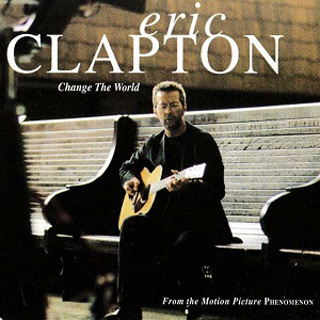
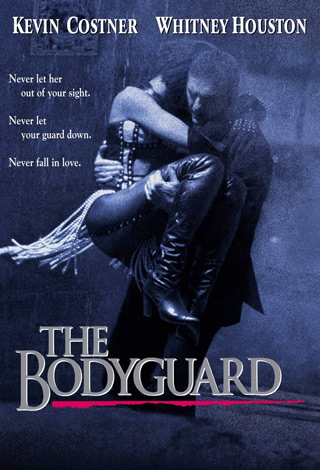
Simon Franglen – I wanted to do film music early on, but I was doing the records at the very highest level. I started working as a session musician in LA. I was a record producer in England. Then I moved to LA. Went back to my day job as a session musician, then gradually moved back into production and writing as that went on. Hollywood has two bits. It has music and films. There was a point when someone introduced me to John Barry, a British film composer. That was like, suddenly, “Oh, you can do this,” and “There’s this 100-piece orchestra,” and “Oh, you can go there.” Then I’d had lots of overhangs like The Bodyguard soundtrack in 1992, and stuff like that. There had been initial things where I’d work on a lot of records that were at the end of films or in the middle of films.
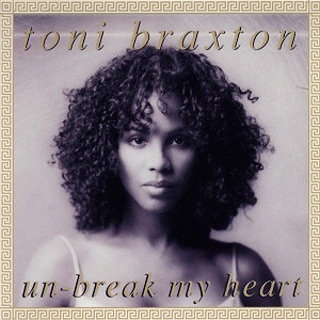
The problem was that the records I was working on were so interesting and so cool. I was really having a great time making these records. The film stuff I would do would be initially, it was really exciting to do Seven (1995) with Howard Shaw, for instance. I got to put a whole orchestra through a fuzz box and do some really experimental stuff. At the same time I was doing that, I might have been doing Toni Braxton, or I might have been doing Quincy Jones. You sort of had to. It was a good time to be working in LA.
Cryptic Rock – It sounds very exciting for sure. That leads us to Avatar. You’ve been involved in the Avatar series production since its inception.
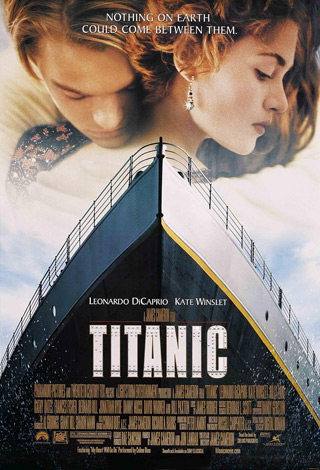
Simon Franglen – Yeah. I started in early January 2009 with the first Avatar. We had such a good time working on that, James Horner and I. We first worked together on Titanic (1997), and I produced the song at the end of the film. I had gotten a bit jaded with the amount of work I was doing, and I needed a break. I moved to England and started doing things there. We’d bump into each other maybe at Abbey Road or something like that once or twice. When Avatar came, he phoned me up and said, “Look, I know you don’t do this anymore, but come and have a look at the movie.” I came and looked, and it was the most astonishing thing to see. He said, “Would you do a week with me?” So I did a week.
We decided that my job would end up being called Electronic Music Arranger. It was basically everything that wasn’t the orchestra. It was the glowing textures of the forest. It was the rhythms, the grooves, the wood sprites when those funny things land on Jake’s shoulders and he’s glowing. All of that stuff was my wheelhouse. Then James was handling the themes and the orchestral side and so on. We had a great time.
James died in 2015. I was in the middle of working on the music for the Avatar Theme Park down in Florida. There are five hours of music in that park. Around the time the park opened in the middle of 2017, at the end of 2017, Jim Cameron called me and said, “Come and read Avatar 2, 3, 4, and 5.” We looked at it because he said, “You have to read all of them to understand the arc.” I read the scripts, and the second paragraph says, “Neytiri sings the song chord,” which is one of the film’s themes.
She had to sing. Zoe Sardania had to sing something. Somebody had to write a song for her to sing. It had to be in Na’vi, but it had to have a meaning in English that made sense. It had to have a melody that would resonate and would feel like it was ancient, but could also be sung by Zoe. I’ve obviously produced hundreds of Pop vocals over the years. The first thing I had to do was get into a room with Zoe and say, “Let’s get the best out of your voice. Where can we make this?”
I knew that this would be a live vocal. This wouldn’t be something like going into a studio and compiling the vocals. It needed to feel live. It needed to feel like it had happened there, as part of the planet. I wanted to get this to feel as live as possible. What you see with Zoe on screen is actually a live performance. It’s not compiled. It’s not tuned. It’s not anything. It’s just her. I had to write that.
Then there were other bits and pieces I wrote. Gradually, the evolution into writing the film score began as I became embedded in the film’s material. I’d written themes that Jim really liked now. He and I, by now, Avatar: The Way of Water (2022), would have been the third film I’d worked with him on. I’d worked on Titanic, on A1 and A2.
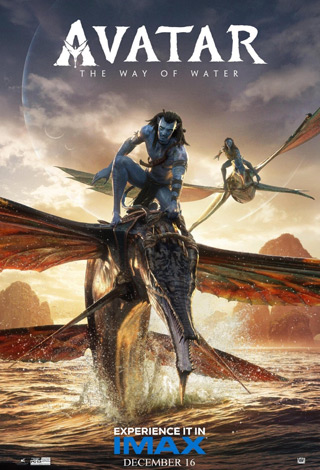
Obviously, it was different for Avatar: Fire and Ash (2025) because I was now the lead composer. He trusted me because I’d already done other stuff for them, and it was very successful. Avatar: The Way of Water was an extremely successful film, and the soundtrack as well. I did the song with The Weeknd and Swedish House Mafia for the end credits. We’re currently heading towards 800 million streams for the soundtrack album, which is staggering for a soundtrack album.
Cryptic Rock – That is unbelievable. Avatar: Fire and Ash has been a resounding success as well. You talked about how it was five hours of music for the theme park. The music for this one is not as massive, but it is still a massive piece. Pages and pages of music were written for this film, yes?
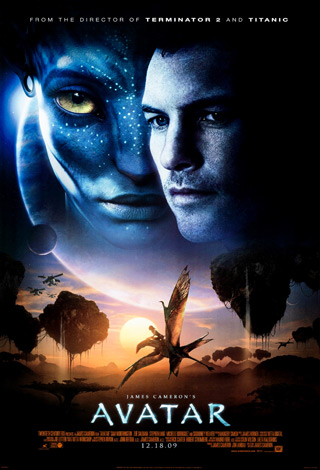
Simon Franglen – This has been infinitely more complex because the theme park also had bits that could be, say, two singers and a drum, or something like that. It could be synthetic. This dwarfed that. This is another level to anything I’ve ever done before. There are three hours, four minutes, and 16 seconds of music in the film. The sheer quantity of sheet music I had to write is 1,907 pages. It is a pile I brought out for an event we held a couple of days ago, and it weighs about as much as a bag of concrete. To put it into context, I wrote a bag of concrete’s worth of music for this one.
Cryptic Rock – That is truly astounding. The soundtrack mirrors the scenes’ emotions. As a composer, do you watch the film as you’re composing? How does that work?
Simon Franglen – I’m not a composer who writes suites. Some composers write chunks of music, then give them to the film director and the editors. The film editors just cut the music wherever they want. I write the music very specifically to the scenes because it should have that flow. It should have that sense of underpinning the emotion within the scene. Whatever you need to do, that has to be done in a way that actually flows naturally. That takes a lot of care and attention, but it also takes a lot of writing, because you can’t reuse things constantly. A lot of generic action music is where people have written a suite. They give it to somebody, and somebody just cuts it up and repeats it as they go along. That’s not my style, but it’s also not something that Jim would ever allow me to do. The music has to feel like it supports what we’re seeing on screen.
There are two great things about this. One is I’m working with these fabulous images, so it’s easy to write. Usually, when you find you have difficulty writing a scene, it means there’s something wrong with the scene. The process I go through is that I sit in front of this in the studio. There’s a big screen up there that would show the film’s image. I just sit down, and I start playing. There’s a point when the film tells me that I’m going in the right direction, and that comes down to your own taste, which is what makes me a composer, makes me different from Hans, Ludwig, James Newton Howard, or whoever. We all have our own taste. That’s an essential part.
Hopefully, we also have a cinematic sense, which is “What am I doing?” One of the things that is important, for instance, is “Do I get ahead of the action?” Sometimes it’s very easy to know what’s coming next, and you start telling the story in advance of the audience. You can’t do that unless it’s really overtly there. You’re there to try and make sure that you support the audience’s reaction. One of the things I’m trying to do is say, “Do I now feel what I should feel at the right time?” Often, that right time might be one second later, or it might be one second earlier. I’m often moving my piece of music around, little bits, just to see if it fits better.
This happens with Jim Cameron. Jim will talk to me and say, “You know that piece of music there? Move it eight seconds ahead.” I’ll do it. I don’t understand how he does it. He has this astonishing sense of where music should sit. I remember there’s one particular soft scene, which moved the whole thing eight seconds ahead. It just lined up, and it was like it had been written exactly there, and it was perfect. Sometimes there are things like that where you realize that just by moving the piece of music around, you get a different feeling.
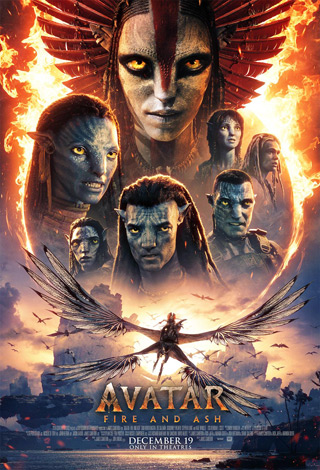
The characters will tell me what to write. Varang, who is the evil lady in Avatar 3, the one who’s in the posters with the great big red headdress. Verang is ridiculously easy to write for because she’s this fabulous character. You’re sitting there, and you just then say, “What do I want to get out of this?” In this case, I wanted to make her almost like a snake charmer. She’s a witch, or she can bewitch people, and she can manipulate them. I wanted a piece of music that actually says, “This is her.” I took three voices, but I made them all slightly out of tune with each other, and then I span them around your head. If you’re in the cinema, you can actually hear these voices doing this. It’s the equivalent of her spinning a spell on you. That’s the feeling I wanted to have. The Ash themselves, the actual sound for that, I didn’t want to have any tune, but I wanted to have this unbelievable Punk energy.
I was a young wannabe Punk when I was little. That was my music. It was The Damned, The Clash, The Pistols, and X-Ray Spex. All of these were the bands I grew up with in London, the ones I used to go see. Although I didn’t see The Pistols, they were the bands of my youth. I remember hanging around with Punks when I was little. These were the real Punks that people don’t understand now. There used to be this thing where they would put their safety pins through their cheeks. That was very much a Punk aesthetic. I wasn’t brave enough to do that because I was just a wannabe Punk to hang out with them. The real Punks felt like the world had turned its back on them, that they were the ones who were the outcasts, and they wanted to tear the world down. That is exactly the feeling of The Ash.
With The Ash, you feel that their mother spirit of Pandora, Eywa, has turned her back on them and that they want to now tear the world down. I took the energy I remembered from Punk, and I put that into the sound of The Ash. Those are the things you look for. You look for how do you want to make the audience feel? In this case, I want to give them a real Punk energy. The drums for The Ash are like a hybrid Punk cashmere type vibe. They’re not organic. They don’t feel like they’re made of nature. They feel like they’re made of destruction. That was important to me.
Cryptic Rock – It is truly quite interesting to hear about all of this. It is also fascinating how you drew on your personal influences of Punk Rock to shape the film’s musical story. We talked about soundtracks and how the movie’s images show you what you have to write. A good soundtrack is one you can listen to on its own. You can listen to these soundtracks on their own, and it is really powerful. You could feel the emotion in the music without seeing the images. Do you go back and listen to it without the images and see how it feels as well?
Simon Franglen – I want the soundtrack to be something the audience enjoys. I really do. Disney asked me only to release one version. There was always a complaint that I didn’t release enough music. I made this into the extended version, but if you go to my socials, you will see Linktree that I’ve done. I’ve curated shorter playlists for people. You can click there, and you can get a one-hour version or the top five tracks, things like that, because I appreciate that a lot of people want to just dip their toes into it first. I want this to be a listening experience. We remixed everything for the album. The mixes in the album are my favorite. This is how I want it to sound. The mixes on the film are how Jim wants it to sound. They may be at odds with each other sometimes.



No comment