

The art of storytelling takes interesting paths in how it is eventually told. In many cases, a story is art imitating life, with characters that may not be real but are based on real individuals or situations. With countless stories told through the ages, many risk being lost in time, but some remain retold for years to come. What is often referred to as classic literature, in the world of erotism, which is not as acknowledged, perhaps no tale has piqued curiosity quite like Emanuelle.
Initially published in France anonymously to avoid censorship due to its explicit sexual content in 1959 under the title Emmanuelle, it was still swiftly banned. For years, an open secret on the French literary scene, it was formally published in 1967 under the author’s name, Emmanuelle Arsan, a Thai-French writer and actress who was also the wife of a French diplomat. Years later, many suggest that Arsan was not the actual author but was used as a pen name by her husband to avoid controversy. Whether this is true remains unknown; however, there are strong indications that she at least co-wrote the story with her husband.
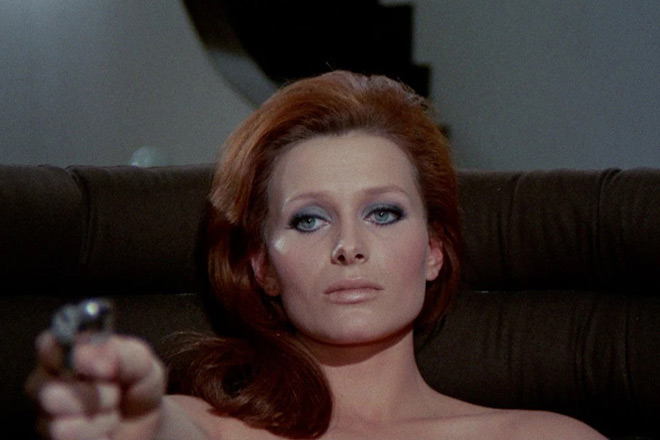
A very fascinating aspect that adds mystique to Emmanuelle: the story follows a lonely young wife of an international diplomat who explores her sexuality and breaks free of societal norms. Again, feeling like it was potentially art imitating life (knowing the source of the material), Emmanuelle became a massive success, was translated into various other languages, and could be argued to be a pioneering aspect of the sexual revolution during the 1960s. Full of vivid intimacy, it was only a matter of time before it would be adapted into a feature film. A long, fascinating journey to cinematic depiction, some may look back to 1969’s I, Emmanuelle (directed by Italian Director Cesare Canevari) as the first Emmanuelle-adapted film. However, this is not entirely the case, because it is a completely separate story, focusing solely on the character of Emmanuelle (played by Erika Blanc) as the lead in its own original, very artfully dark film.
Nonetheless, Emmanuelle’s trajectory continued five years later with the first official adaptation, 1974’s film of the same title. Directed by France’s Just Jaeckin, it featured Dutch Actress/Model Sylvia Kristel as the titular Emmanuelle, in a movie that would eventually take the international world by storm. Arriving at a time in the 1970s when more sexually explicit films (widely recognized as Hardcore Pornography or xxx-rated) had become normalized and essentially legal, a movie like Emmanuelle went against this trend, relying more on artistic elegance.
Certainly amply erotic, Emmanuelle did not shy away or pretend to be prude, but instead pushed the mood forward in a way that was more sophisticated and less crude. A monumental achievement in the world of Erotic cinema, Emmanuelle became a rare instance in which, even with an X-rating, it was given major distribution worldwide to mainstream audiences (including in the United States, where Columbia Pictures released it).
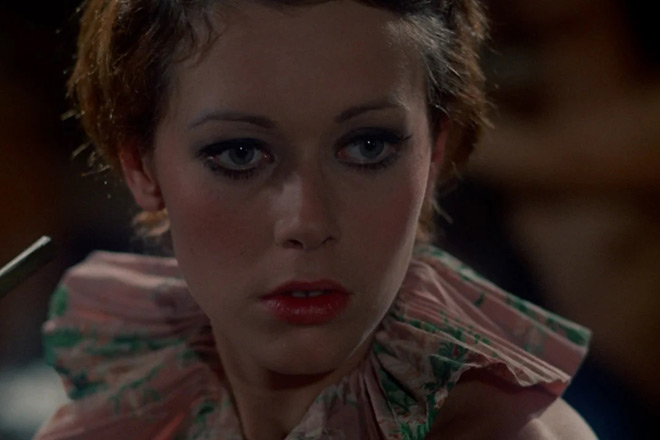
Almost unheard of, it is said that Columbia Pictures took the risk of picking up the film after learning that most of the audience in French theaters at the time were, in fact, women. Eye-opening, Emmanuelle honestly is a film that could appeal to both men and women alike, thanks to its well-plotted story, fantastically artistic camerawork (which employed a soft-focus approach), and beautiful backdrops of Thailand. Forging a character that can be viewed objectively from both genders’ perspectives, some might argue she is a male fantasy, while others might say she is a cornerstone of female sexual freedom.
Anyway you look at it, Emmanuelle became a massive hit at the box office worldwide, taking in over 174 million dollars total, and put the wheels in motion for two more sequels. The first came one year later in 1975, Emmanuelle 2 (this time directed by Francis Giacobetti) also found its way to theaters in the USA, this time through Paramount Pictures.
A sequel which found Sylvia Kristel returning as Emmanuelle, while the first film laid the foundation for her as someone vulnerable and curious, the second sees her develop into a fully free-thinking, strong female character. Also a massive success, it was one of the biggest films in France and attracted audiences throughout Europe, leading to the sequel, Goodbye Emmanuelle, two years later in 1977.
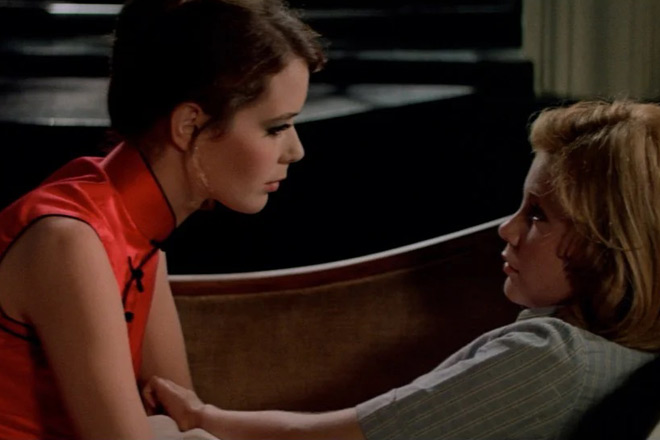
Once more drawing in viewers, Goodbye Emmanuelle (directed by François Leterrier) also found distribution in US theaters, but this time more limitedly until 1981, when a new company, Miramax, re-released it as an R-rated edition. What is considered the final installment in the Emmanuelle trilogy, Sylvia Kristel reprises her role in a film that is far different from its predecessors, for the first time showing conflict and the psychological effects of jealousy. Not quite as successful as the first two features, it remains a big part of the overall trilogy.
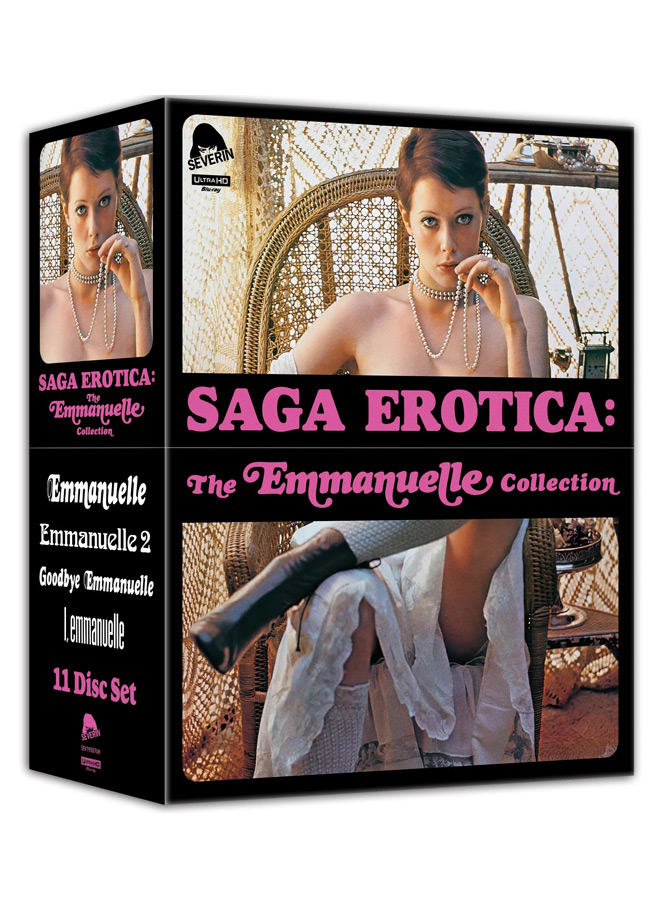
All a part of a significant piece of Erotic cinema history, in 2025 comes the box set Saga Erotica: The Emmanuelle Collection. The ultimate Emmanuelle collection, the new release arrived on December 9, 2025, as an 11-disc 4K Ultra HD / Blu-ray set from Severin Films. Clearly put together with attention to detail, this collection took many hours to restore each film from the original camera negative to 4K Ultra HD. Not in vain: clarity is substantially improved over former home media editions in color, contrast, and depth. Also, including improved audio quality, each film looks and sounds better than ever.
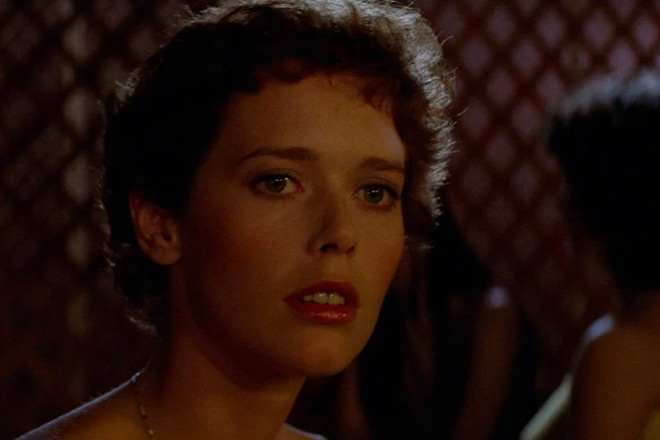
Including all three Emmanuelle feature films, there is also the fitting bonus of a fully restored I, Emmanuelle. Together as one set, you also receive a stunning 15+ hours of bonus material, including new interviews, video essays, matched with archival interviews, and the 2000 documentary Hard Look. Furthermore, two soundtrack CDs are included for I, Emmanuelle (scored by Gianni Ferrio) and Emmanuelle 2 (composed by Francis Lai).
All excellent, in-depth content, capping off the set is a lengthy 128-page book with well-written essays about the films, rare photos/promotional art, and more. Housed in a sturdy box, with each movie given its own hard plastic case and artwork, there is simply no set more complete that documents the cinematic history of Emmanuelle quite like this. That is why it would be unjust to give Severin Film’s efforts put into Saga Erotica: The Emmanuelle Collection anything less than 5 out of 5 stars.



)
No comment