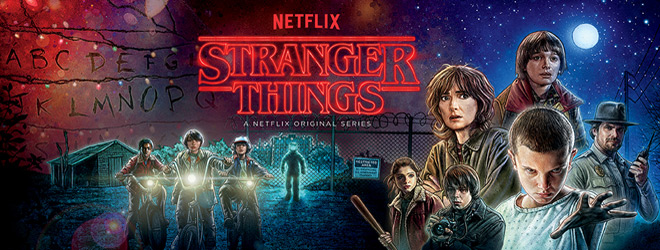
When Stranger Things premiered in 2016, few could have predicted that the Netflix Sci-Fi series would become one of the most powerful music discovery tools of the streaming era. Across all five seasons, the show did not just reference 1980s culture; it resurrected it. With a carefully curated soundtrack of era-defining classics and deep cuts, Stranger Things repeatedly pushed decades-old songs back onto new modern charts, transforming nostalgia into streaming and charting power.
What separates Stranger Things from other shows is that the music is never incidental; each needle drop integrates it into the story and underscores major character moments. The Duffer Brothers, creators of the Netflix series, made the wise decision to tie music directly to dramatic turning points rather than use it in the background. Many of the viewers had little exposure to 1980s music beforehand. And when the Duffer Brothers landed those moments, the streaming numbers followed.
Kate Bush’s “Running Up That Hill (A Deal with God)” best illustrates this phenomenon. Originally released in 1985, the song was already beloved, but its use in Season 4, underscoring character Max Mayfield’s fight for survival, reframed it for a new generation. The effect was immediate and historic. The track re-entered worldwide charts, cracked the Billboard Hot 100 Top 10, marking Bush’s first-ever U.S. Top 10 hit, and went on to surpass 1.5 billion Spotify streams. Nearly four decades after its release, “Running Up That Hill” has become one of the most-streamed songs in platform history. Few song placements, if any, have produced a resurgence of that magnitude.
Metallica experienced a similar revival with “Master of Puppets” when Hellfire Club’s Eddie Munson’s now-iconic guitar solo became part of the soundtrack. The 1986 thrash classic debuted on the Billboard Hot 100 for the first time ever and surged across streaming charts, proving that even vintage metal classics could carve a new path.
The show’s final season continued in the same trend. Fleetwood Mac’s “Landslide” entered the global Spotify chart for the first time at No. 126 with 1.321 million plays following the Stranger Things finale. Prince’s “Purple Rain” and “When Doves Cry,” which were featured at pivotal moments in the series finale, followed suit with massive gains and allowed Gen Z listeners to discover Prince for the first time. David Bowie’s “Heroes” closed out the series finale, by the suggestion of actor Joe Keery, triggering a near 500% spike in streams within days. Keery, who played Steve Harrington, suggested to the Duffer Brothers that they use Bowie’s original version of “Heroes” for the closing, which they agreed to. These were not just random placements. These were moments created and engineered for emotional impact, in which music served as punctuation rather than decoration.
Perhaps the most surprising chart story connected to Stranger Things is from Joe Keery himself, who has turned the Spotify charts upside down on his own. Under the artist name Djo, Keery’s song, “End of Beginning,” from his second album Decide (Djo/AWAL), is not on the soundtrack at all. But following the show’s finale, “End of Beginning” surged to No. 1 on Spotify’s Global chart, holding the top spot for multiple days, and the US iTunes songs chart. His track surged in popularity, briefly dethroning Taylor Swift, who is the most‑streamed artist on Spotify. The song also charted on the Billboard Hot 100, while Decide has earned a Grammy nomination for Best Album Cover. Keery’s success underscores the extraordinary influence of Stranger Things and how it authentically extends beyond the screen.
A large part of the show’s highlights now live on TikTok, Instagram, and streaming playlists. Songs featured on the show are also routinely posted, fueled by fan edits and viral trends. Gen Z listeners have been raised on social media and are digital natives surrounded by algorithms. They did not encounter these songs as ‘oldies’; they encountered them as current emotional attachments to their favorite characters, who are experiencing both challenges and losses. Streaming platforms are amplifying their connections to the Stranger Things series.
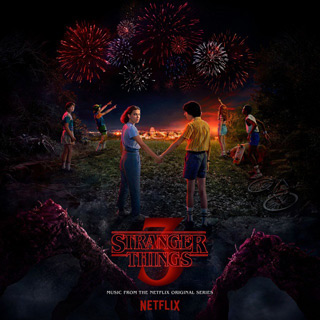
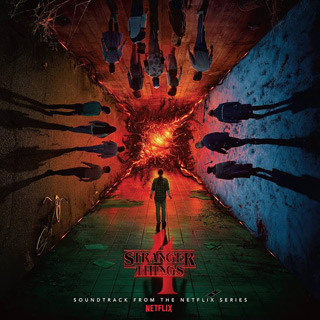
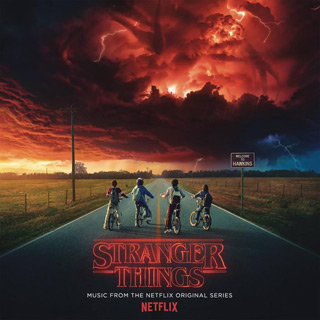
Meanwhile, the show’s original score, lush with synthesizers by Kyle Dixon and Michael Stein, has also helped to spark renewed interest in ’80s-inspired electronic music and is influencing modern producers and artists as well. From Diana Ross’ “Upside Down” and Tiffany’s “I Think We’re Alone Now” to the Clash’s “Should I Stay or Should I Go,” Journey’s “Separate Ways (Worlds Apart)” remix, and ABBA’s “Fernando,” this series turned familiar songs into cultural moments. Stranger Things has built a soundtrack that now functions almost like a living archive. Netflix even extended its music beyond the show by launching WSQK, “The Squawk,” a fictional Hawkins radio station that temporarily existed in the real world via streaming apps and vinyl releases.
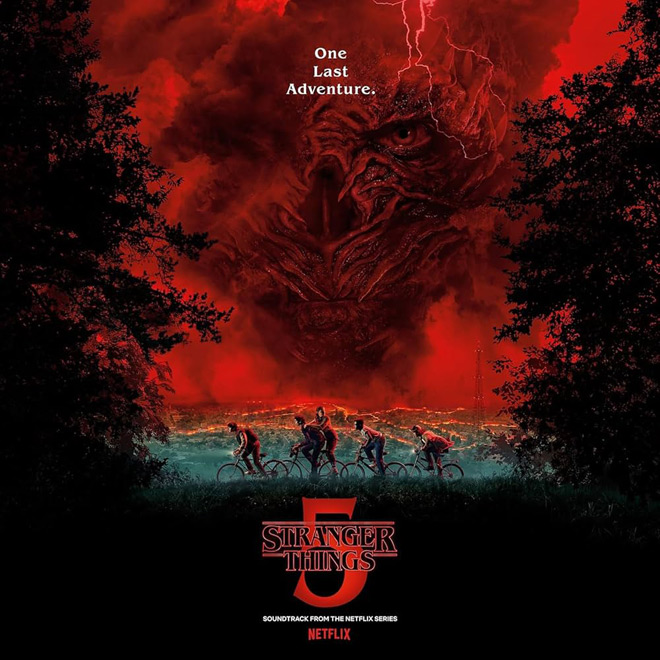
As Stranger Things closed the gate on Hawkins, its musical impact remains undeniable and equally memorable. The series proved that sync licensing and song placement, when done with true intent and purpose, can reshape the charts, revive legacies, and redefine how younger audiences discover music from our past. In an era dominated by short-lived viral hits and clips, Stranger Things accomplished something bigger. It reminded listeners that timeless songs do stand the test of time. Sometimes, these songs just need the right moment in the present to resurge again.


No comment