

The Kinks are a staple of classic British Rock. This groovy Beatles-led genre is known for its happy, upbeat tunes, but for the Kinks (consistently Ray Davies, Dave Davies, and Mick Avory), this was only a phase. An awkward, long-haired, shaggy vested phase. Another phase, however, one they returned to many times, was the tight, sharp, Proto-Punk sound harnessed on classics like “You Really Got Me.”
A few albums later, they don the distorted echo of a “Waterloo Sunset” and become instant UK Hits. Twenty-four studio albums is plenty of time to experiment and widen the genres of a band. It is stunning to fully grasp the depth of discography the band produced from the early ’60s until their last album in 1993.
Because of this, the Kinks are one of the few historical bands who get technology’s golden treatment: permanent archival. Every few months, a new audio tape or single is released with a ‘remastered’ ‘super deluxe’ ‘raw audio’ ‘Live at the’ title. There are hours of music listening libraries online and millions of fans worldwide. Their most famous album, self-titled Kinks, was released in 1964 to UK success, and eventually, the USA caught onto the Kinks, where they had a four-year top twenty album run.
Then, 1979’s Low Budget, 1981’s Give the People What They Want, and 1983’s State of Confusion peaked at eleven, fifteen, and twelve on the US top music charts. These three albums had a more American audience in mind, with themes of Contemporary consumer culture and lifestyle at the forefront.
The majority of Low Budget was recorded in New York City, which complimented the intense Arena Rock sound of the album. State of Confusion mirrors the turmoil the band faced at the end of this complex American-centric music era. The true meat of this trilogy is the second album. A collection of subtle yet mystifying stories that pulled back the covers on America’s culture and revealed it for the consumerist bonanza that it had always been.
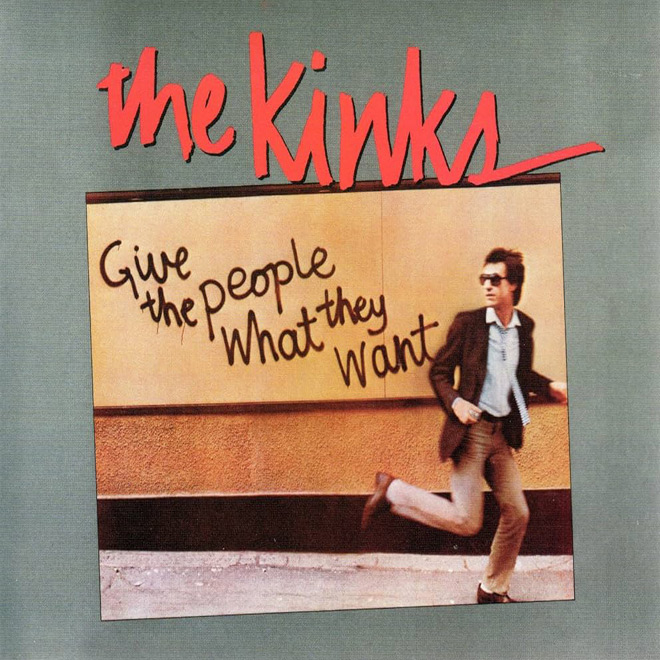
The second album, Give the People What They Want, released in August of 1981, is an interesting case because it is a commentary specifically on the toxic cycle of consumer culture. Ray Davies, the lead singer and songwriter, was inspired by his own experience working in America and the media fed to him through watching TV. As an artist, Davies made the conscious decision to dedicate this album to this theme; as a band, the Kinks made the decision to write and produce a nineteenth album for the consuming world to buy. There is a hint of paradox in the meaning behind the album.
Regardless of artists’ intent and artistic merit, the capitalist nature of music production and consumption poisons or at least alters the value of any song or album. The alternative is, of course, to release music for free, get no ratings, reviews, listens, or radio deals, and starve. All that to say, take the meaning of the album with a grain of salt. The Kinks had produced eighteen studio albums prior to Give the People What They Want, and as the title suggests, they know what listeners want in their songs. More importantly, they know how to polish a song to be enjoyed by the masses.
The idea of consumer culture in television and game shows is to make connections between viewer and performer. The person viewing links themselves to the program or game they are watching because the people in it are just like them. Showing off one specific story helps bridge gaps with many people. This is what is happening in Give the People What They Want. Every song is a story of a new person in a community of crazed killers, perverts, abusers, abusees, and unfulfilled men. Their stories are told as if they are unique and special, but the secret behind all these people is that they are normal; they are the people you see every day. The world around each person is billions of other people, not consumers or statistics but real individuals, and despite how normal everyone seems on the outside, they can easily be sick, sad, or tired on the inside. Davies is showing people what they need to have, the truth about their connections.
What Ray Davies is doing in this album is switching what people receive while they are still getting new music, new connections, and new vinyl to spend money on; what they are receiving is the exact opposite of what they are used to. The Kinks are making a statement about the problems of consumerist culture by releasing an ironic album that mimics the cycle while calling attention to its downfall. Instead of a message that is affirming and reassuring to the audience, the album highlights the crevices of human emotion where problems start to arise. Emphasizing unfulfillment and desperation.
This is exactly what people need: an individual voice to connect to, one that speaks their troubles for them and directs them to the answers they need to hear. Within the stories of each of these citizens, there is no more hiding but instead ownership. Consumer culture has created a secret portal into the household of every single household in America. The hours of endless TV that stream into the mind leave each viewer feeling unfulfilled. If they cannot stop consuming but want to change how they feel, then it is what they are consuming that must change. This is the main thought complex of the album, and it is enacted through the unique soundscapes and stories of each song on the album.
Give the People What They Want is intertwined with consumer culture. It is both the inspiration for the album and a complete part of it at the same time. While one purpose was to make an album that details individual stories to connect with listeners, the album also draws attention to how fake that entire process is. Shining light on the distasteful part of the mind and the hivemind bandwagon of pop culture.
Nothing that Ray Davies is saying can fully be his authentic voice, and he knows that. Before anyone can hear his message, it must be bought and sold, uploaded and downloaded, streamed and sent many times. At the end of the day, what you are listening to and looking at is another way to be controlled, to be altered and changed by companies to better fit a statistic. This album is an ironic wake-up call that reverses the purpose of consuming.




No comment