
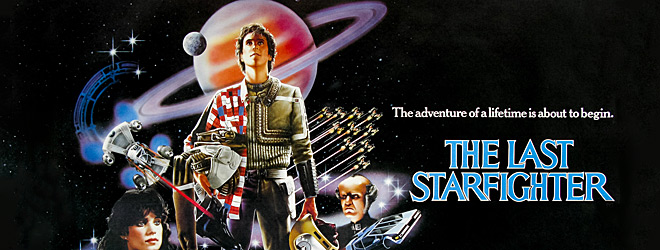
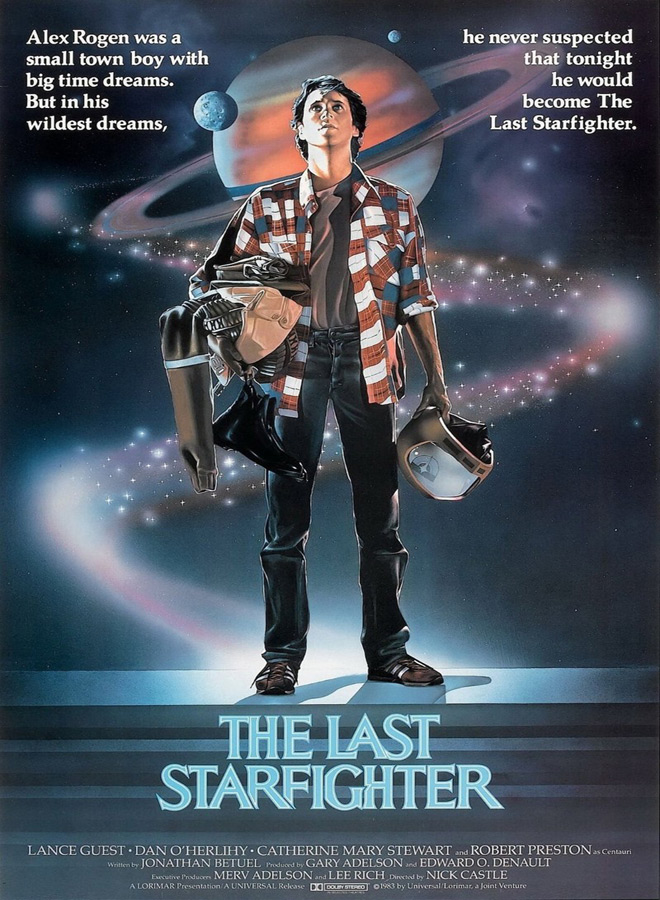
This month in Horror (or Science Fiction) movie history, we celebrate the anniversary of a film that dared to imagine a teenager from a trailer park could save the galaxy, with nothing but fast thumbs and a lot of heart. Released on July 13, 1984, The Last Starfighter—directed by Nick Castle (The Boy Who Could Fly 1986, Major Payne 1995), who is also known for playing Michael Myers in the original Halloween, and written by Jonathan R. Betuel (My Science Project 1985, Theodore Rex 1995)—arrived in the wake of Star Wars’ galactic boom, a time when audiences were primed for space operas full of adventure and heart. While Lucas’s saga inspired countless imitators, The Last Starfighter brought something fresh to the genre: a grounded, digital-age twist on the chosen-one myth, rooted in video games and small-town dreams.
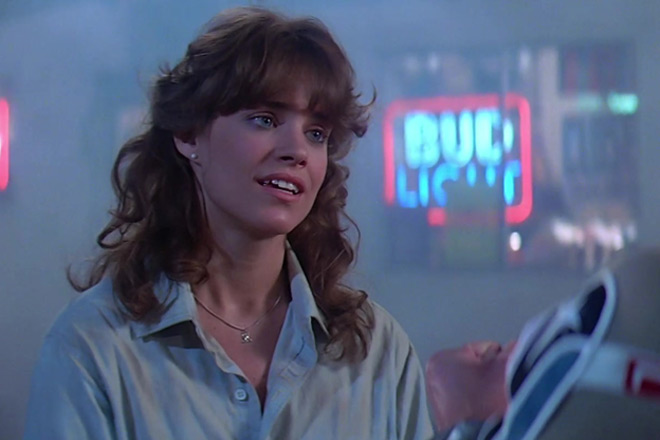
At the heart of the film is Alex Rogan, played by Lance Guest (Halloween II 1981, Jaws: The Revenge 1987), a bored teenager stuck in a dead-end trailer park. His only escape from monotony is a video game perched outside the community store. When Alex beats the high score, he discovers the game was actually a test—a recruitment tool designed to find real-life pilots for a galactic war. Soon, he is whisked away from his family and girlfriend Maggie Gordon (Catherine Mary Stewart: Night of the Comet 1984, Weekend at Bernie’s 1989) by a charismatic alien recruiter named Centauri (played by the always-excellent Robert Preston) and thrust into an interstellar battle.
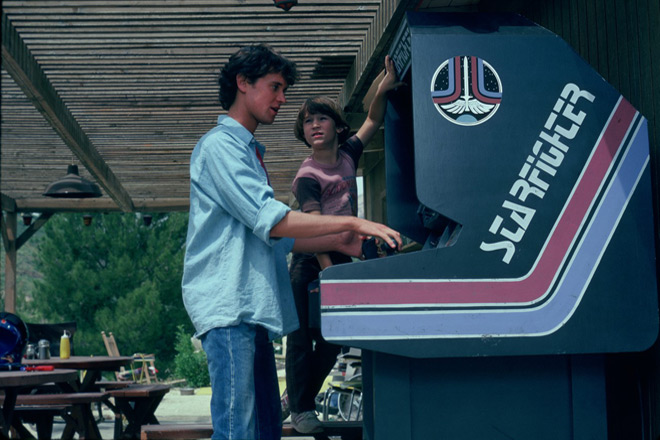
The Last Starfighter helped pioneer a now-familiar Pop culture trope: the gamer or outsider whose seemingly trivial skills turn out to be world-changing. Long before Ender’s Game was adapted for the screen or Ready Player One brought VR to the mainstream, the film told a story where video game mastery was not just a hobby—it was destiny.
Alex’s transformation from isolated teen to galactic hero validated a generation of kids who were often told their time spent in arcades was wasted. The film tapped into the fantasy that intelligence, quick reflexes, and focus—traits honed through gaming—could truly matter in the real world, or in this case, the universe. It laid the groundwork for countless stories where underdogs discover their value not by changing themselves, but by realizing the true potential of what they already love.
The timing could not have been better. The film arrived at the peak of the video game boom. Arcades were packed, Atari ruled living rooms, and kids lined up to play Galaga, Pac-Man, and Defender. While 1983’s WarGames had already shown how computer skills could have real-world consequences, The Last Starfighter leaned further into Sci-Fi Fantasy, imagining a universe where joystick skills could literally save planets. It beat 1989’s The Wizard to the punch by five years and preceded 2018’s Ready Player One by decades.
One of the film’s most significant innovations was not on screen in the traditional sense—it was in how it was made. The Last Starfighter was one of the first films to utilize CGI (computer-generated imagery) to render its space battles and ships, rather than relying solely on physical miniatures. This was a massive risk in 1984. Special effects house Digital Productions used a Cray X-MP supercomputer to produce over 25 minutes of digital effects—an ambitious, radical feat for its time.
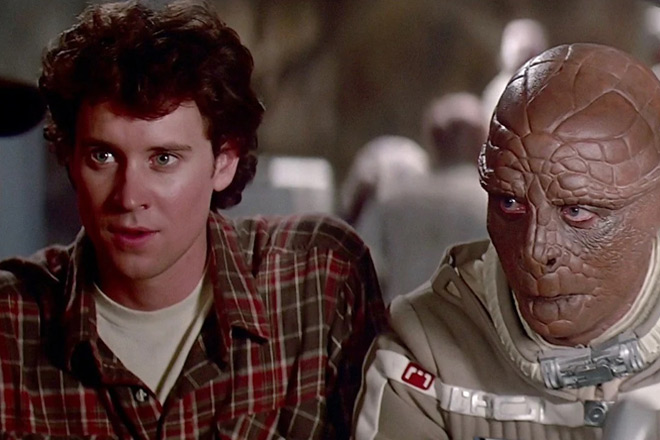
One of the film’s most memorable achievements lies in its inventive production design, which beautifully balanced practical craftsmanship with emerging digital technology. The sleek, angular Gunstar fighter became an iconic symbol of the film’s futuristic vision, meticulously crafted as a physical model and then brought to life through groundbreaking CGI. Meanwhile, the alien characters were brought to life through detailed prosthetics and makeup effects, adding tangible realism to the otherworldly cast. This seamless blend of hands-on artistry and computer-generated imagery gave the film a unique visual texture, rooted in the tactile charm of traditional effects yet boldly embracing the possibilities of digital innovation.
The visuals may seem quaint today, but they were groundbreaking at the time. The Last Starfighter helped pave the way for the digital effects revolution that would later bring us 1993’s Jurassic Park, 1995’s Toy Story, and 1999’s The Matrix. Furthermore, in 2023, Arrow Video released a 4K Ultra HD edition of The Last Starfighter, which offers a stunning visual presentation that showcases just how ahead of its time it was.
To truly understand the film’s impact, it helps to consider the world it came from. In 1984, Ronald Reagan was in the White House, the Cold War loomed large, and the U.S. was obsessed with space defense (remember the “Star Wars” program?). The film’s storyline—recruiting an unlikely young hero to fight a distant war—mirrored real-world anxieties and technological fantasies.
At the same time, America was full of small-town kids feeling stuck, dreaming of escape. Alex’s trailer park was not just a quirky setting—it resonated. His journey reflected the hopes of a generation raised on arcade cabinets and science fiction, dreaming that maybe, just maybe, their talents did mean something.
While The Last Starfighter wasn’t a massive hit at the box office (it grossed around $29 million on a $15 million budget), it became a staple on cable in the ’80s and ’90s. Its mix of old-school charm, sincere optimism, and retro-futurist visuals earned it cult status. The arcade cabinet from the film became a collector’s grail. And in recent years, a sequel or reboot has been rumored, with Rogue One Co-Writer Gary Whitta collaborating with Betuel on a new installment.
However, maybe part of the film’s lasting magic is that it did not get a sequel. It stands alone as a time capsule: ambitious, heartfelt, and quietly revolutionary.
On its anniversary, The Last Starfighter remains more than just a nostalgic relic—it is a milestone in movie history. It envisioned a future where ordinary people could be heroes, where video games served as gateways, and where dreams—no matter how improbable—could lead to the stars.
So, as Centauri would say: “Greetings, Starfighter. You have been recruited…” to remember a film that dared to dream big, and aim even bigger—pixels and all.


)
No comment