

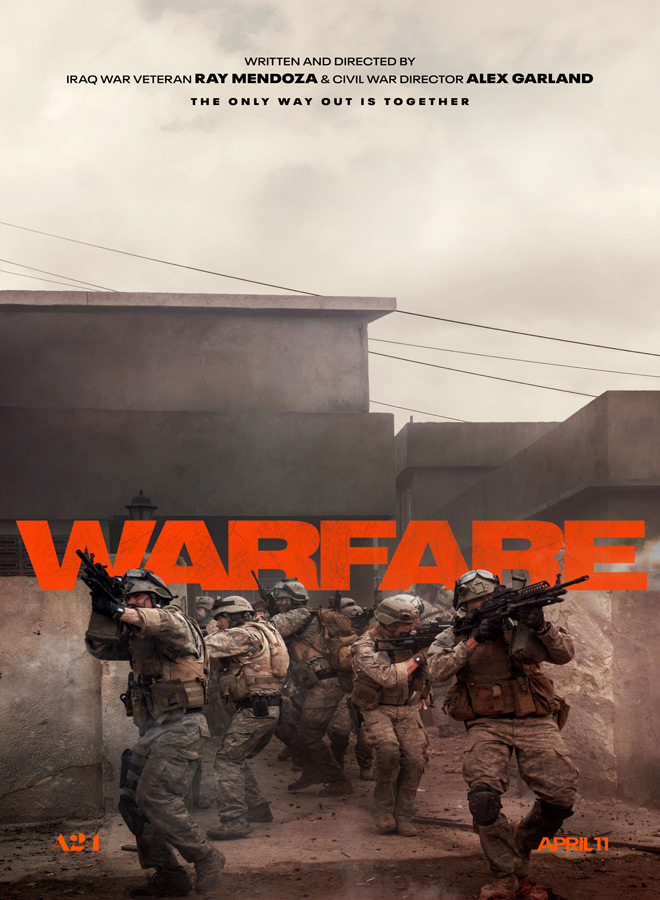
Hitting theaters April 11, 2025, through A24, Warfare does not just depict the chaos of battle — it immerses you in it, breath by breath, bullet by bullet. Co-written and co-directed by Iraq War Veteran Ray Mendoza and visionary Filmmaker Alex Garland, Warfare is a gripping war drama that strips away the gloss of Hollywood heroism to reveal something far more haunting: the raw, disorienting truth of modern combat. Drawing directly from Mendoza’s harrowing firsthand experiences during a 2006 mission in Ramadi, Iraq, the film unfolds in real time, offering a boots-on-the-ground perspective that is as intense as it is intimate.
It also features a fantastic ensemble cast – D’Pharaoh Woon-A-Tai (Reservation Dogs series, Hell of a Summer 2025), portraying Mendoza himself, with Cosmo Jarvis (Inside, 2024; The Alto Knights, 2025) as Elliott Miller — a fellow Navy SEAL and close friend to whom the film is dedicated. There are standout performances from Will Poulter (Guardians of the Galaxy Vol. 3 2023, Death of a Unicorn 2025), Joseph Quinn (A Quiet Place: Day One 2024 Gladiator II 2024), and Charles Melton (The Sun is Also a Star 2019, May December 2023).
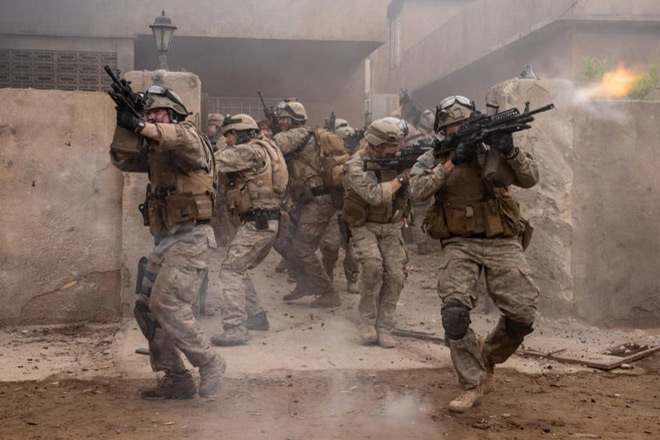
The narrative is reconstructed from the platoon members’ testimonies, emphasizing authenticity over dramatization. Rather than relying on a traditional score or heightened dialogue, Warfare embraces the disjointed, chaotic texture of memory, letting the lived experiences of the soldiers shape the story. The absence of music forces viewers to sit with the raw sounds of war: fractured radio chatter, the percussive rattle of gunfire, and the gut-punch of military flyovers.
This unfiltered soundscape intensifies the immersion, reflecting the soldiers’ disorientation and fear. The film’s meticulous sound design, with its overwhelming volume and relentless audio, mirrors the soldiers’ exposure to constant violence. Given its impact, Warfare is a strong contender for an Academy Award nomination for Best Sound Design, as the audio becomes an inseparable character, shaping the film’s emotional core.

The film also forgoes exposition, plunging the audience directly into the mission with minimal context. Dialogue unfolds entirely in authentic military jargon, with no simplifications for civilian viewers. This choice enhances realism, forcing the audience to absorb information as soldiers do — in fragments, under pressure, and often without full understanding. The performances anchor the emotional stakes, conveying with subtlety and urgency that these soldiers are not just fighting a battle — they are fighting for their own lives and the lives of the brothers beside them. It is a bold, immersive approach that puts the audience in the boots of those on the ground, without offering the comfort of distance or explanation.
There’s no easy way to describe Warfare — it’s a film that demands to be experienced firsthand. While all war films should be considered anti-war, Mendoza and Garland’s unflinching approach goes beyond simple condemnation. Every moment strips away romanticism, exposing the painful reality of combat — the chaos, fear, and bonds forged in unimaginable circumstances. In doing so, Warfare transcends the genre, becoming not just a depiction of war but an intense confrontation with its true cost.
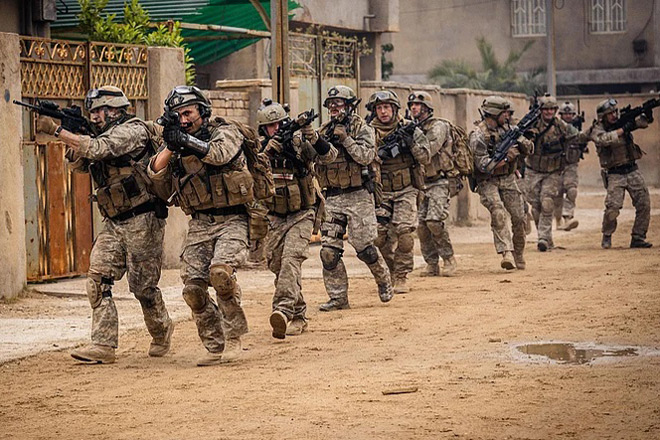
Upon reflection, audiences may find themselves wondering what became of the soldiers depicted or questioning the rationale behind the military’s presence in Iraq. This sparks deeper, lingering reflections that extend beyond the film, urging contemplation on the true cost of war and whether its value can ever truly justify the sacrifices made. This is why Cryptic Rock gives Warfare 5 out of 5 stars.


)
No comment