
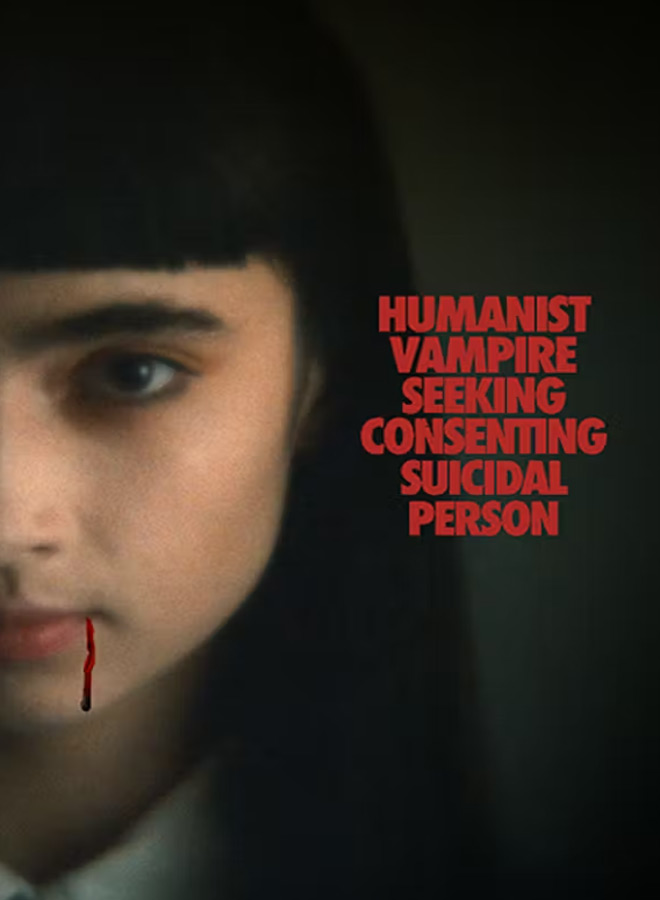
A pacifist teenage vampire who just cannot bring herself to kill how…. dull. Sprinkle in some macabre humor, beautiful lighting and set design, great costume design on spectacular actors, and just the right amount of blood. You get an enticing Quebec indie film that captures your attention right until the deadly ending. More specifically, you get the movie Humanist Vampire Seeking Consenting Suicidal Person. Arriving on Shudder on February 10, 2025, and written/directed by Ariane Louis-Seize, it is both dark and funny, which is a contradiction that fuels the entire film. How can a vampire live without killing? How can a living human crave their own end?
First things first, the main character is not really a teenager. Sasha (Sara Montpetit: Falcon Lake 2022, White Dog 2022) is a 69-year-old gothic introvert whose only solace is the piano. Instead of bloodlust, death triggers her empathy response, disabling her ability to feed on live bodies. Living off of her parent’s extra blood bags, the tension in the household is high and quite humorous. These immortal vampires must take gentle parenting approaches to enable their child’s murder instinct because they may die in the future. There is a slight discrepancy here because the lifespan of vampires is not objectively addressed.
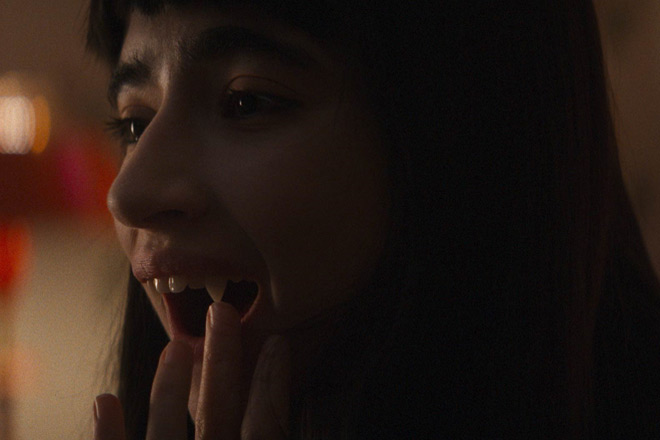
This is actually the only issue with Humanist Vampire Seeking Consenting Suicidal Person. The lore of vampires is expansive and differs greatly from the classics of Dracula to contemporary series’ like Twilight or Vampire Diaries. In this film, the backstory and public conscience regarding vampires are painstakingly defined in these stories to immerse the audience in the story. This important step in creating realistic, otherworldly horror is forgone in the film. This leaves the viewer to wonder how closely these vampires have assimilated into modern life. There is an air of secrecy surrounding the family, and it is obvious that vampires are not an accepted part of society. However, no history or protocol is shown that would help the viewer understand the state of security that the vampire family must live in.
Other than this oversight, the film does a good job of utilizing the vampire trope. Sasha’s troupe of bloodsuckers has an Addams family feel to them, especially the socially cold cousin and conservative 300-year-old aunt. There is only one major gore scene; the killing of humans is tasteful, and it is obvious that Sasha is not afraid of blood and death but empathetic towards the ending of a life. This important character trait makes it very rewarding when she finally finds a victim to sink her teeth into. Spoiler alert: the vampire drinks blood!
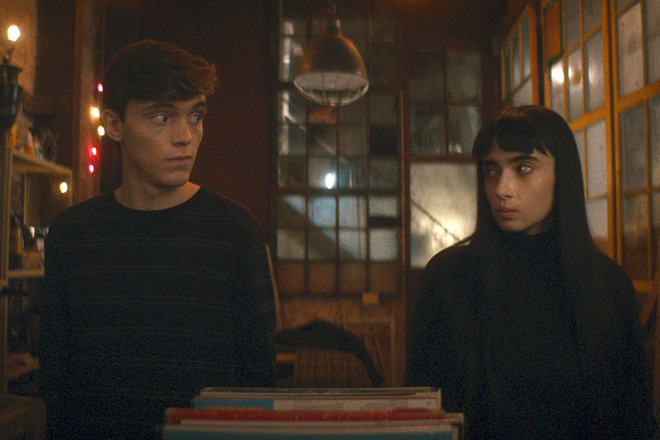
On the other side of Humanist Vampire Seeking Consenting Suicidal Person is the human world. The story morphs into a Rom-Com when the nerdy kid Henry (Félix-Antoine Bénard: La Faille series) is introduced and meets Sasha. There is tension right away with the completely helpless personality he expresses. A suicidal bullied high school experience provides a good juxtaposition with Sasha’s immortal yet lonely character. Both characters have similarities and find comfort in interacting with each other.
With everything considered, the film could be seen as a description of the neurodivergent experience. Making friends with others whose complicated lives alter their personality should, of course, not involve murder or immortality, so who to say? For a sacrificial lover trope, the relationship between the two characters is quite sweet. The moment they share listening to Brenda Lee’s “Emotions” is heartwarming despite the impending doom for one of the characters.
This conflict of emotions is the heart of Humanist Vampire Seeking Consenting Suicidal Person. Although Henry wants to die, Sasha cannot kill him until she believes he will die happy. This paradox is that the depressed teenager only wants to die because he is not happy, and thus, a goose chase ensues with the two trying to find what will make Henry happy. Because the characters are realistic and the acting is high quality, the audience will get attached to these characters and want to see them succeed, even if this success means a bad ending…death. Their interactions are constantly bittersweet and quite exposing. A teen with nothing to lose and an immortal being finds it easy to talk about the plagues of their lives and the ghosts that haunt their mind, and the audience gets to watch as they unfold their lives for each other.
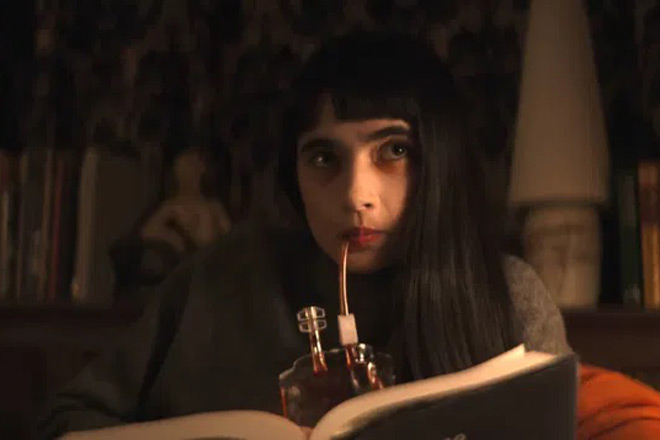
The ending is surprisingly happy for the film’s buildup and shows both the powerful family unit of the vampires and the possibilities of vampirism in the modern world. More hardship could have been thrown Sasha’s way, especially regarding Henry’s mother, but watching these two hopeless teenagers find joy in a dark world is written well enough that more gore or death would tread into the realms of camp and true horror.
Humanist Vampire Seeking Consenting Suicidal Person is not trying to redefine the vampire genre or introduce world-ending demonic prophecy to the human experience; it is a meditation on the similarities and differences between reality and fiction. Placing a bloodsucking vampire next to a self-loathing human and expecting them to get along despite the obvious answer. A film about subverting the dominant paradigm, Cryptic Rock gives Humanist Vampire Seeking Consenting Suicidal Person 4.5 out of 5 stars.




No comment