

The mark of artistic authenticity is one who creates internally before even considering outside opinion. A very selfish perspective, it is imperative for the sake of creation to satisfy your own vision by the best means necessary, regardless of whether the said art has commercial viability.
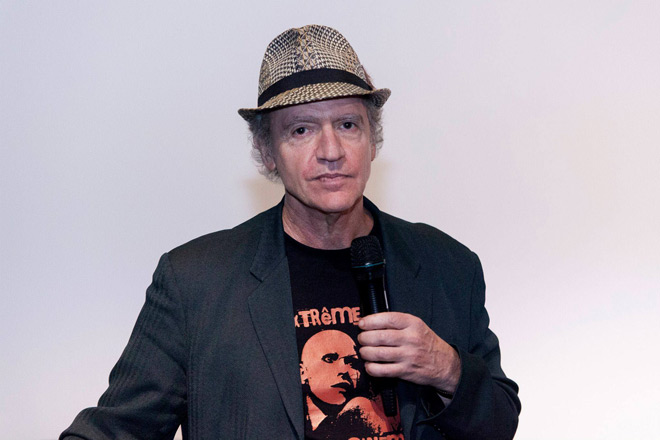
Quite idealistic, but the way many artists function, chances are that veteran Filmmaker Jeff Liberman would agree with many of these sentiments. Born and raised in Brooklyn, New York, Liberman attended the School of Visual Arts in NYC with a very unique intangible eye for directing.
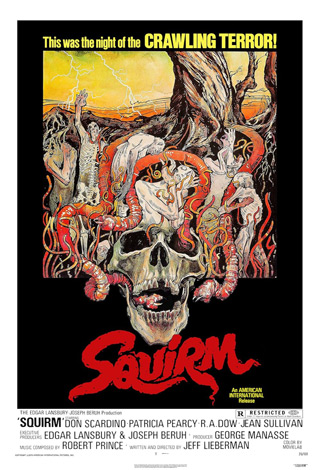
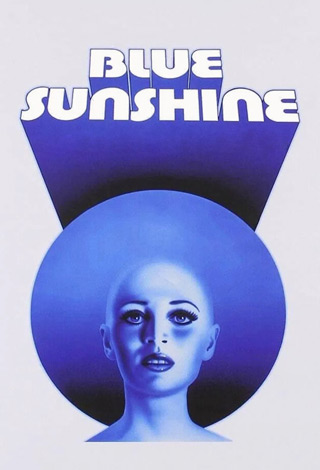
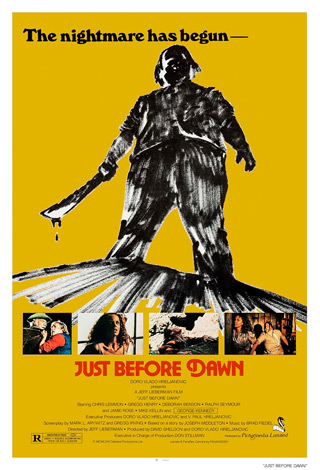
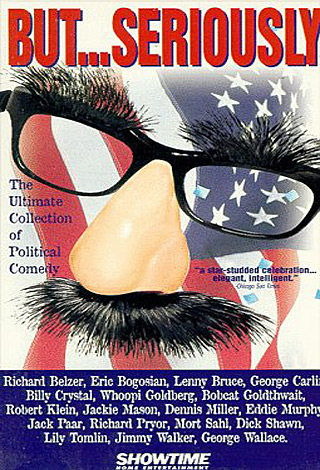
A filmmaker with a yearning to never repeat himself, Liberman is often remembered for his Horror films (which he both wrote and directed), including 1976’s Squirm, the mind-bending 1977 film Blue Sunshine, and 1981’s backwoods Thriller Just Before Dawn. However, how many are aware that he is also an accomplished documentary filmmaker, directing the 1994 Comedy documentary But… Seriously, the 1995 documentary Sonny Liston: The Mysterious Life and Death of a Champion, among others.
A filmmaker and author who cannot be typecast, Jeff Liberman is genuinely a fascinating individual. To this day, an active creative mind, he recently sat down to chat about his film career, his 2020 career memoir, Day of the Living Me: Adventures of a Subversive Cult Filmmaker from the Golden Age, the possibility of making a new film sooner rather than later, plus more.
Cryptic Rock – You have been making films for a long time, and you have made many interesting ones along the way. How would you describe your career as a filmmaker?
Jeff Liberman – I’ve found over the years that the best thing is to let other people describe what I do. They’re on the outside. I’m on the inside. I can’t see with any kind of perspective. Plenty of people have described what I do. It’s a consensus thing, and it seems like the consensus is that there’s a lot of variety.
I don’t repeat myself, and I also don’t follow any trend, what’s selling, or anything like that. I did five feature films, and they’re all totally different from each other. It’s a fact that has nothing to do with good or bad. It’s true. I don’t set out to do that. It doesn’t occur to me to repeat something I already did.
Cryptic Rock – Right. You want to keep things fresh and do something different. As a filmmaker, you not only direct but also write. Obviously, you want to do something different each time you create a film.
Jeff Lieberman – Yeah. I do, but many people don’t. They keep at the same thing because it works commercially. They do sequels for the same thing, and it’s just not the way I think.
Cryptic Rock – That’s understandable.
Jeff Lieberman – Yeah, I’m the only audience in my stuff as far as my thinking goes. I have to be entertained by what I’m doing.
Cryptic Rock – You have to believe in what you are doing. That is an interesting way to approach it from the viewpoint of being your own audience.
Jeff Lieberman – Yeah. You can say the same thing about people in a mental institution, too. They don’t think in terms of entertaining anybody but themselves.
Cryptic Rock – That is true, too. Isn’t that what real art is supposed to be about, though? Filmmaking is an art form, of course, and isn’t real art about trying to satisfy your own vision before satisfying the masses. That should be the main priority, shouldn’t it?
Jeff Lieberman – Yeah. It’s the only priority. That’s why I said that. Somebody else could do the exact same thing. They satisfy work, only satisfy themselves, and never sell anything. Turning things into commerce has nothing to do with satisfying the creative side. That’s why Van Gogh died broke and all of that. Because it never turned into commerce during his time, but it didn’t change the work that he did. It didn’t make it any better when it turned into commence and made millions of dollars. He didn’t get to buy a Maserati with that money because he was dead.
Cryptic Rock – That is the way art usually works. People and their work are not traditionally appreciated until after they are gone, often.
Jeff Lieberman – Yeah. That’s right.
Cryptic Rock – With your films, as you said, they’re all different. The one commonality is that you have often worked in the Sci-Fi and Horror genres. Are those two other frames you enjoy working in?
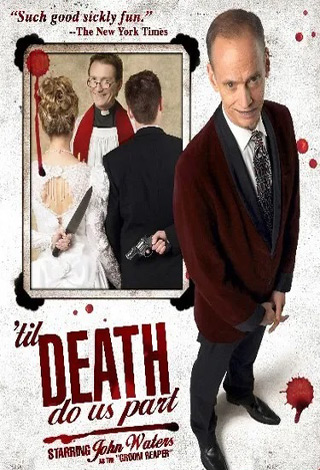
Jeff Lieberman – Yeah. But I have also done other stuff. It’s great to be known for something without robbing the bank or something. I’m not knocking, that’s all I’m known for, but I have done quite a bit of stuff that has nothing to do with this. I’ve done pretty significant documentaries for Showtime, TNT, and HBO. I won an Emmy Award for a documentary on Sonny Liston, the fighter, for HBO. I did a huge Comedy thing, called But… Seriously, for Showtime. Two of them, actually. One was a Documentary feature, and the other was a one-hour year-end special. I did a Documentary on Clark Gable for TNT. I did a PBS Documentary called Museum, which was pretty big. I did a TV series with John Waters, called ‘Til Death Do Us Part, for Court TV.
Cryptic Rock – You certainly have been diverse. Speaking of documentaries, what is it like working in that format, as opposed to a feature film with a script? Is there a different dynamic to that?
Jeff Lieberman – Yeah. Well, theoretically, a documentary, as far as I’m concerned, shouldn’t have a screenplay. It doesn’t make sense. Once you have a screenplay, that means that everything that you’re going to see in the documentary is narrative. There’s no difference between that and fiction. Remember Michael Moore? He won a documentary for Best Screenplay.
Cryptic Rock – That doesn’t make much sense, considering a documentary shouldn’t have a screenplay.
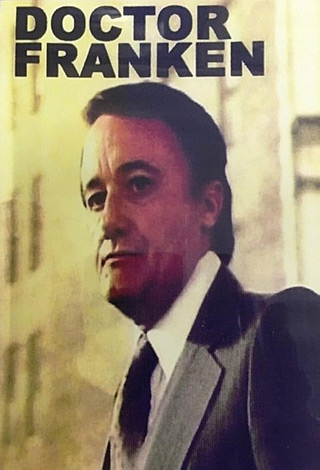
Jeff Lieberman – I couldn’t believe it. I’m in the writer’s guild. How do you justify that? It’s not a documentary. It’s Fiction. It’s his personal point of view. Now, a documentary is supposed to be even-handed and let its facts speak for themselves, not your own narrative voice. In the case of Sonny Liston, we set out to find who killed him, but had no idea. While shooting the documentary, we learned a lot, and then we let the audience decide. I didn’t have a screenplay. That goes to all the other ones.
Cryptic Rock – That is what a good documentary should be. As you said, it makes no sense for someone to write a screenplay for a documentary.
Jeff Lieberman – I could see a Mockumentary, like This Is Spinal Tap (1984), has a screenplay. It’s just like a dramatic movie, only taken the form of a documentary.
Cryptic Rock – Right. To that point, it seems like a lot of documentaries nowadays have an agenda or a steered point of view. Many modern documentaries seem to be driven toward one conclusion.
Jeff Lieberman – Yeah. Preconceived conclusion. That’s what propaganda is.
Cryptic Rock – Right. That’s another thing people notice about your films. Just watching your feature films in the Horror and Sci-Fi genres, you have a very keen sense, and there is a social undertone to your movies. You can see that you understand what is going on around you.
Jeff Lieberman – Yeah. As I said before, I don’t have to describe it because that’s what everybody says. Directors say that. The general audience says that. See what you just said. That’s what I meant by letting other people determine or describe what I do, because I don’t do that consciously. Every single thing I do. I don’t see any point if I’m not interested and if I don’t have something to say. I don’t think that way. I can’t do anything without having a point of view. So it comes out, but I don’t say, “What social commentary can I stick into this?”
The last feature I did was Satan’s Little Helper (2004), and it’s filled with that stuff. I would just sit there when I was typing it and laughing out loud to myself. That’s what I meant, that you could do that in a mental institution. What am I laughing at? There’s nobody in the room, and I’m cracking up. I had a picture of the Satan man in the movie.
The killer, I had a photograph of that mask on my wall. While I was typing on my computer, I kept looking up at the guy’s face. He was telling me what he was doing, and I imagined it from his face. I would just write it down and crack up. The fact of the matter is that all that was coming out of my brain. I guess creativity is a form of insanity.
Cryptic Rock – It sounds very stream-of-consciousness. Would that be an accurate way to describe it?
Jeff Lieberman – Oh, yeah. Definitely.
Cryptic Rock – For example, 1977’s Blue Sunshine is entertaining, but there is a lot of strong social commentary in there. It is just the way it flowed out for you.
Jeff Lieberman – Yeah. That was a lot of my life experience because I was of the Baby Boomer age, and LSD was a big part of it. I took LSD. All those things came naturally because I experienced everything firsthand. I didn’t have to concoct it from the outside. Now, look at Blue Sunshine, and say if you shot Blue Sunshine exactly the way I shot it, same movie. If you did it today, you’d say, “That’s a period piece looking back at the ’70s.” Right? Then you would see all the touchpoints of politics and the Baby Boomers becoming the consumer middle-class, and all of that. I just happened to do it at the time it was happening.
Cryptic Rock – It was in real time. It was happening at the time.
Jeff Lieberman – Yeah, right.
Cryptic Rock – Even still, the film is poignant today. If you look at it and you say, “Wow, a lot of this still is very valid with what is being said here.”
Jeff Lieberman – Yeah. That’s why it gets booked all over the world. It’s incredible how many screenings of Blue Sunshine there are. I recently did the Cinema Tech in LA. At the same time that they screened it as Cinema Tech, I said, “Hey, maybe I’ll come to the screening.” It was sold out, and people love it. Totally different generation than mine, but it doesn’t matter. The same thing in Europe. They show it all the time. Now, it’s been on Shudder and is a staple there.
Cryptic Rock – Yes. And Synapse Films recently released it as a 4K Special Edition, which is really fantastic.
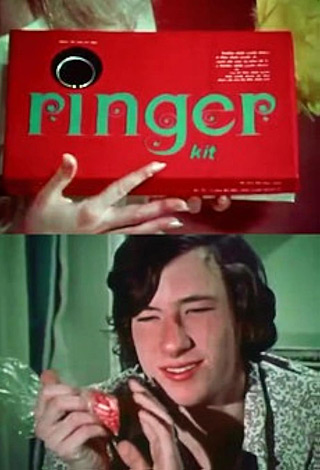
Jeff Lieberman – Yeah. Did you ever see the short I did called The Ringer?
Cryptic Rock – That was one of your first projects.
Jeff Lieberman – Yeah. You can see it on YouTube. If you put in The Ringer, Lieberman, it’ll come up. It’s only 18 or 20 minutes. That was the very first thing I ever did. To this day, when people see it, they say the same things you’re saying about Blue Sunshine; that it is as true today as it was back in 1972 when I did it, and the message in it is just as valid today. Same exact thing.
Cryptic Rock – Wow. That is one to check out. As we have discussed, you have never repeated yourself in your films. In 1981, your film Just Before Dawn was released. This was a Slasher film and very much the complete opposite of Blue Sunshine.
Jeff Lieberman – Yeah. When I made that movie, there was no such term as Slasher. You don’t set out to make a Slasher movie. That’s what they do with everything. They do it in Rock-n-Roll. They do it in the whole music business. You’ve got Country Western, then you’ve got Heavy Metal, Goth, and all this bullshit. They have to label everything because it’s a marketing tool.
The less sophisticated people say, “I’m going to set out and make a Slasher,” which, to me, is moronic. If you’re going to set out and make a Slasher, what you’re saying is that you’re going to try to record a whole lot of killings and try to make them as gross and disgusting and everything. Then, out-gross and out-disgusting the last person that did it. To me, that’s not filmmaking. That’s trying to manufacture a product called a Slasher. If you have a cell phone, you can do it. Has anybody ever done a film where you actually killed people with a cell phone?
Cryptic Rock – They probably have at this point.
Jeff Lieberman – Yeah. Just smack them over the head enough times. You probably have to hit them over the head about 100 times. People can go to the bathroom while it’s happening, come back, and the person’s still not dead. Get on it.
Cryptic Rock – (Laughs) You bring up an excellent point because we are constantly told, with the internet and such, that creativity is better now. It seems like everything is out to create a product, even with the internet. Everyone is selling something. Nowadays, people are selling themselves via social media. Do you think creativity is better now?
Jeff Lieberman – The answer to that is it has nothing to do with creativity at all. All it is is that it’s opened the floodgates that anybody, the most talented people and the people who have zero talent, have access to a countless number of people that could either stumble across their work, like their work, or whatever. It sounds great, the freedom of it. That’s the good news.
The bad news is there’s no barrier. There used to be a barrier to quality. You had to write, say a screenplay, that somebody wants to buy and put enough money to make a movie or pay for a building. I’ve said this sometimes. I did the math. Say, Squirm (1976), I want to make a movie about worms. I’ll pay for a movie about worms in 1965, or I can buy a building on 9th Avenue in Manhattan for the same money. That’s true. The money that Squirm cost was $420,000 or something in 1975. You look it up. The movie inflation is higher than the general inflation. Either way, it’s about 2.3 million. Back then, for the equivalent of 2.3 million, you could buy a building.
Today, you get a cell phone, shoot anything, and get your friends to give you money or go out, “I want to make a movie. Give me money.” Think about all the screenplays that were not good enough to make the grade; millions of them that you don’t know about. It’s good that you didn’t know about them because they weren’t good enough for people to take a risk on. Today, there’s no more film, and anybody can do anything to put it out there. It’s flooded, and 99% of it is crap. Believe me.
Cryptic Rock – Agreed. It seems like there is an oversaturation now. It is excellent that independent people can reach more viewers; however, it is hard to find quality.
Jeff Lieberman – Yeah, just because they can reach people, doesn’t have anything to do with whether they should, if it’s any good, or it’s worthwhile. This is my slogan that I’ve been using since the beginning of Facebook. When Facebook started, it was just to get people in touch with each other. When they started to pontificate, give their opinions on things, memes, and all this stuff…
Did you ever see the movie Joe (1970) starring Peter Boyle? The character was the literal drunk at the end of the bar. That movie, Joe, was made way before the internet. He would talk about the president, what they should do, welfare, and all these opinions, spouting them all over the place. Everybody knew that guy; you go to a bar, and there’s always a guy like that. What do you do? You pick up your drink, and you go to the other end of the bar so you don’t have to hear them.
The internet is 100 million Joes, the drunk at the end of the bar, and that’s what you’re seeing. If it wasn’t for the internet, every single thing they’re typing and putting out there would be yelled at a bar, or somewhere that somebody’s going to hear it. Twelve people will hear it, not 100 million people. Those 12 people say, “Shut the hell up,” or walk away from them.
Think about it. It’s really what it is. I don’t give a damn with 99%. Why do you care about a total stranger’s opinion? I don’t. Have you ever seen people go to a movie and, when they come out, ask, “How was it?” How stupid is that? That’s how stupid people are. It’s a total stretch. I remember in the video stores, back when there were video stores, people would take the video case and hold it up to a total stranger, “Anybody see this?” They go, “Oh, yeah. I saw it.” “Any good?” If the guy says, “Oh, it sucks.” They go, “Oh, okay,” and put it back based on what a total stranger said. I guess the internet has not risen but sunk to the level of human intelligence, which is really low. If I don’t know them, their opinion means absolutely nothing to me, and it shouldn’t.
Cryptic Rock – You raise a lot of thought-provoking ideas to ponder. The collateral damage of all that and what we are seeing is you have these massively inflated egos and narcissistic personalities that people believe their own rhetoric and believe that they are the most important person on the face of the planet.
Jeff Lieberman – Yeah. That’s okay if they were the drunks at the end of the bar. Those guys did too. There’s no difference between that. Then the bartender cuts them off, someone says, “Shut the hell up,” or they wind up in a fight in the bar. You don’t know about it because it was someplace in Des Moines, in a little tiny bar in the corner. Now it’s called the internet. You’ve got billions of people out there, and it’s going back and forth. Humanity is going down the tubes because of it. It’s purposely lowering everything to the lowest common denominator.
Cryptic Rock – Agreed. What about the other aspect that a lot of what we are experiencing in modern culture is really a form of control by others? If people are completely distracted by nonsensical things and fighting with one another over opinions they should not care about, it is very easy to control them in many ways.
Jeff Lieberman – Yeah. That’s nothing new. That’s always been the case. You think there’s control now. You know how much control there was when there were three networks, ABC, CBS, and NBC? That was the only source of television, and there were networks on the radio. Then you had the major newspapers. That was it.
That’s the other side of the coin. When you watched the news on 7 o’clock news or 6 o’clock, whatever it was, you took that as the absolute truth. You had no counter voice to it. I don’t buy into any of that stuff to do with some massive think tank or whatever that’s trying to control masses of people. That’s paranoid bullshit. What I do think is that there are advertising agencies trying to control people to go out and buy Coca-Cola.
If you see The Ringer, that’s what The Ringer is about. It’s literally showing how to use the media to manipulate people. It’s not to manipulate people to become communists or all this stuff. You talk about Hitler and all these big ideas. People are not that smart, and they’re not that organized. There are no secret groups doing this shit except fringe crackpots. The biggest control is go buy a Buick. You need a Buick.
Read Marshall McLuhan. That should be mandatory reading in schools. They don’t even know who the guy was. In the ’60s, he wrote a book called The Medium is the Message. It was very popular for a short period of time. Basically, he said all advertising is good news. Think about that. There’s double action in Babel, with an exclamation point. People don’t stop and say, “Wait a minute. I didn’t even know there was a single action in Babel. I don’t even know what single action means. Hey, honey, look. There’s double action in Babel. We got to get it.”
Every single commercial is good news. All advertising is good news. You save 60% tonight. If you act now, you’re going to save 60%. You’re not smart enough to say, “I’ll save 100% if I don’t buy your shit.” Right?

Cryptic Rock – You are very much on target. Here is the thing: once aware of what is truly happening in front of your eyes, isn’t it exhausting to put on the TV?
Jeff Lieberman – I don’t watch anything with commercials. I haven’t been for so many years. I just don’t. Fortunately, I’ll pay for Netflix and all these kinds of things, but I would never watch commercials. When I watch something, as you say, that has commercials, if I can pre-record it, I’ll fast-forward through the commercials or keep the whole thing on mute.
I watch every sporting event on mute. I figure it this way, if it were the radio, I would want to hear what these people have to say. Since it’s television and I’m not blind, I don’t need three commentators telling me what I’m looking at. So, I just watched the whole thing on mute, period.
Cryptic Rock – Right! A lot of times, they are just filling the airspace, and they get in the way of trying to watch the game, as you said.
Jeff Lieberman – Yeah. They don’t say there’s a ground ball to third base. They say, “Jeff, what do you think?” Well, I think I just saw a ground ball to third base. I agree with him. He’s so stupid.
Cryptic Rock – It’s true. These are things you should think about. Sadly, many do not.
Jeff Lieberman – Well, I thought about them a long time ago, and I’m used to being me. I don’t tell anybody. I don’t say, “You should watch that stuff on mute.” I would never tell anybody to do it. That’s what I do.
Cryptic Rock – That’s the right way to be. Imposing yourself on people does not make you a better person. It just makes you an obnoxious person. You believe what you believe. If someone else is still doing the things that are probably harmful to their brain, well, that is their prerogative.
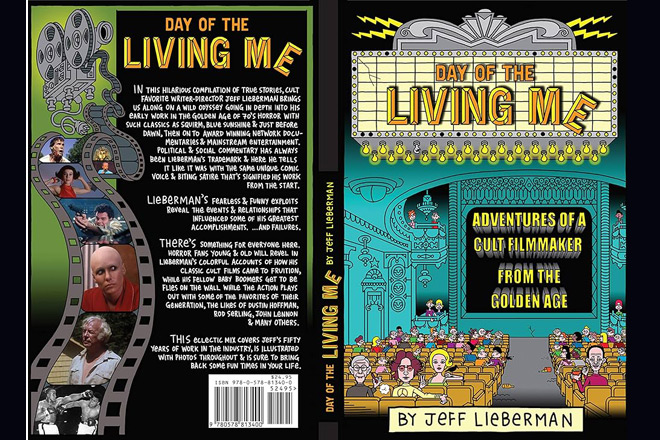
Jeff Lieberman – I wrote a book called Day of the Living Me. When I do personal appearances and stuff, I sign autographs and write, “Don’t be like me.” That’s my recommendation. I’m not going to tell you how to be, but don’t be like me. Do your own thing.
Cryptic Rock – That’s a good recommendation. Where can we find the book?
Jeff Lieberman – On Amazon, it’s called Day of the Living Me: Adventures of a Subversive Cult Filmmaker from the Golden Age. It’s a career memoir. It’s not a personal biography. It’s a career memoir, meaning it’s all about the things I’ve done and how they came about.
Cryptic Rock – Exciting, is it also available on your website?
Jeff Lieberman – Yeah. As a matter of fact, I should remember to tell people that if you buy it on my website, I can sign it. I can’t sign things on Amazon because I never get to touch it. On my website, I send it out for me to sign.
Cryptic Rock – People will need to look into it. Are there any screenplays you are still working on, or anything we could potentially have in the future?
Jeff Lieberman – Yeah. I hope so. I have one script that came so close to getting made. It’s a huge thing for me, but it didn’t happen. I had John Turturro involved, and it was called Cine Muerte. It wasn’t really a Horror movie. It was a character that was loosely based on me. The money fell through at the last minute, or you’d be talking about that. I still want to make it if I can. I have three finished scripts that I’ve actually optioned and made quite a bit of money on, without them ever getting made. That’s how the business works.
Cryptic Rock – Hopefully that will come ot be at some point in the future. You have also written in Fantasy.
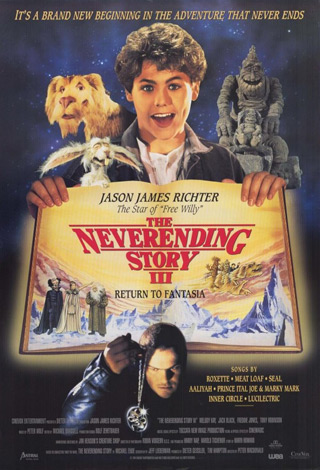
Jeff Lieberman – Yeah. I wrote The NeverEnding Story III (1994). I made more money on that screenplay-wise than all the screenplays for the Horror movies put together. It was a $ 25 million production back in ’93. That’s huge.
Cryptic Rock – Most certainly. Well, let us hope that your other scripts do come to fruition. You would direct them, of course.
Jeff Lieberman – Yeah. So far, I haven’t written a script, except for The NeverEnding Story III, which I did not direct. That was just a work-for-hire. Hopefully, I would direct. I always think in terms of directing them. I write it in a way that it’d be fun to see somebody else direct it and see if it looks like I directed it. The scripts I write are pretty ready to shoot.
Cryptic Rock – Hopefully something comes up soon. It has been some time since you last worked on a feature film.
Jeff Lieberman – It’s funny. It really doesn’t matter to me one way or the other if I make another feature film. It didn’t really matter to me before. I was never driven to do it. When I did Satan’s Little Helper, everybody said, “He hasn’t made a movie in 20 years.” They had no idea that it was all the other stuff I was doing during that time. I never had to make a movie. I don’t have that drive that some people seem to have.
Cryptic Rock – That is a good way to be, for sure. As a filmmaker, you have always thrived on working independently. Is it difficult when you have people behind you, meaning financing, and they want to control what you’re doing? Have you had any problems with that where you butted heads?
Jeff Lieberman – That’s what The NeverEnding Story III was. I was following orders. I got hired for a lot of money. Whatever they wanted, I said, “Okay.” I gave it to him. I didn’t even know what The NeverEnding Story was when they hired me, and there were two other movies. They just told me the requirements, and I followed orders.
My only driving force was not fuck up in their minds so they’d have to bring in another writer, which is very common. When you see credits like a movie like that, you see at least two people. That would just cut down my overall fee when the movie goes into production. I wound up with the entire enchilada, as they say. As far as I’m concerned, mission accomplished.



No comment