


Perhaps more than anything else, the song is the most integral part of who we are as human beings. A passage from any point in time, the song is an expression of human emotion that we can relate to universally. Inherently powerful, whether it touches on personal or worldly struggles, each of us leaves a song feeling something different, but hopefully more connected to one another.
Something we should remember, but often neglect to, in the world of the songwriter, it is paramount to strike these very delicate chords; otherwise, what is the point? Extremely tuned into this sentiment, Editor’s own Tom Smith has chased the endless goal of writing the best music he can over the past twenty-plus years.
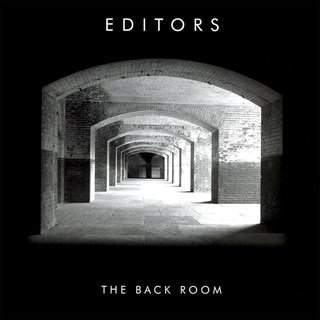
Famously recognized as the lead voice, rhythm guitarist/pianist, and key songwriter for the UK Rock band Editors, he and the band have achieved remarkable success, including chart-topping gold and platinum-selling records, starting all the way back in 2005 with their debut, The Back Room. Known for their melodic, moody brand of music that ebbs and flows between several styles, the key to it all has always been the songs.
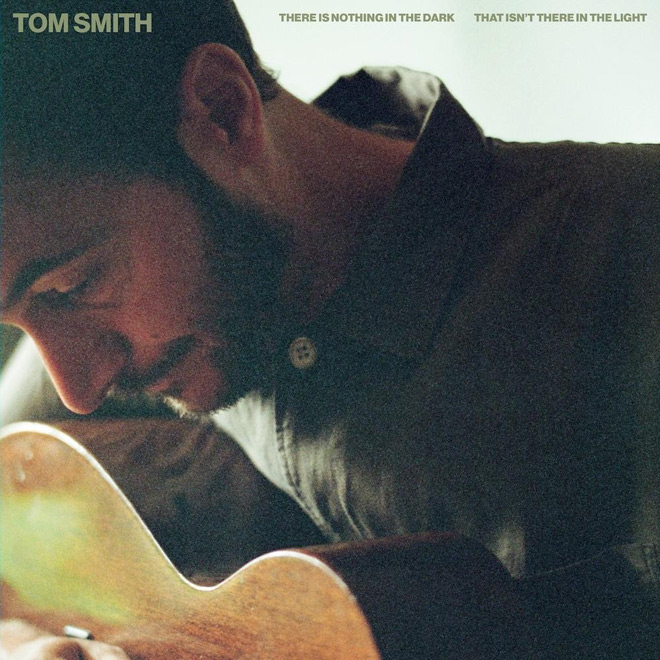
Passionate about this, Tom Smith embarks on a new journey in 2025 with his first-ever solo album entitled There Is Nothing In The Dark That Isn’t There In The Light. Released on December 5, 2025, the album offers a different side of Smith’s songwriting, and like always, it is quite personal. Grateful for the chance to continue his life writing and recording music, Tom Smith took time to discuss it all in depth, offering insight into his songwriting and much more.
Cryptic Rock – You have been involved in music for quite some time now and have attained a great deal of success with Editors. How would you describe your incredible journey in music to this point?
Tom Smith – I feel incredibly lucky to be sitting here talking to somebody like you after being able to make music for 20 years, and it has been my life. As you say, the overwhelming majority of it has been with Editors, with my best friends. I’ve just come from being in the studio with them today as well. I feel blessed.
When we started out, we always talked about those types of bands that we admire, artists that we look up to, and those people like R.E.M, The Cure, or those career bands who made many records, some of which you like more than others. Those bands have been family members to me in some ways. They’re with you for a long time. It’s been nice to, in some way, echo that type of career and still be here trying to write songs and talk to people like you about them.
Cryptic Rock – That’s great. Yeah, it’s been fascinating watching the band through the years. This year is actually the 20th anniversary of the Editors’ debut album, 2005’s The Back Room. A lot has changed with the band from album to album, which is really interesting. You guys have not made two albums alike. That’s a compliment by saying that.
Tom Smith – Yeah. That’s cool. Thank you. We’re always trying not repeat ourselves or to find new ways of expressing ourselves. On a more fundamental level, try to find new ways to keep the fire alive and keep ourselves excited in the studio.
We really feel like things are going well when we’re surprising ourselves. Sometimes that’s reacting to a record that we’ve made previously. Sometimes it’s just a natural evolution. It’s just always been part of our DNA, I guess. Certainly, from that third record, the first two records, you can perhaps draw a straighter line between. We just felt it started to be more exciting when we felt like we were ripping up the rules that we’ve made for ourselves.
It’s not to say that what we’ve done is overwhelmingly original or anything like that, but it’s just trying to find new ways, new people to work with, new producers, and different instrumentation. It keeps it exciting for us. That’s selfishly the most important thing.
Cryptic Rock – Absolutely. That makes for the best art and the best music. You talk about the trajectory of doing what you wanted to do and changing it up; reaction to each record. As time went on, the music changed, but there were points where it got a little darker and deeper. Is that an accurate assessment?
Tom Smith – Yeah, maybe. That’s perhaps more in the ear of the listener, the meaning or the weight behind the emotional depth in any particular song. I can’t really tell people how much or what to feel about certain songs. There’s always been, with the lyrics I write and the tone of our band, an emotional resonance that people who are fans of what we do, that side of the band, really resonates with them. Our audience is passionate, and the weight of sometimes melancholy, sometimes emotional content, the song speaks to them. That comes out quite naturally from us as artists. Maybe more specifically, I am a lyricist.
Along the journey, we’ve at times reacted to that slightly and perhaps tried to do things with a more Pop sensibility, some of our records. Even when we’re doing that, there’s normally a weight to it that perhaps it’s not like our attempts at Pop music are going to challenge the top 10. The idea of heavier emotional themes with melody, excitement musically and musicality that’s exciting and exhilarating. That kind of theater attracts us. In terms of record to record, I think that’s up to the listener to tell us where the meaning lies.
Cryptic Rock – Yeah, you are right. It is individual for each person to connect with songs. A good example of how diverse your writing and Editors are, “No Harm” and “The Phone Book,” two very different songs, but such beautiful music. It grabs you immediately.
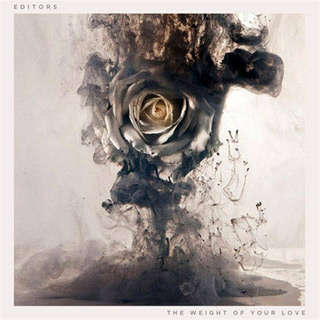
Tom Smith – It’s cool that you mentioned those two songs in particular. I definitely put them in my top 10 of my favorite songs that we’ve ever done. You’re right, certainly the musicality between the two; they come from different places. The Weight of Your Love record, up to this point, is perhaps the most odd one out in our catalogue.
It was the point where we changed as the band members changed, and we were going through a bit of a tough time. Things were difficult for reasons that we’ve talked about before. It pushed us into this like, “Well, we’ve got to be a band again here.” We were worried about the band breaking up, we have to make a band record, and get in a room and play. It led some of those songs, their direction, to be quite natural and acoustic or less electronic in their presentation. Across that record, there are some songs that are perhaps a bit of a misstep and didn’t quite hit the mark. “The Phone Book” is one that has become a really big song in our catalogue, and it means a lot to people.
Likewise, with “No Harm.” That record’s like, “Okay, we’ve done The Weight of Your Love. Let’s get in the studio ourselves. Let’s get our hands on the production, hide ourselves away, and see where experimentation takes us.” “No Harm” is perhaps the best example of that on that record. They’re both moody tracks. We’re always going to be a bit moody. You’re right, they’re from different worlds in some ways.
Cryptic Rock – Yes. That leads us to your decision to do some solo material. As a lyricist, it breaks down to an instrument, a piano or acoustic guitar, and you’re writing. That is where these songs that you are putting out now are from.
Tom Smith – Yeah. It’s where every song I’ve ever written really starts, to be honest. They’re quite a decent reflection or representation of the way that the songs I write start.
That was the intention of making a record on my own: to present some songs naturally. There’ll be a demo somewhere on my computer of “No Harm” that would just be with a piano. Perhaps it’d be a bit easier to understand with that as an example. It’s the way I’ve always written songs.
We just made EBM, and that was a lot of fun. We just finished touring. I’ve been thinking about doing a solo record for a few years, really. These things are never quite straightforward in terms of working out when the best time is to do that. It just felt like the right time to, off the back of that, was to go, “Okay. I want to do something completely different. I want to make a record which is less collaborative in terms of, obviously, the band.”
It was a true reflection of me as a songwriter, like I say, as the songs are born. What happened in the making of this record was that it ended up being more collaboration with Iain Archer than I was expecting or predicting. That’s further down the line; we could talk about that.
Cryptic Rock – Interesting. Your debut solo album, There Is Nothing In The Dark That Isn’t There In The Light, is definitely more stripped back than what you have done with Editors. It really sounds fantastic.
Tom Smith – I just wanted to make, like I say, me sitting with an acoustic guitar or piano and just something close and intimate. There was a warmth in a lot of the lyrics. There was a recognition of whether it’s a love or a warmth of connection between people, and pinning one’s hope in that. It felt apt with an acoustic guitar and these quite personal-sounding songs to be presented like that.
As I said, I ended up in the studio with Iain Archer, and it just grew from another collaboration. I don’t think you can ever properly make a solo record. There are always people, and it’s good. That’s what makes making music unpredictable, surprising, and more beautiful than it would be if it were just a solo record. That’s what it’s all about.
Cryptic Rock – You are absolutely right. These songs are very much you. Looking at the second single,” Life Is For Living,” it is very deep and personal. A lot of your lyrics are like that. What inspired this song in particular?
Tom Smith – Digging deep. When I’m writing, I make an attempt to find something that I feel has a resonance that might spark some moment of connection. I was sitting with Iain, and I was strumming around a version of a song that I’d written, which eventually splintered and became the song that we’re talking about. In that little passage, I was strumming the chords and singing the “Life is for living, anyway you want, life is for living, live it till it’s gone.” It felt quite empowering. It felt quite a bold thing to say. It’s sentimental, but sometimes those things can be good things to say. It was born out of that passage of the track there.
It comes back to this idea of it talks about shared struggling. I’m thinking about my relationship with my wife and going through things, whatever they may be, going through them together. Things are easier when you have people or somebody with you to get through them with. Pretty basic stuff, really.
With this record and with working with Iain, he really wanted a level of clarity with the lyrics that perhaps on Editor’s songs I don’t strive for quite as much. I’ve always enjoyed ambiguity. I’m not afraid of nonsense. I think sometimes things are said in a certain way, the right kind of theatre or drama behind them can take on a meaning. I think that’s cool. That’s not how all lyrics should be. With this record, Iain was really trying to make sure I hone in on a sense of what these things are about or a meaning. The way they’re presented gives them a clarity that perhaps hasn’t been on previous songs I’ve written with Editors.
Cryptic Rock – Very interesting. It is an excellent point you make. A lot of songwriters sometimes like to hide behind metaphors, or this or that, in their lyrics. This is more straightforward, as you are saying.
Tom Smith – Yeah. It’s quite easy to talk about these things and make it sound negative, or I’m saying one way is better than the other. I’m not really. Sometimes you can put words together that have a certain sound and a feeling that just for no reason speaks to the song and becomes something that is bigger than what it is on paper.
Then there are times you’re trying to write a song, and you want it to be a rollercoaster, for it just to be fun, take you on a journey, and tick the boxes you want it to tick. Sometimes you don’t want that. You want it to stop you and say something cheesy or whatever. It’s up to the listener if they want to spit it out or go, “That’s speaking to me and that has a meaning.”
Cryptic Rock – Right, they are both great ways to write songs. That raises another point. Do you find, as a lyricist and a songwriter, that it is easier to convey your feelings in songs after two-plus decades of writing songs professionally?
Tom Smith – No, not at all. I find sometimes you can sit and write, and this still happens occasionally, and it literally falls out of the sky. Something will come, a collection of words or a thought of an idea that, like lightning, becomes a lyric. Like, “People are fragile things. Be careful what you put them through.” When I was sitting writing that, it just came out of the sky. I can’t really say much more than that. It was very quick.
All songs aren’t like that. It can be painstaking, and it can be hard trying to find ways of saying things that you feel sound right. Obviously, writing songs for 20 years, you’ve said a lot of stuff. You might be saying the same thing over and over again, but you still said it all those different ways a lot of times. If I’m honest with you, no, it’s harder now trying to find those moments, those little nuggets, those lightning in a bottle, to find those moments. I did feel that it was easier when we were younger and I’d done it less. I live in fear that if inspiration is like a running tap, someone, out of my control, just turn that tap off one day. So far, it’s not happened. It’s tricky being a 44-year-old songwriter.
Cryptic Rock – Understood. You don’t want to repeat yourself. You want to stay true to yourself. That is essential.
Tom Smith – It’s complicated. I’m still here. There’s a reason what I’ve done has worked for some people. If you do something completely different, people might go, “What the fuck is this? This isn’t the guy I’ve been listening to for 10, 15 years.” You become the thing that you invent. You become your own creation, whether you’re designing it or not. It just happens. You have to pay homage to that as well.
Some days you’re like, ” I’ve said this before. It’s too close.” Sometimes it’s that moment of lightning that elevates it beyond just a bad idea that I throw away, and that becomes something that I’m singing in the studio on my own or with the band or whatever.
In terms of stepping away from just lyrics, it’s also maintaining collective creativity and inspiration in a band for 20 years, which has its own pressures and complications, obviously. That’s another thing, not just the lyrics, the music, and finding ways to make records that you still want to make, still want to get and play live to people. As I said at the very beginning, I feel very lucky to still be able to do it.
Cryptic Rock – There are a lot of interesting points you bring up there about how it is challenging and everything. One thing that is felt about the music you have put out over the years is that you have been willing to do different things and do not concern yourself with commercial viability as much, yet it has still been successful. That is a great thing. As a songwriter, you want your music to be successful, of course, but you also want to make sure that it’s honest, real, and not something just to sell a product.
Tom Smith – No, of course not. Anytime we’ve flirted with thinking in the studio, “People might like this or new people might like this,” you make decisions with that in mind. You wake up the next morning, you go back, and you go back to what your instinct was telling you.
Again, like I said at the very beginning, the reason we’re still doing this is that we’ve been selfish and we make decisions about the records and the songs, to be honest, without even thinking about our fans, let alone wider opinion. It’s about feeling that energy and that vibe in a room or in the studio together that we know, as a group of people, this is the right thing for us to be doing right now, or this has given us that feeling. This is giving us that excitement.
As you maintain that thought process, feeling, or attitude in making, then you’re probably going to make, nine times out of ten, the right decision. That’s important to me. There are no right or wrong decisions, actually. You do what you want to do.
Our first couple of records were a very particular time. Certainly, in the UK, we flirted with mainstream success for a little while, and it was fun. Even at the time, I’ve always thought of us as an Alternative band. The bands that have meant something to me have come from that Alternative place. I didn’t feel at home when we were on top of the pulps.
Be selfish. Make the music for yourself. You should be okay.
Cryptic Rock – That’s a great piece of advice. Surely, you have heard this before; your voice is reminiscent of Ian Curtis from Joy Division. Even Jim Morrison from The Doors, one can hear a little bit of that in there, too. What are your influences as an artist?
Tom Smith – I’ve spent 20 years saying the same thing, really. There were a few bands that changed my life. The one band that I love the most, that went beyond, shaping my teenage years, was R.E.M. In terms of the body of work, Michael Stipe, as a singer, lyricist, and frontman as well, has lived with me forever, and they always will.
When I was in the mid to late ’90s, when I was 14 or 15, picking up guitar for the first time, trying to write songs, and realizing that I wanted to do this, it was Oasis to start with at the very beginning. That made me pick up the guitar to start with. Then it wasn’t too long after that that I started discovering things that had more of an emotional resonance. Things like Radiohead and R.E.M.
Bands and singers, lyricists who felt a bit more otherworldly than perhaps someone like what Noel and Liam do. You’d see pictures of Tom York and Michael Stipe, and they felt like they were beings from another planet. They were saying things that perhaps, if I just read them out, didn’t make any sense. When I heard them sing it, it just, for whatever reason, clicked and made my world a better place. I have lots of memories of seeing those two bands during that period. They were really formative things that made me want to do what I wanted to do.
I realized quite early on that the natural place where my voice feels comfortable is in the baritone register. When Editors first started breaking out, we had this intensity, and we tried to channel that energy and intensity into something quite tight. As I said, my voice naturally lies in that lower place. And of course, there were Ian Curtis and Ian McCulloch comparisons, among others, and Jim Morrison, as you said.
Over the years, as I’ve grown more comfortable with being a singer and a frontman, I’ve definitely tried to reach new areas that I haven’t done before. That’s part of our musical evolution, which is me as a singer being able to try to say and sing things in a different way and in a different place in the scale.
Naturally, it’s most comfortable where it’s deep. If you’re making music like we’re making, people will say Joy Division. If I were singing different lyrics, people might say Barry Manilow or someone like that. A crooner is the word, isn’t it? Or a baritone.
Cryptic Rock –It is also fascinating that you mention bands like R.E.M. and Radiohead as having influenced you; they are also amorphous bands. They never stayed in one place and did different things throughout their records.
Tom Smith – Completely. I’ve always loved that not quite knowing what you’re going to get. In the Brit Pop era, I remember Blur records; you just really didn’t know. They were really throwing the rule book out. It was the coolest thing in the world. So exciting. I liked seeing that change. It’s not to say I loved everything that was done. Even on the records that I found most challenging, there’s always something in there that’s interesting. I like to feel like I’m being taken on a journey.


No comment