

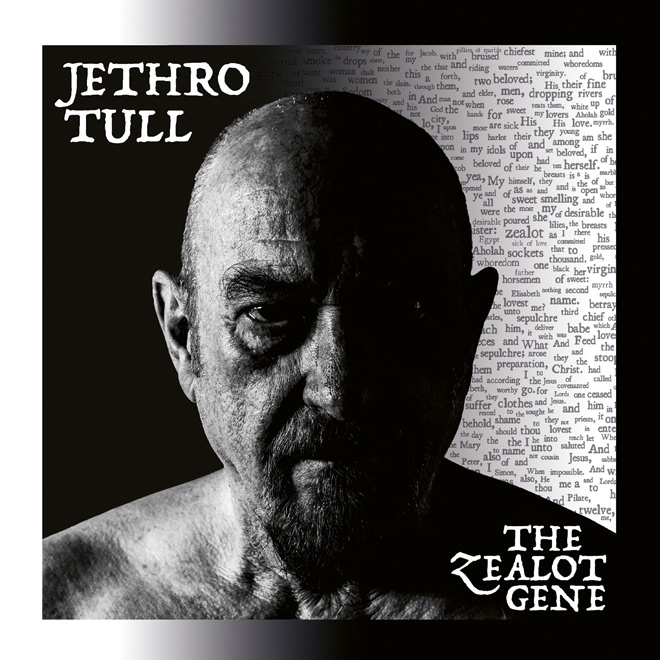
 On January 28, 2022, the legendary British Rock band Jethro Tull released their 22nd studio album, The Zealot Gene, in collaboration with Inside Out Music.
Nearly five years in the making, it marks their first studio album since 2003’s The Jethro Tull Christmas Album, and their first of all original material since way back in 1999 when they put out J-Tull Dot Com. Thankfully this high-octane Grammy award-winning band was abruptly roused from dormancy by the turbulence of the societal and political eddies to reclaim their rightful place on the Rock-n-Roll throne.
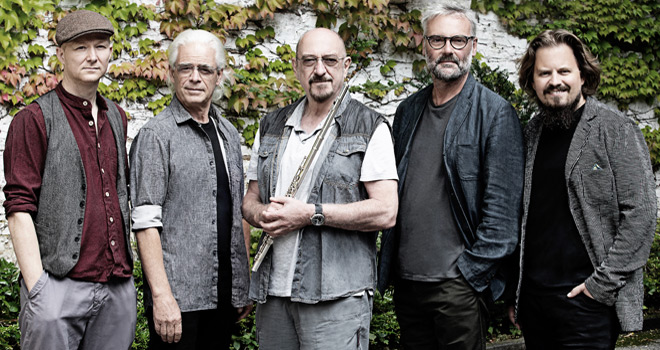
As always, the dynamo behind Jethro Tull is the ever-versatile Lead Vocalist/Multi-instrumentalist Ian Anderson. Florian Opahle on electric guitar, David Goodier on bass, John O’Hara on piano/keyboards/accordion/organ, and Scott Hammond on the drums are joining him for this new ambitious effort. Meanwhile, Joe Parrish-James also handles guitar work.
Stretching their musical limbs to resuscitate their distinctive sound, Jethro Tull could amass enough momentum to propel themselves from the watery depths and launch like a rocket straight up. As they shielded their eyes from the intensity of the sun’s rays, they glanced about searching for a landmass with the songs that make up The Zealot Gene. Once spotted, Ian Anderson raised his magical flute to his lips and within a couple of airy and graceful notes, the sea parted. Sound a bit dramatic? Well, it is a pretty dramatic musical adventure.
All this said, this shooting star of an album has twelve incendiary tracks designed to jumpstart that zealot gene that lies dormant in humanity’s genome. The underlying message is that individuals should take a stand for what they truly believe in and never waver in the face of dissent, to be true to oneself and not a mirror image of the latest brainwashing commercial jingle.
With so much to discuss, breaking down every song featured on The Zealot Gene would be difficult. That said, it is up to you to develop your own thoughts, but a few highlights should be highlighted. For example, the lyrics for the title track are pretty provocative and filled with phrases we should all think over more than once. After all, it is so hard to separate truth from fiction these days. To underscore the lyrical content and make it more impactful, the music starts with a booming marching beat blended with a foot-tapping folksy sound.
Then there is “Mine Is the Mountain,” something that is undoubtedly an interpretation of Exodus 20:4-7,30:7. This biblical passage delineates God’s expectations on being worshiped and the deleterious effects of not conforming to the rules. The track starts slow, gradually building a surge of crashing melodic keyboards with a foaming spray of colorful flute toots. This is while strong vocals intertwine with the music to create an engaging mental visual.
With nimble fingers and controlled breathing, Ian Anderson is a veritable Pied Piper. With that in mind, The Zealot Gene is a testament to how the band’s music is as relevant today as it was decades ago. It has gone through an evolutionary adaptation that has made it strong and lithe. As stated, it would be impossible to break down each song, but other bold moments include “In Brief Visitation,” “The Fisherman of Ephesus,” and “Three Loves, Three.” Based on the caliber of all these songs, Jethro Tull shows no signs of slowing down. The takeaway is to do what you love, and life becomes bright and joyful, no matter what is happening. Stirring the soul and a must-have in any musical collection, Cryptic Rock gives The Zealot Gene 5 out of 5 stars.


)
No comment