
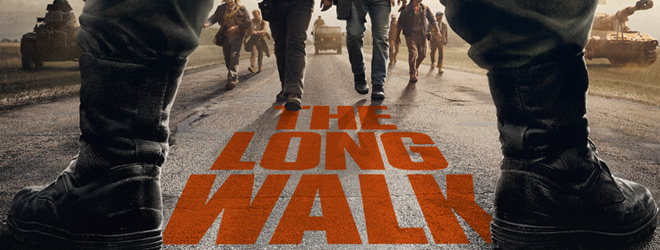
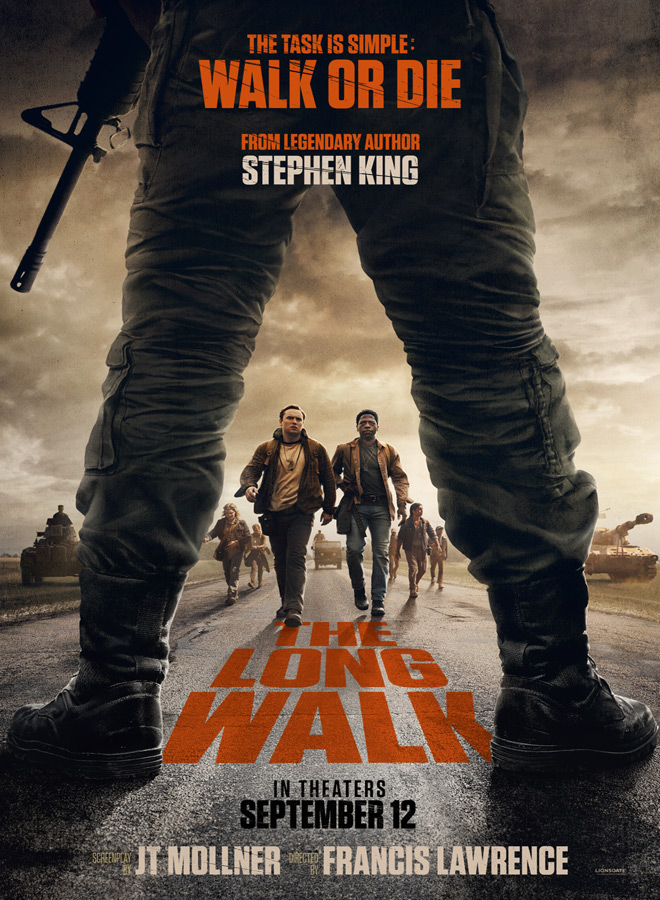
Released on Friday, September 12, 2025, through Lionsgate, The Long Walk is a relentless and haunting adaptation of Stephen King’s 1979 dystopian novel. In this story, a group of teenage boys is forced into a state-sanctioned contest where they must keep walking or be killed.
Directed by Francis Lawrence (The Hunger Games: The Ballad of Songbirds & Snakes 2023, Constantine 2005), who helmed four of the Hunger Games films, The Long Walk carries the weight of his experience with large-scale dystopian and survivalist storytelling, while Writer JT Mollner (Outlaws and Angels 2016, Strange Darling 2024) sharpens it into something more intimate and devastating. At its center are two extraordinary performances: Cooper Hoffman (Licorice Pizza 2021, Saturday Night 2024) as Ray and David Jonsson (Rye Lane 2023, Alien: Romulus 2024) as Peter, whose bond gives the film its emotional core. The film is both unflinchingly graphic and emotionally raw, offering no hope—but a deep well of empathy that resonates against the backdrop of today’s unrest and violence.
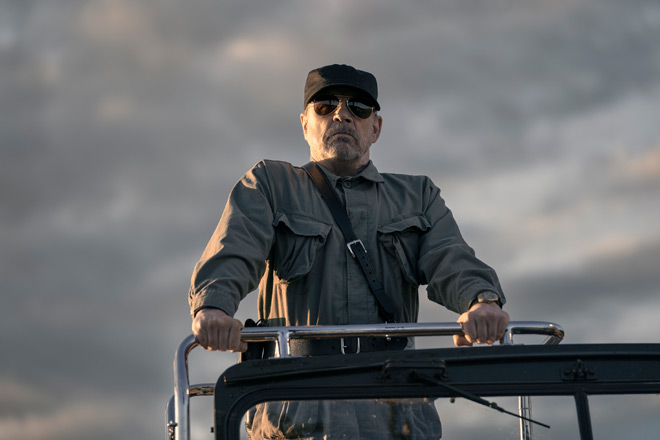
What makes The Long Walk especially gripping is the authenticity of its writing. The dialogue feels lived-in and believable, capturing the way teenage boys might speak under the crushing weight of fear, fatigue, and fleeting camaraderie. The ensemble cast delivers engaging performances across the board, each actor bringing a spark of individuality to their character.
Still, the script of The Long Walk does not give most of them the space to develop beyond surface impressions, keeping the deeper emotional journey focused on Ray and Peter. That choice pays off, though: their evolving relationship becomes the film’s emotional anchor, drawing the audience in with tenderness and vulnerability amid the brutality. By the end, it is nearly impossible not to shed tears for what they endure—and for the fragile bond that makes the inevitable all the more devastating.
The film does not shy away from the brutality of its premise, and the result is alarming. The gore is graphic, unflinching, and at times brutal to watch, but it never feels gratuitous—it serves to underline the horror of the boys’ situation. In refusing to sterilize the story, the filmmakers preserve the raw intensity of King’s vision, making the stakes feel immediate and inescapably real. Every stumble, injury, and collapse carries the weight of life-or-death consequences, and the tension is expertly sustained throughout. The film’s inherent structure, marked by mile counts that track the boys’ progress, reinforces this momentum: just as the characters are holding on from one step to the next, audiences find themselves gripping each moment, anticipating the next “checkpoint” and feeling the journey viscerally.
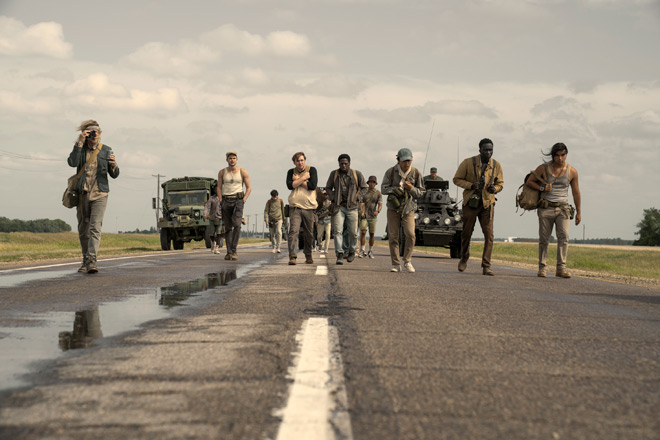
For those familiar with the book, the film admirably honors Stephen King’s original story. While the narrative remains faithful for the most part, the ending has been slightly updated, setting a different tone without diminishing its impact. The change feels deliberate, offering a conclusion that may resonate more readily with American audiences while preserving the story’s emotional weight.
The Long Walk lingers in the mind, leaving audiences time to digest the emotional and moral weight of what they have witnessed. It confronts viewers with fear, endurance, and the fragile bonds that sustain us under unimaginable pressure. With its unflinching brutality and piercing empathy, the film offers no comfort or easy answers—it unsettles, provokes reflection, and underscores the profound costs of survival, both physical and emotional. Perhaps its most striking message is the significance of each passing moment, a truth that resonates in today’s fast-moving world of endless distractions.
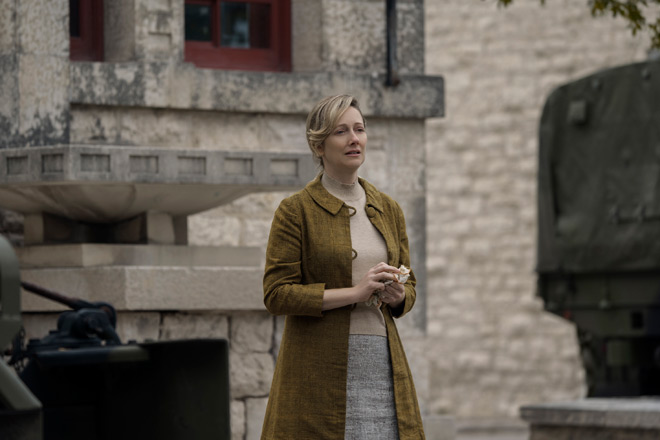
In the end, the story encourages contemplation of what truly matters: the connections we forge, the resilience we summon, and the choices that ultimately define who we are. This is why Cryptic Rock gives The Long Walk 4 out of 5 stars.


)
No comment