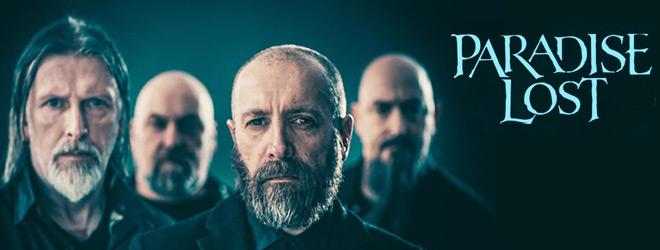

There are some bands that find a sound, stick with it, and rarely venture too far outside those lines. Respectable and in no way marginalizing their works, on the opposite end of the spectrum, others have carved out a distinctive sound, yet still manage to keep you guessing what they will do next, like Paradise Lost.
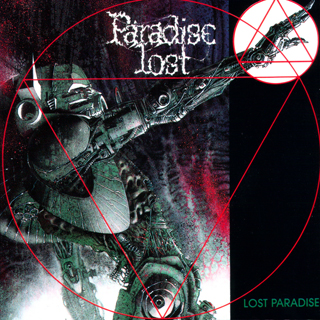
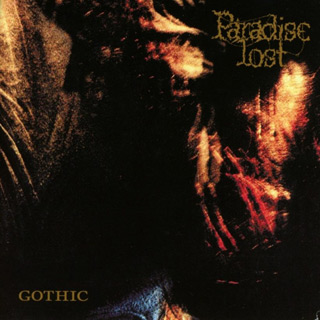
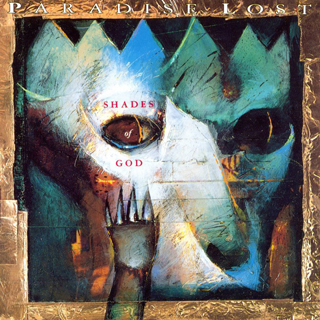
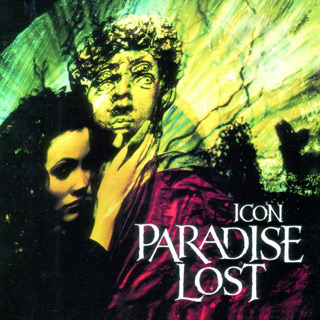
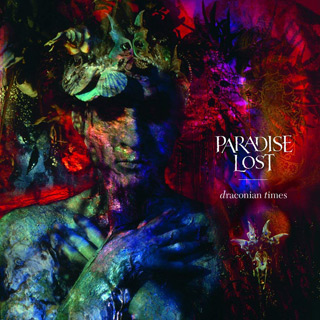
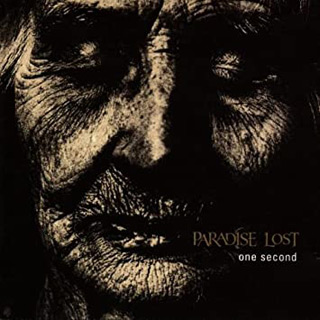
Dubbed by many as the pioneers of Gothic Metal, Paradise Lost began their journey as a Doom Metal band with Death Metal tendencies in 1990 with their debut album, Lost Paradise. From here, growing into something more, 1991’s Gothic, 1992’s Shades of God, and 1993’s Icon really laid the groundwork for a very unique sound. Jumping forward with extremely successful Draconian Times in 1995, true to their form, Paradise Lost completely switched it up a couple of years later with 1997’s One Second.
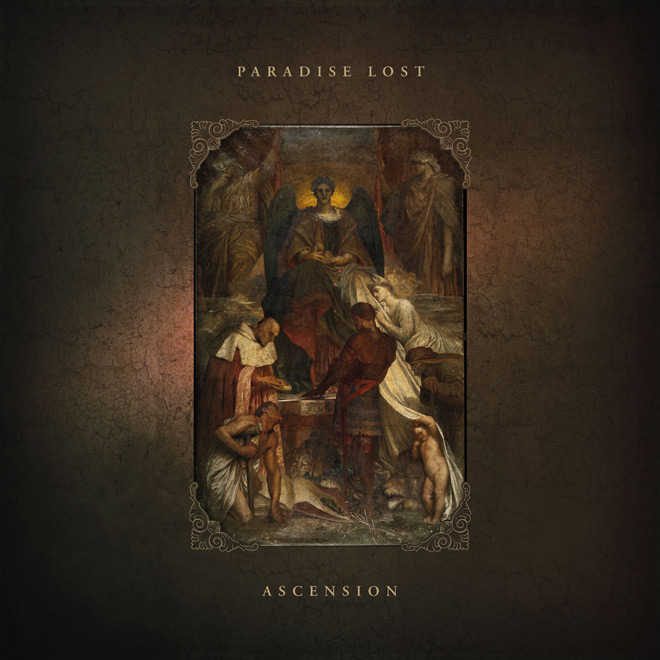
Still ever-changing, they would go on to create some fascinating albums in the early 2000s, like 2002’s Symbol of Life and 2007’s In Requiem, before later reintroducing the rougher tones of their early years with future albums such as 2015’s The Plague Within. Truly an entity unto themselves, now in 2025, Paradise Lost return with the next chapter in their story, calling it Ascension.
Keeping their creativity fresh and seeking to create the best song possible, founding Guitarist Gregor Mackintosh has used several palette-cleansing techniques over the years to help the process. Having previously worked on outside projects including Vallenfyre and, more recently, Strigoi and HOST, as Paradise Lost enter 2026, they prove to be as strong as ever. Invigorated, Gregor MacKintosh recently sat down to discuss the last decade of Paradise Lost, the work put into Ascension, and a lot more.
Cryptic Rock – A lot of interesting things have transpired for you musically since your last interview in 2017. You concluded Vallenfyre, explored with Strigoi, did the HOST project with Nick Holmes, all while keeping Paradise Lost going strong. Ascension is Paradise Lost’s first studio album in five years. How would you describe the past six or seven years of your musical journey?
Gregor Mackintosh – Yeah, two of those years were interesting for everyone with the lockdowns and everything. At the start of lockdown, just before COVID, we were touring. We were actually doing a full tour of Russia, the biggest tour of Russia we had ever done. That’s all gone weird anyway, even without COVID. It was weird because it was just opening up. The gigs were all great. The fans were great. The airports were all good because they just had the Winter Olympics and stuff. It’s kind of weird all that kicked off, and it’s a shame.
Then we came back, COVID hit, and we’d recorded Obsidian (2020). The label said, “Do you want to release it because it might be better to hold off for a while, because it might be over within a couple of months?” We said, “No, just release it right at the start because people will be sitting at home twiddling their thumbs. They might even listen more deeply because people will want books, games, and music, stuff to consume while you’re at home.” It turned out it was probably the right decision, because I think people did connect with it more because of that period. Then it carried on and on, as everyone knows.
I started The Host thing as a solo project, just messing around on my own. After a few months, it got lonely. I got in touch with Nick and said, “Do you fancy doing something with me? I’ve got all these songs written, and I don’t really know what to do with them. It might be fun to do together.” We did it together. Then a girl at our management said, “Oh, can I hear it? This thing you’re doing?” I said, “Yeah, all right.” She said, “Oh, you should send it to a label.” I said, “You do what you want with it.” It eventually came out as it was. We were pleased with it. It was a nice thing to be doing while not doing anything.
After lockdown finished, we did the Obsidian tour. Walter (Väyrynen), our drummer, left to join Opeth. I started to try writing this record probably about three years ago, and it didn’t go very well. I came up with about five or six songs, and they were all not great. I wasn’t feeling it at all, so I scrapped the whole lot. Had the first period of full-on writer’s block I’ve ever had in my life, I think, where I just thought, “I can’t really create anything. Nothing’s feeling good.” At one point, after about six months of not writing anything. Is that it? Is that the end of it? Is it all dried up? Is it all gone?
Then we did a re-recording of our 1993 Icon album because Sony owned the rights to it. We couldn’t release the original record. We did a re-recording. Doing that, learning those songs from the early mid-90s, kick-started that spark of inspiration. It wasn’t the album itself; it was re-recorded. It was more about getting into the headspace of that era, what excited us, and how we felt. It felt rejuvenating. Nick and I were really on board with how it was going. As soon as we’d written like two or three songs, it really snowballed fast. We got everything written pretty fast over the last autumn and winter; we wrote the lion’s share of the album. That’s it, really. Now it’s going out. Hope that wasn’t too long.
Cryptic Rock – That explains it all quite well. As you mentioned, you had your first bout with writer’s block. Some artists were inspired to create more during that time, and others were not at all. It affects everyone differently, this feeling of being secluded, not going anywhere, doing anything, or interacting with people. Do you think that was maybe a hangover from the lockdowns?
Gregor Mackintosh – Yeah, I kind of enjoyed it. It’s probably the wrong choice of words because you shouldn’t really enjoy a thing like that. I’m a bit of a loner. Even when I’m on tour, I’m on my own the whole time. For the last couple of years, I’ve kind of lived on my own, doing my own thing. I don’t mind it at all. Lockdown showed me that I’m pretty good with that kind of thing. I’m okay with silence and solitude.
At the start of it all, I felt pretty inspired. I did the HOST thing. I had another project called Strigoi, which is much scarier. Both felt really good to do. It was just when I came to do the Paradise Lost stuff after I’d done those two. I don’t know if I used up all my creativity in one go on two projects before the Paradise Lost writing, or if it was just, where do you go from here after 30-something years? You do question things like that.
Every album we do, I try to approach it with fresh eyes and ears and think, “What would I like to do now if I were in a brand-new band?” There’s still something subconsciously saying, “You don’t want to repeat yourself. You don’t want to do things that are not relevant. You’ve still got to attain a certain quality of songwriting.” I think part of it’s been our own worst critic and being hard on ourselves. I throw so much stuff out to achieve just 10 minutes of music or something. That’s not a bad thing. It means that what you’re putting out actually means something to you and took a lot of work, and therefore is hopefully worthy of being heard by other people.
Cryptic Rock – Most certainly. That is one thing that you and Paradise Lost have always excelled at. The songwriting has always been strong. Perhaps in the past, you weren’t happy with how that album was recorded, but the songwriting was always there. Even on records like 2001’s Believe in Nothing, the songs were there. It was just other aspects involved that maybe you weren’t pleased with.
Gregor Mackintosh – Yeah. I agree with Believe in Nothing. It was a compromised situation with the label and the recording. There are some good ideas on there. There are some good songs on there. It was just a compromised record, which is the only time we’ve ever done that in our career, I think, and we had to compromise. It’s not a good feeling. It’s not good for the fans either because they’re not getting a true-to-life product. Something that they’re getting from you organically. It’s been rinsed 10 or 20 times by men in suits. That’s what happened. Unfortunately, it happens when you try to jump to bigger labels. It happened to a lot of bands.
Cryptic Rock – Absolutely. It’s interesting to see the trajectory of Paradise Lost’s music over the years. There really have been different eras, so to speak. That is what makes the band so endearing. Maybe that turns off some people, but it’s a fantastic quality that you’ve explored so many different sounds.
Gregor Mackintosh – Yeah, and I agree. I’m trying to think of a good word for getting bored easily with a path.
Cryptic Rock – Challenge yourself?
Gregor Mackintosh – Yeah, it is like – I’m done with that now, and I want to try this. It goes for whatever medium you’re working in; it doesn’t matter. You don’t want to feel like you’re working on a production line. There’s partly that. Nick helps me keep grounded because sometimes I really do fly off at an angle. It might be something that’s too far out of the realm.
We don’t really have boundaries as Paradise Lost, but there’s a sound that’s all our own. If I fly too far left field, it’s not ours. It’s just me taking it somewhere else. He helps me keep it grounded. The eras of the band, that’s why that comes up. I’m kind of done with that now. I’ve had enough of hearing that. I want to see what this sounds like. It’s that simple.
Plus, I love bands in a certain period. I think everyone’s like this. You always gravitate towards that era of them. When they repeat themselves over and over, it’s hard for the fans to like. It’s hard for the bands because they’re trying to attain something that they already achieved. I don’t see the point. What’s the point in doing Draconian Times (1995) two, three, four, five? What’s the point of watered-down versions? No disrespect to bands that do repeat themselves a lot, because I’m sure there’s a market for it, and people want that. For me, it just makes it too tedious.
Cryptic Rock – Of course. It makes it more exciting for the listener as well. The new album, this new collection of songs, feels like the past, the present, and maybe the future of Paradise Lost all come together. It’s a hybrid of all the different things you’ve done in the past. How would you describe it?
Gregor Mackintosh – I guess that’s true to an extent. There’s a certain amount of nostalgia on this record, which I don’t often like to do. With this record, it felt right to do that because that’s what we were feeling. When I said we went into the headspace of the early ’90s, it just felt good to be nostalgic about something. There’s nothing wrong with that as long as we’re still doing something that feels new to us as we’re doing it.
We’ve never done an acoustic ballad type thing. We’ve never done that. So that was fresh. A few other things felt fairly fresh to me. I liked doing the Christmas song “Salvation.” There’s a very Shades of God (1992) album-type song on there called “Diluvium.” I enjoyed doing that one. “Savage Days” was a bit of a baby of mine. I worked really hard on that one to make it what it is because it’s a simplistic song.
When you can make simplistic songs really work dynamically, then the payoff is great because I think when we finished recording that song,” Savage Days,” we were saying this is a really dark version of the song “One Second.” That’s what I had in mind when I was putting it together, but it felt nice to get that validation from a few people to say that. They meant it in a positive way.
There is a decent amount of variation on the album, but it’s grounded. A good 50% of it is grounded in nostalgia, which is fine from time to time.
Cryptic Rock – The songs came out really well. Some aspects that are really pronounced are the guitar tone. Your guitar tone is always so pronounced. You know it is Paradise Lost when you hear the guitar tone. You have really created a very distinctive sound. Nick’s voice also sounds very dynamic. He even ventures into areas he has never explored before with his voice on this record. The nuance is the crow and the bell toning. These are beautiful, and they add feeling to the record. What do you have to say about all those aspects?
Gregor Mackintosh – In the ’90s, I was very interested in sound design, how things are achieved, and how different sounds can take you off to different places. Some can be subliminal, some can be more obvious, like the crows.
With the crow thing, I occasionally go for walks with my son and his girlfriend, and we go to a place called Fountains Abbey, which is a great big, old ruin and old monastery, but in huge grounds. We went last autumn for a walk around there. It was a cloudy day. There are crows nesting in the ramparts of this monastery thing. They kept coming out and flying over us. I had my Zoom recorder with me. I was recording it all. That’s the ones that ended up on the record.
With the wind on “Tyrence Serenade,” that was two different stormy evenings that I recorded. One was a high-pitched wind, and one was low. I liked how I could blend them together, pan them, and make them nerdy sound design things. They’re the more obvious ones. I love that kind of thing. I think it adds something, or it can bring something, if it’s not overdone, to an album.
With Nick, it’s wonderful for someone like me who’s a songwriter to have a vocalist like Nick who excels in three or four different vocal styles. It means you can try a lot more things out and explore things dynamically that maybe you wouldn’t be able to with one or two vocal styles. You can do very different styles of songs. Then it’s the production that ties it together as an album.
If you hear the first song, “Serpent on the Cross,” and then you hear something like “Savage Days” or “Lay a Wreath Upon the World,” the vocal styles are miles apart from each other. How we’ve approached it, how dynamically, and how the production works, it gels together as a thing, hopefully. We worked hard on that so that you get this thing where the album flows up and down. It ebbs and flows and doesn’t feel disjointed even though you’ve got these juxtapositions in vocal style and sound.
Cryptic Rock – It works well. It is interesting to hear the background of the sound effects. That is stuff you have explored in the past with other Paradise Lost records. One that comes to mind vividly was 2007’s In Requiem, where the instruments emulate the sound of a clock on “Praise Lamented Shade.”
Gregor Mackintosh – Yeah. I think that’s right. I do things like that quite a lot. Even on “Salvation,” on the new one, there’s a lot of timed guitar parts that are what I would imagine pealing bells would be or a close choral section doing something. I do it on Harmony guitars instead and try to conjure up an image of walking on a misty autumn evening, or a crisp winter morning, and hearing pealing bells. I just love all that stuff.
I love stuff that takes you away somewhere. Our music is escapism. The more places we can take you to and the more vivid we can make it, the better. That’s how I consume music. That’s how I think about art in general. I want to be transported somewhere. I want to feel something. It’s nice if you get that. It’s like a smell or just a feeling. That’s how I describe music as well.
Even from an early age, when something was heavy, I wasn’t just saying it was heavy. I was saying, “Put this picture in my head,” or, “You imagine a storm coming,” or whatever it is. It’s a nice thing that you can do with music. It’s one of the things that makes me excited about doing it.
Cryptic Rock – Absolutely. Again, it makes it exciting for the listener. It’s stimulating. As you said, it brings you to a place. It paints a vivid picture. You guys did some shows in the United States. In the past, you said that, by no fault of your own, in the early ages, you concentrated on Europe and didn’t really come to the United States. You have been coming more often over the years. There are clearly dedicated fans here in the United States. How are you finding the response?
Gregor Mackintosh – It’s been a slow upward turn over the last few years. I’ve noticed anyway. We did a tour with Solstafir a few years ago. I noticed then that something was a bit different. We were getting a bit more of a buzz, a bit more of a scene going on there. Scene is the wrong word because I hate being part of scenes. Just a crowd of people.
Since then, we’ve come back a few spells here and there. The last one we did, we just all thoroughly enjoyed. Some of the people we met were fantastic, and it just made us think we should definitely make much more of an effort to come here. It’s difficult with the logistics and the visa arrangements and all that.
We know now that we’re coming for the 70,000 Tons of Metal in January. We’re tying a few East Coast shows around that again. Then, in spring, there are only talks about doing it now, but it’s looking pretty good to do a seven-week full US tour in April, something like that. That would be on a three-year visa. That would mean we could just come over as and when, then over the next three years. We’re very encouraged and positive about that.
Back in the day, it was just one tour that put us off. We did a tour with Morbid Angel and Kreator, and it was just a nightmare tour in some respects. In some respects, it gives you a lot to talk about afterwards. We’ve got so many stories from that tour.
Morbid Angel at the time were espousing a lot of quite marginalised right-wing stuff, and Creator of the opposite, maybe a bit more marginalized left-wing ideas. Each show, there was this weird, not good feeling in the crowd. We were stuck in the middle because all we wanted to do was escape. It was just a weird one for a first tour, and it was so long. We were just like, “What the hell is this?” Shows started getting cancelled because of this up and down between bands, audiences, and stuff. We ended up spending a week of the two, which were just parked in a car park in Pittsburgh on the tour bus, because of shows getting cancelled. It put us off.
I don’t regret anything, but in hindsight, it’s something that I wish we’d have just gone. That’s one tour. Let’s just come back and do it. As I said, there’s been seemingly an upturn, and we’re fully on board to be there as much as possible.
Cryptic Rock – That is exciting. We wil have to see where the dates are announced. You did some shows earlier in 2025 in North America.
Gregor Mackintosh – Yeah. As I said, this should be much longer too, in the spring, early summer.


Cryptic Rock – Everyone should look out for that. It has been quite a few decades now since Paradise Lost. If you look at the band and the lineup, it’s been steadily yourself, Nick Holms, Steve Edmondson, and Aaron Aedy. Save for the drumming situation, which has been a little more of a revolving door of late, but Lee was there for a long time as well. What do you attribute the consistency of the lineup?
Gregor Mackintosh – It’s hard to pinpoint one factor. There are many factors. I’d say having a similar sense of humor, which sounds ironic for a band that’s known for being miserable. It’s a wry sense of humour that you learn to laugh at everything. It’s a kind of cynical sense of humor, but in a nice way. There is nothing mean about it.
We all have similar upbringings and backgrounds, and we have a lot in common musically and in other ways as well. We don’t always get on great. It’s living together on tour buses and things over the years. We’ve had our moments, but everything’s all clear in the morning. We’re one of those people who never really hold a grudge against each other. If something goes off on an evening, for whatever reason, the next day, everyone’s just like, “You okay? Yeah, fine.” Lots of different things make us gel together.
We don’t really spend time together when we’re off tour. I don’t spend time with anyone at all. When we get together, it’s like we’ve just left school and just joined the band again. It’s quite cool.
The drummer situation, it can’t be easy coming into a band like ours, where it’s been the same people since we were 17. They see this cynical sense of humour thing. It’s not for everyone. Drummers are also a type. They’re a transient thing. They’re not normal musicians to me. As soon as you finish the tour, they’re always looking at the next thing. Whoever it is, it doesn’t matter who. They’re always looking at the next thing. Maybe that’s because they’re jobbing musicians. I don’t know. Every drummer we’ve had has left for fairly honest reasons.
There are only a couple of guys we’ve had to ask to leave. The rest have had a family, so they have to stay at home now. With Adrian (Erlandsson), At the Gates reformed, and that was his childhood band. We were like, “You go for it, mate. That’s what you need to do.” We’ve always been fully behind the guys.
Now Jeff Singer is back, and he only left the band because he didn’t have children, and he wasn’t married when he joined the band for the first time. Now his children are grown up. He can come out on the road again. It’s all good, really.
Cryptic Rock – It is great that you guys have kept the core together as long as you have. As you said, you have known each other since you were kids.
Gregor Mackintosh – Yeah. I’ve known Aaron since we were 11 years old.
Cryptic Rock – That is a long time. It is well-known that you are a fan of cinema and Horror movies, as is Nick. Have you seen anything old or new that you have enjoyed?
Gregor Mackintosh – Yeah. I try to watch at least a couple of films a week or more, old or new. It’s all about a bit of an atmosphere for me. Of the modern, I try to go to the cinema once every couple of weeks with my son as well. We’ve seen a lot of the newer Horror and whatever films, but only a couple stand out from those.
The Australian one, 2025’s Bring Her Back. It came out a couple of months ago. It’s by the same people who did the one where you hold a hand, and it makes you go into the afterlife, 2022’s Talk To Me. That is great, but it’s so dark. It was on the very edge of being too dark for me, which is saying something because I liked Martyrs (2008). I don’t think I’ve ever come across a film that’s too dark for me. That stuck with me for a few weeks afterwards, thinking about it. Not a lot of movies do that; it’s pretty grim.
I thought 2025’s Weapons was decent as a new film. I thought it was really good.
Of all the films, I’m kind of obsessed with 2001’s The Others. I read that the director took a lot of cues from 1980’s The Changeling, which is, I think, 1981 as well, something like that, ’79, ’80, ’81, with George C. Scott. I thought, “Oh, I must have seen that.” I realized I hadn’t seen it, so then I watched it a few nights ago. He did take a lot of camera angles, scenes, and even some of the characters’ names follow from that film. Really good film, of its time, a little bit dated in some respects, but doesn’t hold up. On the whole, the atmosphere I thought was great. I try to do stuff like that quite often.
Steve, in our band, is more obsessed with one specific genre of Horror. It’s the late ’60s, early ’70s, UK stuff like Amicus and Hammer Horror stuff. I was also a big fan of, but I didn’t realize there were so many that I hadn’t seen. He keeps coming out with these really obscure ones, like Donald Pleasence in some film that you’d literally never heard of. Then you watch it, and it’s like, “Wow, that was great. Why does no one know about this one?” Unfortunately, my brain is absolutely not great at remembering titles of stuff.
Cryptic Rock – Understandable. It is also exciting to explore older films, which you may or may not have seen, transferred to 4K Ultra HD. Some people do not like the grit removed, and in many cases, there is still some grit, even though the film is restored. It is just amazing to watch some of these films upgraded with beautiful, more vivid color and contrast.
Gregor Mackintosh – That was one thing that we noticed about watching The Changeling: we have not seen it upgraded in any way. Even though it was from 1980, the old film has really bad quality graininess. Sometimes you can’t tell what’s going on in the dark scenes and stuff. I’m sure it’s great to see these things upgraded and done properly.
With all the films, I love finding out about them. In world cinema as well, there’s a lot of stuff. I saw one from Romania the other week, from the late ’80s or something, and it was great. It has a really good atmosphere to it. It’s getting recommendations because, otherwise, you just spend forever trolling through the internet trying to find these things.


No comment