
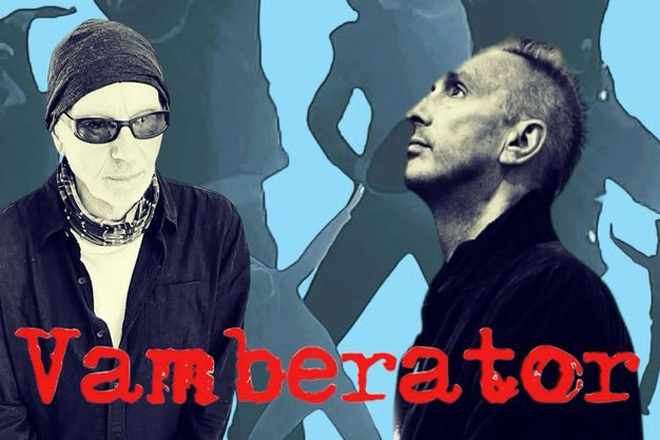
What do you get when two long-time friends and seasoned musicians decide to join their talents for a new adventure? If you are looking in the direction of Boris Williams and Jemaur Tayle, the answer is Vamberator.
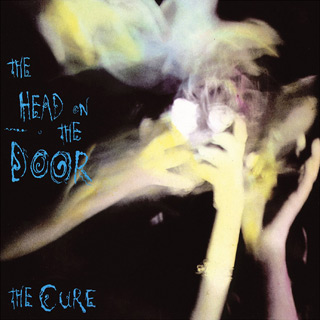
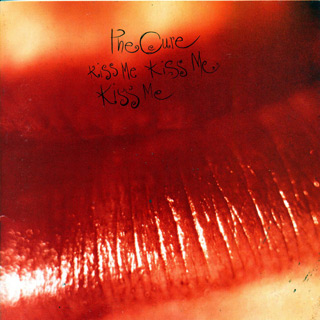
Formed following a difficult period of time coping with the passing of Shelleyan Orphan’s Caroline Crawley in 2016, Tayle and Williams began working on some new music together. Each with their own background – Tayle as the co-founding guitarist of Shelleyan Orphan, and Williams who spent nearly a decade with The Cure touring and recording on albums such as 1985’s The Head On The Door, 1987’s Kiss Me, Kiss Me, Kiss Me, 1989’s Disintegration, and 1992’s Wish – as a team, they create something uniquely different.
With the music of Vamberator, they splatter a canvas with flecks of Alternative Rock and Pop Rock, among other genres. So, what does it sound like? You will just have to listen to their debut album, Age of Loneliness, to find out. Arriving on November 1, 2024, through the Italian label MaRaCash Records, Tayle and Williams graciously took some time to chat about the work put into Vamberator, the idea behind the music, their past experiences, plus much more.
Cryptic Rock – Before we dive into this new project that you are a part of, you have both been involved in music for some time now. Having success individually, you have also worked with each other in the past as well. How would you describe each of your journeys in music to this point?
Jem Tayle – One was successful. One was mildly successful.
Boris Williams – Was your journey first?
Jem Tayle – Mine. What a successful one.
Boris Williams – Well, your journey into us ended up here, I guess.
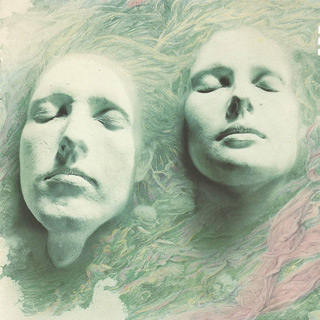
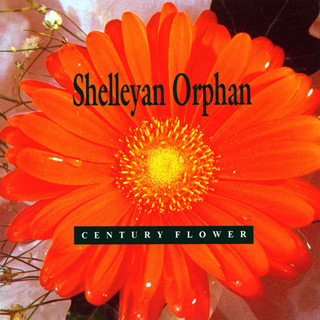
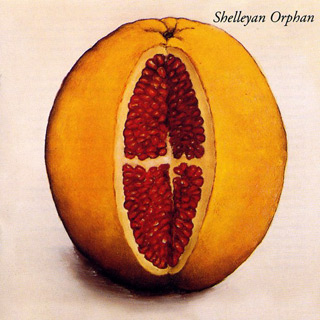
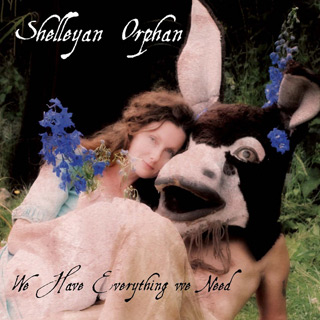
Jem Tayle – Well, Shelleyan Orphan, the band I was in around the ’80s. We got asked to join The Cure’s Disintegration Tour, where I met Boris. That led us to where we are today. Shelleyan Orphan did four albums. Unfortunately, Caroline died a few years ago, so Shelleyan Orphan didn’t exist anymore. Time passed, and then it was time to do more music, where me and Boris hooked up together.
Boris Williams – I was on that tour with Jem where Shelleyan Orphan was opening for us. At the end of the tour, they planned an album to record immediately afterward. The drummer decided he didn’t want to do it or do it for more money than the record company was prepared to pay. He dropped out, and Caroline and Jem said, “Any chance you could help us out here?” I said, “Yeah, I’m happy to do the album.” It just seemed the right thing to do. We didn’t have any rehearsals. I think you guys had run through some.
Jem Tayle – I’ve been rehearsing with the previous drummer, and it wasn’t working. I’d been working on some beats. Boris came in and completely trashed and brought his styling, which was fantastic. He’s a very musical drummer. It suited our sound well at the time. It was easy to work together, which is great when you find that with another musician.
Boris Williams – Yeah, it fell into place naturally.
Cryptic Rock – You two have had a long-standing friendship that goes back decades. This friendship resulted in a working relationship, which is probably intertwined with the friendship now.
Boris Williams – They are, yeah.
Cryptic Rock – What has it been like working with each other off and on through the years and always being there for each other in so many ways?
Boris Williams – The friendship is strong. We’re both based in the same towns, although sometimes I’m away when we get together. We’ve delved into little bits before that of looking at music together. Nothing came completely together until we were offered by this label in Italy to do an album and offered the studio there. We’ve got a studio we can use as much as we want, as much time as we need. That opened the door for Jem to all the songs he’d been working on and bubbling under. It allowed us to put them down and make something solid out of them.
Cryptic Rock – That would be the birth of this new project. That is what ignited it.
Jem Tayle – That’s pretty much it. After Caroline passed, Max at Dark Companion, he’d wanted a Shelleyan Orphan album, but that was not going to be possible. A little time elapsed before I felt we could do this. Honestly, it’s quite a no-brainer.
We never really have musical issues. It’s easy to slot into something. I think we understand each other. That made for an easy working relationship. Sometimes, if you’ve got four people in a band and you’re trying to get something together, it can be a lot harder because everybody’s got their own opinion of what they want it to be. When there are just two of you, sometimes it’s easier. Especially when we know our defined roles and we’re friends. It’s easy to talk, and nobody’s trying to get ahead of the other person.
Boris Williams – It was an easy experience in the studio.
Cryptic Rock – That’s a positive thing. The album is out today. It is released. It’s very good and eclectic. There are different tones throughout the album. What was it like writing and recording this?
Jem Tayle – In terms of the songs, I have a very eclectic musical taste anyway.
Boris Williams – Doesn’t always agree with mine. That is a good thing. A lot of things we’re together on.
Jem Tayle – Having said that, these are just flavors that somehow, without thinking about it too much, find their way into the music. I love a lot of Soul music, as well as Rock and all sorts. In a way, the rock side found its way, but so did some of the Soul stuff with the backing vocals and things like that.
There was a point where I think these songs are quite diverse. There are a lot of different influences in there somehow. I had to make sure there was a thread that goes through it to make it fairly definable as Vamberator. I’ve never felt like I’ve written like other people, so I never really question what I’m writing. Whatever comes out, comes out. Because I arranged it as well, it’s the same thing. I don’t question what I’m arranging. If the strings happen to be quite soulful type strings, so be it. If they happen to be more classical, so be it. I just hope that it’s going to hold together and sound like something viable in the end. I think we’ve done that job.
Cryptic Rock – Absolutely. The record does sound very cohesive. As mentioned, it also has a very eclectic sound to it, and it’s diverse. One song that stuck while listening was “I Don’t Want To Cut The Grass,” which is right in the middle of the record. It is almost like a breaking point in between the record. It breaks it into two different parts. It’s very interesting.
Jem Tayle – Yeah. When I’m writing, I can skip from different instruments. I was fiddling around with a synth, I’d come up with the backing track and popped it away. It kept going around my head. I thought, “I want to use this. It’s very different from everything else on the album, but is a way of breaking things up.” That’s what I did. There’s different messaging throughout the album. “I Don’t Want To Cut The Grass” is about keeping nature where it is and not disturbing nature, as well as being lazy and not wanting to cut the grass (laughs). It was a good vehicle for a message as well.
Cryptic Rock – It works well. As said, it grabs your attention right in the middle of the record, which is cool. With the record out, you’ve released a couple of tracks digitally prior. Are you planning on doing some live shows together with the project?
Boris Williams – I think that’s the plan. The label in Italy is very keen on us doing some shows there. I think that would be a good place for us to try and get because, at the moment, the band consists of Jem and me. Charlie on bass is still on tour with The Cult. He’s busy. He’s always got lots of sessions. Who knows whether he’d be involved? We’re looking for other musicians to fill.
Jem Tayle – It’s probably going to come from Italy. There’s one person there we can work with, Annie Barbazza, a multi-instrumentalist and a great singer. She’s agreed to do it. We probably need a couple more people. It’s a case of going to Italy and maybe auditioning a couple of people to see if they would fit the unit. Then, trying out the live situation there and maybe in other places in Europe. Then, see how it goes from there. Ultimately, we need to find a live Vamberator sound because there’s no way we’re going to be able to take a string section, oboes, and things on tours. We’ve got to find a way for the band to sound like a band but still sound like Vamberator, too.
Cryptic Rock – Right. It’ll be interesting to see how that develops. Hopefully, it’ll blossom to something where you can leave the European market and come into the United States and North America and maybe do some shows here. That would be exciting.
Boris Williams – That would be great. Yeah. Fantastic.
Cryptic Rock – In recent years, quite a few artists from the UK market of the ’80s era who hadn’t performed here in years have returned. It’s really exciting to see that artists have been making their way across and performing here for so many decades.
Jem Tayle – I think a lot of younger people, you definitely see it here, are picking up on a lot of music from the ’80s and ’90s and either being influenced by it or just really getting behind it. Morrissey, The Smiths, and even The Cure are influencing young people of the age group eighteen to twenty. I like that. It feels very fresh.
Cryptic Rock – Yes. One act that comes to mind when thinking of a band that has never been to the USA is Heaven 17. They were just here a couple of years ago. They maybe did a showcase forty years ago, but they have never done a tour here. They did a tour, and that was exciting.
To your point about younger generations digging into the music from the ’80s. It is interesting because it is great music, but maybe it is indicative that they are looking for something real. With modern Pop music, it does not have much substance to it. What would you think about that?
Jem Tayle – We’re constantly thinking about this. I just don’t like the whole thing about social media and having to post things. It drives me mad. I completely understand that young people have been born into this, and it’s what they know. It’s how it’s done. We didn’t have any of that. I presume that the same thing goes for them in terms of the way they write.
When I was younger, I needed to do it. I had to do it. It was like I didn’t know if I could do it, but it was a need. Now, I think a lot of music and songwriting is, “Oh, I want to do it because it’s another thing I can do. I can do it at home on a laptop.” It’s become almost more disposable. If it doesn’t work, it’s not such a big deal. In the old days, I can say that getting a record deal was a huge deal.
The next step was having to make a record that stood up. There were all these steps you had to go to to prove yourself. It’s less like that now. You can be seen online, and somebody can see how many followers you’ve got as if that’s a mark of success. It’s not really. It’s just how good your social skills are online. That’s very different. I’m looking at it going up daily online. I’m thinking, “But that’s not real.”
I appreciate it, but it doesn’t tell me how much they’re engaging with the music.
Cryptic Rock – Most certainly. That is a good point. Sometimes we try to say that younger people don’t have good taste. If you give someone something of quality, they are going to gravitate towards it. Like you said, you know what is in front of them is what is in front of them of anyone of any age. So you give people good quality music or something with more substance, and they will enjoy it. That is the whole point.
Jem Tayle – There are some great bands around. I’m not saying for a moment that there is lots of good music.
Boris Williams – Yeah, there’s lots of good music.
Jem Tayle – The way it’s done and promoted is very different from how we did it. I don’t know how that bodes for the future. Talking to people in the industry, they’ve said that, basically, the whole industry is saturated. There’s so much content. Trying to weave your way through that is difficult.
Boris Williams – It’s a matter of actually trying to get people’s ears to hear it in the first place. If there’s quality music, people gravitate to it. They’ve got to be able to hear it. There’s so much pulling at you from all directions. The whole use of the internet for promoting records is very different.
Jem Tayle – A very steep learning curve.
Cryptic Rock – It is interesting because you both come from a different time and era. It was an independent artist in a lot of ways. It seems very daunting to want to do it the way we are talking about it. It is amazing when you say, “How can you get heard?” The broadness of the internet, but still, you could get lost in the shuffle. If you were coming up now as a performer, would you pursue music?
Jem Tayle – It’s never been about fame, success, and money. Shelleyan Orphan, if you’re familiar with the music, definitely wasn’t mainstream music. Yet, when we created that, the excitement we had within ourselves that we’d created viable music and we didn’t sound like anyone else. That was exciting. That was success in itself for me and Caroline.
We just thought, “Wow, we found something.” Caroline’s voice was extraordinary, and that added to it. I wish I had been better with money or thought about money. As you get older, once you’re no longer working within the industry, you have to take other jobs, which is fine. You’ve got to live. Then, the other side of life takes over.
Still inside, you have the yearning for music because you never were chasing it for money. It was more of a need, a desire, and a hunger because it’s about the creative.
Boris Williams – Yeah. We discussed the goal. It’s that the process is the goal, really, without trying to sound too pretentious, but it is.
Jem Tayle – It’s true. The creative process to squeeze this stuff out of you. People might say, “Well, it’s only songs.” I think music is important to the human race, whatever the style. It’s enormous. If you contribute somehow towards that, and we’ve both had, obviously, Boris on a much bigger scale. When people have been moved by what you do, it’s meant a lot in life. It’s worth it. As a music fan, I know what it’s like to just be enthralled by something that moves you.
Cryptic Rock – That outlook is what makes the best music and the best art. You’re right. Music has been a connective fabric throughout the ages, and art has been in general. We all connect through it more than anything.
In the state of the world now, we need it more than ever. Music is vital. It reminds us we’re human and that we can connect on a level that’s not politicized in many ways. It’s there, and it’s related.
Jem Tayle – Yeah. If only we could use music to heal the world in that way. There are a few people who disagree with us, and unfortunately, they’re the ones who wield the powers. Left to the people, the arts are massively important to the human race. Music is one of the greatest things human beings do. It’s whatever culture it is. It brings people together. It moves people. It gives them a chance to express themselves. It’s amazing.
Cryptic Rock – Agreed. Now that you have the album out and the potential of doing shows, as you said. As we get older, we get wisdom. What do you two take into account in this project with your prior experience?
Boris Williams – In terms of playing with Jem, the songs that Jem’s written are pretty much fully formed before we go in the studio. There are a few things changing while we’re doing it. For me, it’s about trying to be more creative with my playing to complement the unusual type of songs that Jem writes. Hopefully, it brings that out with me. It’s a battle for me because most of the time, I’ve got these wonderful parts that I send to Jem from my house. I lay that over the songs, the demos, and he gets back to me and says, “No, that’s no good. Choose something else.”
Jem Tayle – In general, it works. If you’re in the same room, it’s a lot easier. That’s the first thing you say, but it works. We work well together when Boris sends me stuff. It would be amazing if it did fit straight away. There are never huge disagreements about things. He just does as I tell him. In terms of what wisdom I bring to it, I honestly really don’t know with that question. Caroline’s not around anymore. Most of my writing and most of my life was bouncing off her. Coming into this as the main singer and songwriter is quite a new experience. I’ve only got myself to be in judgment of. It’s quite fresh.
It’s quite interesting to see what I’m going to be like and how I’m going to respond to this particular task. I like it. I like to be challenged. It’s good. You go over many hurdles. Is it good enough? Boris knows, as an artist, you go up and down. People start saying nice things about it. Suddenly, you think, “Oh, it is good.” Then, if you get one mild review, say, “Oh, dear. Maybe it’s not good enough.” It’s up and down. It never lands in a place where you’re completely happy.
Shelleyan Orphan was like Marmite; you either loved it or hated it. That’s probably where my wisdom lies, not really to listen too much.
Boris Williams – You’re more peanut butter now.
Jem Tayle – Yeah. That’s it.

Cryptic Rock – Right. When you create something, you are always your own worst critic. You are never completely satisfied with what you do.
Jem Tayle – Yeah. That’s very true.
Cryptic Rock – As you mentioned, you had stopped with music for a while because, sadly, what had happened. It had to have been hard to get back into it. Loss is difficult. Let’s be honest. Whenever we lose someone we care about, someone we work with, or a friend, it’s very hard. How did that feel to be getting back into working on your own again?
Jem Tayle – It was hugely different and difficult. Caroline and I knew each other for thirty-five years. We’d been a couple when we were youngsters. We’ve been through so many things with a daughter. Our lives were so entangled in so many ways. A lot of that is good, but there’s other stuff you have to untangle. That takes time.
Where the music was concerned, I wasn’t sure where I began, where I ended, and where Caroline began. It was having to unravel it. Once I started writing and spreading things out for myself, I thought, “Actually, no, you do this, you do that. You’ve got all the pieces in place. You just need to find a way to make it work for you.” In terms of Caroline not being there on a personal level, it was very difficult. On a working level was difficult because I didn’t have anybody to bounce off in terms of the songs.
Boris is great, and I would take him things. But being a drummer in a good way, he would be looking at it from a different perspective. Sometimes, I’d be looking for more input about what he thought of the song, the lyrics, or the sort of things I’d be discussing with Caroline, and she wasn’t there. There was some guilt in there as well about doing it without her. These things sound crazy, but when you’ve known somebody so long, and everything’s been based around that, it’s very difficult. It’s an extremely sad time. We’re quite a close-knit family. Boris’ family, Boris and Caroline, had been together for a while. It wasn’t easy, that’s for sure.
Cryptic Rock— One can imagine that. This project is a good homage to the past and everything. It serves a good purpose. It sounds like an exciting new adventure in many ways, too. There is a lot of discovery in this project.
Jem Tayle – Yeah. I’m hoping it just keeps moving forward. That’s the hope. A lot of energy has gone into it. I feel like it’s good enough to have a life. The idea for me is that I keep making music till the day I die. That’s the idea. Hopefully, this is successful enough that we’ll be asked to do more. That’s how I see it.
Cryptic Rock – Excellent. Since you both have separate careers for the most part, what are some of your musical influences coming up?
Boris Williams – It’s so varied. It’s difficult to answer that question. I’ve been influenced by certain drummers along the way. I moved through different drummers at different phases and different decades. Most of Jem’s influence is heavily on the ’70s, but also a bit of the ’60s as well. For me, it’s a bit ’60s as well. I couldn’t nail down any one thing that I’d followed.
I suppose having played in various bands and guises, and recording and touring, when I dropped into, out of the blue, playing with The Cure, it felt very much my place. It felt like the right place to be. In a way, easy. It suits me perfectly for my style. That was the anchor in my musical life.
Jem Tayle – As Boris said, mine was predominantly the ’70s, but it started in the ’60s really when my mom and dad had an Easy Listening stroke, Easy Jazz record collection, which I used to listen to a lot. In the background on the radio, it would be The Beatles and The Rolling Stones. You’d have that as an influence.
I had an elder brother who was into The Velvet Underground, so I got to learn about them and hear them very early on, which was great. By the time I started liking my own music, it was things like T-Rex and Lou Reed. At the same time, I’ve got diaries where I’ve got the records I want to collect. I’ve got Al Green in there. I’ve got Marvin Gaye. I’ve got The Chi-Lites. I’ve got all this Soul stuff going alongside Lou Reed.
Then again, by probably about ’74 or ’75, I’d heard Nick Drake on a couple of compilations. I got into Nick Drake, and he wasn’t well-known then. That was quite a nice thing trying to find his records. There was a Folk influence there as well.
It was always alongside all the other stuff, individual records, John Cale, Paris 1919. I love people like Jonathan Richman. He’s somebody who means a lot to me. Bobbie Gentry means a lot to me. It’s very eclectic. I suppose the formative ones were Marc Bolan and David Bowie and maybe very early Roxy Music, Lou Reed, and The Velvet Underground.
Cryptic Rock – Sounds like a very good mix of different styles and different genres. It shows in what you guys have both done in your careers. Last question. Is there going to be a physical format of this album released, or is it just digital?
Boris Williams and Jem Tayle together – No, it’s physical. It’s going to be on vinyl and CD.
Cryptic Rock – Good.
Jem Tayle – The vinyl is late in production, apparently, but it’s on its way, and so is the CD. It’s kind of imminent, I guess.
Cryptic Rock – Well, that is a good thing; physical format is important. With digital music, it is easy to take it for granted because it is instant gratification. In a physical format, you wait for it, yearn for it, and when you finally have it in your hands, you examine the art, read the liner notes, and completely put yourself into the music. Coming from a different time and place, do you still find value in physical format?
Boris Williams – I tend to listen mainly to vinyl records. By doing that, you’re listening to it because when it ends on one side, you have to go over and turn it over. If you’re streaming music, you can wander around, and it becomes almost a background thing, or you can skip tracks. With vinyl, okay, you can skip tracks if you’re happy to ruin your record.
Jem Tayle – The way people listen to music now, with streaming, is if an album comes out and they know the single, they’ll go straight to the single. I remember that in the old days if you bought an album, there’d quite often be a couple of tracks you weren’t too keen on. After a few listens, they’d probably become your favorite. I think you can miss out by just doing the streaming stuff.


No comment