
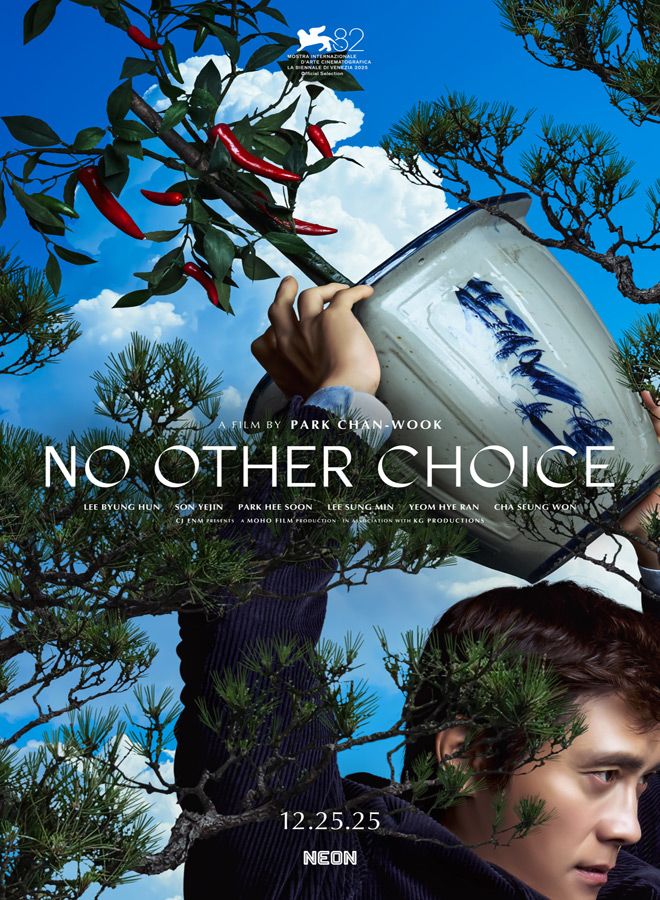
Coming to theaters December 25, 2025, from Neon, No Other Choice marks the return of Korean master Director Park Chan-wook (The Handmaiden 20216, Decision to Leave 2022) with a Thriller-satire that is as razor-sharp as it is uncomfortably funny. The film follows Yoo Man-su, played with deliciously strained pride by Lee Byung-hun (Squid Game series, The Match 2025), a long-term unemployed husband who feels mounting pressure and desperation after years without work. In response, he devises a wildly unhinged plan to secure a new job: eliminate his competition. Opposite him, Son Ye-jin (The Negotiation 2018, Crash Landing on You series) brings warmth and exasperation to the role of Miri, his wife, grounding a story that spirals into a hilariously bleak critique of late-stage capitalism, social status games, and the warped relationship dynamics that emerge when a household is pushed to its breaking point.
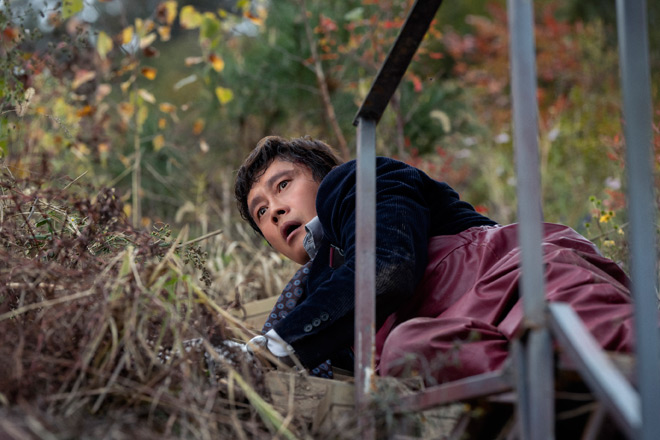
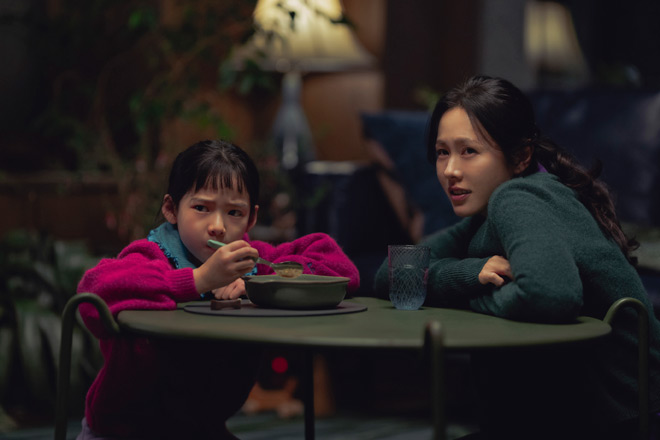
The story is relatively simple; however, the performances really sell the emotional stakes and biting humor at its core. Byung-hun’s tightly wound intensity, coupled with the fact that he plays such an ordinary, unremarkable man, turns every misstep into anxiety-fueled chaos. Audiences will likely relate to his plight and cringe as he makes poor decisions and stumbles into one avoidable mess after another. Ye-jin’s Miri feels like a modern, grounded woman, stepping in to keep things together amid a disastrous situation. She is not the only female character in the film portrayed as the more logical or pragmatic partner, highlighting a very relevant dynamic many women in our real world will relate to: taking control of the chaos around them.
Much like the title suggests, the characters often seem to feel they have “no other choice” but to press forward with a particular choice. The paper companies must downsize to survive, these ‘pulp men’ must continue to work in the dying paper industry, and even Yoo’s teen son feels the need to rob an electronics store. The film uses these escalating pressures to explore how societal expectations, economic strain, and personal pride push people toward extreme choices, and how capitalism creates this harsh environment. No Other Choice will make audiences laugh at the absurdity of the world we must all survive in, while examining whether ordinary people can retain their humanity in a system that constantly demands more.
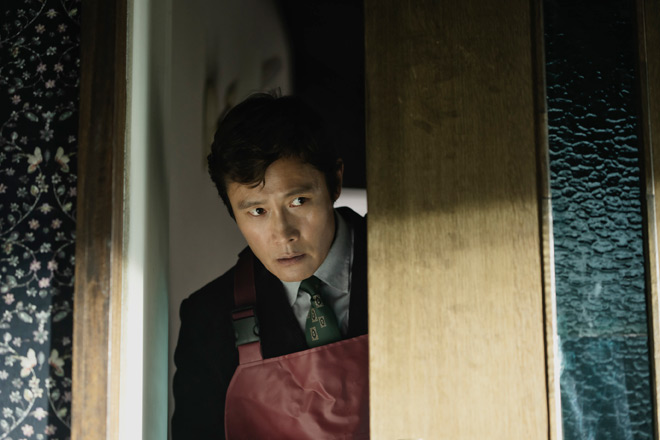
Even in a film with characters making some pretty ugly choices, the cinematography, color grading, and sets are stunning. The cinematography in No Other Choice is precise and purposeful, using framing, camera angles, and movement to reflect the psychological pressure on the characters. Cinematographer Kim Woo-hyung (1987: When the Day Comes 2017, The King of Kings 2025) frequently positions Yoo Man-su and other characters within cluttered, impersonal spaces, visually reinforcing their isolation and marginalization. Low-angle shots, carefully timed dollies, and match cuts emphasize both vulnerability and chaos, turning mundane environments into extensions of the story’s tension. The camera work amplifies the film’s darkly comedic tone while making viewers feel the constant weight of societal and personal pressures.
Color grading, lighting, and production design work together in No Other Choice to emphasize shifts in tone and character psychology while grounding the story in vividly realized environments. Brighter, warmer colors in early scenes convey domesticity and normalcy, while muted, colder tones in later sequences mirror the characters’ descent into desperation and moral compromise, with the contrast between the warmth of home and the sterility of corporate spaces visually tracking the unraveling of the family. The sets reinforce this emotional landscape: the family home is carefully detailed to convey warmth and intimacy, while offices, factories, and corporate corridors are deliberately bland and sterile, highlighting the dehumanizing effects of economic struggle and turning everyday spaces into a stage for both tension and darkly comedic moments.
Some viewers may find the ending of No Other Choice frustratingly neat, as it wraps up the story with a clarity that contrasts sharply with the chaotic and morally messy journey that precedes it. The conclusion is ironic, subverting audience expectations and leaving a lingering sense of unease, highlighting the darkly comedic logic that governs this world.
Park Chan-wook has crafted a world where humor and Horror coexist (as they do in real life), forcing us to confront how desperation, pride, and systemic pressures can push ordinary people toward extraordinary, and sometimes morally troubling, choices. The film does not offer easy answers, but its combination of pitch-perfect performances, meticulous visual storytelling, and darkly comic insight ensures it hits close to home with audiences, making us reflect on our own choices, compromises, and the absurd realities of the modern world. This is why Cryptic Rock gives No Other Choice 4 out of 5 stars.


)
No comment