

No matter who you are, everyone at some point in their life has pondered what-if. Just human nature: we constantly question our choices and the outcomes, and can become lost in the fantasy of the unknown.
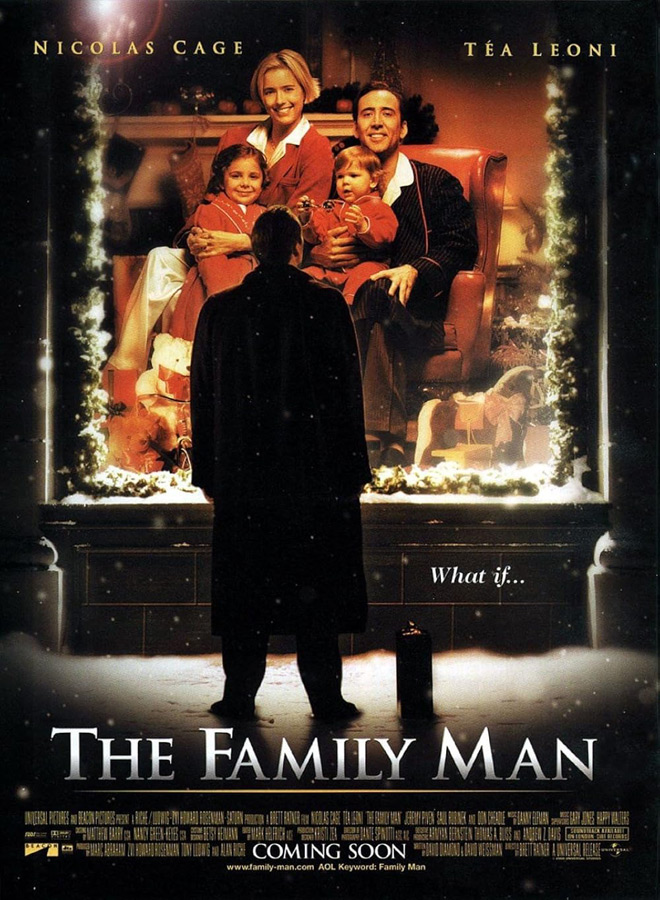
A theme often used in cinema, 1993’s Groundhog Day, 2004’s The Butterfly Effect, and 2006’s Click are more current examples of the concept. However, a fundamental what-if film is 1946’s It’s a Wonderful Life. A magical combination of valuing what is essential in life, wrapped in a Christmas theme, it is a historically all-time classic film. With this in mind, in 2000, a modernized version of the tale arrived on the silver screen, titled The Family Man.
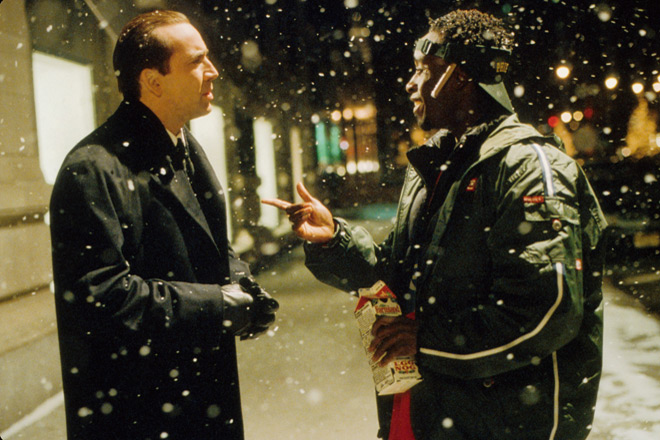
Written by a collaborative team of lifelong friends, David Diamond and David Weissman, they sought to create a story that felt like a classic holiday film that audiences could relate to in a fast-paced modern world. Offering a mix of Romance, Fantasy, and Comedy, some would argue that The Family Man succeeded on every level, making it a modern-day Christmas classic 25 years later.
Released just days before the new millennium’s first-ever Christmas (on December 22, 2000), Universal Pictures put a lot into assuring the film’s appeal over four months of production. Setting aside a pretty large budget of $60,000,000 for The Family Man, they secured top talent for the project by hiring Brent Ratner as director (who was coming off 1998’s box-office smash hit Rush Hour) and securing Nicolas Cage as the lead, Jack Campbell. Cage, a bona fide Hollywood star, was recently coming off filming of what would be a massive 2000 hit Action film, Gone in 60 Seconds, so The Family Man was something quite opposite.
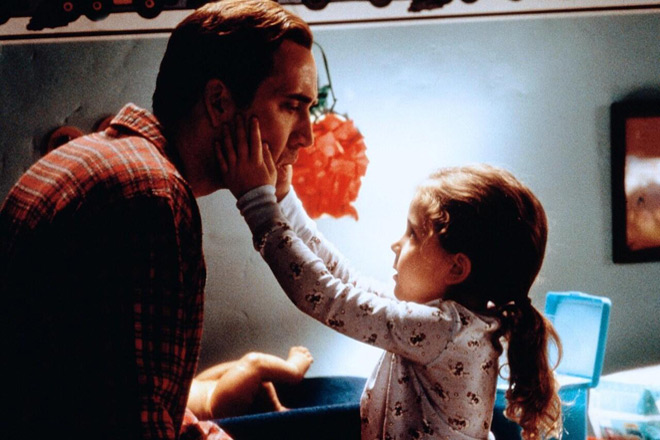
A change of pace for Cage: in The Family Man, he portrays a highly confident, wealthy Wall Street executive who is confronted with his own vanity and materialistic lifestyle in the blink of an eye. A role that Cage did not necessarily want to take on at the time, the enthusiasm of Ratner (who he himself was not initially interested in because of his determination to make Rush Hour 2) persuaded him to join on. Fitting perfectly for the role of Jack Campbell, opposite Cage was the award-winning Téa Leoni as the titular love interest Kate, securing two big stars at the top of the bill. Coming together for a sensational chemistry where their relationship feels legitimate and heartfelt, the supporting cast included rising star Don Cheadle as Cash (Jack’s guardian angel) and Jeremy Piven (who later would go on to the hit HBO series Entourage) as Jack’s alternate-life close friend Arnie.
All working exceptionally well together, The Family Man’s effectiveness is based on a present-day situation where you bear witness to the pressures of self-affirming success in the business world, as opposed to a more modest life of sacrifice for the sake of love and family. A concept many struggle with daily (especially 25 years later, when it seems many are career-first individuals), The Family Man’s story does not make it a good-versus-bad moral judgment of Jack Campbell, but rather a decision about which path would have served him better in the end.
Breaking it down, Jack Campbell seems to have it all -money, a bachelor’s lifestyle, and power. However, a woman named Kate, whom he loved very much and should have married, is still lingering in his past. An unexpected call from her, 13 years later, rekindles memories that he thought had faded away. Something that has likely happened to many couples, Jack suddenly finds himself with a chance to glimpse what his life might have been like if he had stayed with Kate. Transported into an alternative reality where they are married, have two children, and struggle to make ends meet, suddenly, everything changes. Faced with the internal predicament of returning to a life of corporate success and money or a life shared with someone he loves deeply, Jack Campbell is presented with feelings that will shift his entire world.
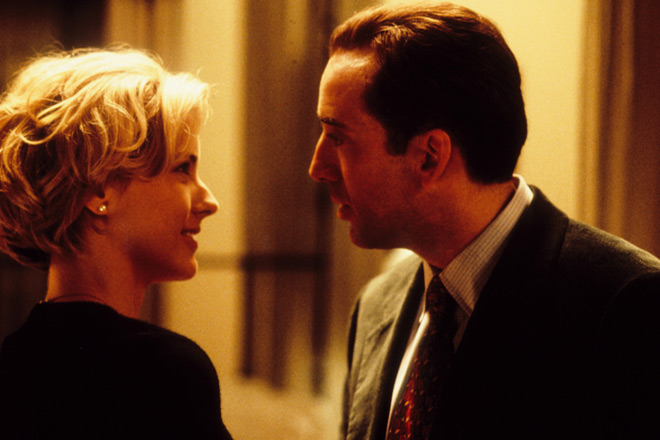
Very heartwarming, you cannot help but put yourself in the same situations as The Family Man and also wonder ‘what if.’ Furthermore, it grabs you by the heartstrings, even if you are one who decided to put love ahead of potential fortune, as you look into their eyes and think, how could I ever be without you? Inevitably, it is a film that presents no judgment, but solidifies what should be the most important aspects of who we are. A very human experience wrapped around a Christmas theme, The Family Man is in the realm of all-time Holiday classics, such as the aforementioned It’s a Wonderful Life or Charles Dickens’ Scrooge type character from 1843’s A Christmas Carol.
A film that strongly connected with audiences, The Family Man doubled its budget during its theatrical run, but was overshadowed by bigger blockbuster films of 2000, such as Cast Away, What Women Want, and the more children’s geared Holiday film How the Grinch Stole Christmas. Either way, The Family Man is a film that has remained a favorite in many hearts, with some referring to it as one of their favorite Christmas films of all time. Hard to argue, The Family Man is a beautiful story that challenges present-day society’s view of what success is, 25 years later still steering a profound message of love, and yes, family.



No comment