
It is undisputed that anyone who understands the history of zombies in cinema sees George A. Romero as the godfather of the genre. While not the originator of the zombie idea, Romero’s vision of this undead creature informs nearly all modern interruptions in movies, television, and even video games today.
A tragically overlooked piece of history, Romero’s 1968 Night of the Living Dead was the first modern-day, flesh-eating zombie film. This is while 1978’s Dawn of the Dead took the narrative in a far deeper social consciousness, and 1985’s Day of the Dead touched on what becomes after an entire decay of society. To many of the big three when it comes to Zombie Horror, many films of this type have come and gone in between, while Romero largely stepped away from the genre in the interim. However, fast forward to the late 1990s, news swirled around the Horror community that Romero was on tap to direct a Resident Evil live-action feature.
A film that was to be based on the popular Capcom video game series that originally arrived on PlayStation in 1996, astute Horror fans clearly saw inspiration from Romero in the storyline that hooked the masses. At a time when adapting video games into feature films was not as widely practiced, the prospect of Romero as the writer and director put a smile on many faces. However, historically, everyone knows this never happened, and the curiosity as to why still piques interest twenty-plus years later.
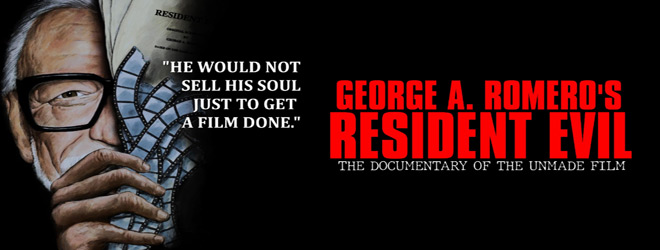
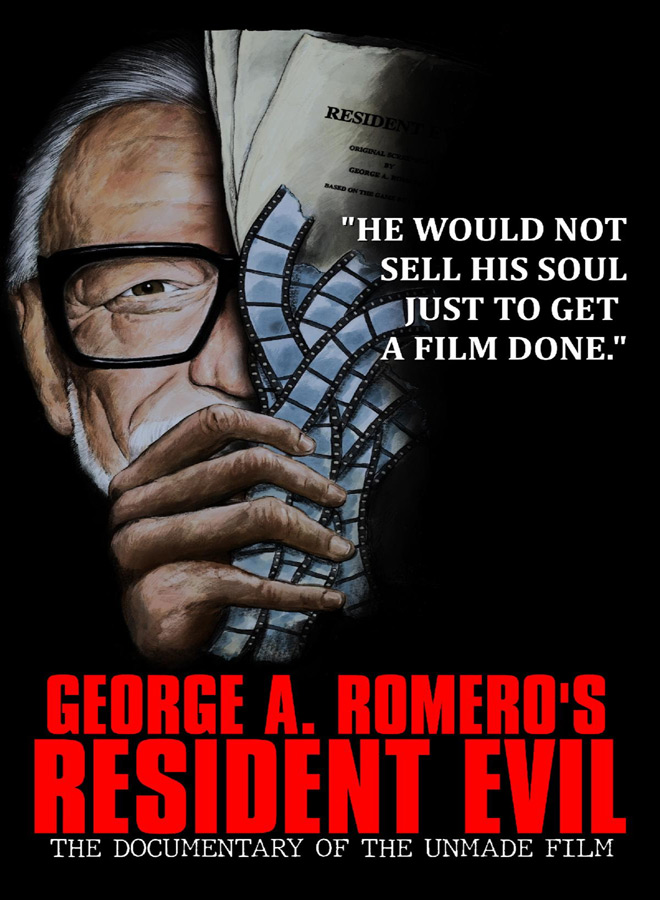
Educated on the topic, native Pennsylvanian Filmmaker Brandon Salisbury tackles it in his new documentary film, George A. Romero’s Resident Evil. Initially announced in 2022 at the Creature Feature Weekend in Gettysburg, Pennsylvania, the film was distributed by Uncork’d Entertainment and released digitally on January 7, 2025.
Written and directed by Salisbury, George A. Romero’s Resident Evil marks his debut, and it should be considered that he clearly put ample time into researching the subject matter. With that, Salisbury also has a sincere passion, and you can see it in the historical setup in this documentary, which leads to the understanding of matters leading up to the Residential Evil craze. With this, he assembles a cast of interviews, including a few of those who either knew or worked with George A. Romero in the past.
Running for nearly two hours, George A. Romero’s Resident Evil documentary is heavy-handed on researched quotes from achieved online publications, which, by and large, overpowers most of the film. With that in mind, the sterile approach of flashing quotes on the screen with verbal dictation from a narrator amidst numerous interviews seems rather dry. Furthermore, it is cool to note that the narration for the entire film is Pablo Kuntz (the original voice of Albert Wesker in the first Resident Evil game). However, it all sadly comes across as extremely cold and emotionless.
In all, you must commend Salisbury’s attempt to comply with much information on the who, what, where, when, and why surrounding George A Romero’s involvement with a Residential Evil film. As stated, without question, he devoted time and energy to the research, but perhaps the information aspect of this film is too systematic. What is really lacking here is some cinematic style to keep you involved and more than a documentary largely made up of pulled quotes from websites.
It will be interesting to see where Salisbury’s filmmaking goes from here because the fire is there; it just needs to develop. Until then, Cryptic Rock gives George A. Romero’s Resident Evil documentary film 2.5 out of 5 stars.


)
No comment