
While we may not see it at the time, the end of one road often leads to another. A daunting life change we are not always willing to accept, if we move ahead with an open mind, it might be an exciting new adventure.
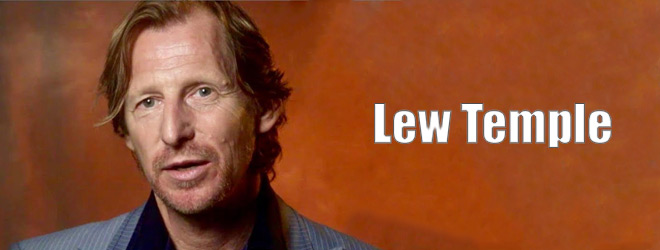
The case with seasoned Actor Lew Temple: many recognize him for his numerous roles, including 2005’s The Devil’s Rejects, Axel in Season 3 of AMC’s The Walking Dead, 2016’s 31, and more. However, before 1994, Temple was entrenched in Major League Baseball. Dedicated to his passion, he never made it to the major leagues, but worked in organizations such as the Seattle Mariners, the Houston Astros, and the New York Mets.
Extremely fascinating to learn: soon after, Temple applied his passion for baseball to film and has appeared in over 100 films in the last 30 years. Still an avid baseball fan, Temple has carved out a niche in cinema, exploring characters in various genres, especially Horror. Feeling blessed for his longevity, Lew Temple sat down to chat about his career trajectory, working in Horror films, his role in the recently released feature Dorothea, plus more.
Cryptic Rock – You have built a very extensive career in film and television. However, you were not always in the entertainment industry; you were also an athlete. On a fascinating trajectory, how would you describe your journey to this point from athletics to entertainment?
Lew Temple – That’s a great question, actually. My one answer to that would be passion. When you’re young, you find something that you adore. For me, it was baseball. Ever since I was taken to Little League to try out as an eight-year-old boy, I’ve just fallen in love with it. I didn’t know how to play. I couldn’t play. Most of us couldn’t, but you learn and figure it out.
It became my passion, my best friend. I recognized that it meant everything to me. Everything that my whole existence was, from eight years old to my twenties, was baseball. Sure, maybe a few Rock-n-Roll, some girls, a car. In the end, it’s baseball. It still is.
I found that when I got done playing baseball and was out of baseball, the same passion, that thing you feel inside, I got with acting as well. I knew that feeling, and I knew what it was to pursue that feeling through baseball. I understood to pursue that with acting as well.
The easy answer is passion. I followed that passion. I always talk to young people about finding something that you get passionate about, whatever it is. The road that it takes you on will be magical.
Cryptic Rock – That’s cool. You basically transferred that passion from baseball into entertainment. Not that you lost a passion for baseball, but you took it, put it into that, and it led to this career, which has lasted a few decades now.
Lew Temple – Yeah. For instance, I will watch the World Series game rather than a great movie. If someone said, “Hey, there’s a new screening of Frankenstein tonight? You want to go? We got free tickets.” I would say, “Thank you. I’m going to watch the World Series.” I still have that passion for baseball.
What’s great about it, too, is that when I was a young person, I never thought that I couldn’t. It never occurred to me how difficult it was going to be to be a Major League Baseball player. I never considered that I wouldn’t be. I was a little guy. I got to play a long way towards that dream.
The same thing a little bit with acting, it never occurred to me that I might not make it. I think that’s wasted energy. What is making it, by the way? I don’t think that’s serviceable energy at all. You may or may not, whatever that is, but certainly, whatever energy you’re giving to the possibility that you’re not isn’t going to help you down the road.
That’s what passion is. Passion keeps you from, “Oh, I couldn’t. I love it, but I couldn’t.” Passion says, “Oh, yes, you can.” So I say, “Follow it.”
Cryptic Rock – Absolutely. To your point, passion also sometimes requires a certain level of delusion to believe we are capable of doing something. That is not a bad thing. That is a good thing, because you need to be disillusioned sometimes to get where you want to go or achieve what you want.
Lew Temple – I think everything happens out of, you might call it a disillusion, I might call it an illusion, but at the end of the day it’s an imagination. It’s seeing yourself in that place when you’re not. There is a make-believe. We’re best at it when we’re really in that place. Think about these stories that you watch, that you’re a part of, that you review. Those are big pieces of somebody’s imagination that were dreamed up. Yeah, I think you’re right. We have to live in a certain delusional state. I also believe there are all these studies now that say part of your subconscious can’t distinguish between reality and delusion. If you believe it’s true, it is.
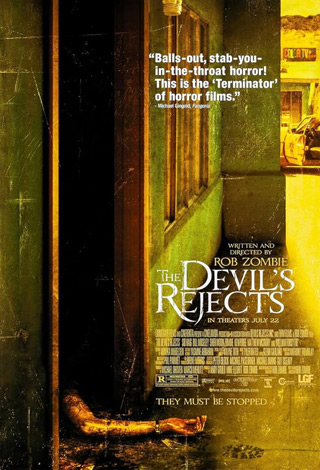
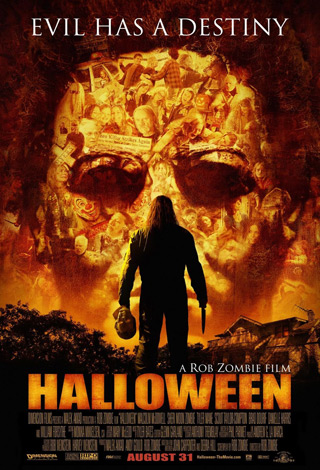
Cryptic Rock – Most certainly. That is how people become successful or achieve what they consider success. In your acting career, you have starred in many Horror movies. One of your first was Rob Zombie’s 2005 film The Devil’s Rejects.
Lew Temple – That was. That was my very first foray into the Horror genre, which was certainly not something that I had set out to find myself in. I talked to actors who grew up loving Horror movies and grew up and thought, “This is where I really want to be. I love this genre.” That was not me. I didn’t know much about the genre. Like any child, I loved the monsters, Frankenstein, werewolves, Dracula, the Wolfman, the Mummy, those for sure. Probably wasn’t so dialed into The Texas Chainsaw Massacre (1974), The Hills Have Eyes (1977), or Dawn of the Dead (1978), but aware of them, maybe might have got a little nervous around those.
The Horror genre found me and allowed me to expand on the characters I get to play. Bill Moseley talked to me a lot about that. Bill, the great Horror genre actor, with whom I’ve worked several times, and we all know him as Chop Top or Otis Driftwood. He talks about finding opportunities to go outside the lines with those characters that he might not be able to do in a Drama or Suspense Thriller for a studio picture, for instance.
Cryptic Rock – It gives you the ability to expand upon something that is not necessarily reality-based as much. That is what is excellent about Horror.
Lew Temple – I don’t know that I would have gotten to color Adam Banjo in The Devil’s Rejects with all the nuances. I don’t know that I’d have been afforded the opportunity in the context of a studio story, the way Rob Zombie was able to guide and direct, pull and collaborate with me to do that really nice arc for Adam. A lot of bravado, big talk, the proverbial poop hits the fan, puts his wife’s dress on, then has to muster the courage at the end to go down in a blaze of glory.
It’s perfect. We crafted that along the way. It’s a great movie. It’s so much fun, but there are many layers. Why I think that movie is so good is not just Adam Banjo, but every character in that film has a layered story, a layered arc. We invest in all the characters.
Cryptic Rock – Absolutely. The movie has stood the test of time. It is probably one of Rob Zombie’s best films.
Lew Temple – I agree.
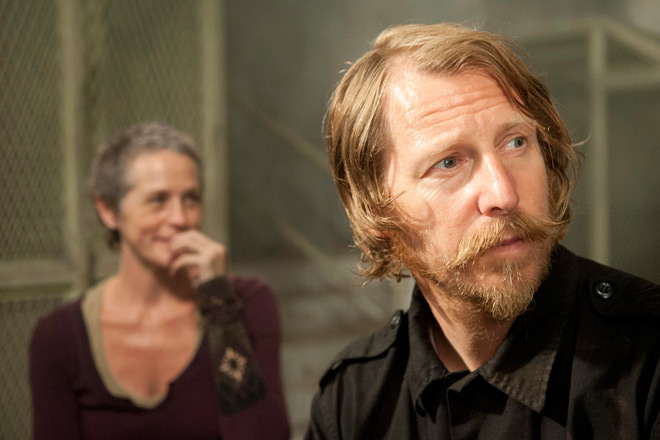
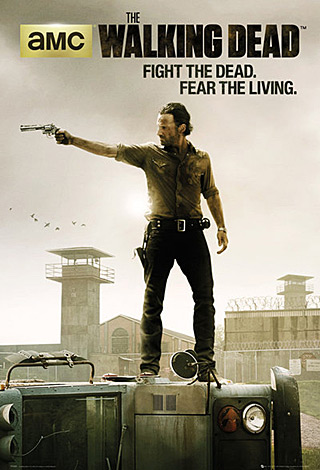
Cryptic Rock – You went on to do quite a few other Horror-related films. You also went on to have a recurring character in the very popular, at the time, The Walking Dead series. A lot of characters came and went in The Walking Dead, but Axel stood out. Axel was around for only a short while, but you remember your character. That is a testament to you and the character that you played.
Lew Temple – Yeah. Of course, there’s the blueprint in the graphic novels. Indeed, the Axel that Robert Kirkman had designed was gregarious, big, and larger than life, but he was also dark. We decided to give the Axel that I was bringing to the audience a little more levity, a little more colloquialism, a little more connectivity. He says what everybody’s thinking and tries to be a bit more endearing, connecting with the audience. I’m really proud that we did, so that when he exits, we all feel it, unfortunately. That was the goal. I’m pleased that we were able to accomplish that.
You’re right. He was gone too soon. While he was there, I thought we were making in rows, at least with Carol fans. I want to feel that I stayed around long enough to help save her life as a human sandbag.
Cryptic Rock – Yes, the character does stand out. It is interesting to look at the characters you have played. One can imagine that, as an actor or actress, you would hope to have maybe one project that stands the test of time. You never know how it’s going to go. You have a few projects you have been involved in that people know by name and remember, like The Devil’s Rejects and The Walking Dead. People know these things. That has to be a pretty cool feeling to know that you are part of these things that are remembered.
Lew Temple – Yeah. I like that I’ve had the opportunity to be part of telling a good story. I’m really proud of the diverse and interesting directors I’ve worked with, from Rob Zombie to Quentin Tarantino, Tony Scott, Gore Verbinski, John Hillcoat, Alejandro Iñárritu, and Alfonso Cuarón, all in between. That’s amazing.
Or working with two young people like Aaron Moorhead and Justin Benson on an independent called The Endless (2017). I find them to be very developed storytellers. Very interesting, technical, but also about the story. I look forward to working with young filmmakers.
That’s the idea: keep telling the story, but do so in a new way. It’s incumbent upon us to keep evolving in our storytelling. At the end of the day, it’s sitting at the campfire, once upon a time this happened, and then they lived happily ever after. We’re still telling the story. I like being part of that.
Cryptic Rock – That aspect of humanity is vital. That is what it has always been about through the ages. As you said, around the campfire, we always tell stories. It makes us who we are. It gives us context for where we came from and where we are going. It is all part of it.
Lew Temple – That’s the truth. I was interested because storytelling is fundamental, but we’ve gotten really great at marrying technology with story. With all the help we have, it’s crossed the technological threshold. It’s crossed over into a time-honored genre like Horror. I’m finding that Horror is as popular as it’s ever been amongst the masses. Kind of like Nirvana got really popular. They weren’t just the coveted Grunge band for the underground. Now it’s a national tour.
I find that Horror is right in that wheelhouse. Last year, I was talking about two camps. There was Gore Horror, such as the Terrifier franchise. Then there’s what I call the Lore Horror, like Smile (2022), which is maybe more story-driven in its lore. People may lean towards one, the Slasher, or lean towards the other one, the Psychological Thriller.
By the way, with Smile, I was actually in the short film they took to the South by Southwest Film Festival, Laura Hasn’t Slept, which got them their deal. I keep asking the Director, Parker Finn, “When are you going to bring me into the franchise?” He goes, “You’re in the franchise. I put “Laura Hasn’t Slept” on the Blu-ray extra. You’re part of it.” I’m like, “Okay.” So I’m the original smile, but they’ve really developed that.
Now, I’ve seen things like Sinners, Weapons in 2025. For me, those are even hybrids beyond what we’re talking about with the other two franchises. I don’t want to call them smarter, but they’re really playing the story and challenging the audience. I think that’s really fun. It’s a credit to the genre, right?
Cryptic Rock – Agreed. Good things are happening in Horror right now, which leads us to Dorothea, a different kind of film in the Horror sub-genres. Released to VOD on November 4, 2025, it is a bit of a Dark Comedy in a way. It’s a little bit of a satire. It’s not straight Horror per se. You have a brief role, but a memorable one. How did this all come about for you?
Lew Temple – I’ve been knowing the writer/director, Chad Ferrin, for quite a while now. I did one of his first films, Someone’s Knocking at the Door (2009), which is a really bizarre, almost a psychedelic mind-trip movie. Chad’s an interesting filmmaker because he pushes the envelope, to say the least.
He’s found his niche in these serial killers, either inside their minds or observing them from the outside. It’s an interesting perspective and voice he brings to these.
He always comes to me with an opportunity, “I’m doing this project. Would you like to do it?” Oftentimes, they’re significantly, again, outside-of-the-box characters and places that we can push the envelope a little bit, do something that I don’t usually do. Like an Australian accent, for instance, I don’t really get to do that very often, do I? In this film, I was able to, and I wouldn’t be afforded that opportunity for Sony, Fox, Paramount, Gore Verbinski, or Quentin Tarantino. They have real Australian actors they can use.
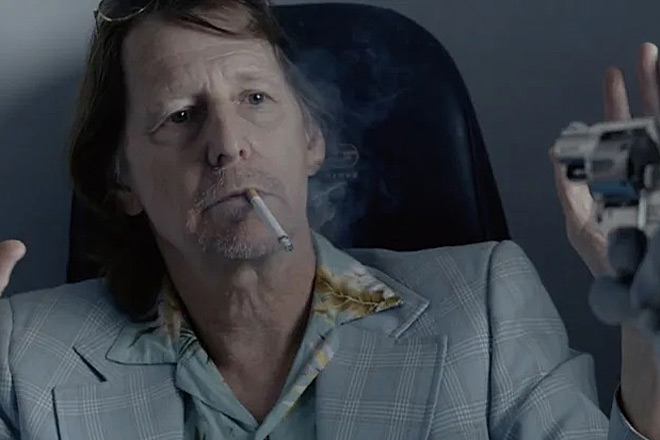
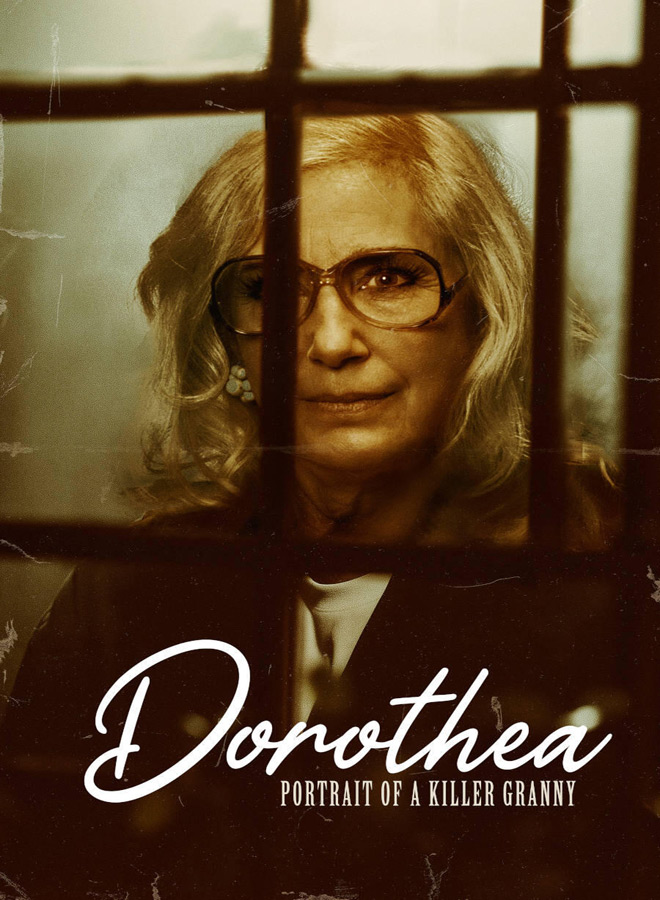
In this instance, I got to do the Australian accent. That was very appealing to me. Then, in the context of being a challenge for our heroine, the lead of the film. She’s not a heroine at all. She’s a damn serial killer. It felt great. I always appreciate that.
Chad’s really great at setting up a scenario in the story and then adjusting it on the day. He’s got a script, and it’s definitely blueprinted, but he allows us to free up and find the truth in the scenes. I appreciate it. He came to me and said, “Hey, this would be great if you’d like to swing at this.” I was like, “Yeah, that would be fun.” It was lovely to work with Susan. She’s the lead of the movie, Susan Priver.
It’s a lot when you’re the lead of a movie. I’m coming in and doing my thing, but after I do my thing, she’s got her next big scene with someone else coming in to do their thing. It was fun. It was a lot of work. Chad has a unique voice, particularly in the Serial Killer genre. For instance, he’s told a few of these stories now. They’re going to keep coming because, apparently, we’re not running out of serial killers, and we’re fascinated.
Cryptic Rock – People are fascinated by it for sure. Whether it’s a film like this or a real-life true crime, people are fascinated by it. By the way, the Australian accent came out great.
Lew Temple – Thank you. I appreciate that. Again, I was speaking to a group of young people, and I tried to encourage them to step outside their comfort zone, whether that’s square dancing, pottery, or something else, because it’s just good for your overall well-being to take on those challenges. You never know what’s going to happen. Again, the you never know factor is another part of being human. That’s why we tell these stories, or we’re interested in these stories. Like hide-and-go-seek, not hide-and-go-find, or it’s called fishing, not catching. We love that puzzle. We love what’s under the bed. We’re trying to figure it out.
Cryptic Rock – That is all part of being human. That’s the excitement of the unknown. The character of Dorothea, as you said, is not a heroine. She’s a serial killer. She is an interesting character because at first, you feel empathy for her based on her backstory. However, you quickly see she is a psychopath. What do you think of the character?
Lew Temple – Beyond what we see, there’s something that is really creepily manipulative about that character. Where does that start? Where does it begin to get that I must have that, or I’m going to take that from you? I’m going to take that toy from you. I’m going to take from you that piece of food. I’m going to take your friend from you in third grade. I’m going to take your boyfriend at 16. I’m going to take from you your money as an elderly. I’m going to take your life, ultimately. Where do you get that I’m going to take more and more? Spinning those webs of deceit. Morally, how do you justify any of it?
The character’s corruptible moral constitution is really interesting. It’s got to be beyond upbringing, but maybe it is just at the level of upbringing. That was fun for her to really delve into, and how she comes off. All of these predators, for instance, seem like one thing, but they’re really something else: the wolf and the sheep’s clothing.
Cryptic Rock – Right. It is an interesting character study for sure. As said, it is not really straight-ahead Horror. There is a tongue-in-cheekness to the film.
Lew Temple – Yes. Chad’s good at that. He likes being amused by certain things when he feels it won’t distract from the story he’s trying to tell, and he likes having fun or poking fun at things. He has a nasty, delicious sense of humor. He likes to implement that.
Cryptic Rock – It works well. Your scene in Dorthea is in fun.
Lew Temple – Oh, great. You never know what’s in that purse, if there’s a pistol or another check to write, or some cash. In this instance, it turned out to be a pistol.
Cryptic Rock – Right. As someone who loves baseball, what are your thoughts on the game today?
Lew Temple – What’s apparent to me right now is that pitching wins, followed by defense, followed by contact or moving runners around the bases. I love seeing Aaron Judge hit 62. I love seeing Giancarlo Stanton come off an injury and hit a couple of bombs. But man, all the strikeouts that follow, and it’s not just those two. It can be you know Goldschmidt, who’s a pretty good hitter, or used to be. It can be anybody.
If you watch a team like the Toronto Blue Jays and their contact, just making contact, fouling off pitches, running up pitch counts. So I’m less interested in Bo Bichette and Vlad Guerrero Jr., and really interested in guys like Ernie Clement, Addison Barger, Nathan Lukes, and Davis Schneider. Guys like me, right, the character actors, the utility guys.
Cryptic Rock – Agreed. You look at teams that have had success, the 2015 Kansas City Royals, they didn’t have a lot of bombers in that team. They won with contact. The New York Yankees teams, which won so many World Series, had some home run hitters, but they also had great lead-off hitters like Chuck Knoblauch. Does a legitimate lead-off hitter even exist anymore?
Lew Temple – They are going to say Shohei Ohtani is the lead-off, you know, a guy that can hit a ball out of the park and get him as many at-bats as possible. But this whole exit velocity, sensibility, the launch angle, sensibility, those teams that are really good at that stayed home to the World Series.
It is a little bit like the Horror genre in the early 2000s, with what I believe they called Torture Porn. Maybe the movies had moments, but overall, I’m not sure the storytelling was that great. We could say the first Saw (2004) was fantastic, but was The Human Centipede (2009) really great? Maybe it was genius. I don’t know.
I still think movies like The Babadook (2014) hold up for me as great stories. This launch angle and exit velocity stuff, that’s how I relate it to that part of baseball. That analytic-driven measurable stat has got us in a little bit of trouble.


No comment