
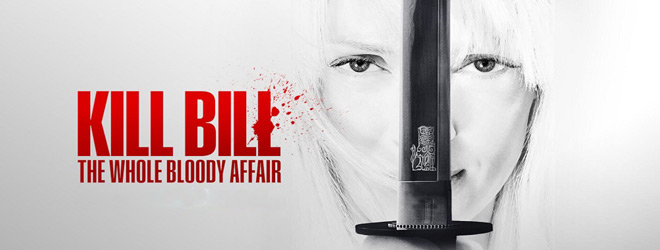
For the first time, Quentin Tarantino’s intended cut of the 2003 classic Kill Bill is receiving an official commercial release as Kill Bill: The Whole Bloody Affair and arriving in theaters on December 5, 2025, through Lionsgate.
Tarantino originally conceived Kill Bill as a single, uninterrupted film, but its nearly four-hour runtime led Miramax to split it into two volumes. Over the years, he spoke often about his preferred full cut, which restored extended sequences, additional violence, and the original animated chapter. This version was screened only at rare special events, including its 2011 premiere at the New Beverly Cinema, and it became something of a cinematic myth—known to exist but inaccessible to most viewers. Its upcoming release finally brings Tarantino’s complete vision to a wide audience. Fans familiar with the original two-part films will notice several meaningful differences, while newcomers will experience what is widely considered the definitive version of the story.
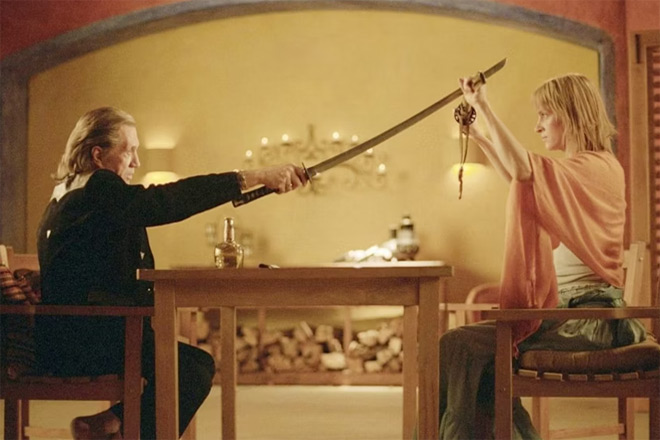
Kill Bill follows The Bride, played by Uma Thurman (Pulp Fiction 1994, The Old Guard 2025), a former assassin who awakens from a coma and sets out on a relentless, globe-spanning quest for revenge against her ex-colleagues and her former lover, Bill, who killed her (or so he thought). The story unfolds as she confronts each member of the Deadly Viper Assassination Squad, reclaiming her identity and rebuilding her strength along the way.
The 4 hours and 35 minutes of runtime are daunting for any viewer, even with a 15-minute intermission. It helps if you’re already a fan of Tarantino’s style, as his signature blend of tension, humor, and hyper-stylized violence is what carries the film through its extended length. For those who appreciate his voice, the runtime feels less like a hurdle and more like an opportunity to fully sink into the world he created. Its chapter-driven structure further eases the experience, offering the audience small, digestible segments that make the epic runtime feel surprisingly approachable.
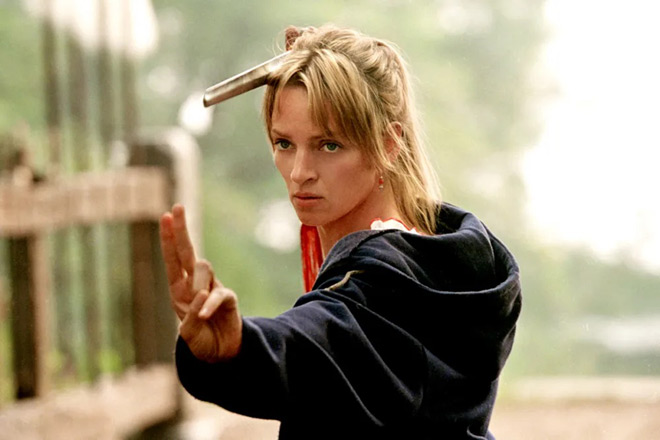
The performances themselves are heightened, with characters speaking in a way no real person ever would. It’s strange at first, but it becomes part of the film’s charm, lending it a pulpy, genre-soaked flair that draws viewers in. Thurman’s performance as The Bride, even 20 years later, remains magnetic, combining steely determination, physical intensity, and subtle vulnerability that anchor the film and make her journey feel both epic and deeply personal.
Each confrontation brings excitement; each member of the Deadly Viper Assassination Squad is strikingly bizarre, yet oddly captivating. Most memorable are Lucy Liu’s (Charlie’s Angels 2000, Elementary series) O-Ren Ishii and Daryl Hannah’s (Splash 1984, Wall Street 1987) Elle Driver, who embody ruthlessness, terror, and raw power. Their confrontations with The Bride are evenly matched, making every encounter feel high-stakes and keeping the outcome thrillingly unpredictable.
While the film is now over 20 years old, let’s not spoil anything for those experiencing Kill Bill for the first time. Some of the most notable changes in this version include an extended animated sequence detailing more of O-Ren Ishii’s backstory, the battle with the Crazy 88 now presented in full color (previously shown in black and white to maintain an R-rating), and the cliffhanger from Volume 1 pushed to the end of the film. This final adjustment gives the last 30 minutes far more emotional weight, delivering a payoff that truly hits.
Kill Bill: The Whole Bloody Affair is filled with strong, complex female characters who dominate the narrative through intelligence, skill, and sheer presence. From The Bride to the female members of the Deadly Viper Assassination Squad, women drive the story, subverting traditional gender roles in action cinema and claiming the spotlight in a genre long dominated by men.

There is a certain irony to this celebration of female empowerment, given Quentin Tarantino’s relationship with Harvey Weinstein while making this film. Thurman has publicly spoken about her negative experiences with Harvey Weinstein, including an attempted sexual assault in the 1990s and the push for her to keep quiet about a car crash incident on the set of Kill Bill that led to her dealing with long-term health problems.
While the film champions women’s strength on screen, it exists within an industry and history that has often silenced or exploited them, adding a layered tension between the story and its real-world context. Budd’s line “That woman deserves her revenge, and we deserve to die,” lands with a certain irony, echoing not only The Bride’s righteous fury but the real-life power imbalances and abuses that shadowed the film’s production.
Kill Bill: The Whole Bloody Affair is more than just a revenge fantasy; it is a bold, electrifying testament to Tarantino’s vision and his ability to craft unforgettable characters, particularly the women who command every scene. Even two decades later, the film’s style, energy, and audacious storytelling remain strikingly fresh, and this full cut allows audiences to experience the narrative as he originally intended. This release delivers cinematic revenge, letting audiences finally experience Tarantino’s epic in one unbroken, unmissable ride rather than the split two-part version. This is why Cryptic Rock gives Kill Bill: The Whole Bloody Affair 5 out of 5 stars.


)
No comment