
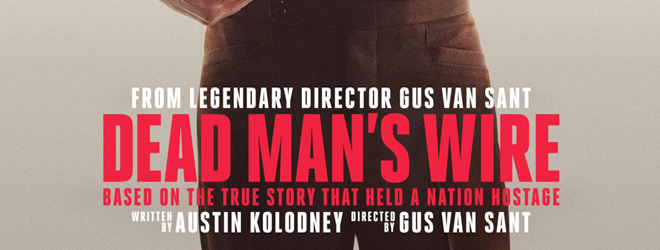
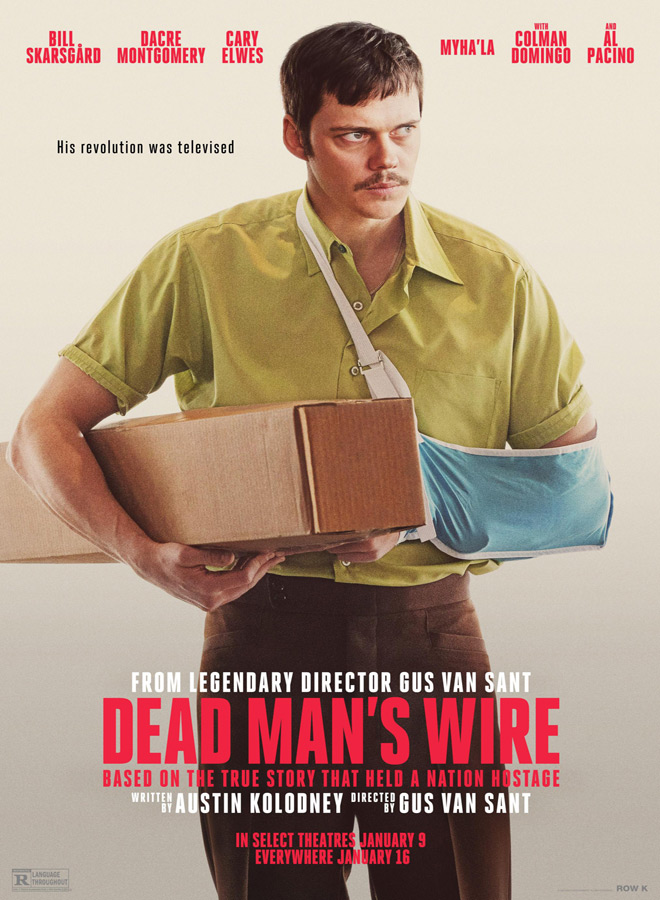
Coming to theaters January 16, 2026, from Row K Entertainment, Dead Man’s Wire arrives as an unnervingly intimate descent into one of the most startling crimes broadcast to a captive nation. Directed by Gus Van Sant (Drugstore Cowboy 1989, Good Will Hunting 1997), the film reconstructs the real events of February 8, 1977, when Tony Kiritsis stormed into the office of Meridian Mortgage Company president Richard Hall and took him hostage using a sawed-off shotgun rigged to his own neck, a terrifying setup that became known as the “dead man’s wire.”
Anchored by a ferocious Bill Skarsgård (It 2017, Nosferatu 2024) as the desperate but humble Tony and a tightly wound Dacre Montgomery (Stranger Things series, Went Up The Hill 2024) as Richard Hall, the film also features Colman Domingo (Fear of the Walking Dead series, The Electric State 2025) as Fred Temple, a local radio personality pulled into the chaos as it unfolded in real time. Van Sant drops viewers directly into 1970s Indianapolis, surrounding the crisis with era-accurate music, costuming, and chillingly authentic news footage, creating a portrait of a city and a country watching a nightmare play out live.
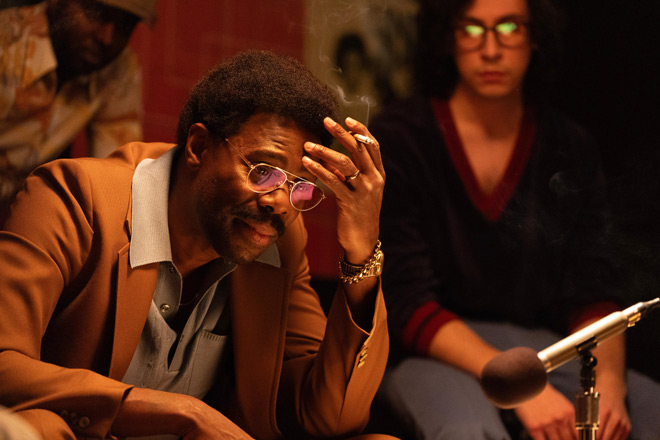
Dead Man’s Wire situates itself among contemporary crime studies that challenge the binary of villain and victim, urging viewers to wrestle with the uncomfortable question of whether some criminals, under certain pressures, merit our empathy. Van Sant leans into that ambiguity, allowing the story’s claustrophobic tension and volatile emotional swings to speak for themselves rather than offering neat moral answers.
While this story takes place in 1977, the moral questions it raises feel startlingly relevant today, as housing prices skyrocket, the middle class struggles to survive, and economic pressures push ordinary people to consider what they are willing to do to support their family and survive.
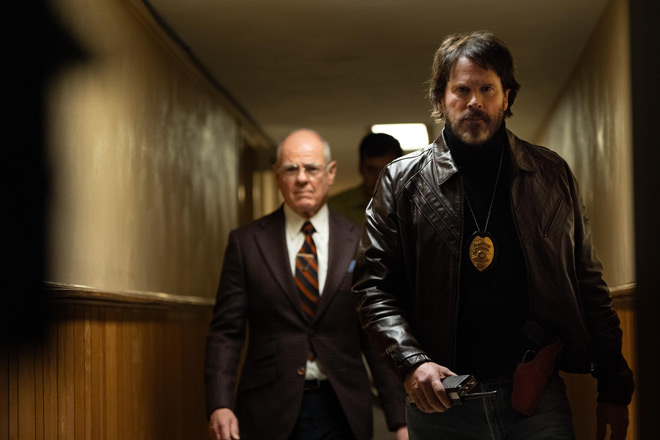
Part of what makes the film so engaging is the immersion created by its meticulously designed costumes, era-accurate glimpses of television broadcasts, evocative soundtrack, and the careful recreation of 1970s Indianapolis, which together make the city itself feel like a living, tense character in the story. Every performance, from the leads to the supporting cast, feels lived-in and authentic. With much of the film confined to a cramped one-bedroom apartment and to police and radio offices, it relies almost entirely on these performances to draw the audience in and sustain its relentless tension.
While the tension remains high throughout the film, the runtime begins to weigh on the audience as Van Sant makes them sit with every unfolding moment across the three-day ordeal. Just as the characters grow restless in their impossible situation, viewers may start to feel that same impatience. Although this may be an intentional choice, the pacing in the final quarter of the film slows noticeably when you would expect the story to be peaking.
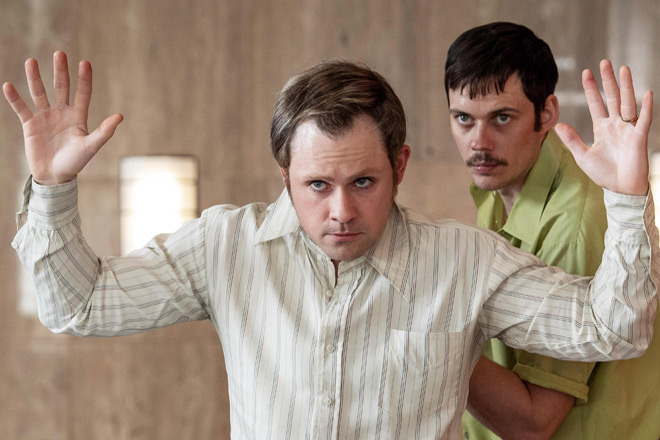
The impact of Dead Man’s Wire lingers, not in spectacle, but in the uncomfortable questions it plants about empathy, survival, and human limits. It is a study in tension, moral ambiguity, and human desperation, asking viewers to confront discomfort, empathy, and the consequences of extreme choices. In its careful attention to time, place, and performance, the film becomes less about the headline-making crime and more about the fragile, volatile humanity at its heart, a humanity that, despite the decades that separate us from 1977, still resonates today. This is why Cryptic Rock gives Dead Man’s Wire 4 out of 5 stars.



)
No comment