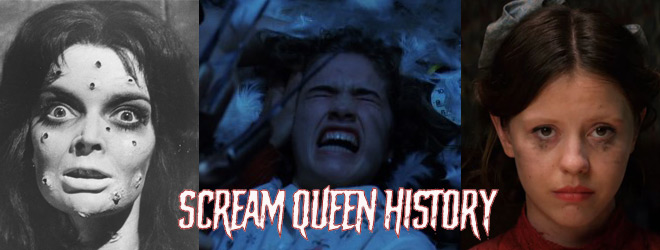
Women have been integral to the Horror genre since its inception, shaping its narratives, defining its most iconic characters, and pushing its boundaries both on-screen and behind the scenes. While the industry once reserved February as a time to celebrate women in Horror, Cryptic Rock Magazine believes their contributions deserve recognition year-round.
That is why, in March 2025, a spotlight shined on the fearless women who have brought Horror’s most unforgettable characters to life— Scream Queens. These actresses have not only shaped individual stories but have also become the backbone of entire franchises, cementing their legacy in the genre’s blood-soaked history.
A Scream Queen is a brave (and sometimes very terrified) actress who steals the spotlight in Horror films. She often runs for her life from creepy killers or supernatural threats. With a talent for screaming at the top of her lungs and making us jump out of our seats, a Scream Queen is the ultimate symbol of fear and strength. These actresses become legends in the genre, celebrated for turning pure terror into an art form and earning their place in Horror history with every spine-chilling scream.
Over the years, the Scream Queen has evolved from being a helpless, one-dimensional character into a strong, resilient protagonist the audience can truly root for. Arguably, this shift reflects a broader cultural change, with feminism playing a key role in shaping how women are portrayed in Horror. No longer just the victim who runs, screams, and survives by sheer luck, today’s Scream Queens are resourceful, courageous, and often take matters into their own hands—turning the tables on their tormentors and proving that strength and survival go hand in hand. This evolution not only empowers these characters but also allows audiences to connect with them on a deeper, more meaningful level.
The Early Scream Queens:
The first Scream Queens were seen in silent-era films, like 1922’s Nosferatu and 1920’s The Cabinet of Dr. Caligari —even when you could not hear their screams, their wide-eyed fear and dramatic expressions helped communicate terror to the audience. However, the first modern scream queens didn’t emerge until the 1950s and 1960s, when sound and dialogue allowed actresses to fully engage with the horror in a new way. In this era, actresses like Janet Leigh in 1960’s Psycho, Veronica Cartwright in 1963’s The Birds, and Barbara Steele in 1960’s Black Sunday became icons, portraying vulnerable women caught in terrifying situations. These early Scream Queens helped establish the trope of the terrorized woman, setting the stage for the evolution of stronger, more empowered heroines in the decades that followed.
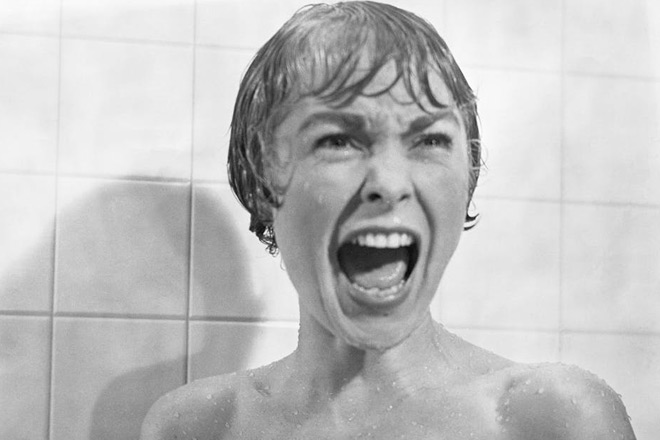
Janet Leigh’s portrayal of Marion Crane in Psycho is a landmark moment in Horror history and the evolution of the Scream Queen. As one of the first characters to subvert audience expectations, Marion’s early death in the infamous shower scene shocked viewers and redefined the stakes in Horror films, proving that no character was safe. Leigh’s performance as Marion, a morally complex and relatable protagonist, brought depth to the role of the “woman in peril,” showcasing vulnerability and strength in equal measure. Leigh’s work not only earned her an Academy Award nomination but also paved the way for future scream queens to bring emotional depth and complexity to their roles in Horror films.
Post-World War II, America and much of the Western world focused on rebuilding and reinforcing traditional gender roles, with the “perfect housewife” ideal dominating. Women were often depicted as vulnerable and in need of protection, which is reflected in early Horror films. These women were portrayed as innocent victims, typically placed in horrifying situations, as the cultural climate of the time did not yet allow for women to take on dominant, empowered roles. Instead, they were used to evoke fear and tension in the genre.
The Rise of the Slashers and Giallos:
The 1970s marked the rise of the slasher genre, where the Scream Queens truly began to take shape as a defining figure in Horror. With the introduction of graphic violence and suspenseful set-ups, these films were often built around a “final girl”—a resilient young woman who outsmarts or survives the villain against all odds.
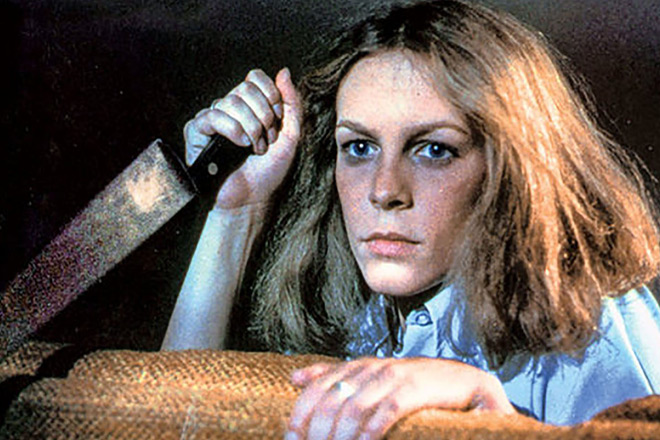
Jamie Lee Curtis emerged as the quintessential Scream Queen with her role as Laurie Strode in 1978’s Halloween, setting the standard for a tough, intelligent heroine who could endure and overcome unimaginable terror.
Similarly, Sissy Spacek’s portrayal of the telekinetic teen in 1976’s Carrie, while unconventional, established her as a Horror icon, blending victimhood with empowerment. Adrienne Barbeau, meanwhile, became a staple of 1970s Horror with her strong, no-nonsense performances in films like 1979’s The Fog, paving the way for the more assertive Scream Queens of the future. Together, these actresses helped define the era and elevate the Scream Queen to a central role in the Horror genre.
This evolution coincided with the rise of the feminist movement, which brought increased awareness of women’s rights, workplace access, and reproductive freedom. The sexual revolution of the decade further challenged traditional gender expectations, encouraging a shift in cultural attitudes. This broader cultural context helped shape the transformation of the scream queen, with characters moving from passive victims to empowered survivors. The “final girl” archetype reflected this shift, embodying intelligence, resourcefulness, and a drive to take control of her own fate. Curtis’s Laurie Strode in Halloween became the embodiment of this change, proving that women in Horror could be more than just victims—they could outsmart and overcome the terror they faced.
Scream Queens played a crucial role in the Giallo subgenre, the stylish and often violent Italian thrillers that flourished in the late 1960s and throughout the 1970s. These films, known for their blend of Mystery, Horror, and Eroticism, relied heavily on the captivating performances of their leading women to heighten the tension and emotional stakes. Actresses like Edwige Fenech (1971’s The Strange Vice of Mrs. Wardh), Daria Nicolodi (1975’s Deep Red), and Barbara Bouchet (1972’s Don’t Torture a Duckling) became iconic figures in Giallo cinema, embodying a mix of vulnerability, glamour, and strength.
Often cast as both victims and sleuths, these types of Scream Queens brought depth to the genre. Their fear and determination drove the narrative while also grounding the elaborate visuals and surreal storylines in human emotion. Their presence was essential to Giallos’s success, and their influence can still be felt in modern Horror and Thriller films.
Golden Age of Slashers:
The 1980s is often regarded as the golden age of the Slasher film, a pivotal era when the scream queen truly cemented her status as a Horror icon. This decade introduced the “final girl”—the resilient last woman standing after all her friends have been killed, often emerging victorious over the villain. It was also a time of cultural tension in America, with a backlash against the progressive changes of the previous decade and a growing conservatism that reflected fears of societal decline.
Amid this climate, the era’s obsession with excess played out in slasher films, known for their graphic violence and sexualized portrayals of women. The “final girl” archetype evolved within this landscape, with women transitioning from mere victims to assertive, resourceful heroines.
Heather Langenkamp’s portrayal of Nancy Thompson in 1984’s A Nightmare on Elm Street exemplified this evolution, as Nancy faced Freddy Krueger head-on with intelligence and determination. While Sigourney Weaver’s performance as Ellen Ripley in 1979’s Alien technically predated this era, her role still influenced the 1980s, introducing one of the first true Action Horror Scream Queens and redefining what it meant to lead in a Horror film.
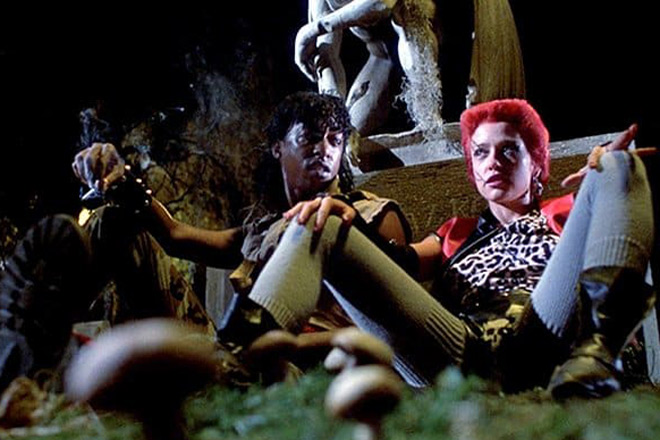
Linnea Quigley, the “Queen of the Bs,” also became one of the most iconic B-movie scream queens of the decade, known for her bold and memorable performances in cult classics. With her fearless approach to roles and magnetic on-screen presence, Quigley became a defining figure in low-budget, high-energy Horror films. Particularly her breakout role as the Punk Rock femme fatale Trash in 1985’s The Return of the Living Dead, where she balanced humor, horror, and sensuality, earning a dedicated fanbase.
This period not only solidified the scream queen as a central figure in Horror cinema but also reflected a cultural shift in the portrayal of women. The increasing prominence of feminist ideals encouraged more agency and power for female characters in a genre historically known for victimizing them. While Slasher films of the 1980s still involved graphic violence and sexualized themes, they also marked a transition toward more complex female protagonists who faced their fears, fought back, and emerged victorious.
The Post-Slasher and Final Girl Revival:
The 1990s brought a fresh twist to Horror with a wave of meta, self-aware films that poked fun at the genre while still delivering scares. By this point, Slasher films had become predictable, so filmmakers kept the genre alive by cleverly commenting on its own clichés. This shift gave scream queens a new edge, blending humor and irony with genuine fear, all while staying true to the resilience and strength that defined them.
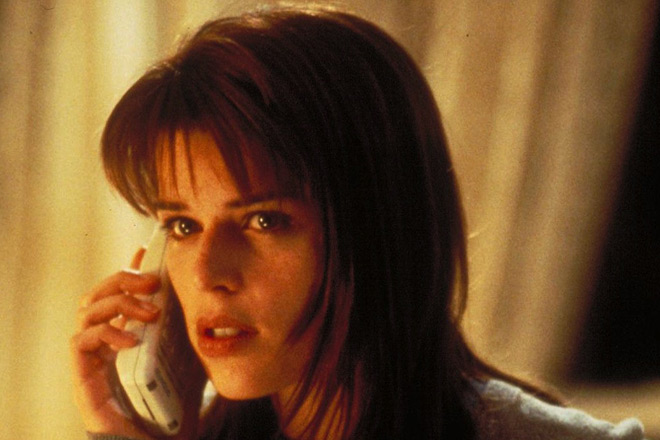
Neve Campbell’s Sidney Prescott in 1996’s Scream became the perfect example of this evolution—vulnerable yet tough, navigating the terror and self-aware humor of a story that knew exactly what it was doing.
Sarah Michelle Gellar also left her mark on ’90s Horror with her charming, witty performance in 1997’s I Know What You Did Last Summer, while Jennifer Love Hewitt’s Julie James in the same film embodied the fear and determination of a modern scream queen. Debbie Rochon is another standout figure of the era, known for her extensive work in indie and B-movie horror, with over 200 films to her name. Renowned for her fearless performances and devotion to the genre, Rochon has become a cult icon, starring in films like 1996’s Tromeo and Juliet and 2002’s American Nightmare. These actresses breathed new life into Horror, making its heroines smarter, stronger, and more relatable than ever before.
In the 2000s, the role of the scream queen continued to evolve as horror films changed. The start of the new millennium was marked by growing awareness of social issues, including women’s rights, body autonomy, and LGBTQ+ visibility. There was a movement towards more progressive depictions of women in media, and women began to be portrayed as complex, multi-dimensional characters who had agency and voice. While classic slasher films were rebooted, the decade also saw the rise of new subgenres like Supernatural and Psychological Horror, featuring more empowered and nuanced female leads. No longer just survivors, the Scream Queens of this era became fighters. Kate Beckinsale’s portrayal of Selene in 2003’s Underworld redefined the archetype by blending action and horror, showing a tough, commanding vampire warrior.
Similarly, Eliza Dushku’s character in 2003’s Wrong Turn used her resourcefulness to outsmart terrifying foes. Katharine Isabelle further pushed the boundaries with her role in 2000’s Ginger Snaps, where she portrayed a teenager grappling with her own monstrous transformation, blending Horror with themes of adolescence and empowerment. These films explored deeper themes of survival, self-discovery, and transformation, allowing scream queens to embody not just fear but strength, resilience, and agency in the face of unimaginable horrors.
The Modern Scream Queen:
In recent years, the scream queen has evolved to reflect societal shifts, particularly the rise of strong, independent women in popular culture. The 2010s and beyond have been marked by feminist activism, a focus on intersectionality, and a push for more diverse and authentic portrayals of women in media. Movements like #MeToo and body positivity have fueled this change, pushing for more progressive narratives in Horror.
Female characters are no longer mere plot devices but empowered figures who drive the story and challenge traditional gender dynamics. Anya Taylor-Joy’s performances in 2015’s The Witch and 2016’s Split showcase her characters’ ability to balance strength and vulnerability, overcoming overwhelming odds. Florence Pugh’s transformative role in 2019’s Midsommar takes her character from grief-stricken and frightened to an empowered force by the film’s end. Similarly, Emma Roberts’ portrayal in 2015’s Scream Queens series reimagines the archetype, blending vulnerability and villainy with a self-aware, modern twist.
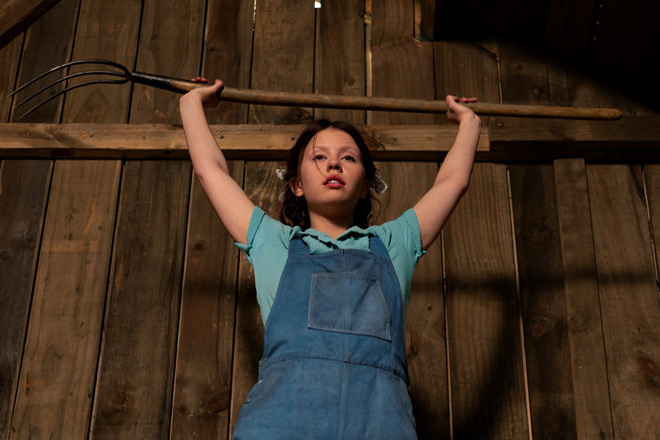
Some actresses have built entire careers around their roles as scream queens, becoming iconic figures in the genre. Maika Monroe, known for her roles in 2014’s It Follows, 2014’s The Guest, 2022’s Watchers, and 2024’s Longlegs, brings a unique mix of strength and vulnerability, solidifying her as a standout of the modern era. Mia Goth has become a genre-defining force with her captivating performances across Ti West’s X Trilogy—X (2022), Pearl (2022), and Maxxxine (2024)—where she expertly inhabits multiple complex roles, seamlessly shifting from innocent to disturbing, further showcasing her versatility. Samara Weaving has also made a significant impact in the genre, particularly in 2019’s Ready or Not and 2017’s The Babysitter, where she expertly balances vulnerability with badass strength and humor, earning her a place among the best scream queens working today. Together, these actresses embody the empowered scream queen of today, proving that they are capable of not only surviving but thriving in the face of Horror.
Why is the Scream Queen Important?:
The Scream Queen is important to Horror movies because she represents a key element of the genre’s emotional and narrative structure. As the archetype who faces and (sometimes) overcomes terrifying situations, the scream queen often serves as the emotional anchor for the audience, eliciting empathy and fear.
Over time, the Scream Queen’s role has evolved from a helpless victim to a complex, multi-dimensional character who often takes on a more active, empowered role in confronting the villain or the supernatural forces at play.
This shift reflects broader societal changes, where female characters are no longer merely tools of Horror but active participants who fight back and outsmart their adversaries. The Scream Queen embodies the resilience and strength that makes Horror films resonate with viewers while also contributing to the genre’s ability to explore deeper psychological and cultural themes. Whether she is a survivor, a fighter, or a victim, the Scream Queen remains an essential figure in helping Horror movies balance thrills, suspense, and emotional investment.
Her portrayal also serves as a marker of women’s progress in society, reflecting evolving expectations of female agency and empowerment. As these characters become more complex and empowered, they mirror real-world shifts toward gender equality, where women are increasingly seen as active participants in both media and society.


No comment